18
Oct
Halloween Cut Paper Pumpkins
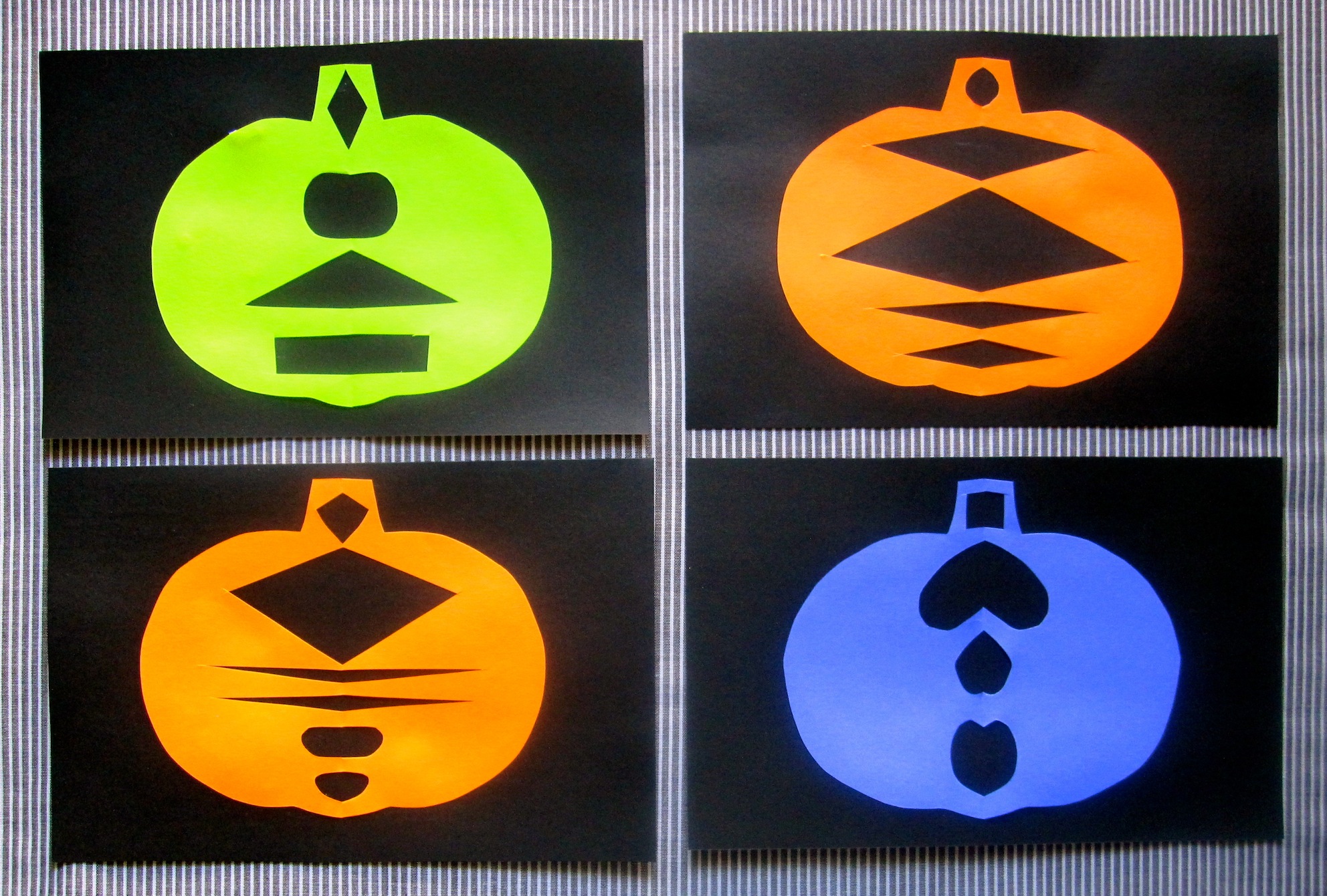
Please take a minute to swing on by Library as Incubator Project today for my latest Pages to Projects post: Halloween Cut Paper Pumpkins!
Pages to Projects is a series I write for Library as Incubator Project about how to incorporate art education and art appreciation into library storytime. This most recent post focuses on how to teach kids the technique of cut paper art during the Halloween season by reading One Spooky Night by Kate Stone and creating cut paper pumpkins. It also provides the opportunity with sneaking in a few simple math concepts.
If you enjoy the Pages to Projects series, be sure to check out our Pages to Projects Pinterest board for more art-infused storytime ideas!

15
Oct
Feedback in the Library

Awhile back, I was sitting in a youth services staff meeting and we were talking about when was a good time to have a Saturday program. There was hesitance over hosting it in the afternoon because it was assumed it was a difficult time for families to bring their children. While the mini-debate ensued, I sat back wondering how we determine what is a good time vs. a bad time for caregivers and their children, especially since each patron’s individual schedule is very different from the next. Do we solely rely on past program experience to determine these specifics? Sometimes past experience can be dated because, lets face it, times change. But if we don’t ask our patrons when we should be available to them, how will we ever know?
That’s when I decided to start leaving out comment cards at programs.
The inaugural Read Across Lawrence for Kids event was a great opportunity to test drive comment cards for kids. It was the first time we implemented this type of expansive, month-long intensive program, and any feedback would be helpful for future planning. At the first Read Across Lawrence for Kids event last year, I left out our library’s event-specific comment cards which our adult services programming coordinator created a couple of years ago. They look like this:

Only one person filled one out, and it was an adult. I love hearing from caregivers, but I also wanted to hear from the kids. So, I created these:
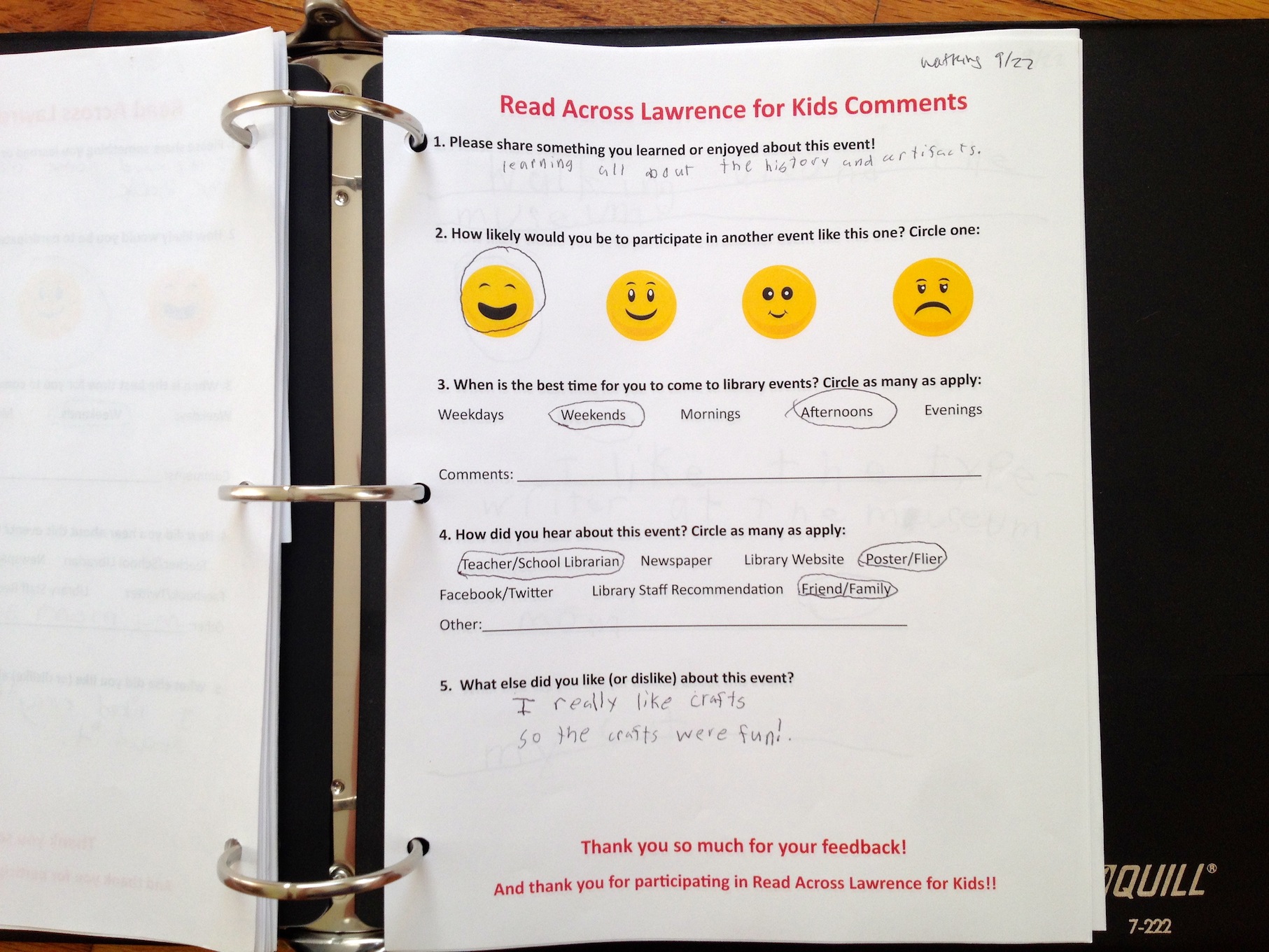
Last year’s comment forms not only included information about dates and times that attendees (ages 8-13) were available, but also asked about what they liked about the event, how did they hear about the program, and this year’s forms also included if they have any suggestions for future library programs. The larger print and colorful emoticons gave the comment cards the kick in the pants they needed to be more kid-friendly. The results showed. I had scores of feedback forms turned in, and once the entire monthly program was over, I bound it in a binder and read each one. I made notes specific to the best times kids were available and how they heard about the program. When the time came to start working on this year’s program earlier this year, I pulled the binder of comment forms out out and consulted it regularly throughout the planning process.
This is what this year’s forms looked like:

I added the question: “Do you have ideas for events at the library? What are they?” in this year’s form and received a lot of really great ideas!
Paper feedback forms are easy because the’re available at the events attended. Ideally, I’d love to have a feedback form for kids on the library’s kids page so that kids can submit feedback and program ideas anytime. Feedback forms would be a great inclusion for storytime as well. The kid-friendly forms are less of a time commitment for parents to fill out when they have little ones they’re trying to keep track of. I’d like to incorporate some type of standard, one-for-all kid comment form in the future. I found the Read Across Lawrence for Kids comment forms to be extremely handy in implementing programming, and it gives the kids and their caregivers the power to provide input in the services we customize for them.
Do you have feedback forms in your library? How do you document or survey the needs of your patrons?
13
Oct
RAL Kids Featured in Lawrence Kids Magazine
This year’s Read Across Lawrence for Kids program was featured in the Fall 2013 issue of Lawrence Kids Magazine. Article starts on page 48.
Thanks Lawrence Kids Magazine!
7
Oct
Read Across Lawrence for Kids 2013 Recap Part 2
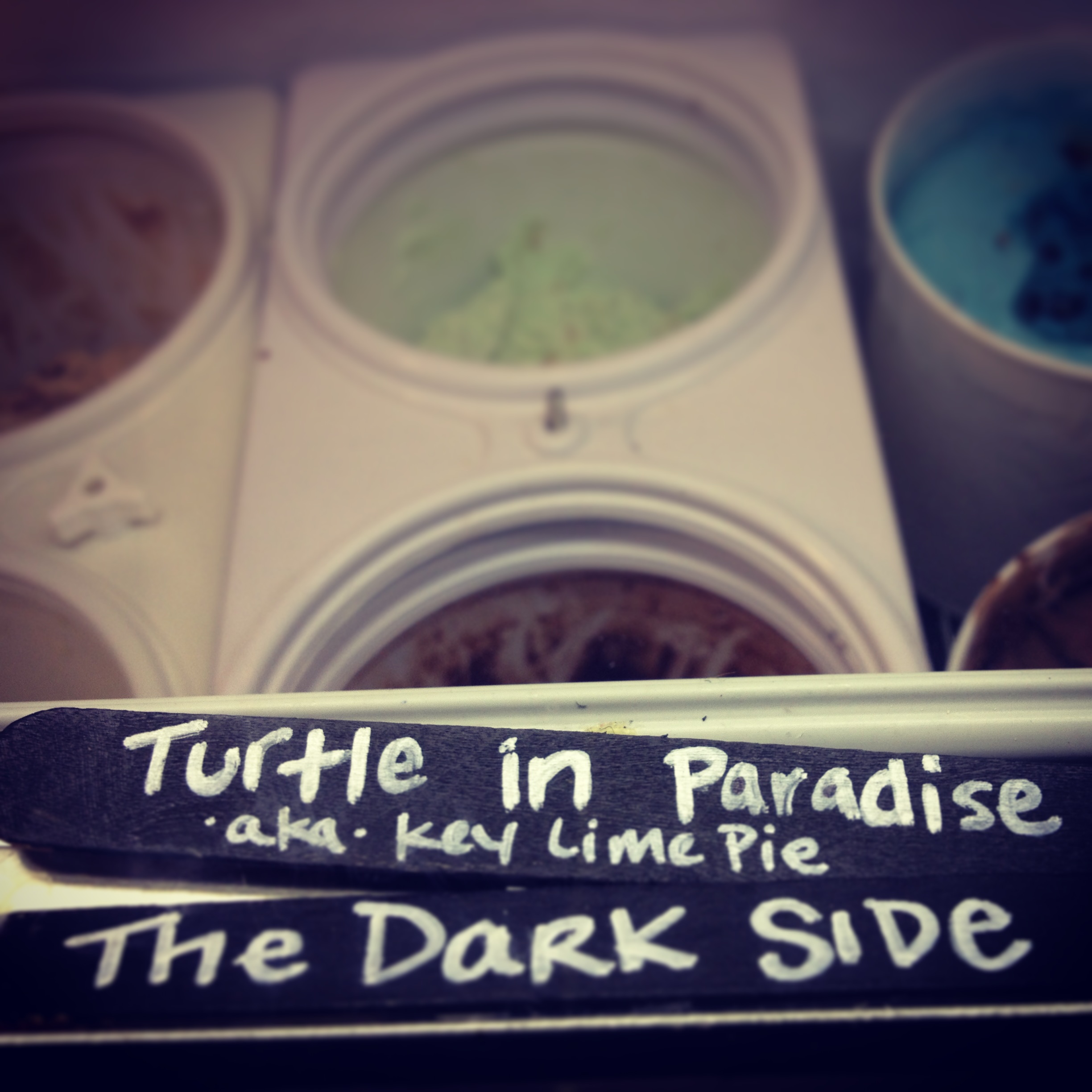
I gave a recap of the first part of Read Across Lawrence for Kids (RAL Kids), a month long one book, one community program for young readers, HERE. Now for the second half of the month’s worth of exciting events including Jennifer Holm <squeek>!!
In the picture above you will see that RAL Kids had it’s very own ice cream flavor featured at our local downtown creamery, Sylas & Maddy’s. The flavor was a the most delicious key lime pie ice cream flavor you’ve ever had and was available the entire month of September.
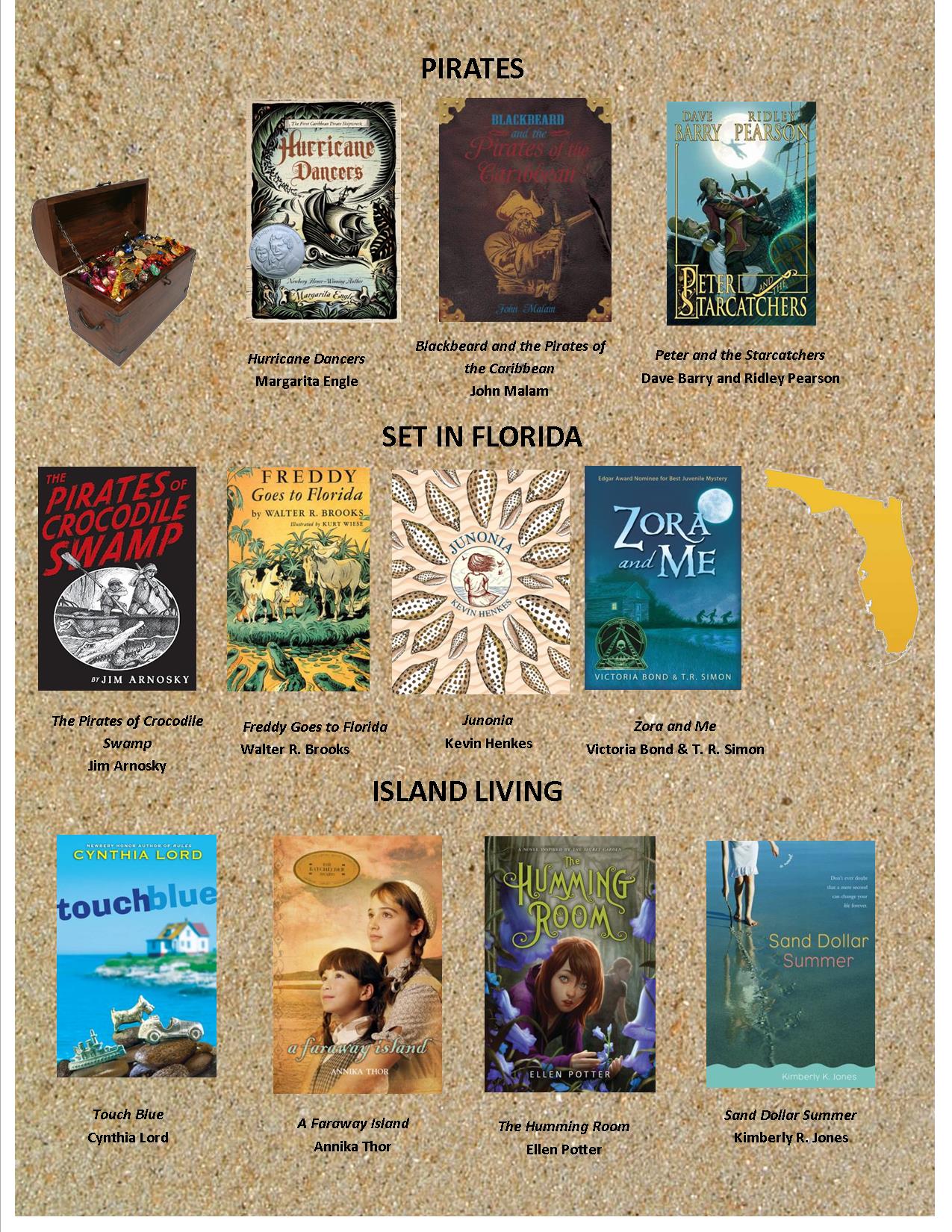
Events were mostly based in partnerships between the library and the community, all themed around the featured book Turtle in Paradise by Jennifer L. Holm. A few of the featured events included a Historic Downtown Lawrence Treasure Hunt that could be done anytime throughout the month, a STEM program on hurricanes with UKanTeach students from the University of Kansas, a babysitting clinic with Lawrence Memorial Hospital, and a free family movie at Liberty Hall. To celebrate the end of the RAL Kids month, three-time Newbery Honor winning author Jennifer Holm visited with the kids of Lawrence in a virtual author talk in the theater of the Lawrence Arts Center.
The event programming costs were minimal compared to the total programs held throughout the month (11 RAL Kids events) due to community sponsorships and partnerships. We received several large food donations, businesses allowed us to use their venue space free of charge, and they donated their time and services for programs. One of the reasons I love living in Lawrence is the sense of community and compassion, especially when it comes to supporting the library and the young people of Lawrence. It’s a beautiful thing to witness and to be apart of.
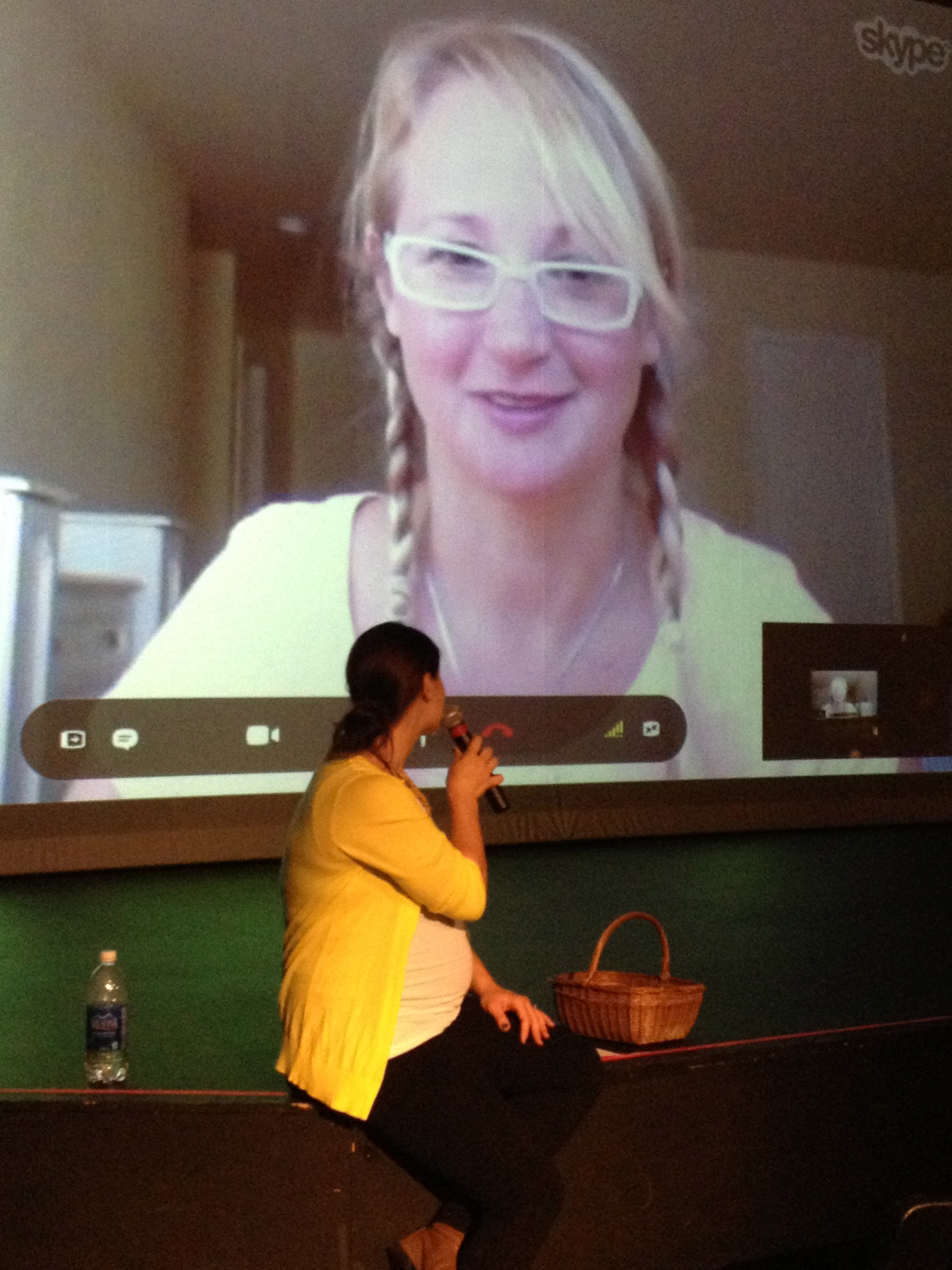
And I was blown away by how awesome author Jennifer Holm is. She was so fun and pleasant to work with throughout the entire RAL Kids process and did an AMAZING job at our final virtual author talk event. The picture above is her rocking the author talk while I look very pregnant. She talked a lot about what it’s like to be a writer, books and comics she liked to read as a kid, Turtle in Paradise, other books she has written, she answered audience questions, and we even got to meet her son! She also revealed that she’s currently working on a sequel to Turtle in Paradise titled Full of Beans. It was a great way to finish up the RAL Kids month.
As I did with the first part of the recap, here’s a Storify wrap up of the final weeks of programs for this year’s RAL Kids:
6
Oct
Read Across Lawrence for Kids 2013 Recap Part 1

1 Book + 1 Public Library + 50 Classrooms = 4270 Kids Sharing One Story
Whew! The storm has come and gone. The month of September has ended, which means I just finished wrapping up another Read Across Lawrence for Kids program! Most youth services librarians rejoice when September arrives as it is the end of the Summer Reading Program chaos, but for Lawrence Public Library the fun has only just begun… Read Across Lawrence for Kids is a youth literacy event in which the entire community of young readers reads the same book at the same time and also comes together to participate in activities themed around the book throughout the month. This year’s featured title was Turtle in Paradise by Jennifer Holm. You can read about the preparations and start of this year’s program HERE.

Due to another energetic collaboration between the Lawrence schools and the Lawrence Public Library (LPL) for RAL Kids, I’m pleased to report RAL Kids almost doubled it’s participation this year with a total of 4,276 (last year’s participation was just under 2,500). Along with the LPL’s independent readers and event participation, local schools were actively incorporating Turtle in Paradise into their curricula, reading it aloud in class, and/or hosting reading groups.
How did that work?
The Friends of the Library donated funds specifically for this program, from which I purchased a boat load of books at a discounted rate. In May, I reached out to the elementary school and middle school librarians in our district (we have quite a few!) and they were responsible for getting any teachers on board who were interested in teaching the book in their classrooms. In early August, those books were distributed before school started along with information about the library’s RAL Kids events and a RAL Kids Parent and Educator Resource Guide, which also included a book list of books from The Great Depression time period for ages 8-13 (available for checkout through LPL). When school started, the school librarians and teachers started reading Turtle in Paradise right away with their classes. I sent out weekly emails about the RAL Kids events going on that week, as well as additional resources including this awesome Turtle in Paradise Read-Alikes Chart my co-work Molly made.
Since there were a total of 11 RAL Kids programs throughout the month, I thought I would break this recap up into two parts recapping the festivities though Storify posts. Here’s what went on the first couple weeks:
23
Sep
Life in Library School: Here We Go
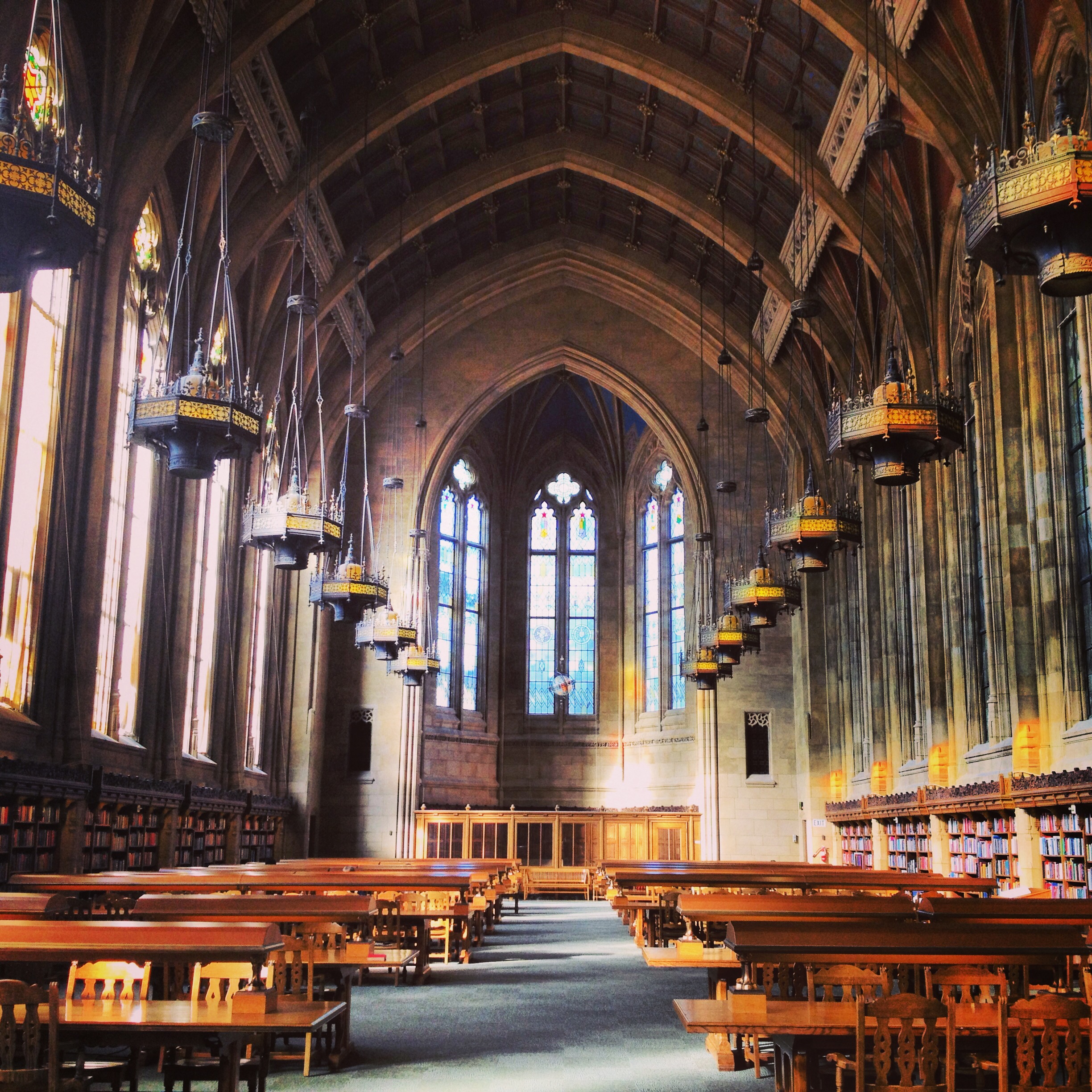
I go to Hogwarts for library school.
Not really… But it kinda looks like it, doesn’t it?
I mentioned awhile back that I made the decision to go to library school, but the only hangup was trying to decide which program I wanted to put my sweat, blood, and tears into. After much deliberation I chose the University of Washington iSchool to pursue my MLIS (Masters in Library and Information Science, for those non-library types out there). I was in Seattle over the past week for orientation and will start classes this week, remotely.
Wheeeee….. Here we go!
I must confess over the summer I had become a bit cynical about going back to school. There’s been a lot of controversy about paraprofessionals vs. professionals in the library industry, and the troubling notion that the degree is not preparing librarians for the work force – not to mention the slim job market (like here and here and here). What was most concerning was how many librarians I’ve met over the past few years that were very ho-hum about their degrees. I heard a lot of, “Well, I did it because I had to.” or “The program I went to was terrible, but at least I have my degree.” responses. Was I about to put a huge amount of time into something that was just going to leave me with just a piece of paper?
I brought this up to my library director and he gave me some stellar advice. He said (paraphrased), “You get out of it what you put into it. Don’t be cynical. You’re going to a good program and you’re going to do great.” When did I get so down in the dumps? He’s right. I’m going to school to push myself and grow in my profession. Not because I have to or because I need a piece of paper to prove myself. I’m doing it to be more knowledgeable in my field and to better serve my community. So what if I happen to be 8 months pregnant. Sure it’s going to be tough, but I’m ready now.
1
Sep
And so it begins… Read Across Lawrence for Kids
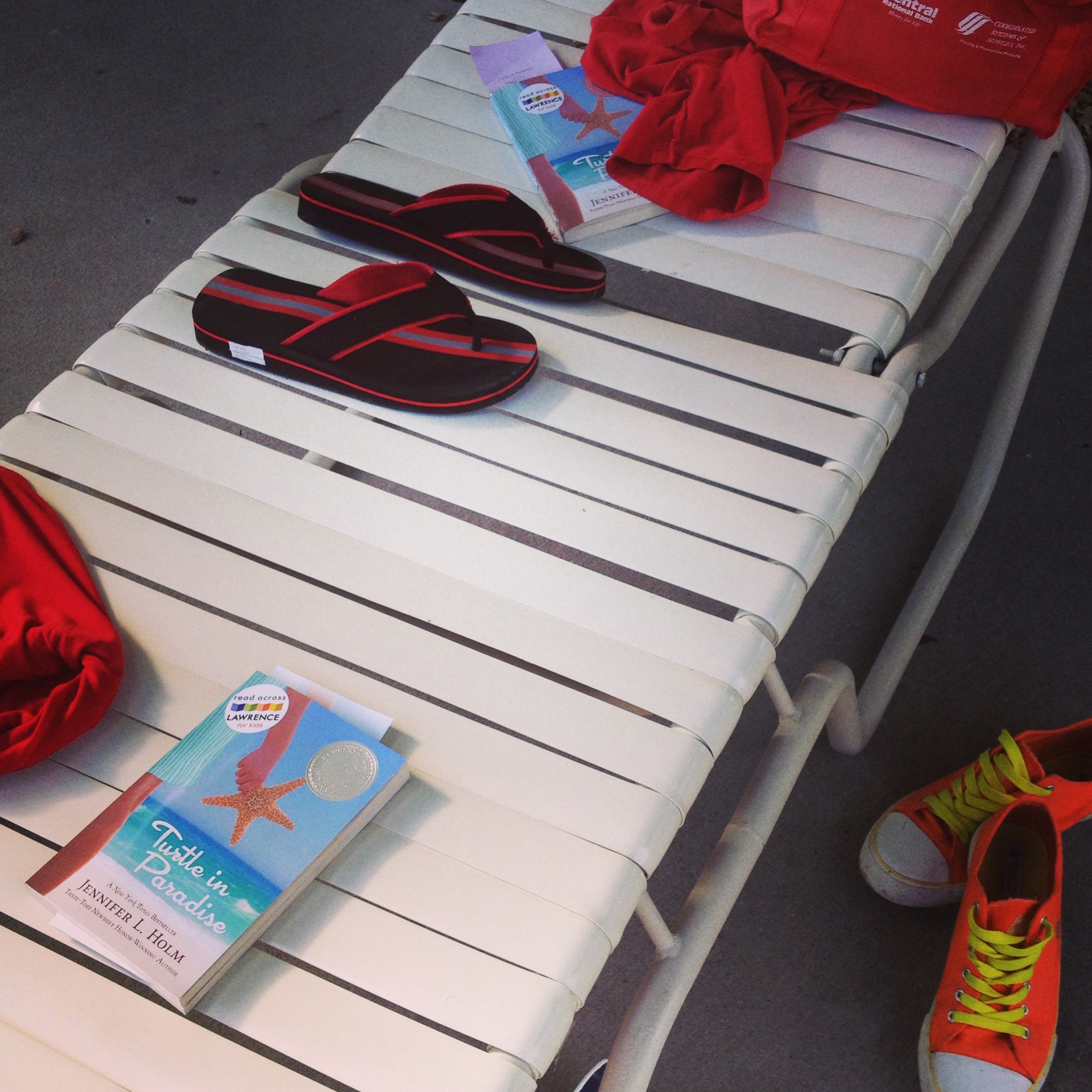
It all started yesterday….
Read Across Lawrence for Kids (RAL Kids) is a month-long library program designed for kids to get on the same page with other kids in the community by reading the same book at the same time, and then coming together to enjoy a variety of activities and events built around a shared adventure in reading. Translation: Thousands of kids all across Lawrence will be reading the same book whether it be in school or on their own time, and also have a whole heck of a lot of fun doing it!!
The Book
This year’s celebrated pick is the Newbery Honor winning Turtle in Paradise by Jennifer Holm, a hilarious and heartfelt middle grade read that takes place during The Great Depression in Key West. The selection was announced back in May (you can read more about that process here) and ever since preparations have been underway. The library, the kids, and the teachers and school librarians are over the moon that this book and author Jenni Holm are the stars of our RAL Kids month!
The Kick-Off
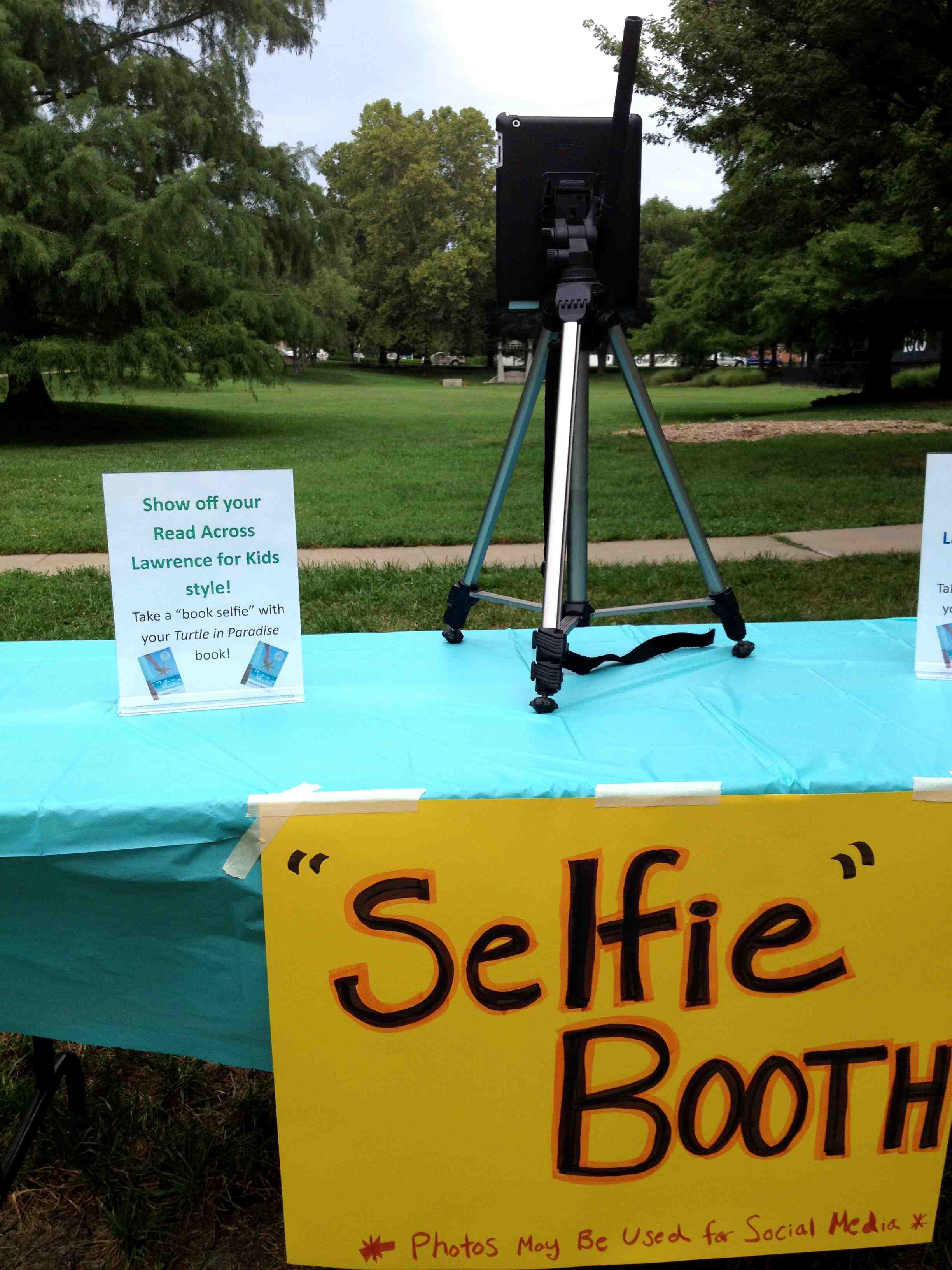
To kick things off yesterday, we threw a beach party. Yes, Kansas has no beaches, but we made our best go at it. The kick-off was the first opportunity for kids to pick up their free copy of Turtle in Paradise. There was also live music (provided by my wonderful co-worker Michael), sandwiches provided by Jimmy John’s (donated!), Mrs. Fields Cookies (donated!), beach volleyball (without the beach), a book selfie booth (see below), and a table to pick up information about the program from (a.k.a the parent hangout).
But the party didn’t end there… the Lawrence Outdoor Aquatics Center was gracious enough to allow all participates of RAL Kids to swim for FREE that day! All they had to do was show the cashier their book.
I have to say… I was a little bummed that we didn’t giveaway all 500 books in the hour. A somewhat lofty goal, I know, but that’s what I had hoped for. On the upside we did have a great turnout and gave-away about 350 books AND will have left over books for the families who were away during the Labor Day weekend. Best part? I took Little L to the pool that afternoon and saw tons of smiling faces on the kids who were at the program. I even caught a couple reading while at the pool! Lawrence, Kansas may not have sandy beaches, but we made do.
The Events
Here’s what’s planned for the rest of the month via blurbs I wrote for the library calendar:
Design Your Own Turtle in Paradise T-shirt: Show off your Read Across Lawrence for Kids style by making a Turtle in Paradise t-shirt using all kinds of crafty, cool methods such as magazine transfers, bleach pens, and sandpaper. Bring a plain t-shirt!
Flavors of Key West: Enjoy an ice cream making demonstration by Lawrence’s own ice creamery, Sylas and Maddy’s. Learn how to make “cut-up”, a Key West specialty!
Diaper Baby Gang 101: How do you burp a baby? How much does a babysitter make an hour? Does the Diaper Baby Gang’s Secret Formula really work? Learn the in’s and out’s of babysitting with a specialist from Lawrence Memorial Hospital. We’ll also be talking about the entrepreneurial side of babysitting (i.e. $$$).
Free Family Movie Matinee of Annie: Main character Turtle’s favorite thing to read is Little Orphan Annie, an extremely popular comic that appeared in the funny pages back in the day. It’s hard to come by this comic nowadays, so Lawrence Public Library and Liberty Hall teamed up for a FREE showing of Annie, the famous flick inspired by the Little Orphan Annie comic strip!
Hurricane a Comin’!: The famous hurricane of 1935 makes a big appearance in Turtle in Paradise. Learn the science of what a hurricane is and participate in activities with a couple of UKanTeach students from the University of Kansas. You’ll also experience the excitement of Lawrence’s famous, the one-and-only indoor hurricane, at The Sandbar. (Yes, I’m hosting a event for kids at a bar. But it’s more of a family pub AND it’s a super cool place. Tropical fish tanks, kitschy nautical decor, and there is an indoor hurricane to boot!)
Cool Comics: Do you like comics as much as Turtle does? Astrokitty Comics & Games will be visiting the library to talk about cool comics from yesterday and today. Be prepared to draw because you’ll learn how to create your own comic as well!
Secret Book Club: The featured book of September’s Secret Book Club is our Read Across Lawrence for Kids book, Turtle in Paradise. Discuss the book and enjoy themed activities.
Kansas to Key West: How Kids Had Fun During the Great Depression: The Great Depression was… well… depressing. So, what did kids do for fun? Explore different games and toys of the time and learn how to craft some of your own at The Watkins Community Museum of History!
**FEATURED EVENT** Read Across Lawrence Author Talk Finale: Meet our Read Across Lawrence for Kids author, the three-time Newbery Honor winning, New York Times bestselling author Jennifer Holm in a virtual author talk on the big screen in the Lawrence Arts Center auditorium! Learn about Jennifer Holm’s personal inspiration behind Turtle in Paradise, what it’s like to be a writer, and what she’s currently working on. We will also be raffling away prizes and conclude with a slice of key lime pie in celebration.
Downtown Lawrence Treasure Hunt: The hunt is on! Attempt this Read Across Lawrence for Kids Treasure Hunt by picking up a sheet at the Children’s Room or Teen Zone desk and navigate your way through Downtown Lawrence in search of Black Caesar’s Treasure. Those that complete the hunt will not only find the treasure, but be eligible to win tickets to the Real Pirates exhibit at Union Station.
Read Across Lawrence for Kids Exclusive Ice Cream Flavor: Make sure you stop into Sylas & Maddy’s to try the exclusive Turtle in Paradise flavor offered throughout the Read Across Lawrence for Kids Month!
The Beauty Of It…
RAL Kids is really a story about the collaboration between the public library, Lawrence’s schools, and local businesses to give area kids an enriching and engaging literary experience. 1200 books were ordered. 700 of those books went to the schools and 50 area classrooms are incorporating the books in their curricula for the month. The school teachers and school librarians are the backbone of why this program is as popular as it is. It is a privilege to work with Lawrence’s teachers and school librarians, and this collaborative effort serves as a constant reminder of why Lawrence is such a special place.
The local businesses, the university, the hospital, the history museum, and all the partners and sponsors that have come together to either support the program financially, provide services, and be eager to help in in any way they can are also other reminders that it’s the community that makes this town so great. Compassionate people who care about the library and the city’s young people. Pure awesome.
The Extras
I put together this handy-dandy Read Across Lawrence for Kids Parent & Educator Resource Guide which has online resources as well as a Great Depression book list. This guide was given to all teachers and librarians participating in the program and is a handout that is available at the library’s kids’ room desk. Downloadable version of this guide: RAL Kids 2013 Resource Guide
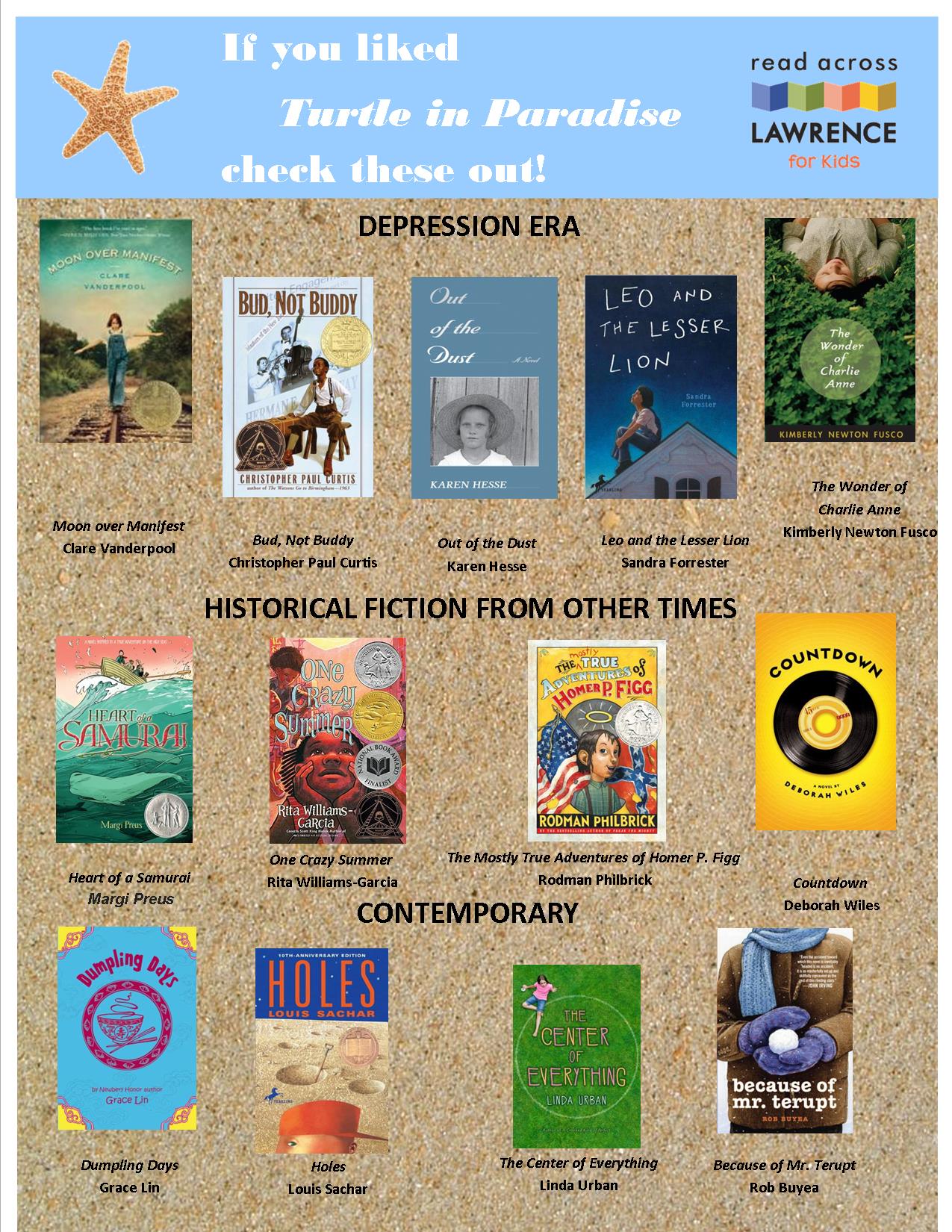
My amazing co-worker, Molly Wetta (a.k.a queen of flowcharts and all things teen), has put together a read-alikes guide for Turtle in Paradise! (Click to enlarge)
Join the conversation or follow along the progress of RAL Kids via Facebook, Twitter, and Pinterest using the hashtag #RALKids. I’ll be updating the #RALKids storify website on a regular basis as well!
Here’s to a great month ahead!!
23
Aug
Yarn Magic
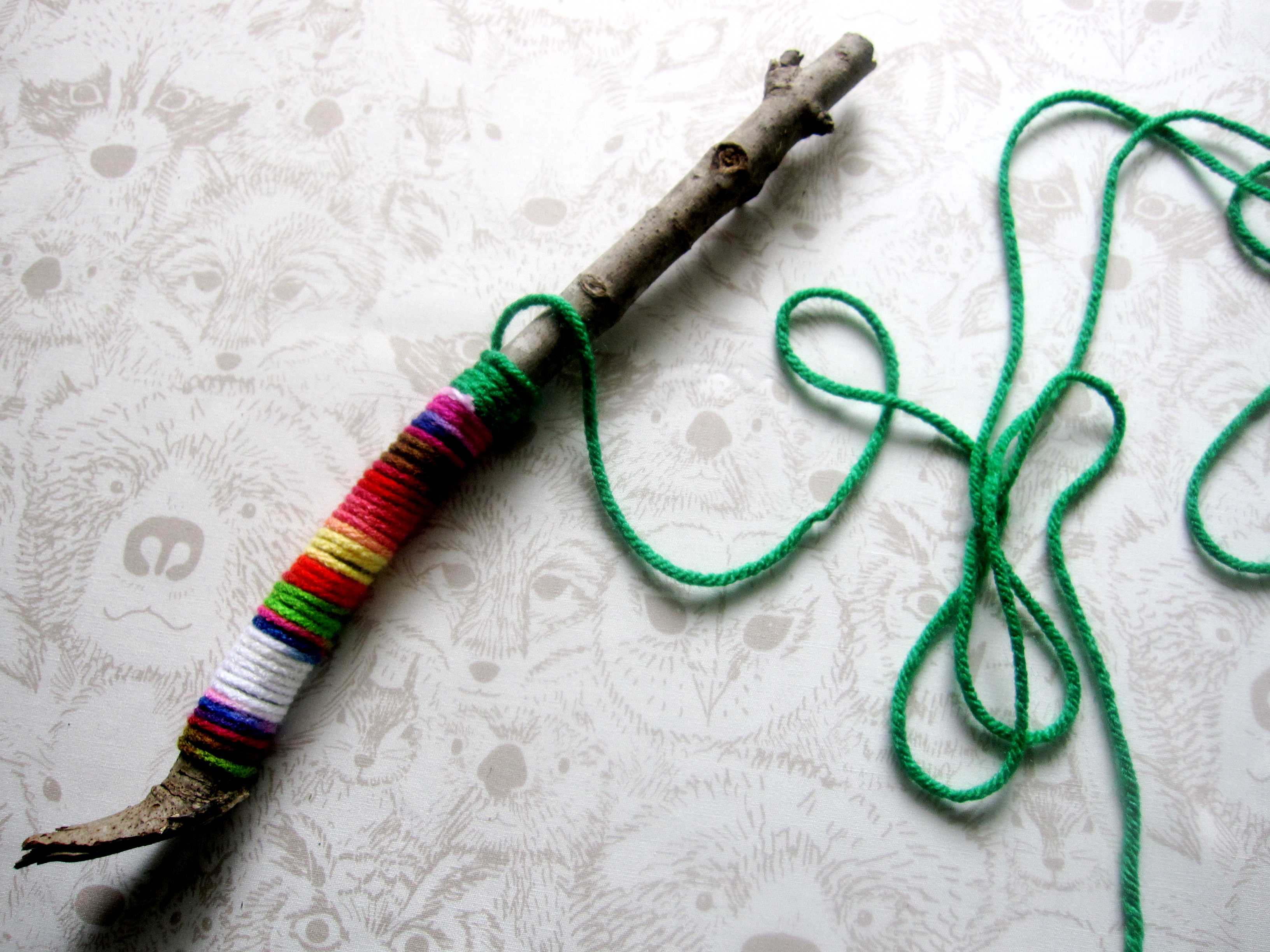
Hey folks! I’m over at Library as Incubator Project today talking “yarn magic” for my latest edition of Pages to Projects. Pages to Projects is a seasonal series about how to incorporate elements of art education and appreciation into storytime.
Please be sure to check it out!
8
Aug
Summer of STEM @ the Library

Last Thursday was the official end of summer reading programming at Lawrence Public Library. While I organized a few solo events here and there, including a couple of author talks and an early literacy event for parents and caregivers, the predominate amount of my time was devoted to Kidsapalooza, a weekly summer club for 5-6-year-olds that the library has been hosting for over a decade. Kidsapalooza has always been about games, activities, and crafts- which is groovy and all- but this year I decided to change things up. It was the perfect opportunity to transform the program into a full-blown immersion in STEM (Science, Technology, Engineering, & Math) literacy.
This post is an outline of everything covered during Kidsaplaooza’s Summer of STEM. Each session had a different theme which was left a mystery to the kids until the day they showed up. Candy experiments, robotics, squishy circuits, and a glow-in-the-dark party where a few of the themes employed in our summer of fun. We were also fortunate to be entertained by several guest speakers. I reached out to the community and so many different individuals were willing to lend the library a couple hours of their time to advocate for STEM learning. It was awesome.
At the end of each session the kids received a handout titled “Today’s Adventures and Beyond”. This sheet contained information for their parents about what we discussed during each session and also provided them with activities and recommended reads based on what we learned about on that day. This is the introductory note from each flier:
“This summer at Kidsapalooza, we are going beyond games and crafts! Everything we do will be rooted in STEM literacy. STEM stands for Science, Technology, Engineering, and Math, which are key elements needed for kids to develop successful reading skills. After each session your child will receive a sheet like this briefly explaining what we did during today’s session. It will also include ideas to further today’s fun at home.The Kidzapalooza goals for the summer are: Explore, Observe, Create, and Have Fun!”
It was hard to capture pictures while managing over 50 kids, many of which were divided into several groups, but I did my best to get a few (as well as a few Vines). You ready? Here we goooooooo…..
Session 1: Fun with STEM
The first session was essentially tons of hands-on STEM activities that the kids rotated through every 8 minutes. At the beginning, I introduced myself and told the kids that this summer was going to be all about exploration. We were going to explore different ideas, make observations, create, and ask questions, and have fun! After a that brief intro we broke out into groups and spent the rest of the time learning and playing.
Here’s what we did: 
Built structures with gumdrops and toothpicks. (idea from Modern Parents Messy Kids)

Attempted Lego pattern puzzles. I took pictures of different Lego patterns, printed them out, and the kids had to recreate them.

Created chemical reactions using baking soda and vinegar. Using food coloring, I dyed a couple cups of vinegar and the kids spooned the vinegar onto plates of baking soda. Fizzy!!!

Operated iPads. A basic demonstration of using an iPad. They also played a few games I preselected if there was time left in their rotation at this table.

Explored shape creation. I created a bunch of shapes, some more complex than others, and the kids had to trace the shapes with strings of yarn. (idea via Teach Preschool)

Learned about leaves of various local trees with a Leaf Matching Game. I walk to work. I also live in the oldest part of Lawrence, so there are a lot of big trees that have been around for awhile. I made sheets with a picture of a specific native leaf, the name of the tree the leaf belongs to, a picture of the tree and either the fruit or flower of the tree. The kids had to match the leaves I picked on my walk to work with the various trees depicted on the sheets.
Read the picture book Me… Jane by Patrick McDonnell to the entire group at the end.
Session 2: Buzzzing for Bees
 (Naturally, I wore my bee antennae to this session.)
My co-worker is the daughter of one of the most famous entomologists in the world, Charles Michener, so I’ve learned quite a bit about bees just from working with her (which has grown into a fondness of the little striped buggers myself’0. I also chose a theme centered around bees because they are disappearing, and without them there will be no more fruits and vegetables to eat. This was just one way to raise awareness.
Here’s what we did:
Jennifer Thomas from the Division of Entomology at the University of Kansas introduced us to all kinds of fascinating facts about bees. 
Performed a nectar collecting relay. At one end of the room was a bunch of cups filled with water dyed yellow and fake flowers. At the other end of the room were little paint pallets. Using an eye dropper the kids had to collect nectar from the flowers and hurry back to the other end of the room to “fill their hive”. (idea via For The Children)

Tested our sense of smell and found “bee siblings” using our noses. A bee smells, tastes, and feels with its two antennae. Honeybees of the same colony recognize their siblings by scent. When an unrelated bee tries to enter the hive, guard bees detect its foreign scent and sting it to death.Using multiple cotton balls that have been dipped into clear food flavoring such as peppermint and lemon extract. Each child received a cotton ball without revealing the smell The kids had to locate their “sibling” by exchanging smells of each other’s cotton balls. Once they found their “bee sibling” swap the child’s cotton ball for a different smell. (idea via Scholastic)

Planted a Bee-Friendly Garden. The kids learned about what plants through this simple craft. All they had to do was choose flowers they would like to “plant” and glue them to their paper. Then they decorated the garden with markers. They also glued this caption: “Honey bees require pollen and nectar from flowers in order to survive. “Plant” a bee garden using different kinds of bee-friendly plants that grow well in Lawrence, Kansas.” I encouraged them to show their caregivers so that they could plant a few bee-friendly flowers in their own gardens at home.
Did the waggle dance, a special dance bees perform to communicate to one another. As a large group, we watched this video from PBS Nova, and then attempted to preform our own waggle dance.
Session 3: Candy Chemistry
This entire program was structured around the book Candy Experiments by Loralee Leavitt. As a large group we discussed what chemistry is, how to conduct an experiment, and touched upon the scientific method. Then, we conducted a few experiments of our own using candy. This was a messy one!
Here’s what we did:
Conducted an experiment with Mentos and Diet Coke which resulted in an eruption! (see above) I took all the kids outside and preformed this experiment as they watched. Diet Coke is full of carbon dioxide gas. When you drop a Mentos, bubbles of carbon dioxide form on the surface of the candy. So many bubbles form so fast that they push the soda right out of the bottle.
Tested if there was acid in candy. If candy is sour it usually means it contains acid. The kids dropped Sour Patch Kids or Sour Skittles into a cup of clear water, sprinkled a bit of baking soda, and if the candy fizzed then it meant there was acid in the candy.
Learned about density and why certain candies sink or float. If you drop Laffy Taffy into a cup it sinks, but if you stretch it out into a boat or cup it floats. On the other side of the spectrum, a 3 Musketeers bar floats because of all the air in the nugget, but if you crush it, then it sinks to the bottom of the cup. The kids played around with manipulating the density of these types of candies.
Experimented with dissolving candy coating and what happens to the artificial colors. The kids dropped 2 red M&M’s and 2 yellow M&M’s into a bowl of water. I asked them, “Do you think the colors will mix themselves together to create orange?” The colors did not blend because the dense sugar water sinks, so the M&M’s sit in their own pools of color. But if you swish the water around, the movement causes the colors to mix together.
Investigated the elements found in Pop Rocks. We discussed how Carbon Dioxide gas is the secret ingredient that makes Pop Rocks pop. When you put Pop Rocks in water or in your mouth the candy melts and releasing the tiny bubbles of Carbon Dioxide. This was demonstrated by pouring Pop Rocks in a glass of water.
Session 4: Robotics
KU Robotics visited Kidsapalooza to discuss the technology and components of what makes a robot. Their presentation was AWESOME! We didn’t break-out into activities since the presentation took the whole session. Their closing message? If you engage yourself in math and science, then you can become a superhero and save the world. The kids ate it up.

The Lawrence Journal World wrote up a nice article about their visit here.
Session 5: Magic Measurements
Will Dunn, a mathematics education UKanTeach student at the University of Kansas (also my husband), came to visit Kidsapalooza to discuss and demonstrate the magic of measurements by noticing different sizes and different ways to measure. There was a short presentation and then we broke out into rotating groups for various measurement activities.
Here’s what we did:
Size comparison between animals. Will gave a presentation about size comparison using various animals, and also talked about measurement and types of measurements.
Shot pom poms balls from a pom pom shooter and measured the distance of the pom poms after they were shot. Before this session we made a handful of pom pom shooters. The kids shot pom poms using their shooters and measured how much distance the pom pom covered using their feet and yard sticks. (Idea via Relentlessly Fun, Deceptively Educational)
Explored volume by pouring rice into various sized containers. Will and I emptied out our kitchen cupboards and brought pitchers, cups, bowls, and whatever else we could find for the kids to use to experiment with measuring volume with rice.
Utilized different tools such as paper clips, pencils, crayons, and yardsticks to measure objects. The kids used different devices to measure the top of a table by lining them up single-file in the middle of the table.

How many Kidsapalooza kids does it take to equal the length of a blue whale? I measured out the length of a blue whale (about 100 feet) with tape and the kids lined up to see how many of their body lengths it would take to equal one whale.
Read the picture book Lucky Beans by Becky Birtha, illustrated by Nicole Tadgell and discussed estimation afterward by holding our own Lucky Beans contest were the kids guessed how many beans were in a clear vase.
Session 6: Energy and Squishy Circuits

I am so glad I came across this TED Talk before starting Kidsapalooza. Squishy Circuits is a unique way that allows kids of all ages to create circuits and explore electronics using play dough. It’s so easy, my daughter (3) could do it.
Here’s what we did:
Visited with an electric expert. Amanda, an engineering student at the University of Kansas and one of my amazing storytime moms, visited Kidsapalooza to talk about how energy and electricity work. Then she stayed to help assist kids with the squishy circuits.
Played with squishy circuits! I ordered 6 squishy circuit kits, made the play dough (err… my husband made the play dough) the day before, and the kids took turns creating circuits. So that everyone was able to have a turn, each child received 2 minutes of alone time with the circuits before passing it on to a peer. They kids did a wonderful job sharing during this activity.
Afterwards, we came together as a group and I read the book How Ben Franklin Stole the Lightning by Rosalyn Schanzer. You can learn more about how to create lessons using squishy circuits here.
Session 7: Wind Power

Piggy-backing off of the session from the week before, this session was about the power of wind turbines. Kansas has a large population of these giants of energy, so I thought it fitting to have a session devoted to them and energy efficiency in generl.
Here’s what we did:
Aaron Weigel from Trade Wind Energy visited Kidsapalooza to talk about wind turbines! The kids learned where wind comes from, how wind turbines work , and how they help create energy.
We crafted pinwheels using things you would find around the house. This is a craft that needs a bit of help from an adult, but the kids had fun putting them together nonetheless. I used the template and direction found on First Palette.
We ran out of time, but the plan was to read the book The Boy Who Harnessed the Wind by William Kamkwamba and Bryan Mealer, illustrated by Elizabeth Zunon.
Session 8: Glow-in-the-Dark Party

Everyone loves things that glow-in-the-dark! For the last session, I threw the kids a glow-in-the-dark party. I started with a short presentation and a few demonstrations and then the kids broke out into groups for activities.
Here’s what we did:
Discussed various animals that glow-in-the-dark. Black Dragonfish, Firefly Squid, Flashlight Fish, New Zealand Glowworms, and (of course) Fireflies. I explained why and how these animals light up in the dark, along with some pictures and a couple short video clips.
Learned about the chemistry of a glowstick. How does a glowstick work? I cracked a glowstick in front of the kids and talked about the chemistry behind how a glowstick works. More on that can be found here.
Admired glowing water that was created using florescent paint and discussed ultraviolet light and how some colors glow brighter under a black light. Next, I talked about ultraviolet light and fluorescence and how fluorescent colors glow under a black light. I demonstrated this concept by mixing a few drops of neon paint in cups of water under a black light, which makes the water glow in vibrant colors. Each cup was devoted to a different color, and I had 7 cups in all. Lots of “oooohs and ahhhhs” were voiced during this demonstration. (Idea via Growing a Jeweled Rose)
Created a glowing eruption. Using the same baking soda and vinegar procedure the kids tested during the first session, I conducted the same experiment except this time with neon paint under a black light. Using a clear cup, I poured in a generous amount of baking soda, added three different colors of neon paint, and then poured in the vinegar. (Idea via Growing a Jeweled Rose)
Using fluorescent glue, we painted glowing pictures under a black light using glue and black paper. The Vine above is of the fluorescent glue I made for the kids to use. All I did was add a teaspoon or two of neon paint, stirred the glue and shook the bottle up, and voila! Fluorescent glue. Under black light the kids created designs with the glue on black paper. (Idea via Growing a Jeweled Rose)
Played ring toss with glow-in-the-dark materials. Water bottles, glowsticks, and glow necklaces… ring toss! This was a fun game for the kids to play. Using a pack of water bottles, I inserted a glowstick into each water bottle (with the water still in it) and sealed the lid. The bottles were arranged in a cluster on the floor and using assembled glowing necklaces (like these), the kids tried their hand at ring toss. (Idea via Design Dazzle)

Experimented with glowstick photography. I gave a 2-minute talk about long exposure photographs (like the image of fireflies above) and then the kids tried their hand at making their own with glowsticks. The the digital camera we used wouldn’t allow us to set the aperture to make the exposures even longer, but they got the idea. You can see a sample gallery of the kids’ glowstick photography here. This was their favorite activity of the session.
At the end, all the kids received their own glowstick and a glow-in-the-dark bracelet along with their “Today’s Adventures and Beyond” handout.
And that my friends, was our Summer of STEM @ the library!
I almost forgot to mention…. Since our library is under renovation, we were using a temporary space for the program. Our wonderful circulation team at the library set up a Pop-Up Library so kids could check out books after each session. I selected books that reflected the theme of the day ahead of time, and one of my co-workers would check out books to the kids once the program was over. It also served as a book dr0p-off location. Huzzah!
Are you incorporating STEM in your library? I’d love to know if you are! I’ve been collecting lots of ideas on my Pinterest board STEM Literacy Activities for the next opportunity for STEM programing. So many ideas, so little time. Be sure to check it out. Also, if you have a question about any of the activities mentioned, just shoot me an email using the contact form or leave a comment below. I can also send any of the “Today’s Adventures & Beyond” handouts the kids received after each program. I’m always happy to share!!
image source: wind turbines, fireflies
8
Jul
Adventures as Annie: Midnight on the Moon
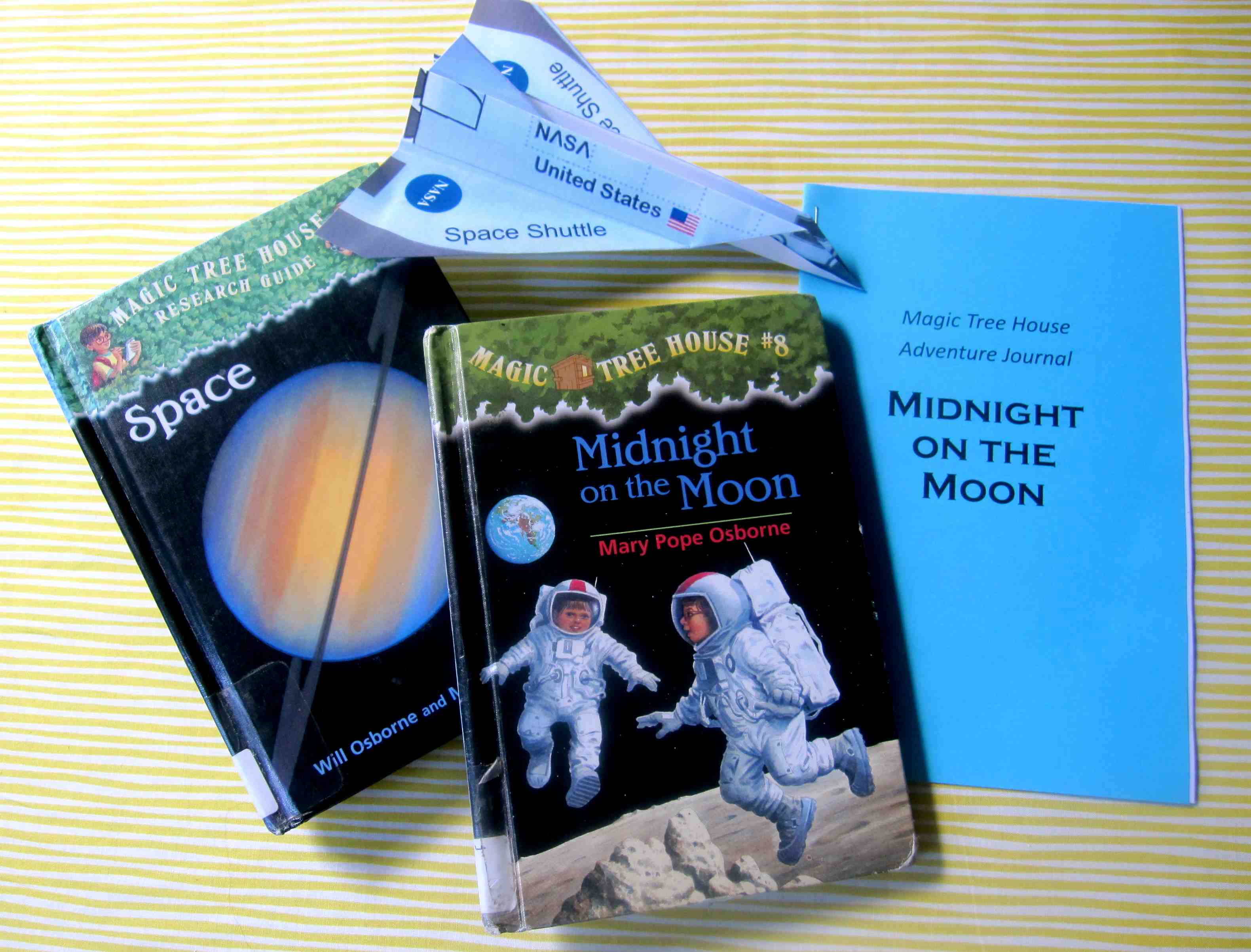
The last Magic Tree House Adventures session of the year took place on the moon! If you’re not familiar with Magic Tree House Adventures, it’s a library program that I conduct for kids ages 5 & up. Each session focuses on one book from the popular Magic Tree House series by Mary Pope Osborne which consists of guest speakers, games, crafts, science, discussions, and fun! Each one is different from the next and at the end, each child takes home their own journal (just like Jack!) that includes facts about the theme of the day and activities they can do at home. This session was based around the book Midnight on the Moon and was by far my favorite session with the Magic Tree House Adventures group.
Where Are We? Who Are They?
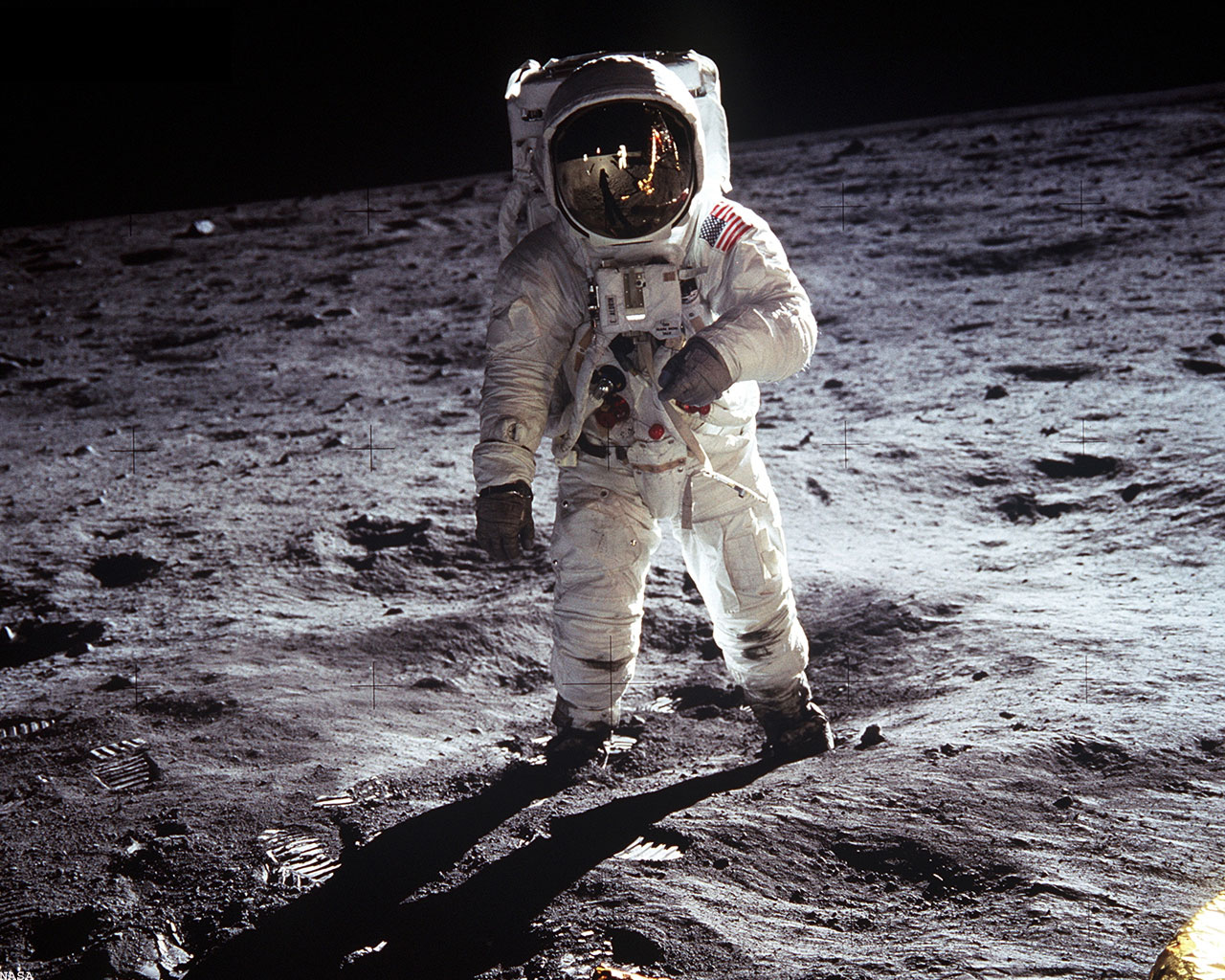
Where Are We? Who Are They? is a Magic Tree House Adventures staple. It’s a “game” that I play with the kids where I flash a picture up on a projector and they have to tell me what the picture is about. After a few guesses, I tell them the answer and we move to the next picture. This goes on for 10-12 slides. For example, for Midnight on the Moon I showed pictures of the universe, the sun, our solar system, the moon, space travel, etc. We also watched a couple of video clips afterwards. The first was the recording of when man first landed on the moon, and I also showed 2-3 minutes of clips of astronauts in space.
I don’t typically show videos, but I felt they were necessary visuals for the kids to imagine what it’s like to be in outer space. They seemed to really enjoy them as well (especially the last clip).
Making Moon Craters
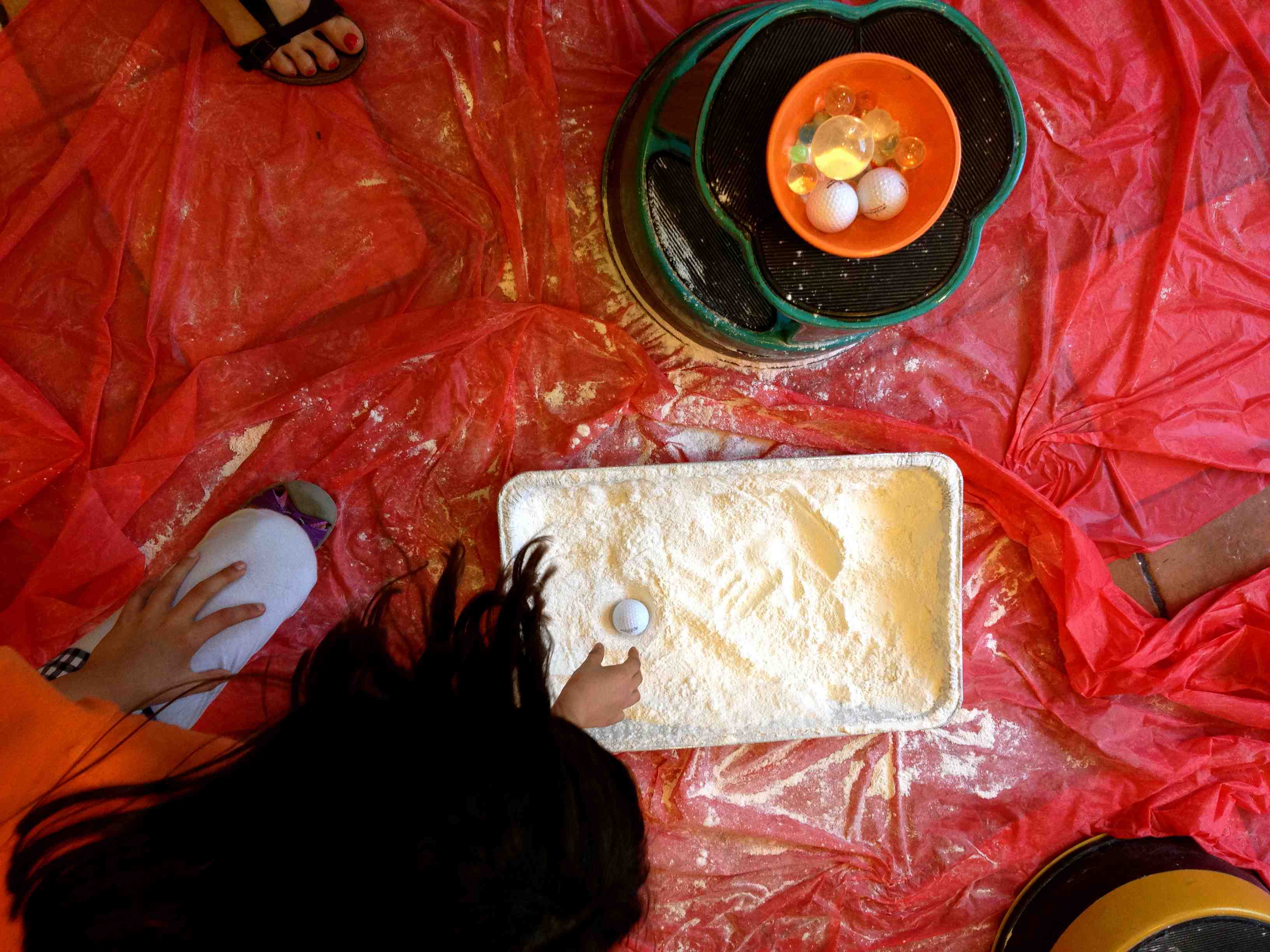
Next I divided the group into four teams for rotating activities. One of these activities was “Making Moon Craters”, an idea that I snagged from A day in first grade. Using different asteroids (golf balls, marbles, and acrylic balls) the kids experimented with how the size and distance they drop the asteroid effects the moon’s surface (a large tray filled with flour). They stood on step stools to drop their asteroids from farther distances, and they also tested them closer.
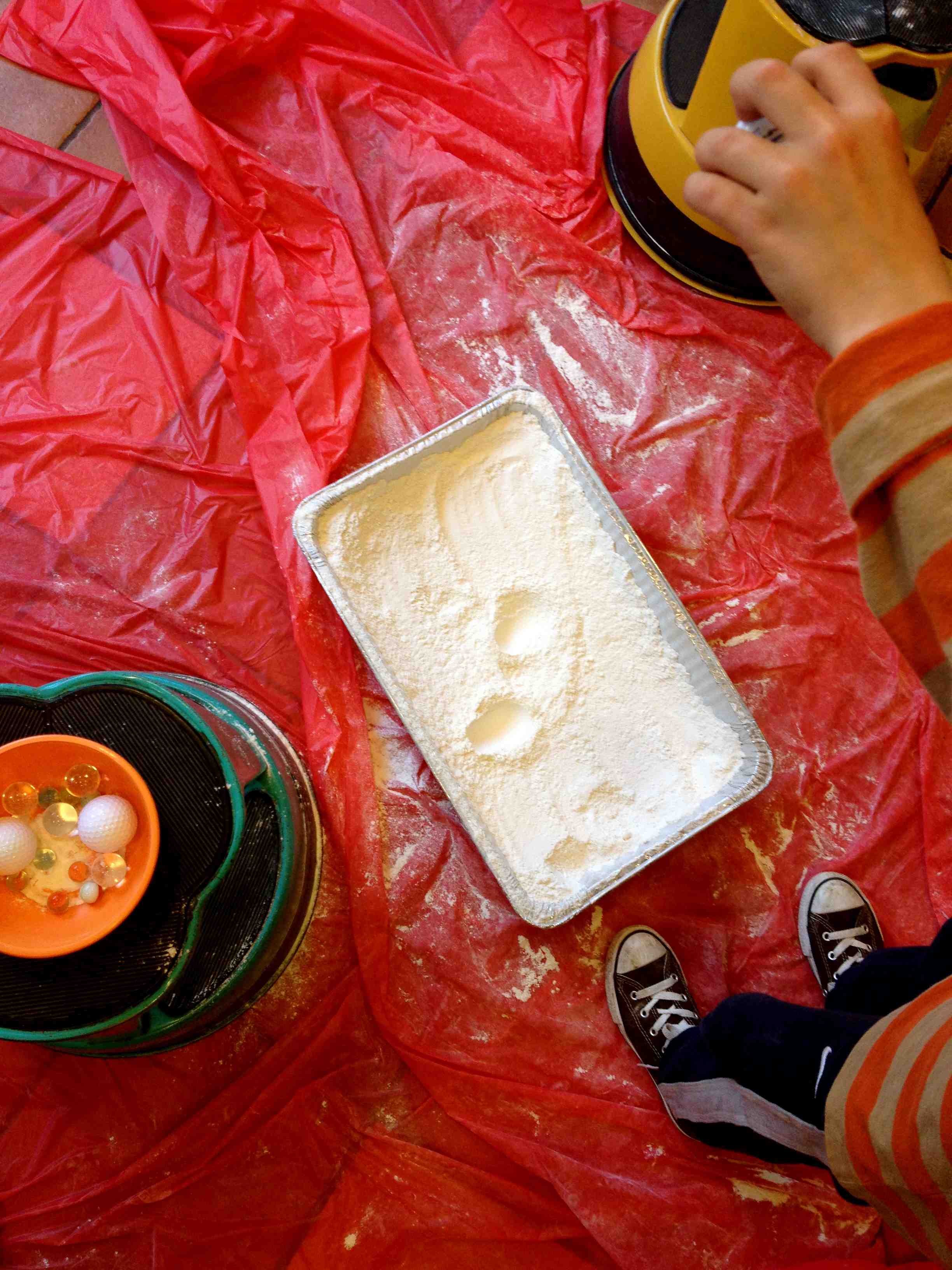
It was messy, but the nice thing about flour is that you can just brush it off your hands and clothes.
Phases of the Moon Craft

During “Where Are We? Who Are They?” we discussed the phases of the moon. To exercise what was discussed, the kids made a Phases of the Moon chart which was inspired by this craft from learn create love. Beforehand I taped two pieces of cardstock together for each child and also pre-cut all the moon phases (print out found here) and the labels (which I made in a word doc) with help from a few volunteers.
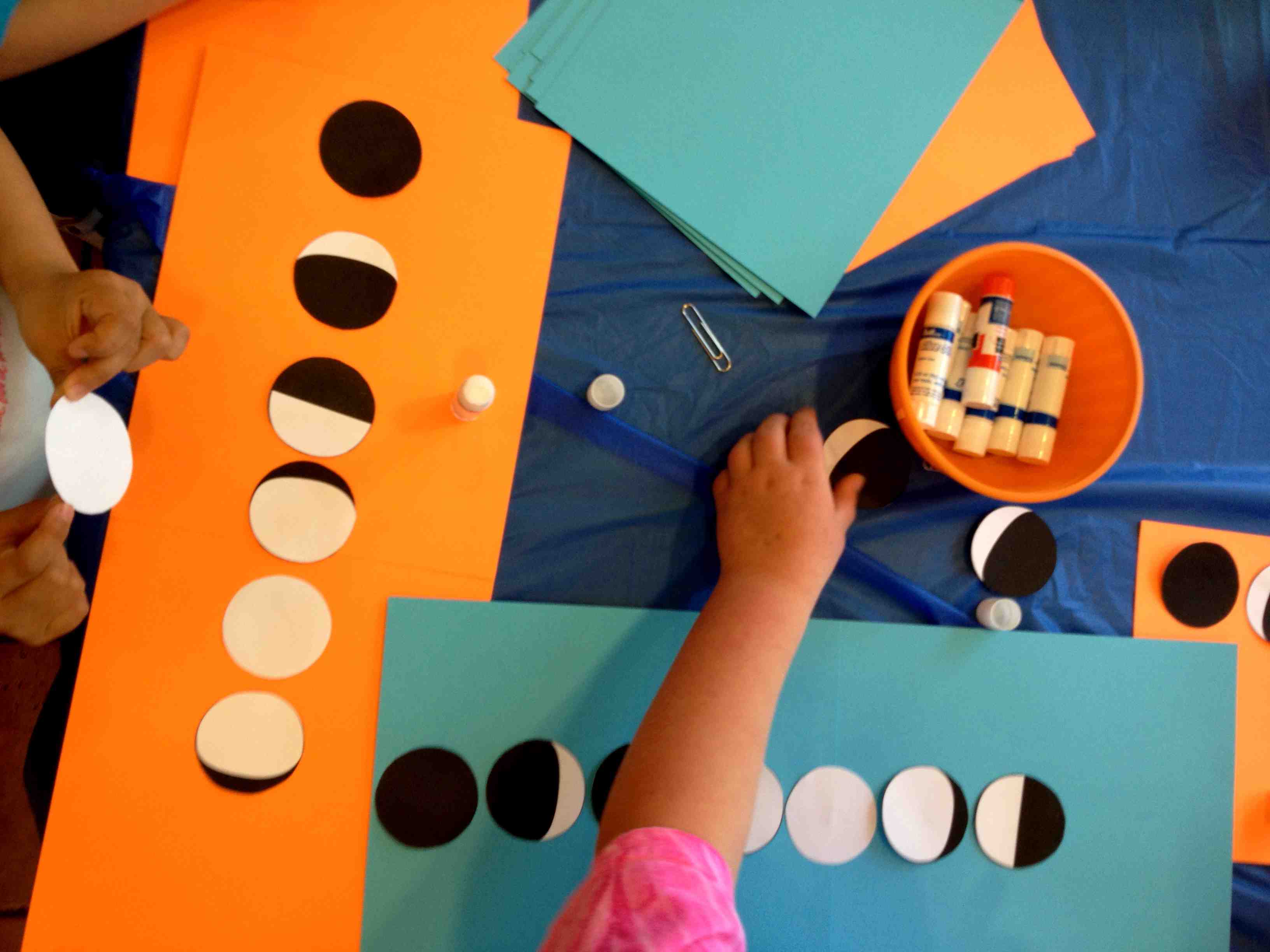
A few of the younger kids still have a hard time with scissors, so I thought It would be better to work on the actual activity instead of having to struggle with the basics of cutting all the moons out. All they had to do was glue the order of the phases of the Earth’s moon with their labels and decorate. Now they have their very own chart so they can note the different phases of the moon at home.
Hubble Telescope Chalk Drawing
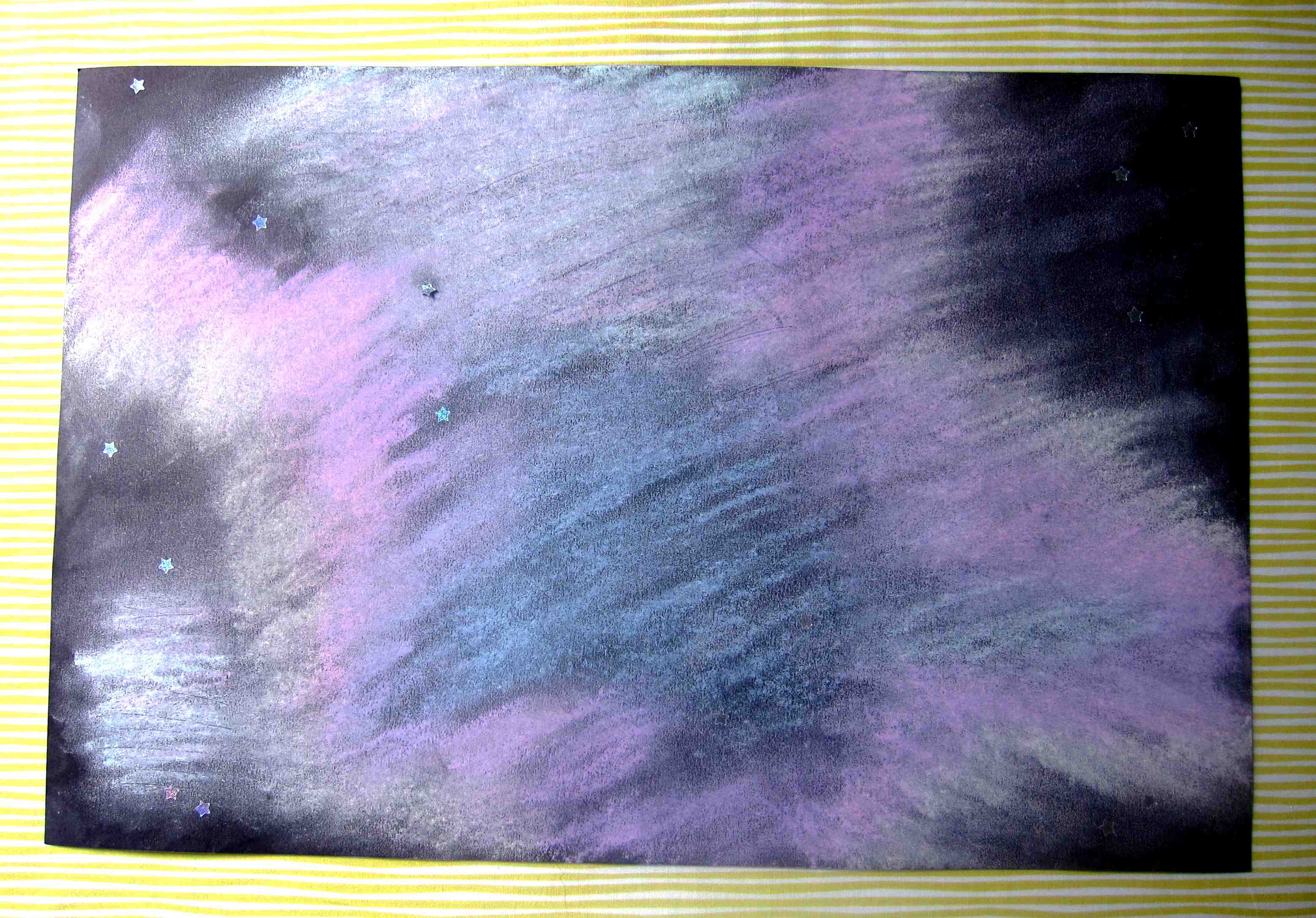
The Hubble Telescope takes incredible pictures of places we have not yet been. Pictures that are alluring and are a work or art.
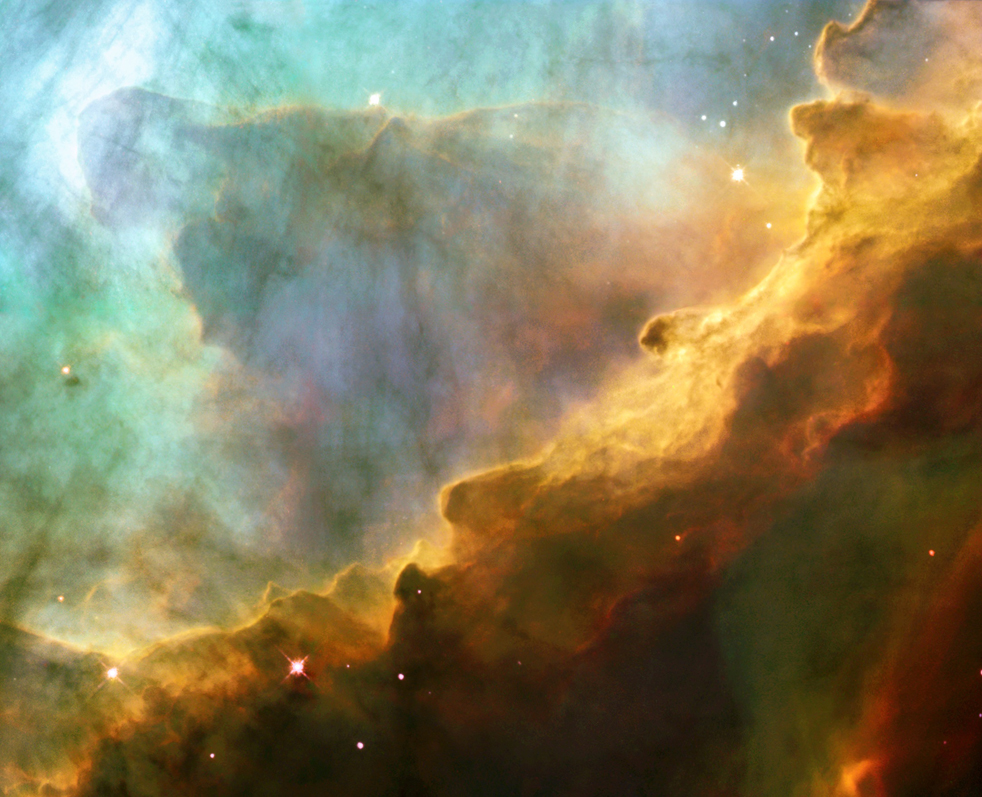
During “Where Are We? Who Are They?” I showed the kids a few of these images, and at this activity table prodded them to create their own Hubble telescope picture using black construction paper, chalk, and star stickers. At this table, I also had a few Hubble telescope images I printed out to use as inspiration.
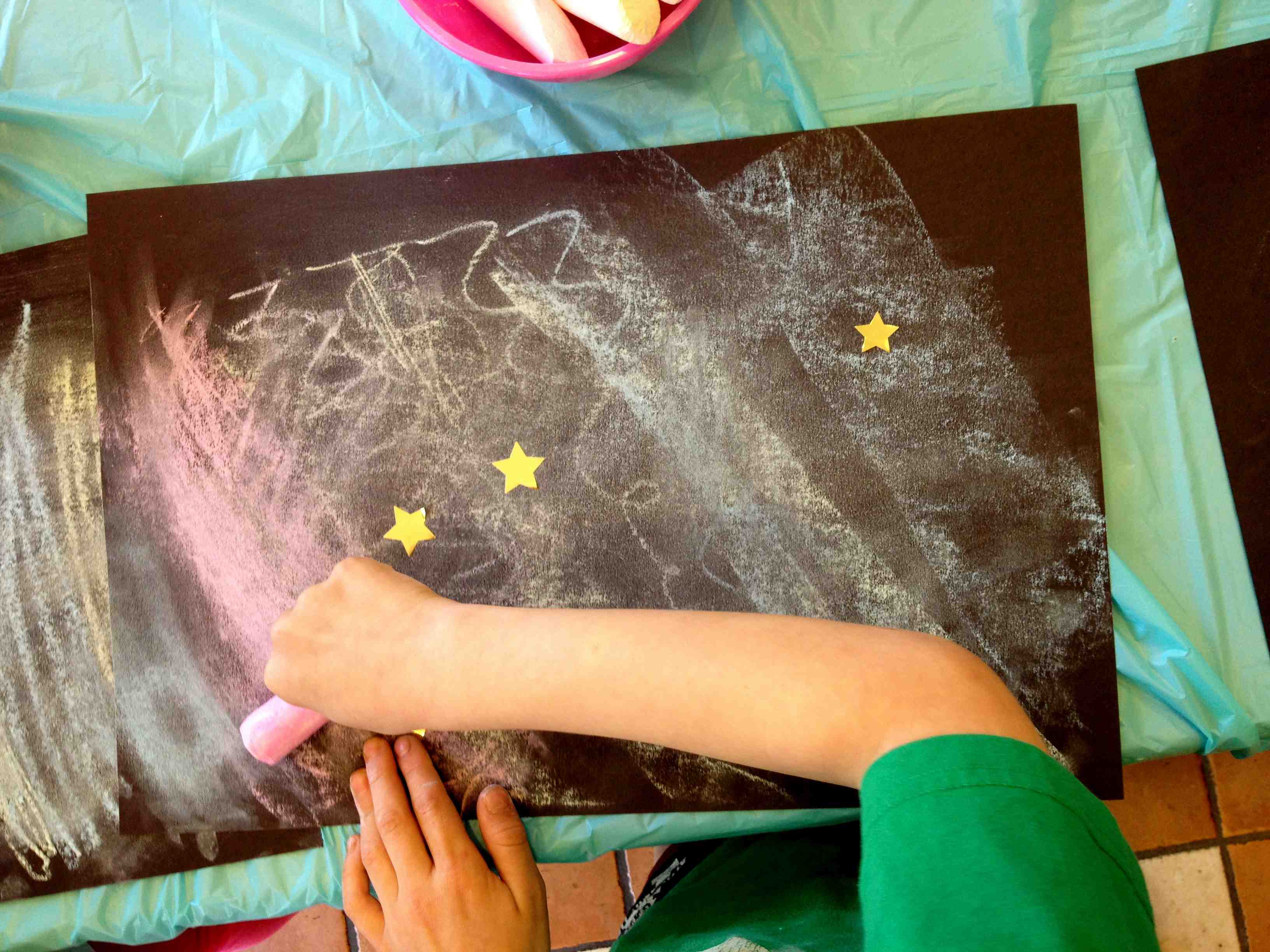
This idea came from Make it.. a Wonderful Life, but I modified it for younger kids. You can check out the incredible work a 5th grade art class did using this concept here.
Fly to the Moon Game
For the fourth activity, the kids tried their hand and landing on the moon.. Using paper airplane space shuttles. This idea came from Libraryland and was more of a just-for-fun activity where the kids tried to fly a paper airplane space shuttle into a large paper moon.
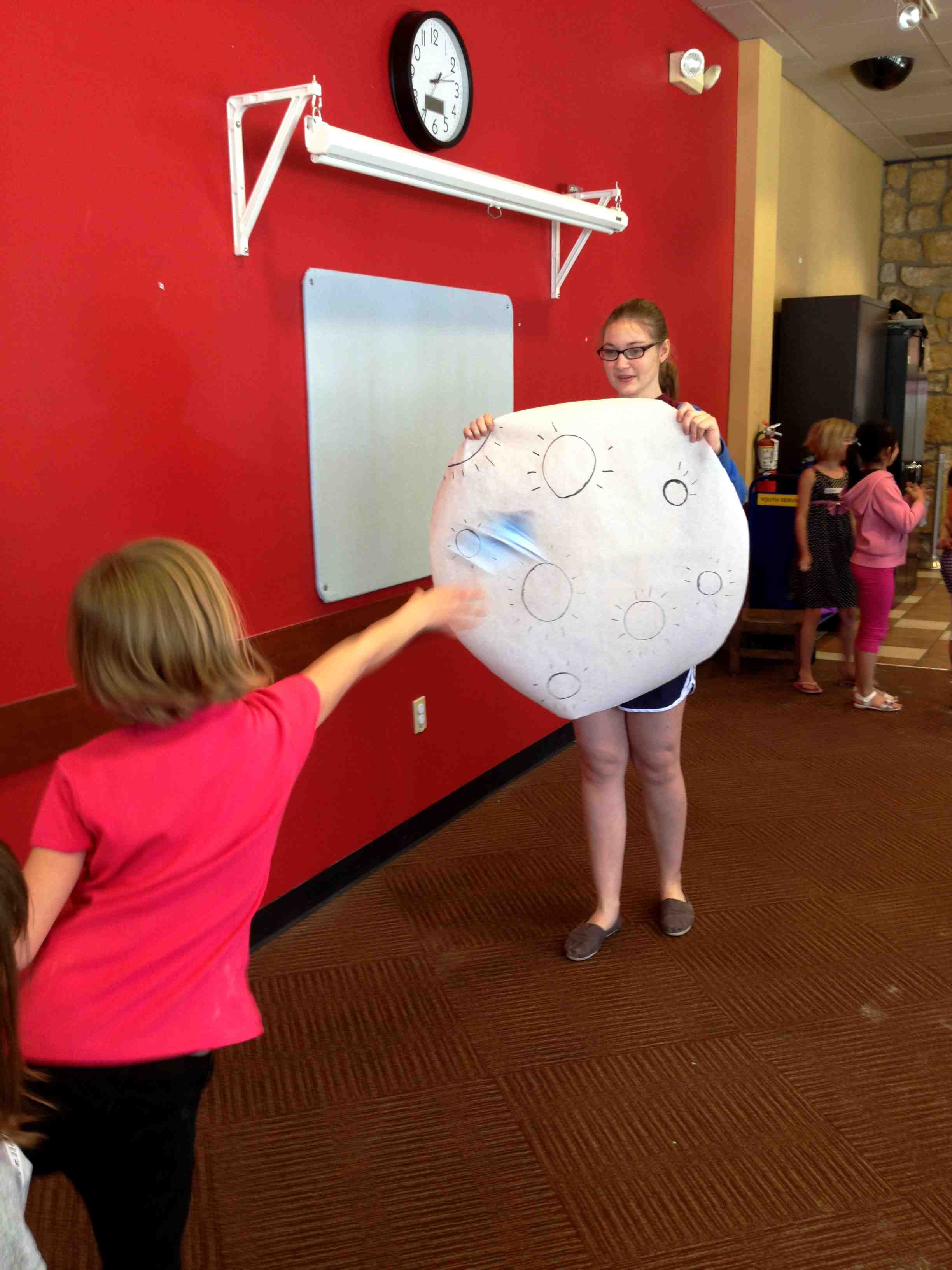
This activity was extremely low maintenance. All I had to do was print off a few copies of this space shuttle paper airplane template, fold the planes, and cut out a large moon from white paper. That’s it! My volunteer would stand in different places and the kids would try and hit the moon target with the paper shuttle. Short and sweet.
Read-Aloud How to Bicycle to the Moon
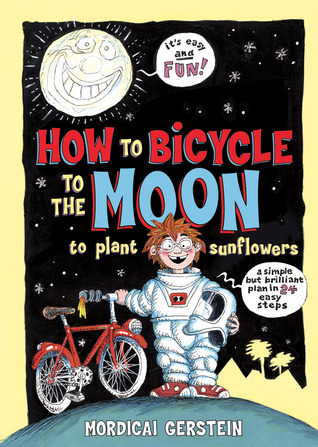
I’m glad there were a few extra minutes to spare after each group completed all four activities because I got to read a new favorite book of mine, How to Bicycle to the Moon to Plant Sunflowers: A Simple But Brilliant Plan in 24 Easy Steps by Mordicai Gerstein. It is a wonderfully silly story that is infused with facts about the moon. If you haven’t read this book yet, be sure to check it out. You’ll be so happy you took the 3 minutes to do so!
Magic Tree House Adventures Journal
As I mentioned before, after every Magic Tree House Adventures each child receives their own Magic Tree House Adventures Journal that I put together using the Magic Tree House nonfiction companion guide. I also incorporate a few fun activities that are from the Magic Tree House website, or anything I can find from various books or educational websites.
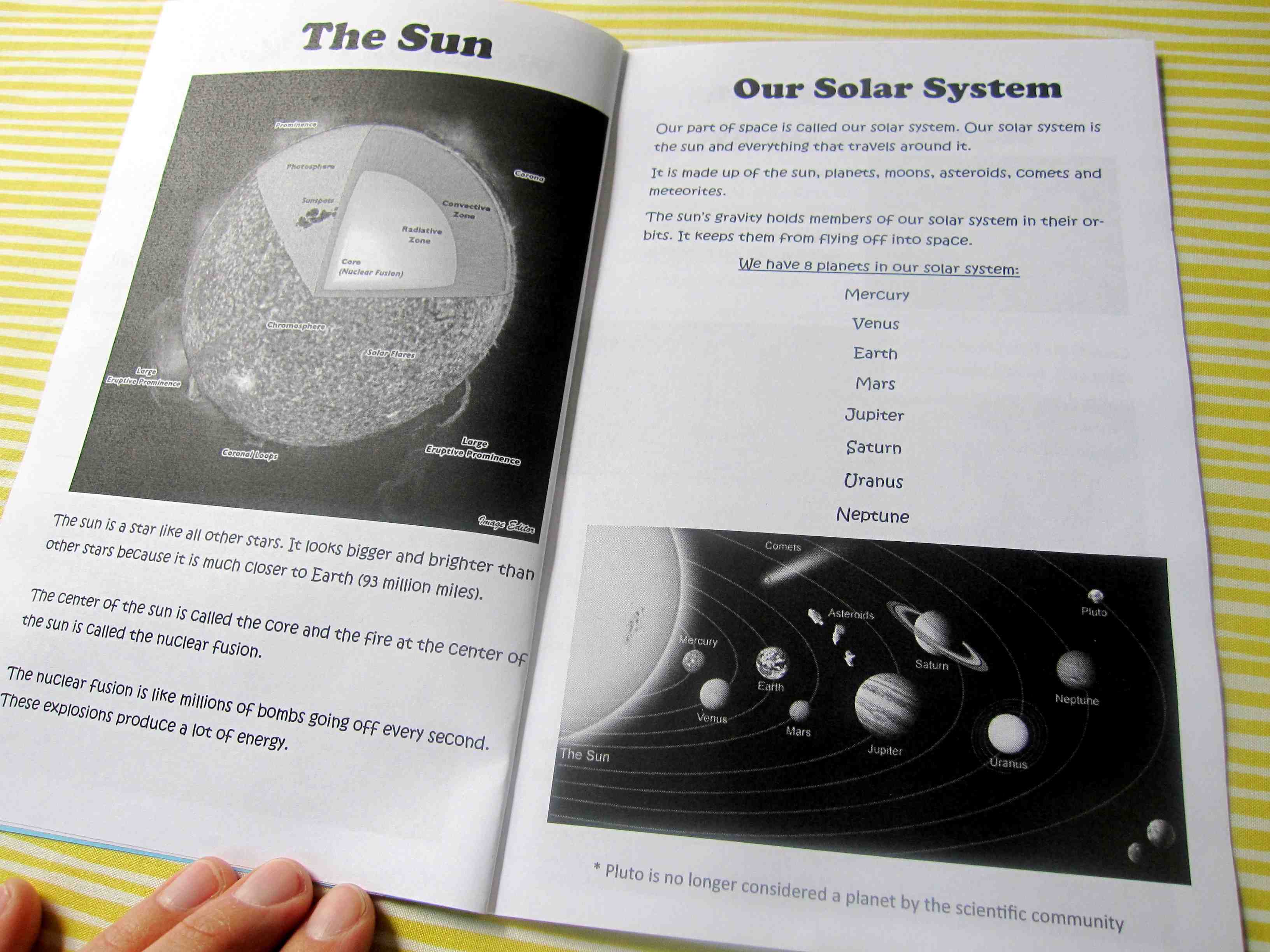

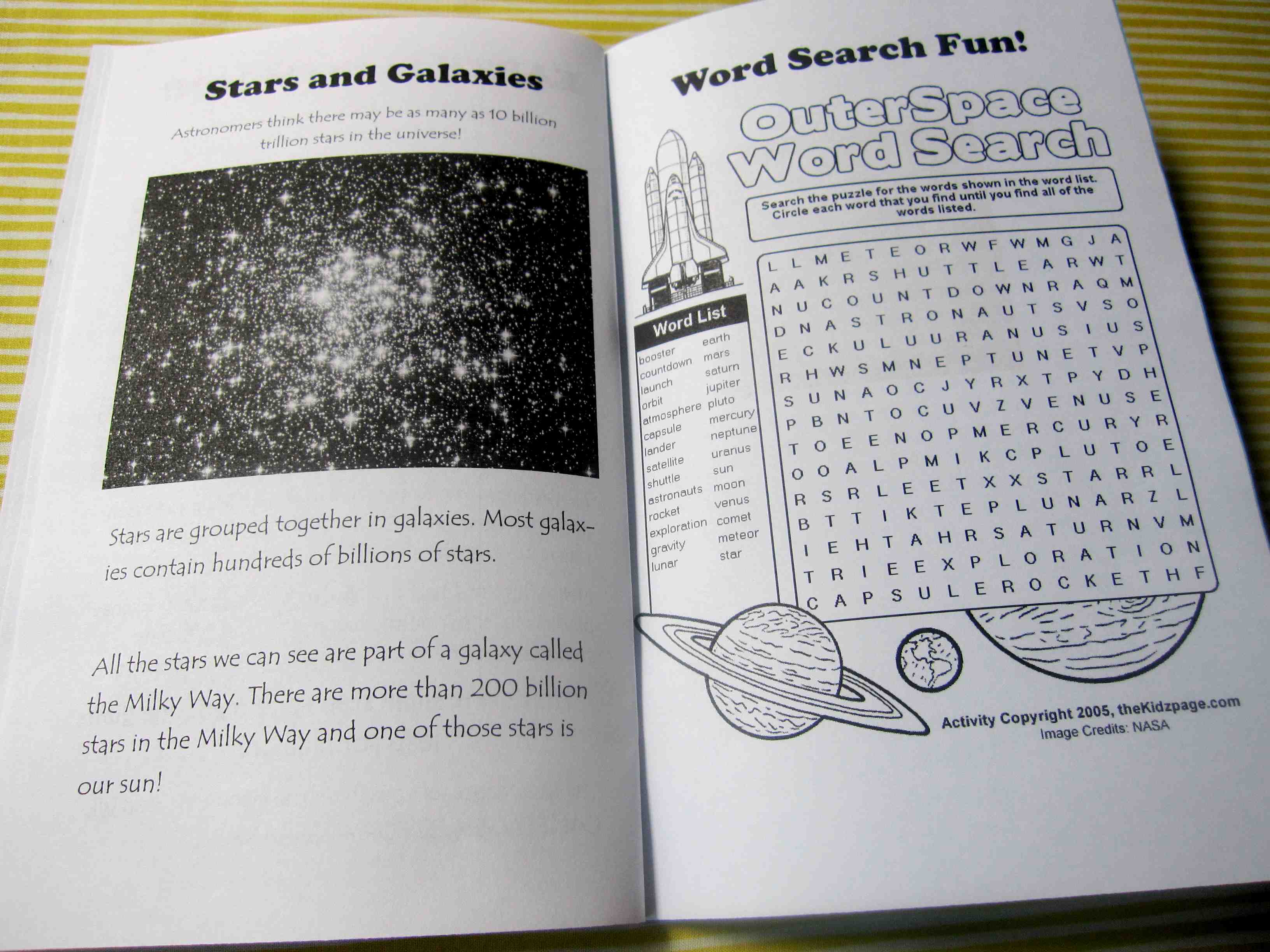
If you would like a copy of the Midnight on the Moon Journal to use in your classroom or library, please send me an email using the contact form or by emailing me at sturdyforcommonthings (at) gmail (dot) com. I receive requests daily for Magic Tree House Journals, and it’s much easier for me to keep track of who I’m sending what if you email me.
That sums up my last adventure as Annie for awhile! This has been an extremely enjoyable program to put on, and one that was very popular with the kids as well. ‘Til next time!
image sources: man on the moon, hubble telescope image


