29
Sep
Provocation to Connect With Nature in the Library
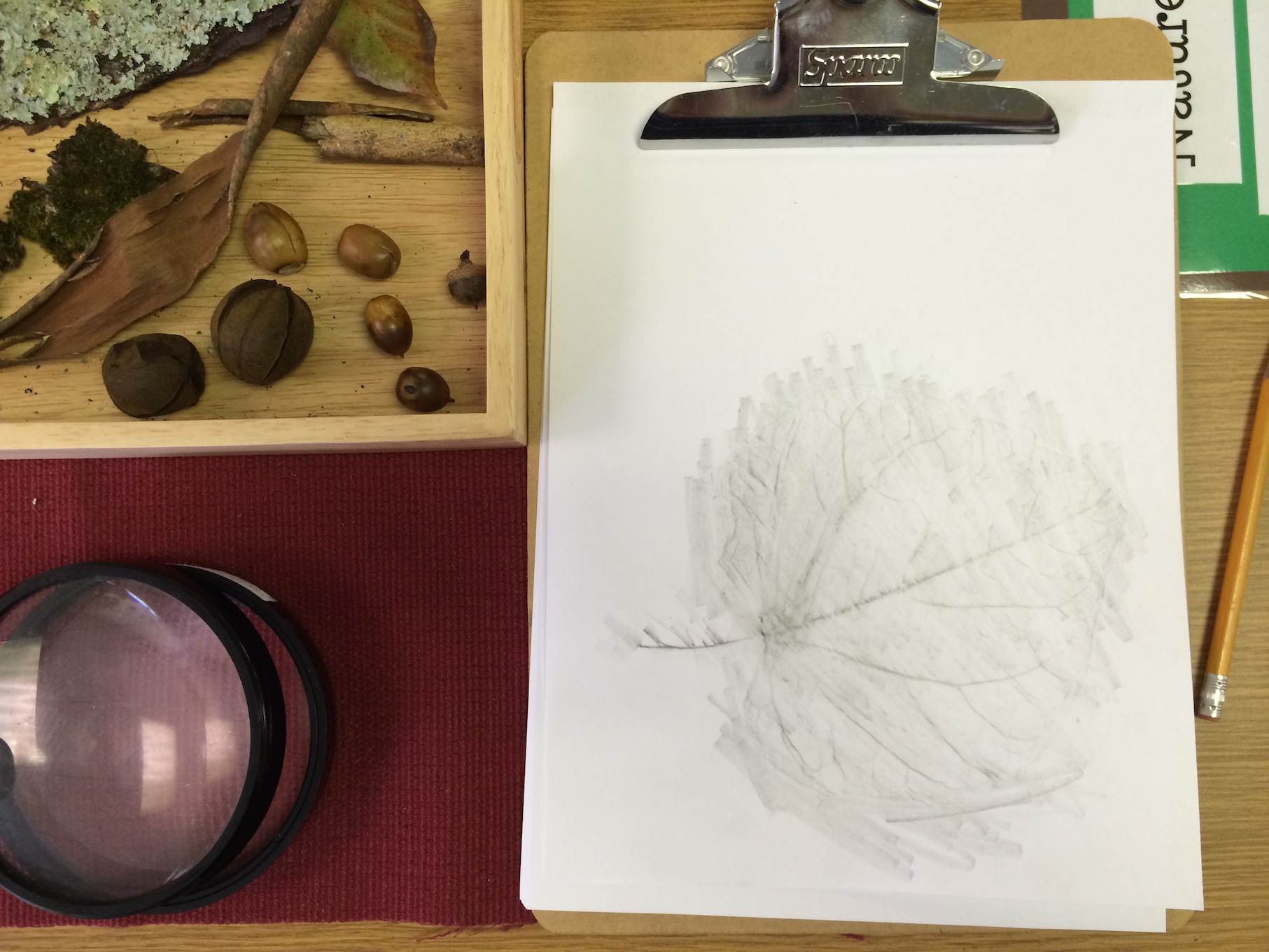
Finally! A teeny amount of free time to blog! Over the past several weeks I’ve been working on setting up provocation stations in the library, so the next several posts will be devoted to the creation of these exhibits. The goal of the provocations, which will be modified seasonally or monthly like the new post office, is to give kids hands-on exploration opportunities as well as a chance to flex their creativity and self-expression. I’ve been fervently reading about the methods and philosophies of several educators over that past few weeks, two of which have been the biggest inspirations in my research and practice working with kids in the library: Loris Malaguzzi and David Hawkins. Loris Malaguzzi was the founder of the Reggio approach, an emphasis on providing children an environment with materials and tools to express themselves and explore the world around them, to observe, document, and communicate with a strong emphasis on community and inquiry-based learning. Reading Malaguzzi’s “The Hundred Languages” for the first time this summer had a very strong impact on me and my relationship with the children I serve and with my own children. David Hawkins was a scientist, philosopher, and educator who conducted a variety of studies/projects with children involving “unscripted explorations of materials and surroundings” in an outdoor environment.
But before I fall down that rabbit hole (I will go into this more in-depth at another time), lets get to the Nature Center! Since the weather has started to cool here in Tennessee, the girls and I try to go on nature hunts daily. We have so much fun taking the time to watch the sun filter through the leaves of an oak tree, looking for snails, and picking mushrooms. After each hunt, we layout whatever treasures we’ve found that day to observe and discuss. I also use that time to note what my 4-year-old picks up and how to further those areas of interest.
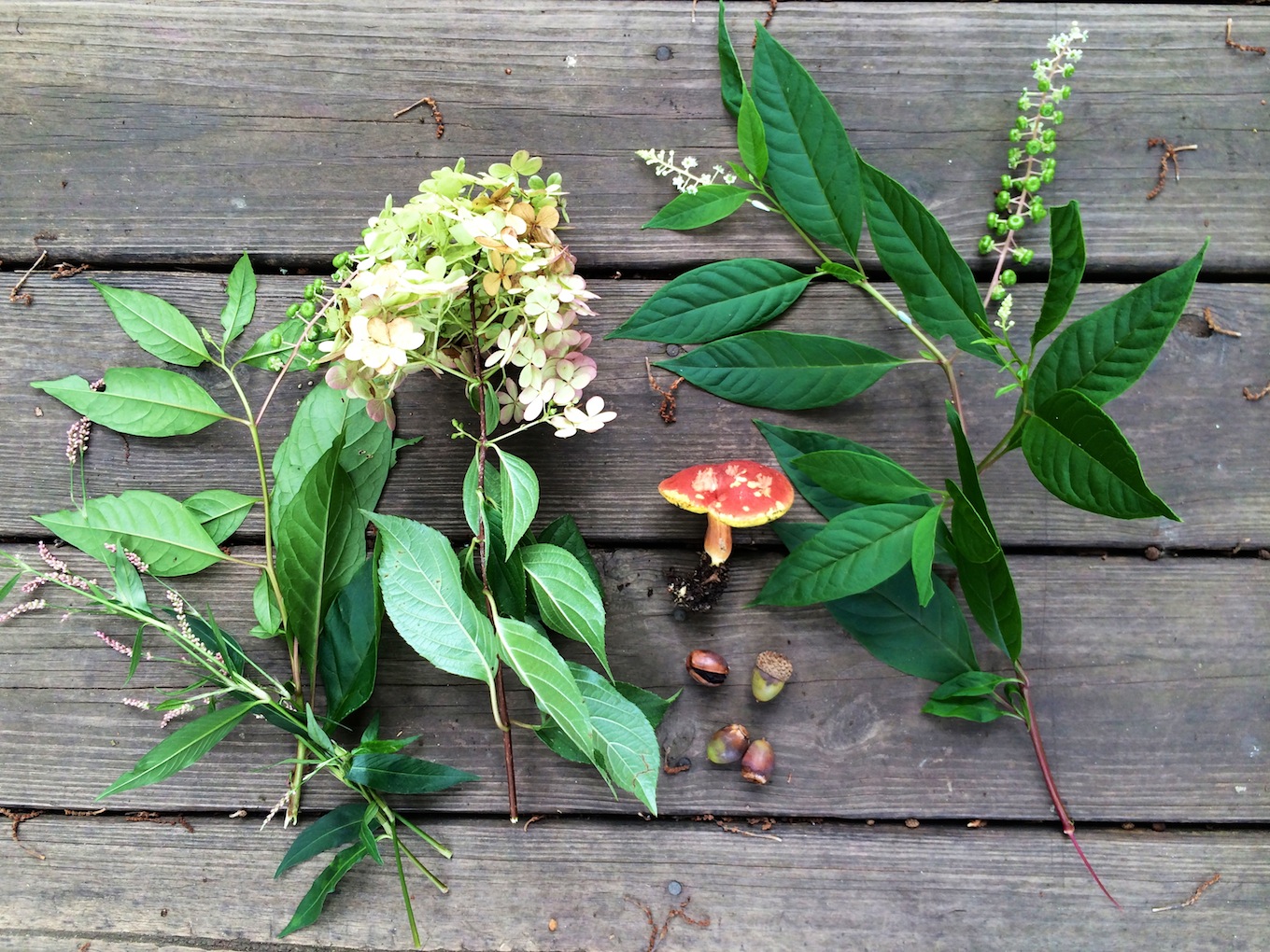
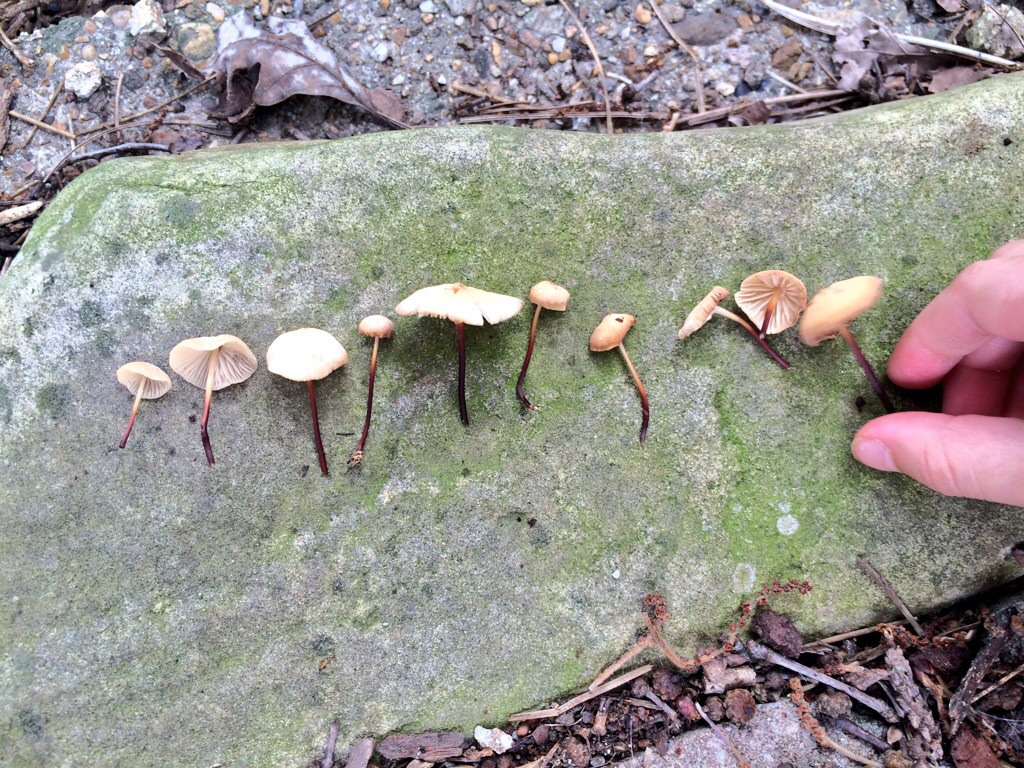
Each day at work I interact with and learn from children and families who come from neighborhoods that aren’t safe to walk around and explore. While reading a story the other day, a child around the age of 6 or 7 pointed to an image of a pinecone and curiously wondered what it was. He had never seen or held a pinecone. It was from these types of experiences that I decided to create a space where they could touch and discover items found in nature from the city which they live. The goal would be to spark a connection with themselves and the natural world around them.
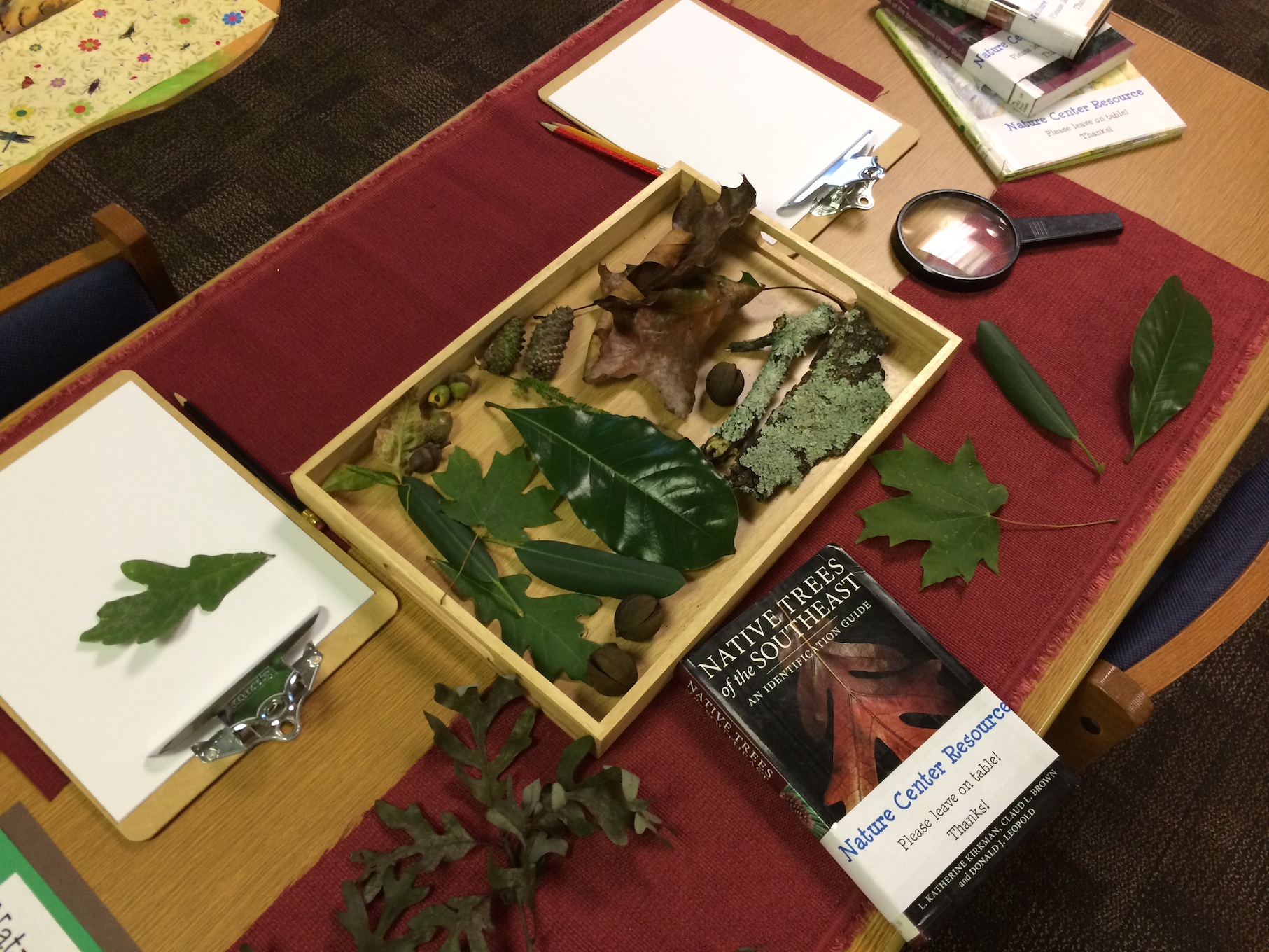
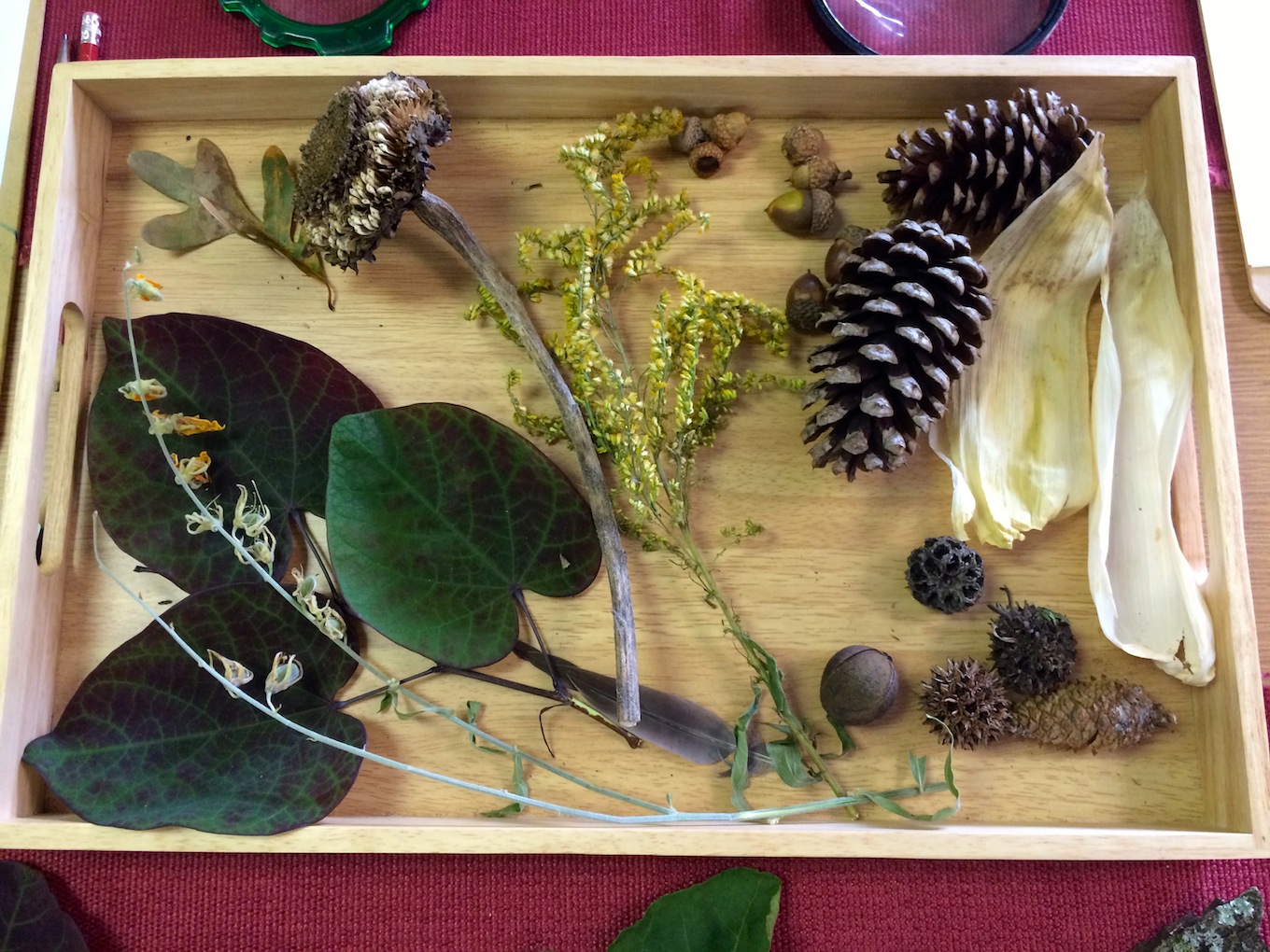
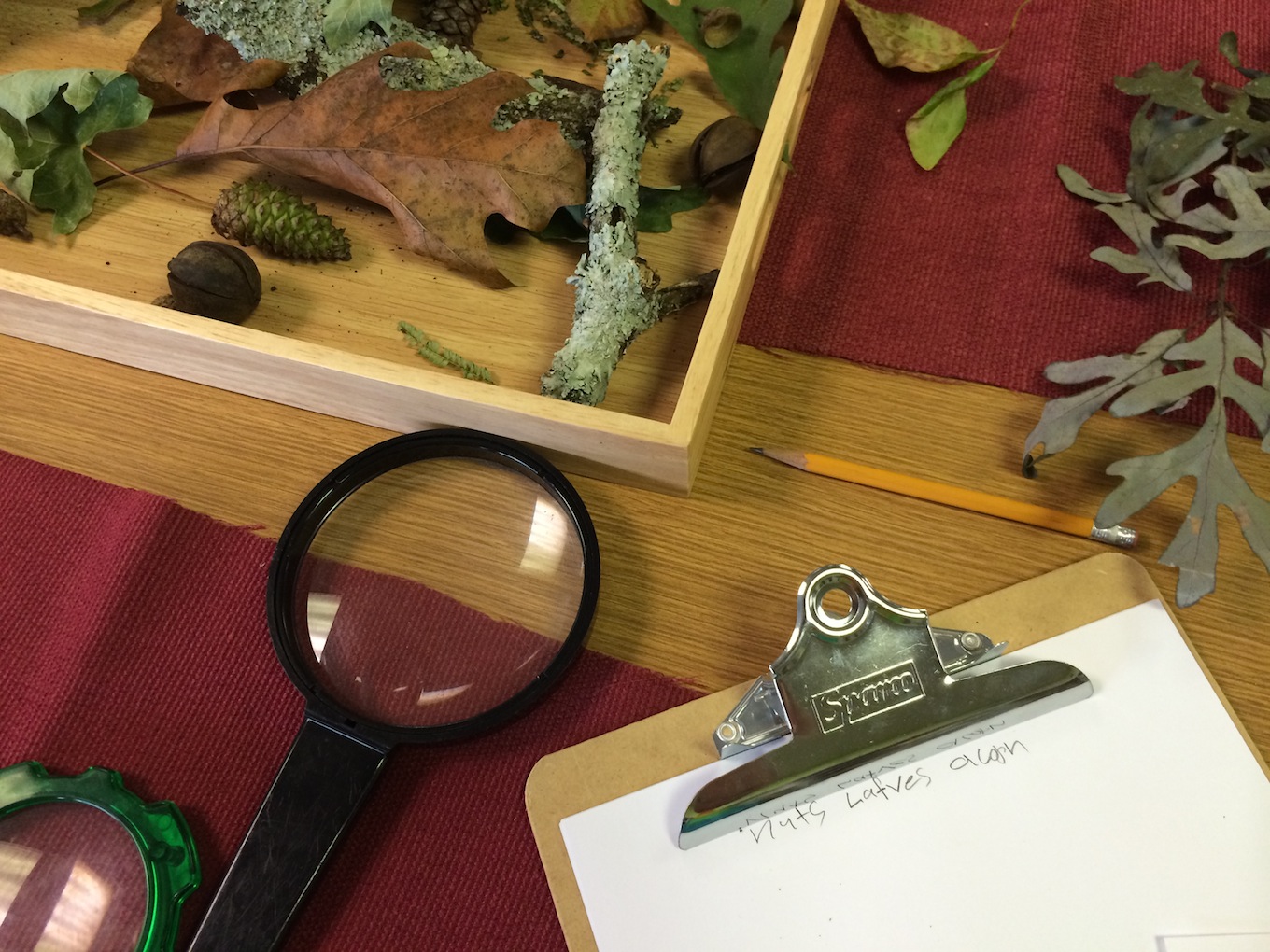
I purchased a wood serving tray on clearance and everything else I found around the library. Magnifying glasses, fabric, clipboards, paper, pencils, as well as image-heavy identification guides. The leaves, pinecones, acorns, branches with lichen, and all natural items were found by my daughter and me. I posted a few prompts at the end of the table such as:
- Look closely at the specimens on the table – What do you see?
- How do these objects feel?
- Can you identify what these objects are?
- Did you know scientists document their observations by drawing illustrations of what they find? Can you draw a picture of one or more of items on the table?
- Look for these plants when you are outside next time on a walk or at recess. They all from our Chattanooga neighborhood!
A couple days after setting up this station, my coworker told me a child saw the Nature Center and said, “Mom, look at all these treasures!” Bingo. Ever since, kids curiously walk up to the Nature Center daily and take the time to touch and feel and observe what is displayed. Weekly, I refresh what’s on exhibit. I also posted some information about Leafsnap for families with smartphones that would like a fun way to explore and identify plants they happen upon. Personally, the best part is finding the drawings the kids leave behind:
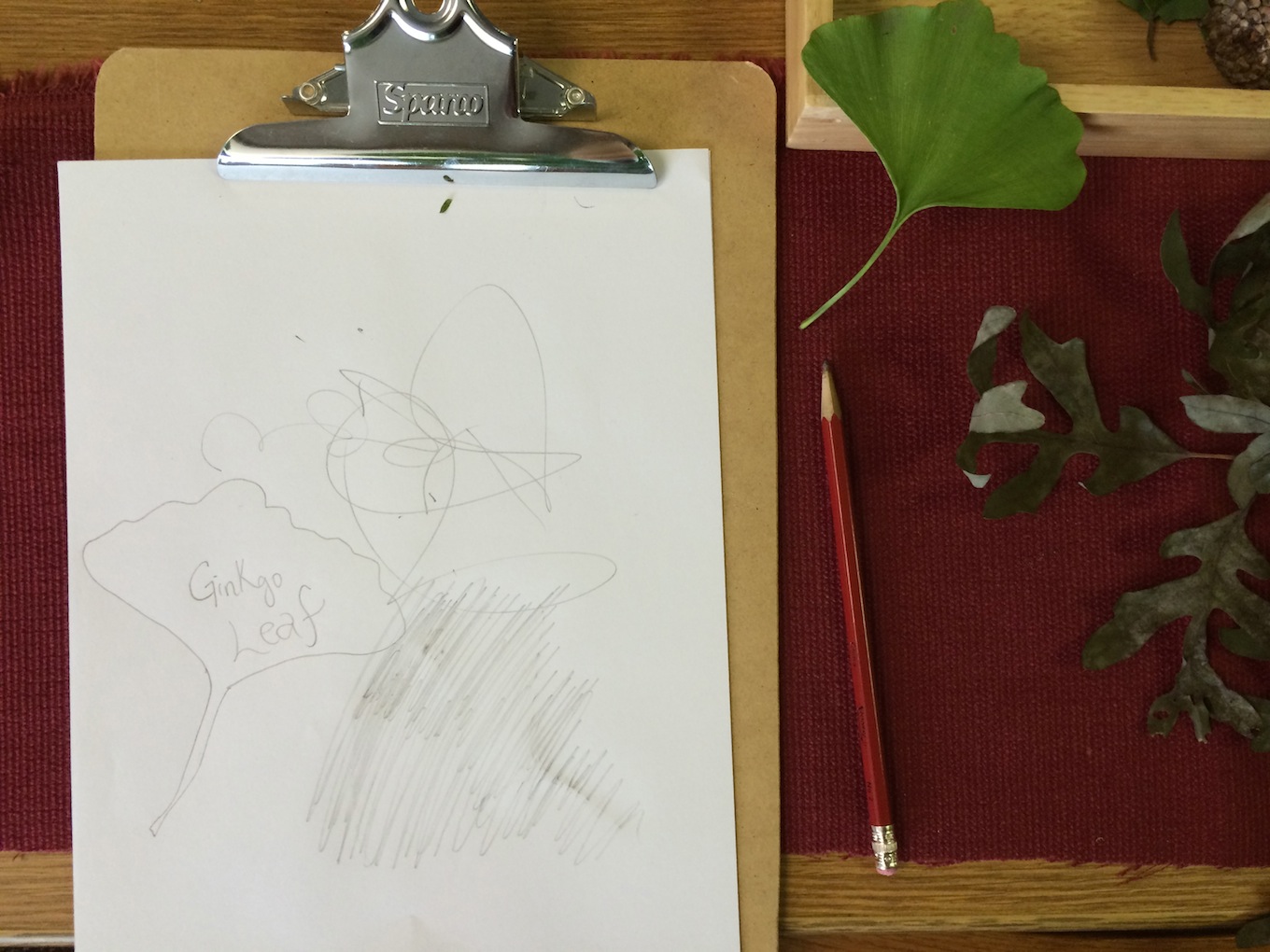
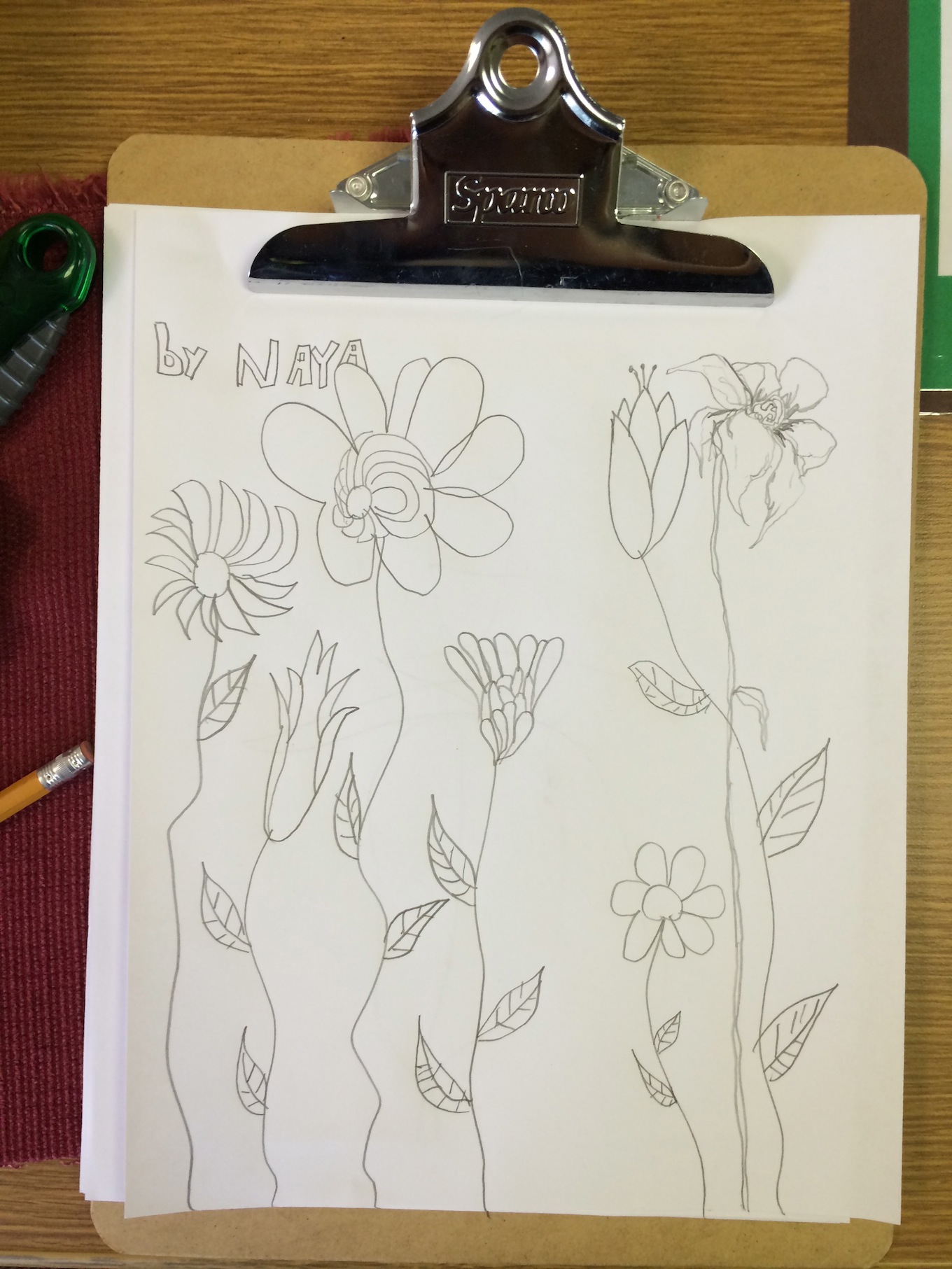
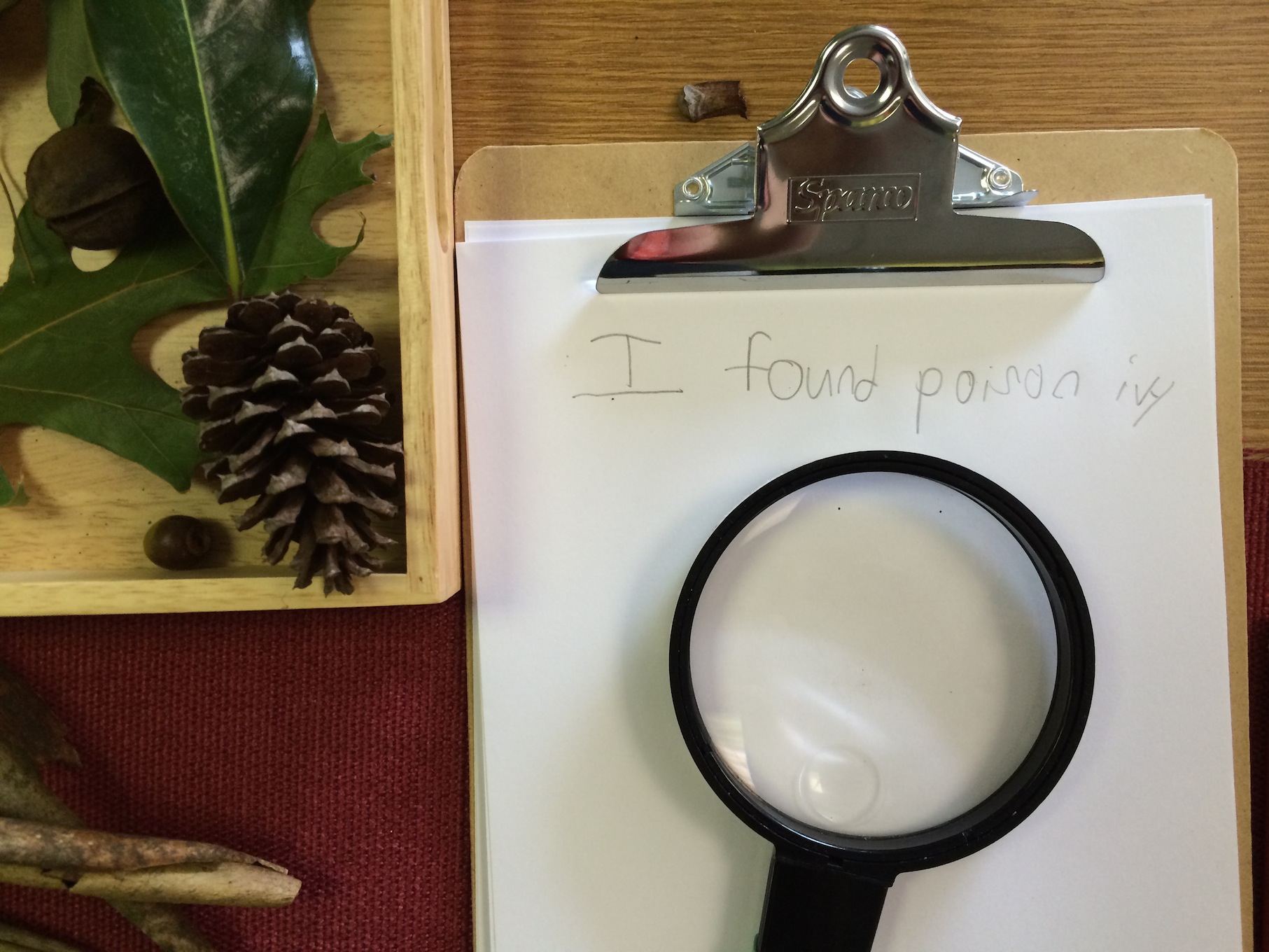
I have been keeping them all in a folder and hope to bind them into a field guide and add it to the Kids’ Library (a new station that holds books created by kids – more on that in a day or two!).
And since a certain someone has been having a hard time sharing our findings with the library, I set up a Nature Center for her at home:
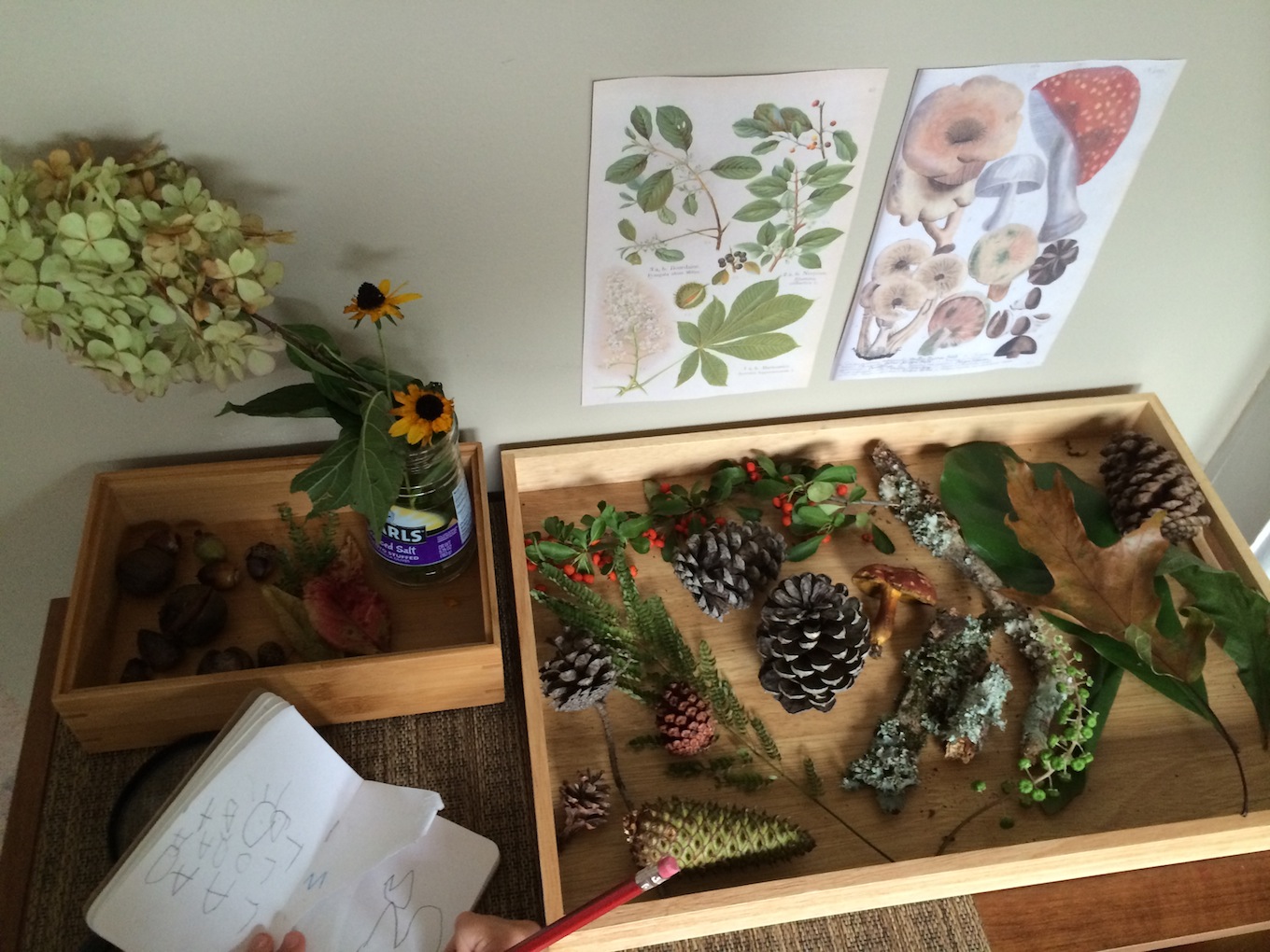
I created our home Nature Center on a bookshelf close to her art space. It is comprised of a placemat and 2 wooden trays found on clearance at Target, a magnifying glass from Dollar Tree, a recycled olive jar to hold flowers, an old notebook, and a pencil. I also printed out old botany illustrations for display/inspiration.
I’ve had a very large perspective shift in the past few months that has strongly influenced my services, research, and interactions with youth in the public library. This includes the above refernced teachings of Malaguzzi and Hawkins, but also equally as inspiring are the many early childhood educators that incorporate like-minded concepts in their practice. So much growth and learning has happened that it’s difficult to articulate.
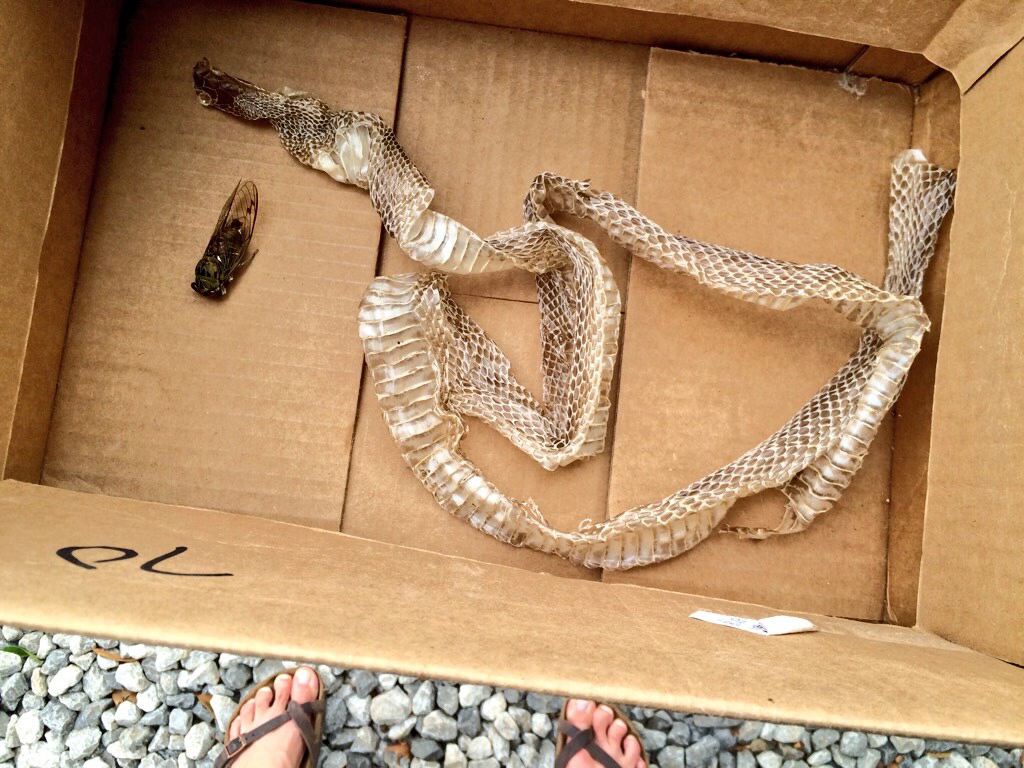
Until I’m able to find those words, I will leave you with the newest Nature Center additions, courtesy of Crabtree Farms:

18
Aug
Speedy Delivery! Post Office in the Library
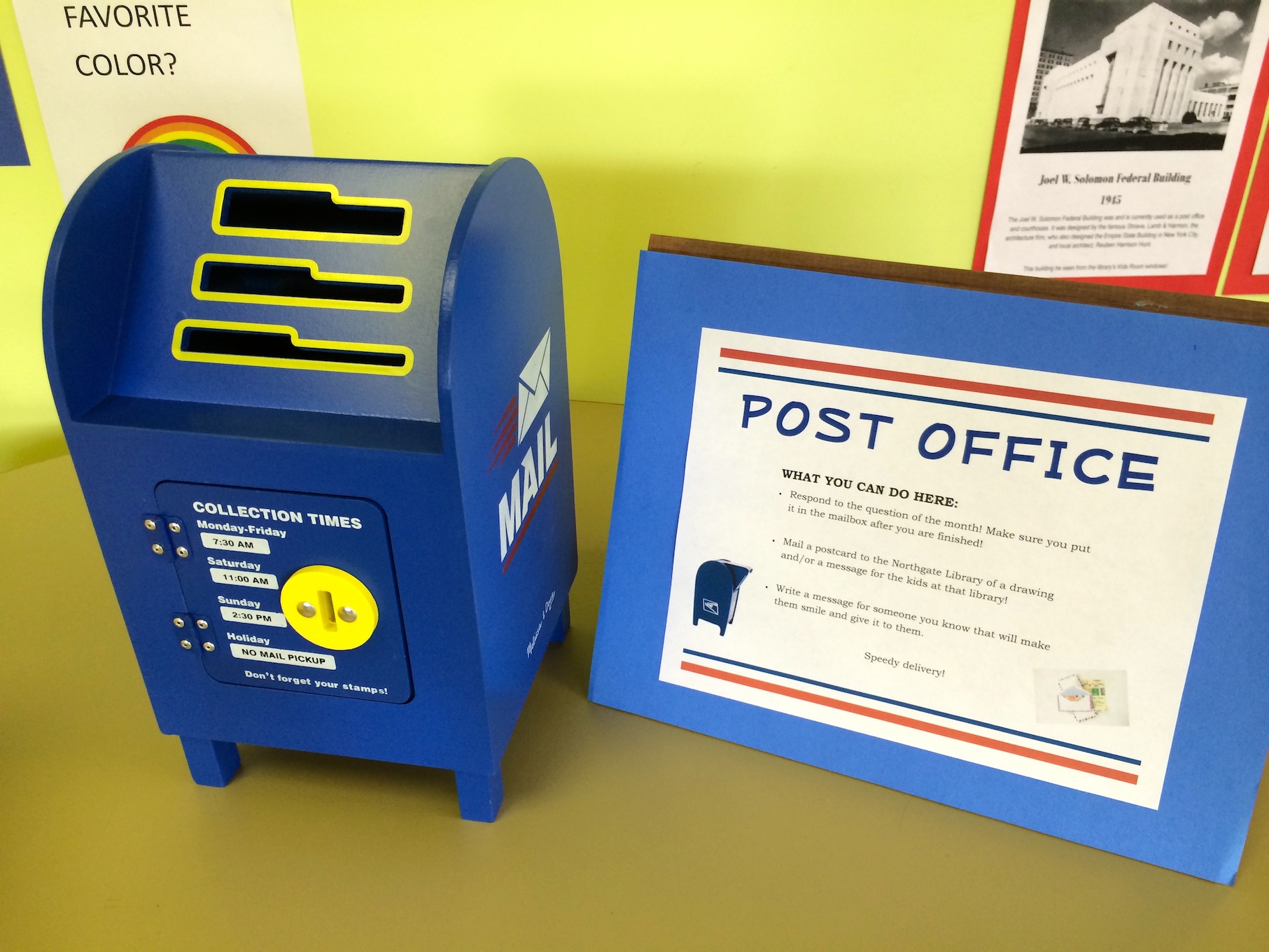
Ever since I read this post by Anne Clark from So Tomorrow about the writing center in her library (so smart) AND watching my own child create notes and letters at a provocation station in preschool, I’ve been itching to try this out…
A Post Office! In the library! For kids!
The Post Office is a new activity station I set up in the library last Saturday. After setting out this mailbox and hanging up a few encouraging prompts, it was immediately a busy place for kids to play and create.
Here’s what kids can do at this station:
- Respond to the question of the month. This month’s question is: “What’s your favorite color?” The responses will be hung up on the wall for all to see.
- Send a post card to the children at another branch. That branch will also have this activity station and be able the draw a picture/send a message to the kids at my library. These will be exchanged and also be displayed.
- Or, you can write a note for someone you know that will make them smile and give it to them in person.
The goal of this experience is to promote and encourage writing, teach the concept of correspondence, self esteem (being proud of their response on the wall), and a little history to boot.
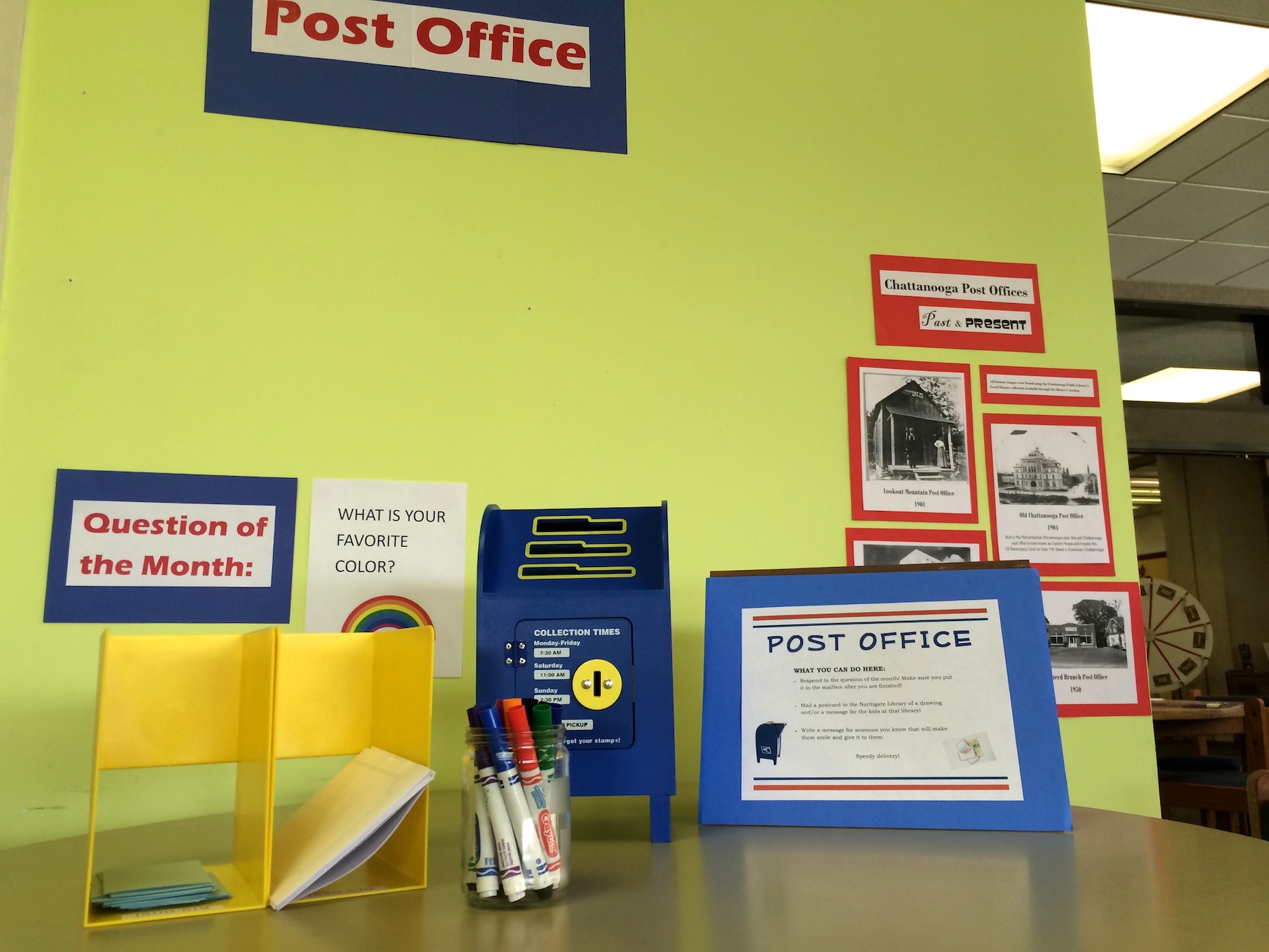
Since the Chattanooga Public Library has an incredible Local History Department, I created a small side display of historical post offices of Chattanooga. I printed out images available to the public through the digital archives browsable through the library’s online catalog. Not only is this a fun little learning experience for kids and their caregivers to see these historic institutions, but it’s also a nice cross promotion of another department’s services.
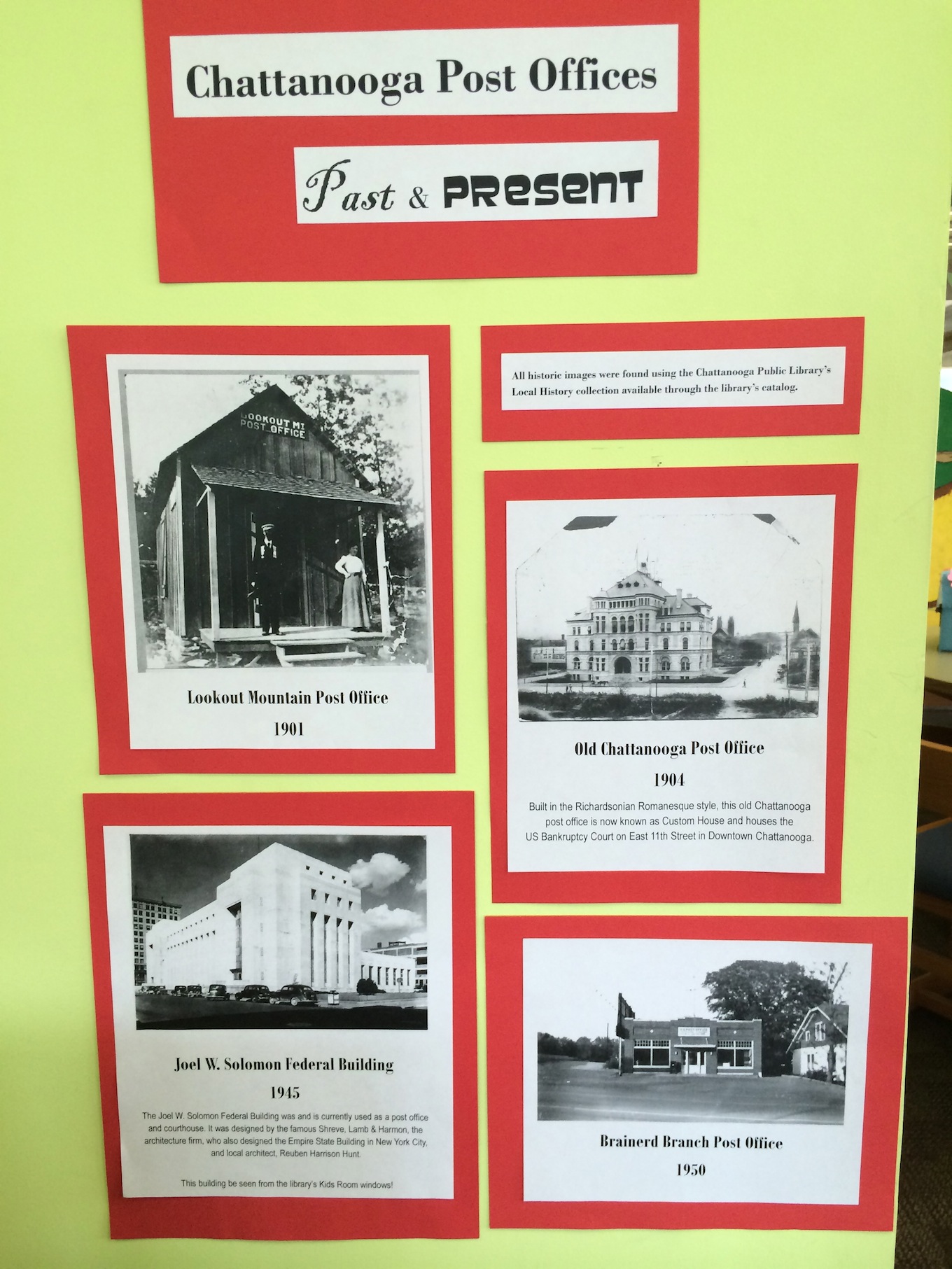
And how cool is it that the Joel W. Solomon Federal Building, which was created by the same firm that designed the Empire State Building AND a local architect, Ruben Harrison Hunt, can be seen from the library’s Kids Room’s windows?
Connecting kids to their city’s history and their neighborhood. Connecting kids to each other.
15
Aug
The Picture Show: An Exploration in Oral Narrative
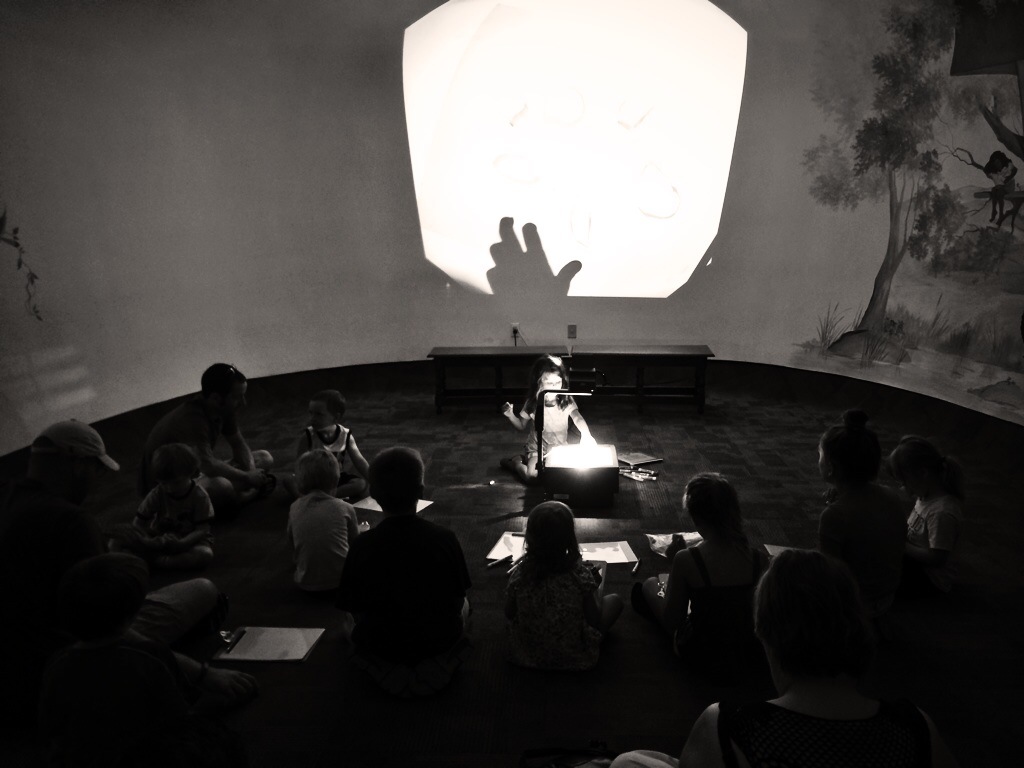
Last week I conducted an experiment.
I set up an overhead projector on the floor of the storytime room , I attached overhead transparencies to clipboards, and sprinkled colorful dry erase markers about the room. What happened next could have been a complete flop on a late Saturday afternoon, but I went for it and held a spur-of-the-moment program for kids and their families:
The Picture Show
After setting up the projector, I went into the general children’s library area and made an announcement that I was conducting an experiment, and anyone who was feeling adventurous or curious was welcome to join. We would be drawing pictures and then projecting them on the wall like a movie. If they wanted to talk about their picture that was encouraged, but if not that was a-okay too. No pressure.
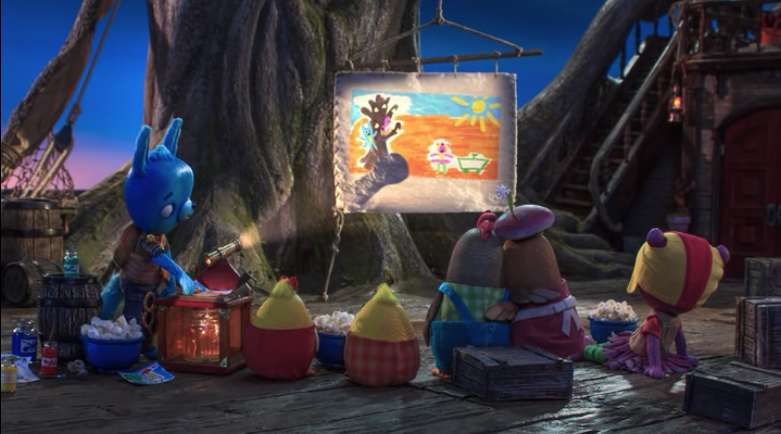
The Picture Show is an idea that has been percolating in my brain over the past week. The idea was born while watching an episode of the kids’ show Tumble Leaf. Main character Fig shares stories with the other characters by using a firefly projector. Ever since watching it, I’ve been mulling over how to bring this concept into the library. It wasn’t really planned out and I had no idea what to expect. After I made the announcement, I wasn’t sure anyone would follow me in the room, I wondered if this idea was too simple and boring, but patrons followed my lead and more onlookers continued to trickle in.
To kick things off, I did a very short demonstration of how The Picture Show could work. Emphasis was on “could”. It was entirely up to the participants. I showed everyone a picture of a turtle in a pond I had scribbled on a transparency a of couple minutes before and talked about it a bit. And then I showed kids how they could tell a story AND draw at the same time using a familiar picture book, Go Away, Big Green Monster. I drew the monster’s features on the projector as I read the book aloud and then erased them as the features go away in the book. (I thought of this idea right before I started and I’m glad I did, because it turned out to be a great visual device for the kids.) Then I gave the stage to them. I explained they could draw whatever they’d like and when they were done to let me know and we will take turns sharing one another’s pictures. Talking about the picture is optional. Luckily, my 4-year-old and I have been doing this for awhile (with and without an overhead), so she jumped right in and started drawing and telling a story while the other kids watched and drew.
When a child was ready to share, I invited them up to the overhead, asked them their name and then introduced them and gave them the stage. If they simply stated what their picture was I would ask them deeper questions. What is the bird’s name? Where are the people going? Have you seen a scene like this before in real life? What time of day is it? If they were less eager to share, then I took cues from their behavior and didn’t force it. But at the same time, the kids who were a little less confident in sharing their picture’s story opened up over time. Or, they found confidence recreating a picture and/or story of another child. It was also fun to watch the stories overlapping; children inserting elements of another child’s story into their own. The group was very good about taking turns, and since they took various lengths of time to work on their picture, there was never a line to present. The audience listened, watched, and drew when someone was presenting. As a group, we applauded after every picture and every story and I thanked every child who presented a picture for sharing their picture with the group. Here’s a small handful of the picture stories created from that day:
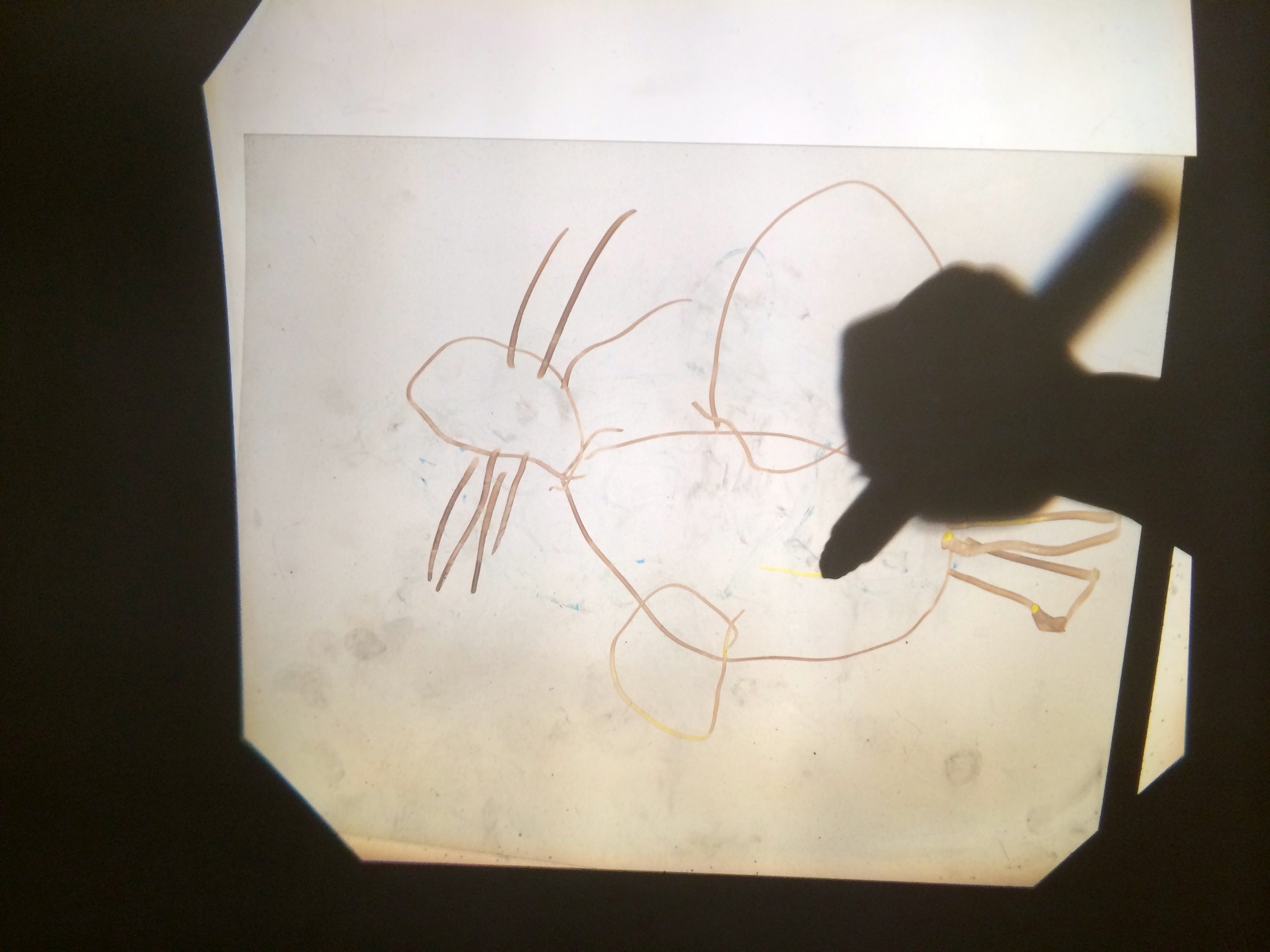
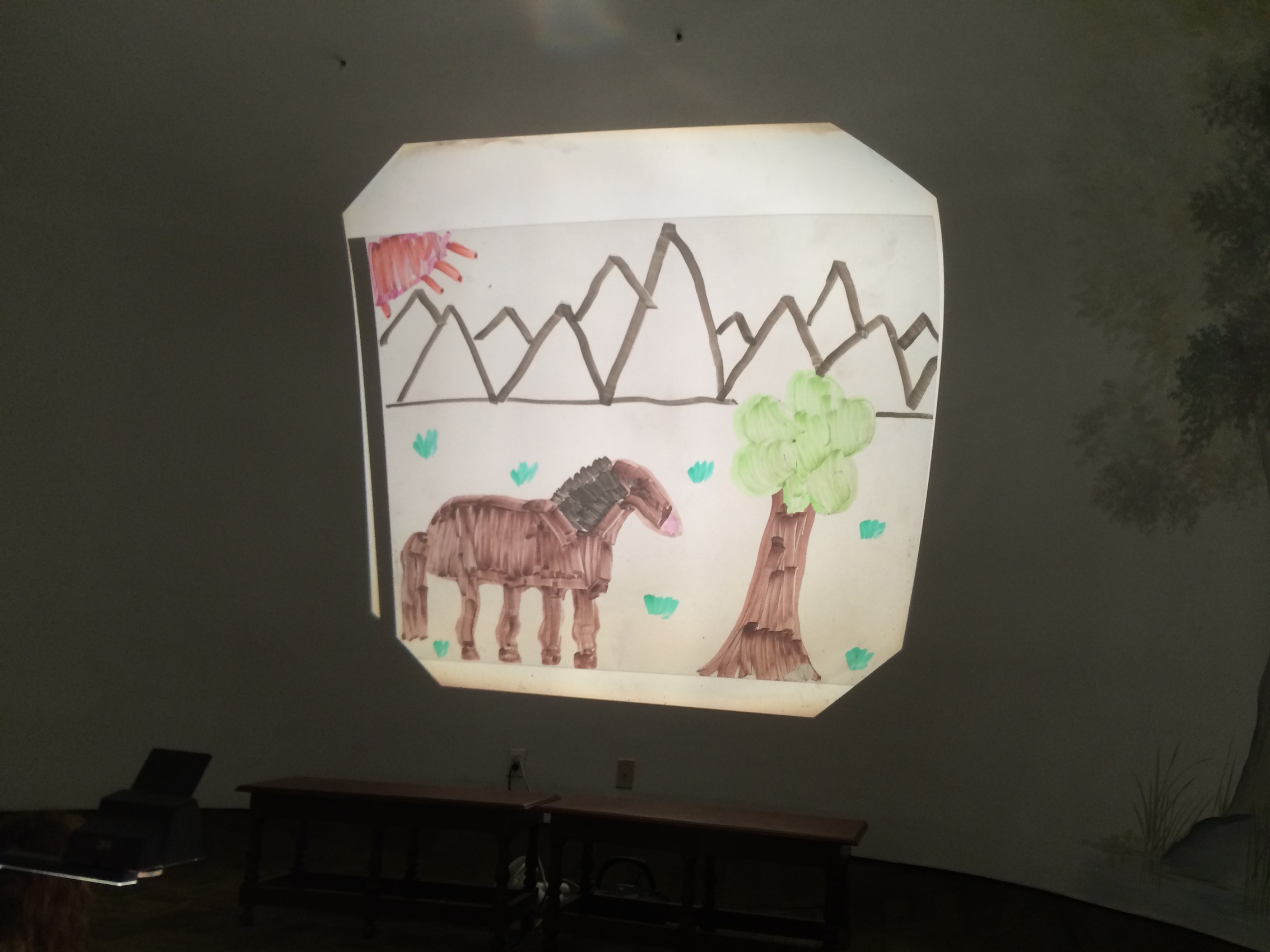
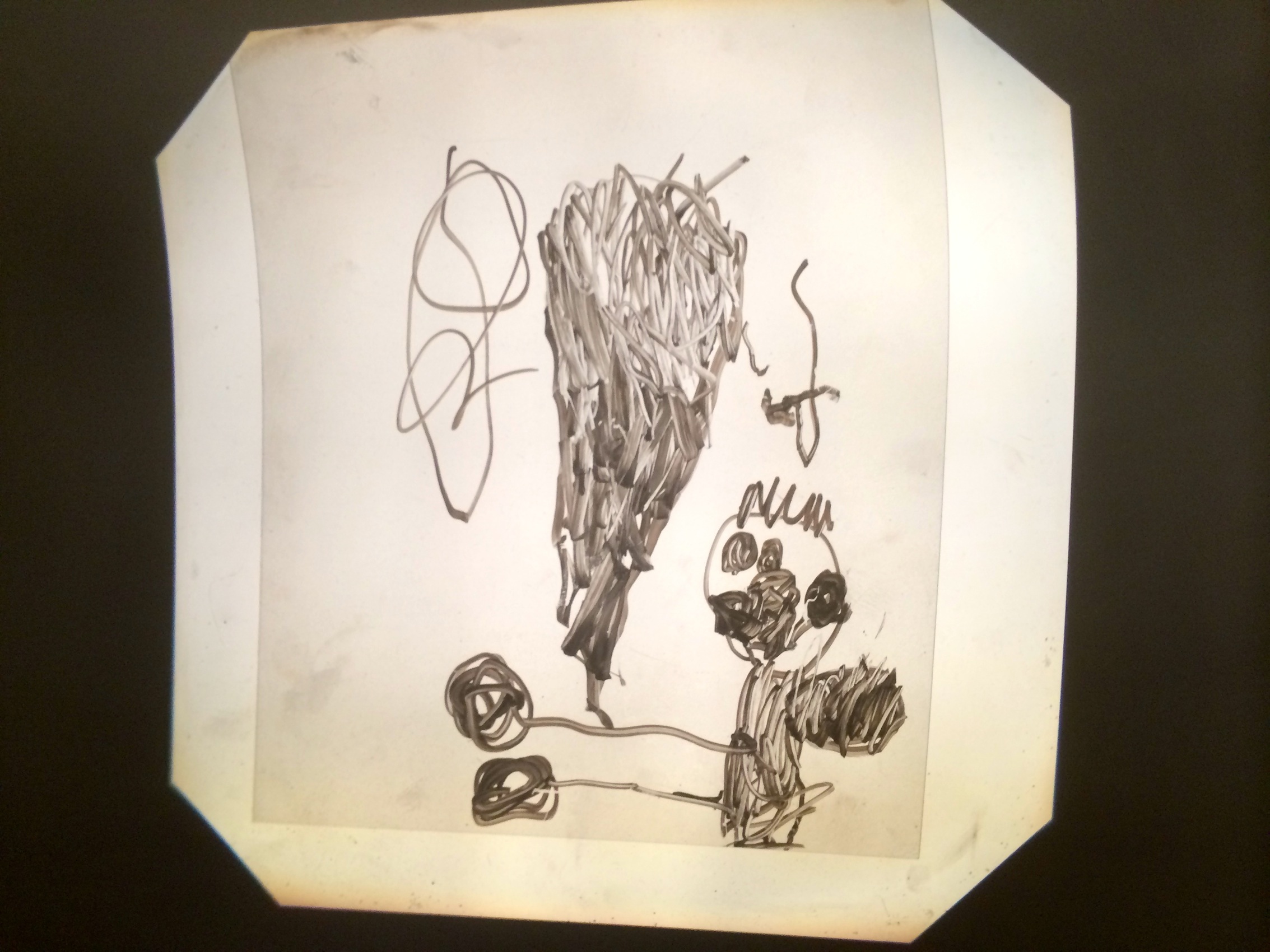
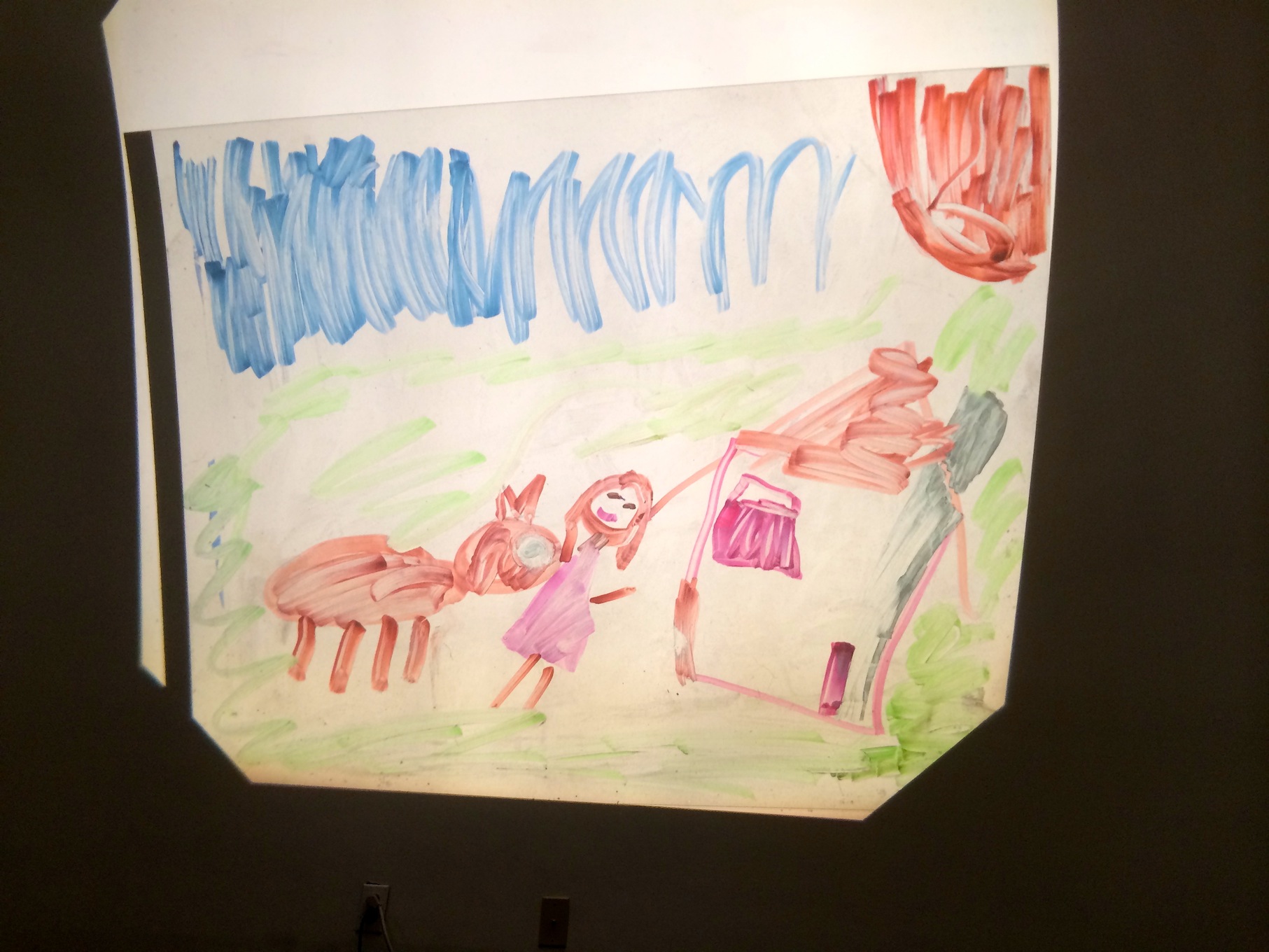
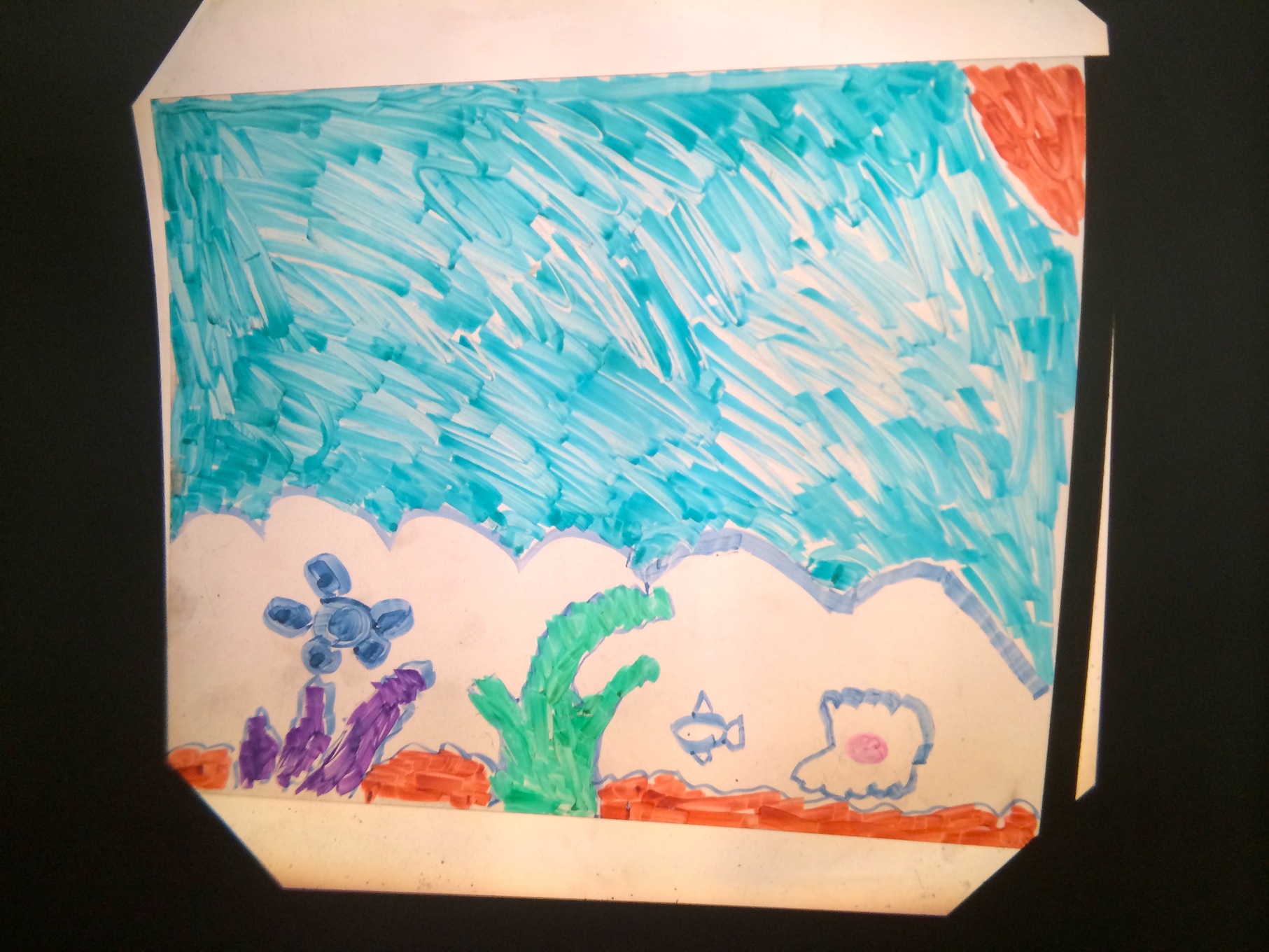
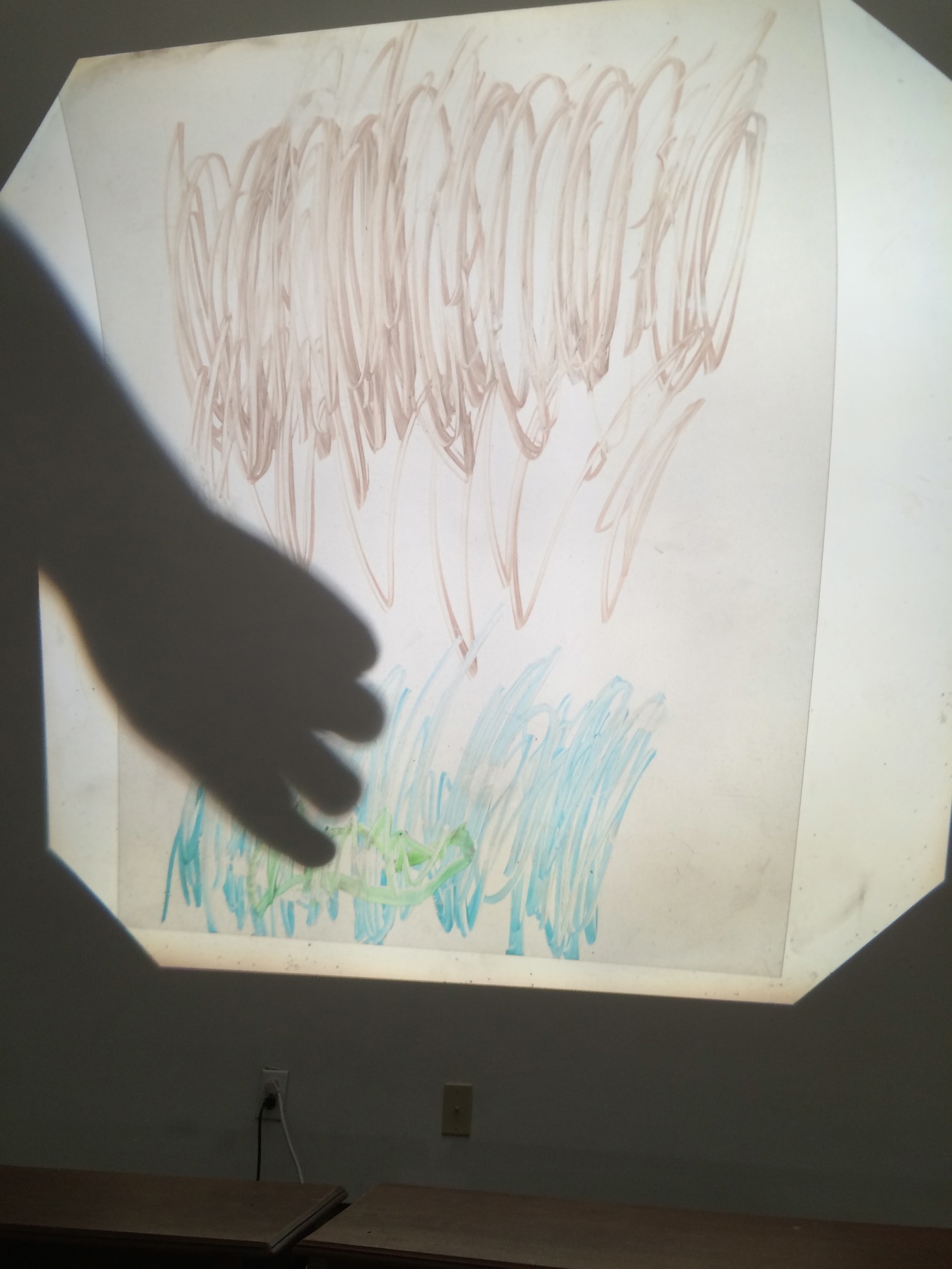
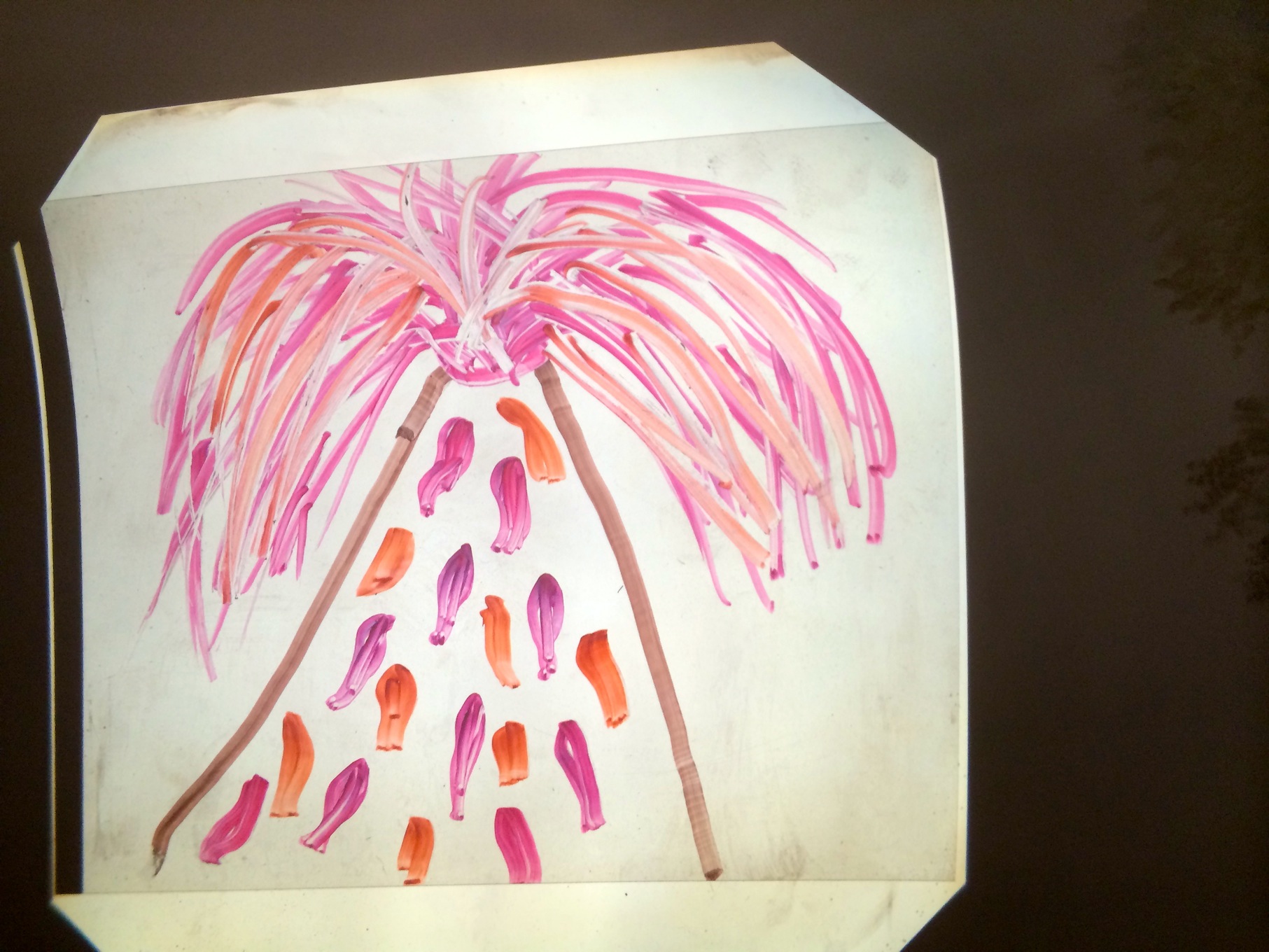
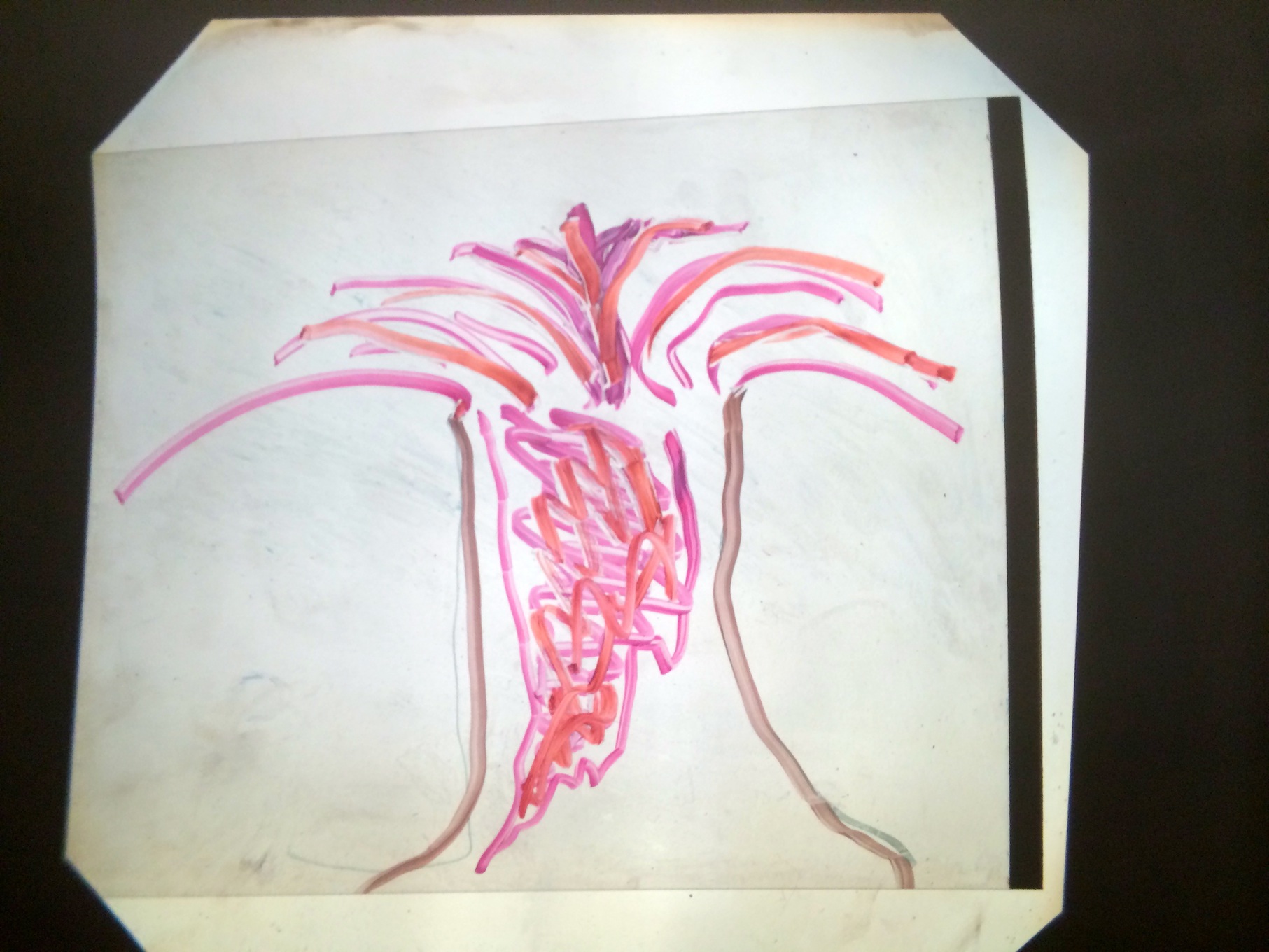
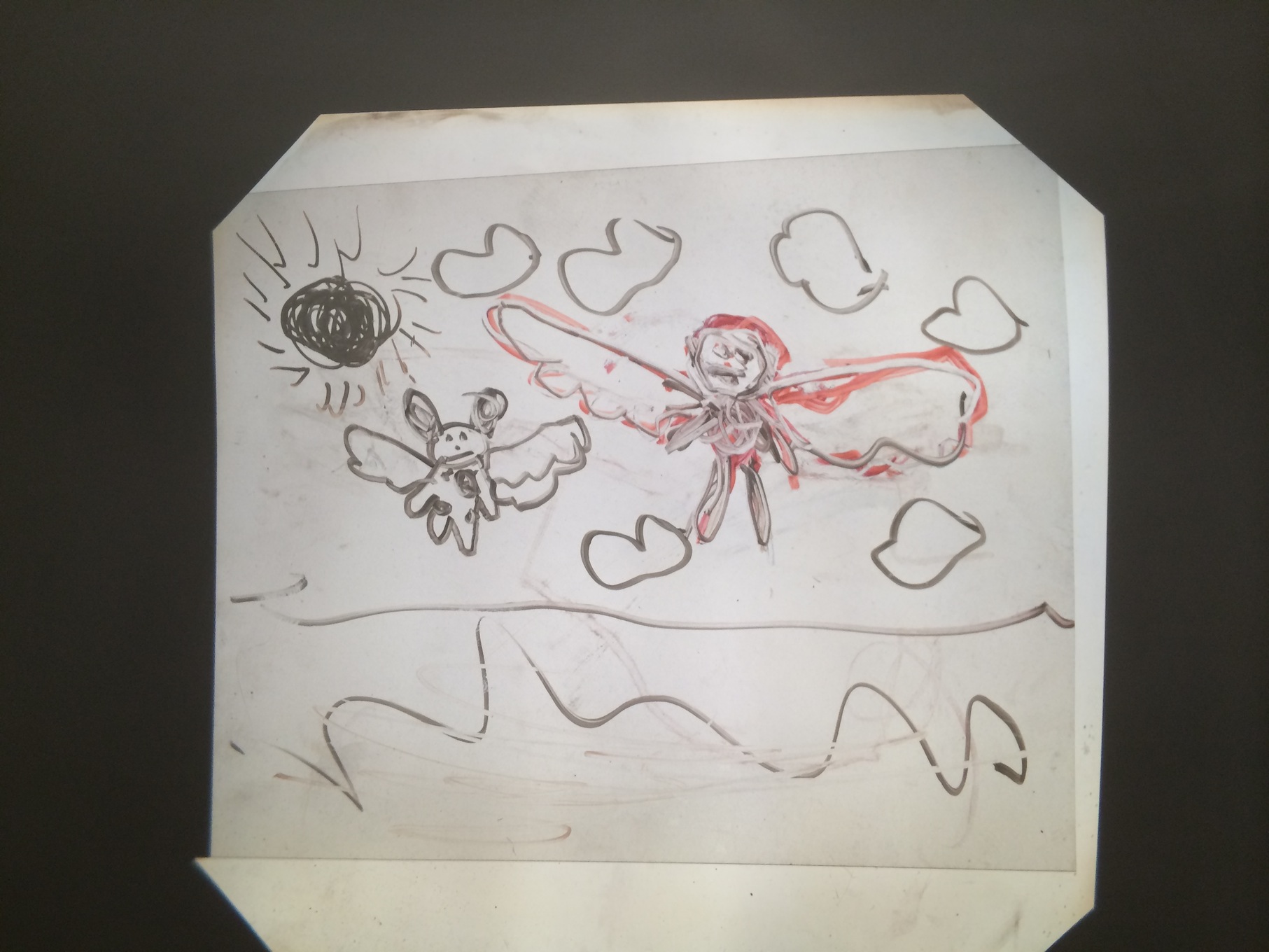
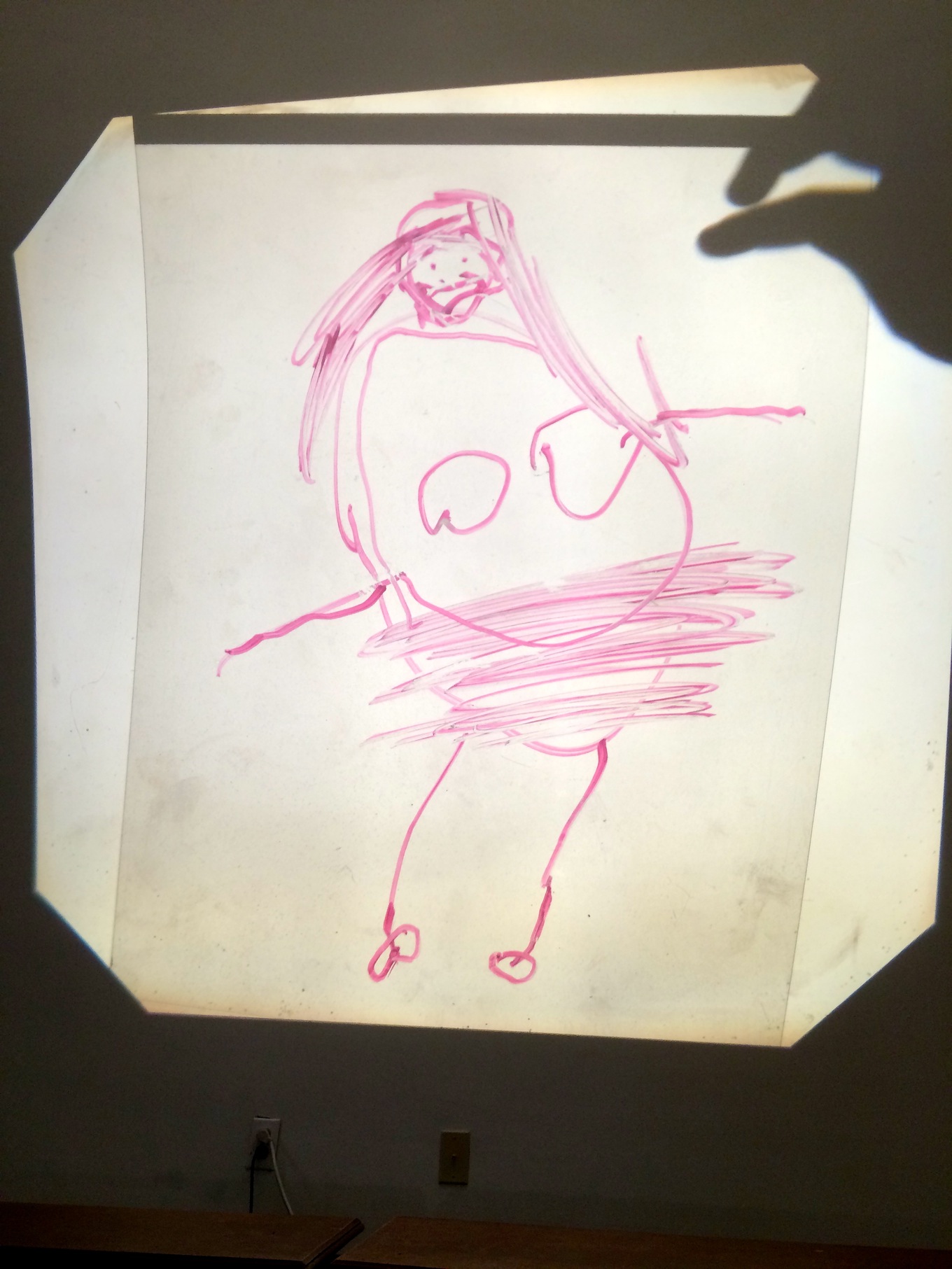
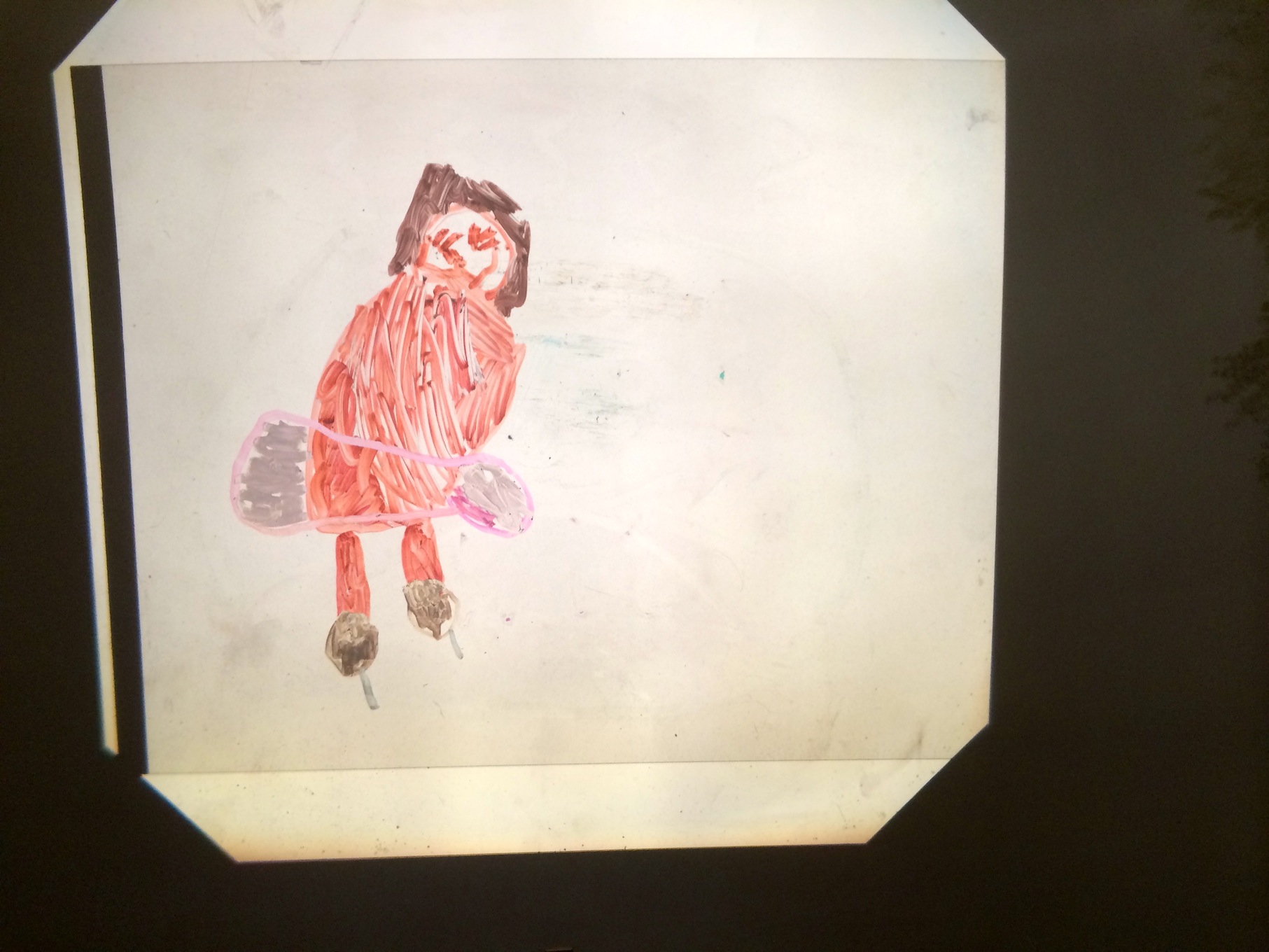
It was a large range of children from 3-10 years old and parents in the room. Kids telling stories, sharing stories, collaborating on stories together through an unstructured time for artistic expression. Sure this happens to be a great literacy exercise, promoting language development both in written and oral forms, but to me that is secondary. The number one objective is to create an engaging, enchanting place for kids to grow and be themselves. To use communication and storytelling as a form of play. And you better believe that the parents had just as much as the kids did. This activity required very little prep and happened organically with little structure.
The feedback was encouraging, so I’m going to add this as a regular “storytime” staple starting tomorrow. It will be an exploration of art, play, and light in an organic, open-ended storytelling experience. On with the show!
12
Aug
Miss Rebecca Storytime Song
I’ve been covering for a coworker’s Toddler Storytime every once in awhile, and since I’m new to the library I decided to make a little opening jingle, “Miss Rebecca Storytime Song”. I quickly wrote out lyrics and have sung it a few times in storytime, but the music never quite fit. Good thing Justin is musically inclined and was able to help me out setting the words to music within minutes. Thank youuuuu, Justin! So, if you’re looking for a new opening storytime song, I’ve added the lyrics below. Feel free to switch out my name with yours:
“Miss Rebecca Storytime Song”
Hello and welcome friends,
Wave hello,
And clap your hands,
Smile!
Because it’s storytime
with Miss Rebecca!
Share some stories,
Explore new things,
Fun for all,
play and sing,
Smile!
Because it’s storytime
With Miss Rebecca!
26
Jul
First Month: Here We Go

Less than a week after moving to Chattanooga (with a rendezvous family wedding in Michigan miraculously pulled off in between) I started my first day of work. It was a Monday. My husband drove me to work with both kids in the back. It was my first time going back to work since having Mira, so I was feeling a bit sad about leaving them and also excited for everything the day held. “Here we go!”I said more to myself than anyone as I hopped out of the car and kissed my family goodbye. That morning, I was asked if I would help host a maker party for the mayor in celebration of National Maker Day on The 4th Floor on Wednesday.


And that happened.

On Thursday, a handful of us at CPL met with Etsy and the local Etsy community, Etsynooga, to talk about how the library can assist in their efforts as small business owners and craftspeople.
My first week pretty much sums up what it’s been like working at Chattanooga Public Library this past month.
A lot happens. Fast.
The next week, I opened up the shades as wide as the would go in the Kids Room and looked at the space with fresh eyes. I’ve been talking with the people who visit and doing my best at digesting everything that comes my way. Justin, my manager, is my translator and cheerleader.

As a way to introduce and immerse myself, I started doing Spontaneous Storytime. When I have a spare moment, I wear a sign around that says, “Ask me to read you a story!” The moments have been sporadic with so much going on lately, but every time I wear the sign a child or caregiver takes me up on the offer. To be continued.
Sure I have times I miss my friends. I doubt myself. I miss being home with my kids. I feel like THIS on occasion.
But then I have days that I feel confident and gutsy and more at ease in my new library home.
Our End of Summer Party, wrapping up CPL’s Make.Play.Read.Learn program, was a hit. Hundreds of patrons came out to visit the Downtown Library’s 2nd Floor. On the tween/teen side, there was a full out “Fancore Finale” with cosplay, My Little Pony, Disney, Tim Burton… All the good things run by Megan and Jessie. The Kids Room had science experiments, games, a dance party disco with the Frozen soundtrack on repeat, a “Make a Thingamajig” table with various recycle items, among many other fun and engaging activities.


I organized a “Spin Art” station, which included record player art (an idea I borrowed from my daughter’s former preschool in Lawrence) and salad spinner art (a tried and true favorite project).
With summer in the rear view mirror I’m finally able to start digging into the programming goals I hope to implement. The other day I covered for my coworker’s Lego Club at the last minute. I started having the kids dictate their stories of what they were making to me. I have done this with my daughter for awhile now and my co-conspirator and library soul sister, the brilliant Cate Levinson (Storytiming) has been doing something similar in her library. As I wrote down these imaginative narrations, magic happened. The kids who were playing individually, started playing as one, blending their stories into one. In that moment, I felt connected to my young patrons and full of possibility. A librarian I very much look up to said something I think about every day at work. She said, “Start with the community and their points of need and let that guide the agenda.”
Here we go.
2
Jul
Create and Connect at Your Library
Hi there! I’m here! It’s been a bit of a whirlwind the past few weeks! Moving to Tennessee, family wedding, new job, first time getting back to work after having a baby… The whole kit and caboodle. There will be catch up time here on the blog in the future, but for now a brief post. I had the absolute pleasure of speaking in Vegas at the ALA Annual Conference with Library as Incubator Project and Jessica Pigza, author of Bibliocraft, for our session about book inspired art programs in the library, Create & Connect @ your library. The fine folks at LAIP and Jessica Pigza are pure gold when it comes to inspiration, and I find them to be such incredible resources. During the session I shared a bit about my Pages to Projects initiative to introduce kids to art through picture books and projects, and I have included the slides from my part during that session here. For those of you who were there, thank you so much for the conversation and kind words. It was wonderful meeting so many fabulous folks! Library people are the best.
5
Jun
Art for Babies

In the midst of the moving madness (we’re move to Chattanooga this weekend!), the girls and I were able to sneak in some art exploration time highlighted in the latest Library as Incubator Project post featuring 3 DIY Art Sensory Bags for babies as well as a fun little art rhyme I wrote paired with famous works of art.

Read the full post here: Art for Babies
Check out the Pages to Projects pinboard, which includes other artsy sensory and/or tactile activities for littles!
It’s never to early to start exploring!

9
May
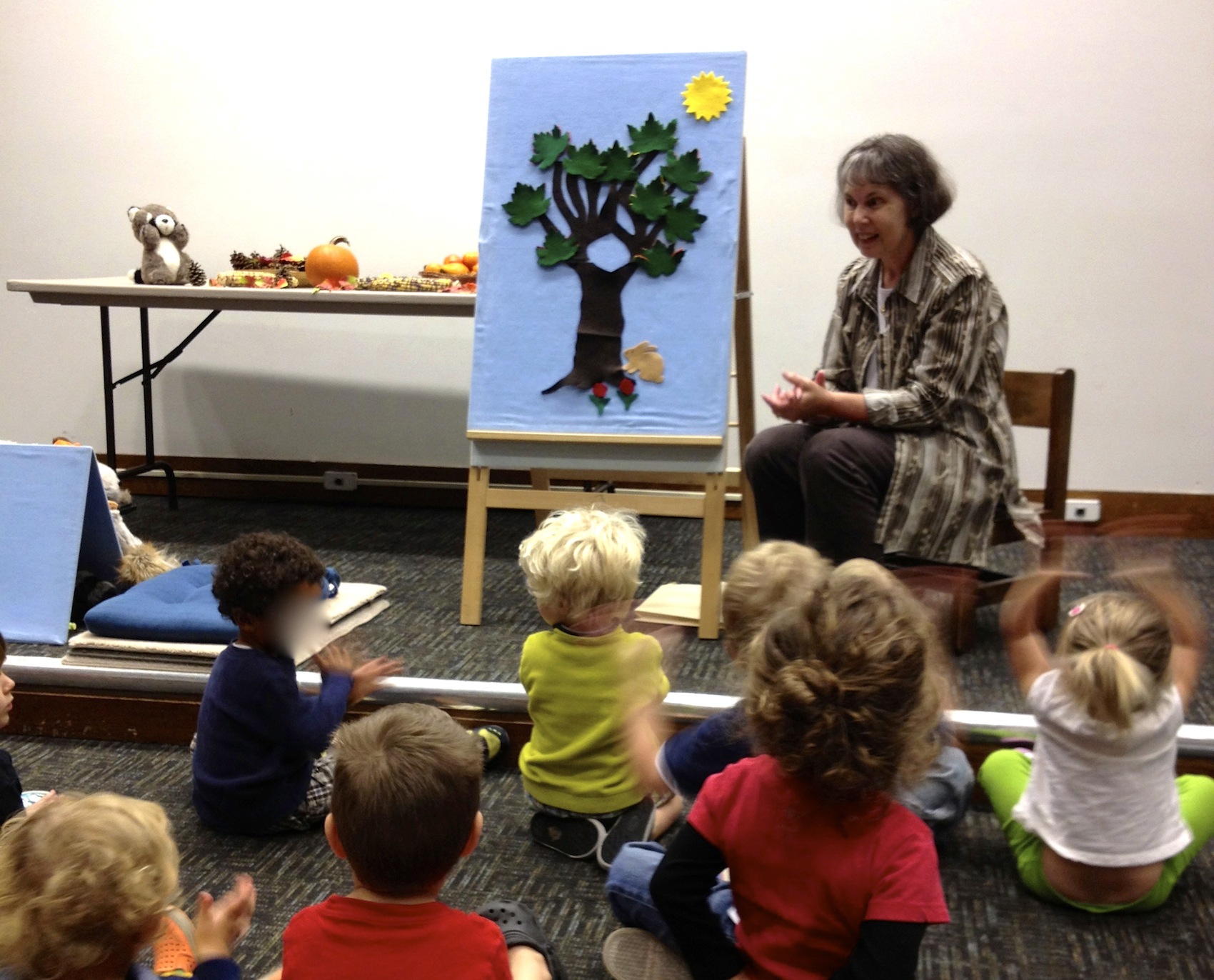
Every Day is Storytime
Exciting news! The best!!
I’m happy to share that my mentor, recently retired children’s librarian Jane Johnston, has started a blog: Every Day is Storytime.
If you’ve ever had the pleasure of meeting Jane Johnston in person, she is magical. While we worked together, I made it a point to try and absorb every ounce of wisdom she possesses when it comes to early literacy devices and tools, children’s books, and programming. After she retired, I often wondered how all the knowledge she possessed would live on, especially her philosophies, the songs, fingerplays, and stories she created entirely on her own. I was only able to take in a teeny sliver of it during the time I worked with her, which is why I’m beyond thrilled that she has decided to start blogging. Every Day is Storytime is “dedicated to exploring the fun of finding and appreciating the words and stories tucked into the corners of your family time together”. Her blog is written with the caregiver audience in mind, but I feel it will also be a rich resource for librarians and early childhood educators.
As her devoted pupil, I hang onto her every word. She is a storyteller, a poet, a children’s literature enthusiast, an advocate for discovery and play, a musician, a wizard, and so, so, so much more. Please join Jane in celebrating storytime every day HERE.
1
May
Using Storybird as a Storytelling Prompt in Libraries
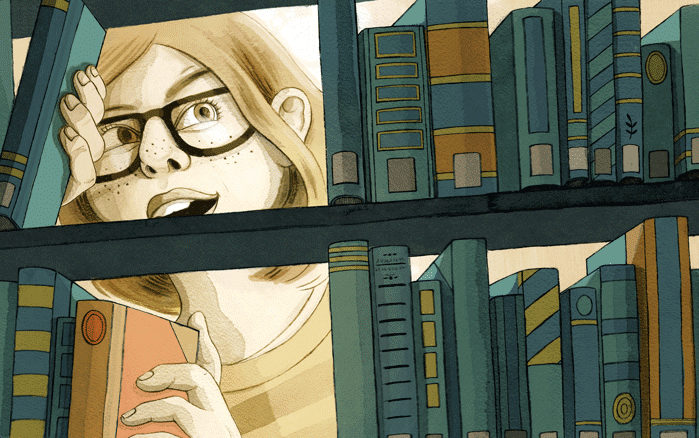
A picture is worth a thousand words.
Storybird is a new social media platform that prompts writing by allowing users to sift through a catalogue of illustrations (both amateur and professional) to select and pair with their stories. Here is the rundown from the Storybird website:
“Storybird lets anyone make visual stories in seconds. We curate artwork from illustrators and animators around the world and inspire writers of any age to turn those images into fresh stories. It’s a simple idea that has attracted millions of writers, readers, and artists to our platform. Families and friends, teachers and students, and amateurs and professionals have created more than 5 million stories—making Storybird one of the world’s largest storytelling communities.”
Pretty neat, right? Essentially, it’s an online community that promotes reading and writing in an online environment popular among the tween-agers.
I first heard about Storybird from my friend, illustrator Elizabeth Baddeley, who you might remember from a few weeks ago. She contributes her work to Storybird and is one of the featured illustrator for Storybird’s new longform format, which was announced last week (see this announcement in Publisher’s Weekly). I had to check it out for myself.
Even though Storybird is becoming a popular tool to use in the classroom, I think it would also be a treasure trove of learning and fun for young people that visit public libraries. If you’re a youth services librarian, here are a few ideas I came up with off the top of my head to encourage storytelling using this versatile site:
- The simplest way to utilize this service for FREE in the library is to introduce it to your you patrons and their caregivers. They can either create their own accounts or you can create an “educator account”, which would give you access to their account if you decide to develop a program using this site (and would also make managing login information handy).
- Make up your own digital picture book for storytime! Storybird is handy if you’re looking for a way to visually add to a song or rhyme or something of your own creation. Relay to audience members before or after reading the story that you created this book on your own using Storybird. If they have older children at home, Storybird is a good way to promote reading and writing there as well.
- Although most Summer Reading/Learning logs have already gone to print in preparation for the busy summer months at the library, think about using Storybird as a passive summertime program option. Kids can email their stories with the option of having them shared on the library’s blog. And/Or they can be printed and shared with the families who visit the library.
- Another programming idea is to have kids sign up to participate in creating a community book. After one child writes a chapter, another picks up where the last one left off. Print and add the book to the library’s collection for all to read!
Are you familiar with Storybird? Do you use Storybird in a library setting?
image source: Elizabeth Baddeley
16
Apr
Chattanooga Here I Come

BIG NEWS! I’ve accepted a position as children’s librarian at the Chattanooga Public Library, with the (unbound) directive of making awesome things happen with kids ages 0-7. I’ll also work a bit with the older kids too. The Dunn family will be booking a one-way ticket to Tennessee this summer.
Why Chattanooga Public Library?
After meeting THE Justin Hoenke last summer, Chattanooga has been on my mind. All kinds of innovative library happenings have been coming to fruition at a rapid rate at the Chattanooga Public Library. They aren’t afraid to try new things, and because of it they’re leading the future of libraries. Chattanooga is the perfect climate for learning as well cultivating seedling ideas for youth services. So when Justin asked if I would come work with him and his team, how could I refuse?
For those of you who aren’t in the library industry or may not be familiar with Chattanooga Public Library, here are a boatload of wonderful things going on as of late:
Read about what’s happening on the Chattanooga Public Library’s 2nd Floor (devoted to kids 0-18) and other events throughout the library on Justin’s blog HERE and radical tween/teen librarian, Megan Emery’s blog HERE.
Chattanooga Public Library Director, Corrine Hill was named Librarian of the Year for 2014
Chattanooga Public Library was featured in What the Library of the Future Will Look Like
Making Room for Innovation highlights The 4th Floor, Chattanooga Public Library’s community driven tech space
CPL’s Muse of Fire Project highlighted on Library as Incubator Project
These are only a few recent highlights. So, SO MUCH to list!!! I’m so excited to work with these folks!
Why Chattanooga?
Chattanooga is in a place of transition, full of opportunity. It was a city that had been in a dark place for awhile, but has turned a new chapter and is becoming a place that fosters technology and new business. We are looking forward to being catalysts for this movement of change. Another plus I found out early on is people who live in Chattanooga, love Chattanooga. Not one person I had spoken with, whether they were transplants to the area or have lived there for thirty years, said otherwise. The city has so much to offer and I am excited to be a part of it.
Goodbye, But Not Farewell to Lawrence
Moving to Chattanooga was a tough decision. My family and I love Lawrence. We love the community and the friendships we have here. I have had the privilege to work with a few incredible people at the Lawrence Public Library who have shaped who I am as a librarian, and I will carry that on forever. Many of you LPL’ers I consider family and have become surrogate grandparents, aunts, or uncles to my children. You are a big reason why my daughter has such a strong love for the library. We are leaving people and a city we love dearly, that’s for sure.
Lawrence will always hold a special place in my heart.
Ad Astra per Aspera.
Looking forward to this new adventure! Chattanooga, here I come!


