8
Aug
Summer of STEM @ the Library

Last Thursday was the official end of summer reading programming at Lawrence Public Library. While I organized a few solo events here and there, including a couple of author talks and an early literacy event for parents and caregivers, the predominate amount of my time was devoted to Kidsapalooza, a weekly summer club for 5-6-year-olds that the library has been hosting for over a decade. Kidsapalooza has always been about games, activities, and crafts- which is groovy and all- but this year I decided to change things up. It was the perfect opportunity to transform the program into a full-blown immersion in STEM (Science, Technology, Engineering, & Math) literacy.
This post is an outline of everything covered during Kidsaplaooza’s Summer of STEM. Each session had a different theme which was left a mystery to the kids until the day they showed up. Candy experiments, robotics, squishy circuits, and a glow-in-the-dark party where a few of the themes employed in our summer of fun. We were also fortunate to be entertained by several guest speakers. I reached out to the community and so many different individuals were willing to lend the library a couple hours of their time to advocate for STEM learning. It was awesome.
At the end of each session the kids received a handout titled “Today’s Adventures and Beyond”. This sheet contained information for their parents about what we discussed during each session and also provided them with activities and recommended reads based on what we learned about on that day. This is the introductory note from each flier:
“This summer at Kidsapalooza, we are going beyond games and crafts! Everything we do will be rooted in STEM literacy. STEM stands for Science, Technology, Engineering, and Math, which are key elements needed for kids to develop successful reading skills. After each session your child will receive a sheet like this briefly explaining what we did during today’s session. It will also include ideas to further today’s fun at home.The Kidzapalooza goals for the summer are: Explore, Observe, Create, and Have Fun!”
It was hard to capture pictures while managing over 50 kids, many of which were divided into several groups, but I did my best to get a few (as well as a few Vines). You ready? Here we goooooooo…..
Session 1: Fun with STEM
The first session was essentially tons of hands-on STEM activities that the kids rotated through every 8 minutes. At the beginning, I introduced myself and told the kids that this summer was going to be all about exploration. We were going to explore different ideas, make observations, create, and ask questions, and have fun! After a that brief intro we broke out into groups and spent the rest of the time learning and playing.
Here’s what we did: 
Built structures with gumdrops and toothpicks. (idea from Modern Parents Messy Kids)

Attempted Lego pattern puzzles. I took pictures of different Lego patterns, printed them out, and the kids had to recreate them.

Created chemical reactions using baking soda and vinegar. Using food coloring, I dyed a couple cups of vinegar and the kids spooned the vinegar onto plates of baking soda. Fizzy!!!

Operated iPads. A basic demonstration of using an iPad. They also played a few games I preselected if there was time left in their rotation at this table.

Explored shape creation. I created a bunch of shapes, some more complex than others, and the kids had to trace the shapes with strings of yarn. (idea via Teach Preschool)

Learned about leaves of various local trees with a Leaf Matching Game. I walk to work. I also live in the oldest part of Lawrence, so there are a lot of big trees that have been around for awhile. I made sheets with a picture of a specific native leaf, the name of the tree the leaf belongs to, a picture of the tree and either the fruit or flower of the tree. The kids had to match the leaves I picked on my walk to work with the various trees depicted on the sheets.
Read the picture book Me… Jane by Patrick McDonnell to the entire group at the end.
Session 2: Buzzzing for Bees
 (Naturally, I wore my bee antennae to this session.)
My co-worker is the daughter of one of the most famous entomologists in the world, Charles Michener, so I’ve learned quite a bit about bees just from working with her (which has grown into a fondness of the little striped buggers myself’0. I also chose a theme centered around bees because they are disappearing, and without them there will be no more fruits and vegetables to eat. This was just one way to raise awareness.
Here’s what we did:
Jennifer Thomas from the Division of Entomology at the University of Kansas introduced us to all kinds of fascinating facts about bees. 
Performed a nectar collecting relay. At one end of the room was a bunch of cups filled with water dyed yellow and fake flowers. At the other end of the room were little paint pallets. Using an eye dropper the kids had to collect nectar from the flowers and hurry back to the other end of the room to “fill their hive”. (idea via For The Children)

Tested our sense of smell and found “bee siblings” using our noses. A bee smells, tastes, and feels with its two antennae. Honeybees of the same colony recognize their siblings by scent. When an unrelated bee tries to enter the hive, guard bees detect its foreign scent and sting it to death.Using multiple cotton balls that have been dipped into clear food flavoring such as peppermint and lemon extract. Each child received a cotton ball without revealing the smell The kids had to locate their “sibling” by exchanging smells of each other’s cotton balls. Once they found their “bee sibling” swap the child’s cotton ball for a different smell. (idea via Scholastic)

Planted a Bee-Friendly Garden. The kids learned about what plants through this simple craft. All they had to do was choose flowers they would like to “plant” and glue them to their paper. Then they decorated the garden with markers. They also glued this caption: “Honey bees require pollen and nectar from flowers in order to survive. “Plant” a bee garden using different kinds of bee-friendly plants that grow well in Lawrence, Kansas.” I encouraged them to show their caregivers so that they could plant a few bee-friendly flowers in their own gardens at home.
Did the waggle dance, a special dance bees perform to communicate to one another. As a large group, we watched this video from PBS Nova, and then attempted to preform our own waggle dance.
Session 3: Candy Chemistry
This entire program was structured around the book Candy Experiments by Loralee Leavitt. As a large group we discussed what chemistry is, how to conduct an experiment, and touched upon the scientific method. Then, we conducted a few experiments of our own using candy. This was a messy one!
Here’s what we did:
Conducted an experiment with Mentos and Diet Coke which resulted in an eruption! (see above) I took all the kids outside and preformed this experiment as they watched. Diet Coke is full of carbon dioxide gas. When you drop a Mentos, bubbles of carbon dioxide form on the surface of the candy. So many bubbles form so fast that they push the soda right out of the bottle.
Tested if there was acid in candy. If candy is sour it usually means it contains acid. The kids dropped Sour Patch Kids or Sour Skittles into a cup of clear water, sprinkled a bit of baking soda, and if the candy fizzed then it meant there was acid in the candy.
Learned about density and why certain candies sink or float. If you drop Laffy Taffy into a cup it sinks, but if you stretch it out into a boat or cup it floats. On the other side of the spectrum, a 3 Musketeers bar floats because of all the air in the nugget, but if you crush it, then it sinks to the bottom of the cup. The kids played around with manipulating the density of these types of candies.
Experimented with dissolving candy coating and what happens to the artificial colors. The kids dropped 2 red M&M’s and 2 yellow M&M’s into a bowl of water. I asked them, “Do you think the colors will mix themselves together to create orange?” The colors did not blend because the dense sugar water sinks, so the M&M’s sit in their own pools of color. But if you swish the water around, the movement causes the colors to mix together.
Investigated the elements found in Pop Rocks. We discussed how Carbon Dioxide gas is the secret ingredient that makes Pop Rocks pop. When you put Pop Rocks in water or in your mouth the candy melts and releasing the tiny bubbles of Carbon Dioxide. This was demonstrated by pouring Pop Rocks in a glass of water.
Session 4: Robotics
KU Robotics visited Kidsapalooza to discuss the technology and components of what makes a robot. Their presentation was AWESOME! We didn’t break-out into activities since the presentation took the whole session. Their closing message? If you engage yourself in math and science, then you can become a superhero and save the world. The kids ate it up.

The Lawrence Journal World wrote up a nice article about their visit here.
Session 5: Magic Measurements
Will Dunn, a mathematics education UKanTeach student at the University of Kansas (also my husband), came to visit Kidsapalooza to discuss and demonstrate the magic of measurements by noticing different sizes and different ways to measure. There was a short presentation and then we broke out into rotating groups for various measurement activities.
Here’s what we did:
Size comparison between animals. Will gave a presentation about size comparison using various animals, and also talked about measurement and types of measurements.
Shot pom poms balls from a pom pom shooter and measured the distance of the pom poms after they were shot. Before this session we made a handful of pom pom shooters. The kids shot pom poms using their shooters and measured how much distance the pom pom covered using their feet and yard sticks. (Idea via Relentlessly Fun, Deceptively Educational)
Explored volume by pouring rice into various sized containers. Will and I emptied out our kitchen cupboards and brought pitchers, cups, bowls, and whatever else we could find for the kids to use to experiment with measuring volume with rice.
Utilized different tools such as paper clips, pencils, crayons, and yardsticks to measure objects. The kids used different devices to measure the top of a table by lining them up single-file in the middle of the table.

How many Kidsapalooza kids does it take to equal the length of a blue whale? I measured out the length of a blue whale (about 100 feet) with tape and the kids lined up to see how many of their body lengths it would take to equal one whale.
Read the picture book Lucky Beans by Becky Birtha, illustrated by Nicole Tadgell and discussed estimation afterward by holding our own Lucky Beans contest were the kids guessed how many beans were in a clear vase.
Session 6: Energy and Squishy Circuits

I am so glad I came across this TED Talk before starting Kidsapalooza. Squishy Circuits is a unique way that allows kids of all ages to create circuits and explore electronics using play dough. It’s so easy, my daughter (3) could do it.
Here’s what we did:
Visited with an electric expert. Amanda, an engineering student at the University of Kansas and one of my amazing storytime moms, visited Kidsapalooza to talk about how energy and electricity work. Then she stayed to help assist kids with the squishy circuits.
Played with squishy circuits! I ordered 6 squishy circuit kits, made the play dough (err… my husband made the play dough) the day before, and the kids took turns creating circuits. So that everyone was able to have a turn, each child received 2 minutes of alone time with the circuits before passing it on to a peer. They kids did a wonderful job sharing during this activity.
Afterwards, we came together as a group and I read the book How Ben Franklin Stole the Lightning by Rosalyn Schanzer. You can learn more about how to create lessons using squishy circuits here.
Session 7: Wind Power

Piggy-backing off of the session from the week before, this session was about the power of wind turbines. Kansas has a large population of these giants of energy, so I thought it fitting to have a session devoted to them and energy efficiency in generl.
Here’s what we did:
Aaron Weigel from Trade Wind Energy visited Kidsapalooza to talk about wind turbines! The kids learned where wind comes from, how wind turbines work , and how they help create energy.
We crafted pinwheels using things you would find around the house. This is a craft that needs a bit of help from an adult, but the kids had fun putting them together nonetheless. I used the template and direction found on First Palette.
We ran out of time, but the plan was to read the book The Boy Who Harnessed the Wind by William Kamkwamba and Bryan Mealer, illustrated by Elizabeth Zunon.
Session 8: Glow-in-the-Dark Party

Everyone loves things that glow-in-the-dark! For the last session, I threw the kids a glow-in-the-dark party. I started with a short presentation and a few demonstrations and then the kids broke out into groups for activities.
Here’s what we did:
Discussed various animals that glow-in-the-dark. Black Dragonfish, Firefly Squid, Flashlight Fish, New Zealand Glowworms, and (of course) Fireflies. I explained why and how these animals light up in the dark, along with some pictures and a couple short video clips.
Learned about the chemistry of a glowstick. How does a glowstick work? I cracked a glowstick in front of the kids and talked about the chemistry behind how a glowstick works. More on that can be found here.
Admired glowing water that was created using florescent paint and discussed ultraviolet light and how some colors glow brighter under a black light. Next, I talked about ultraviolet light and fluorescence and how fluorescent colors glow under a black light. I demonstrated this concept by mixing a few drops of neon paint in cups of water under a black light, which makes the water glow in vibrant colors. Each cup was devoted to a different color, and I had 7 cups in all. Lots of “oooohs and ahhhhs” were voiced during this demonstration. (Idea via Growing a Jeweled Rose)
Created a glowing eruption. Using the same baking soda and vinegar procedure the kids tested during the first session, I conducted the same experiment except this time with neon paint under a black light. Using a clear cup, I poured in a generous amount of baking soda, added three different colors of neon paint, and then poured in the vinegar. (Idea via Growing a Jeweled Rose)
Using fluorescent glue, we painted glowing pictures under a black light using glue and black paper. The Vine above is of the fluorescent glue I made for the kids to use. All I did was add a teaspoon or two of neon paint, stirred the glue and shook the bottle up, and voila! Fluorescent glue. Under black light the kids created designs with the glue on black paper. (Idea via Growing a Jeweled Rose)
Played ring toss with glow-in-the-dark materials. Water bottles, glowsticks, and glow necklaces… ring toss! This was a fun game for the kids to play. Using a pack of water bottles, I inserted a glowstick into each water bottle (with the water still in it) and sealed the lid. The bottles were arranged in a cluster on the floor and using assembled glowing necklaces (like these), the kids tried their hand at ring toss. (Idea via Design Dazzle)

Experimented with glowstick photography. I gave a 2-minute talk about long exposure photographs (like the image of fireflies above) and then the kids tried their hand at making their own with glowsticks. The the digital camera we used wouldn’t allow us to set the aperture to make the exposures even longer, but they got the idea. You can see a sample gallery of the kids’ glowstick photography here. This was their favorite activity of the session.
At the end, all the kids received their own glowstick and a glow-in-the-dark bracelet along with their “Today’s Adventures and Beyond” handout.
And that my friends, was our Summer of STEM @ the library!
I almost forgot to mention…. Since our library is under renovation, we were using a temporary space for the program. Our wonderful circulation team at the library set up a Pop-Up Library so kids could check out books after each session. I selected books that reflected the theme of the day ahead of time, and one of my co-workers would check out books to the kids once the program was over. It also served as a book dr0p-off location. Huzzah!
Are you incorporating STEM in your library? I’d love to know if you are! I’ve been collecting lots of ideas on my Pinterest board STEM Literacy Activities for the next opportunity for STEM programing. So many ideas, so little time. Be sure to check it out. Also, if you have a question about any of the activities mentioned, just shoot me an email using the contact form or leave a comment below. I can also send any of the “Today’s Adventures & Beyond” handouts the kids received after each program. I’m always happy to share!!
image source: wind turbines, fireflies

20
Jul
Seeing Things
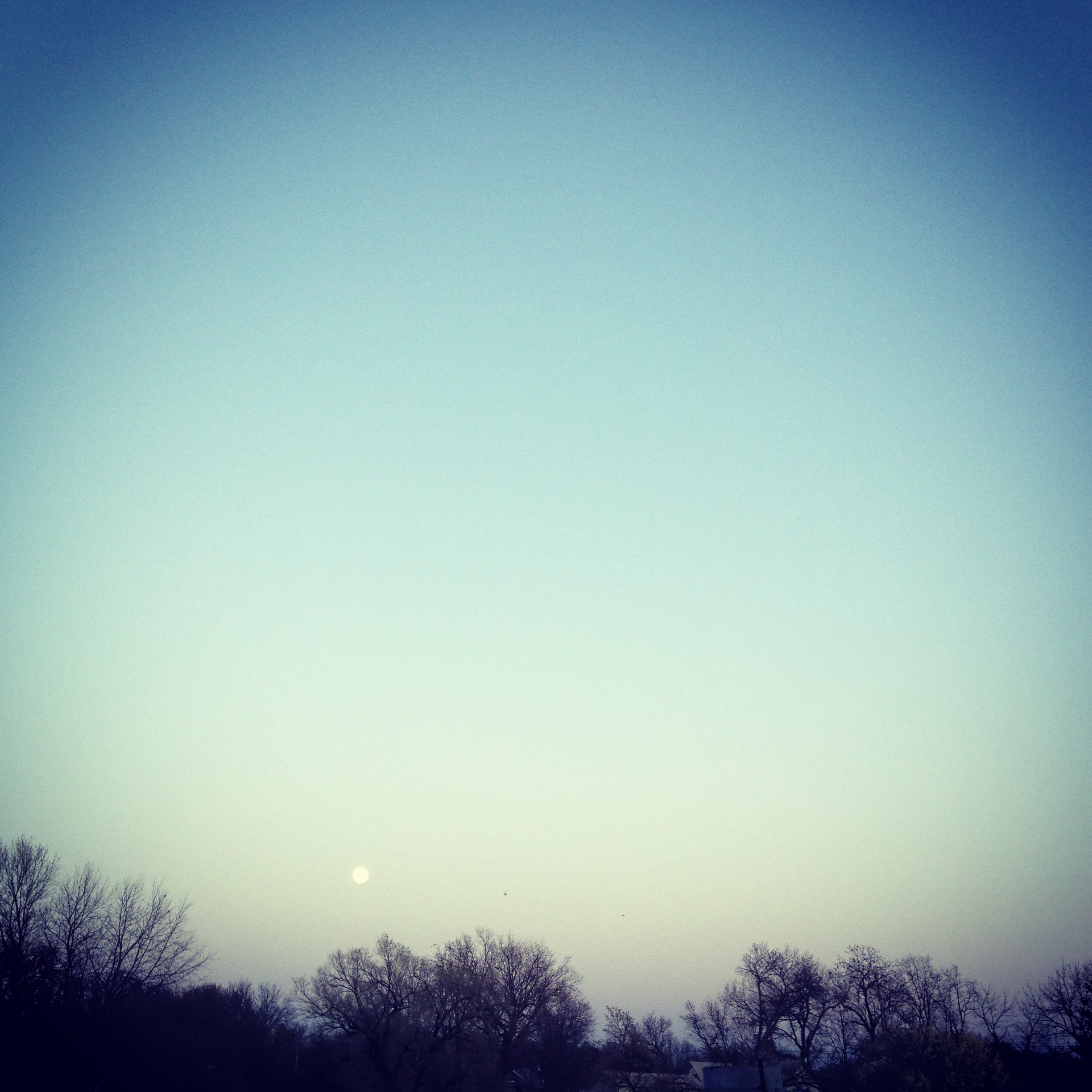
Spring moonrise.
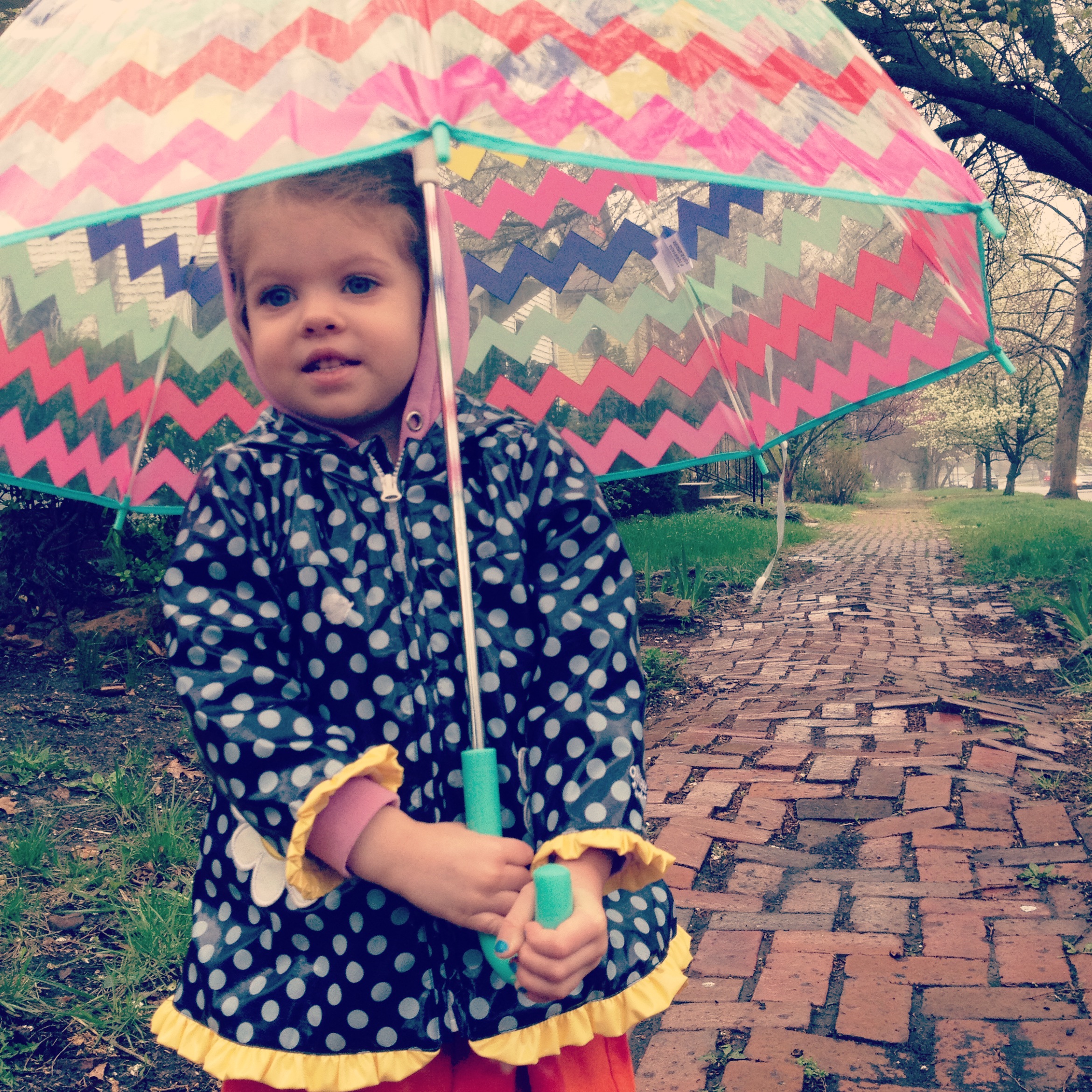
Misty walks.
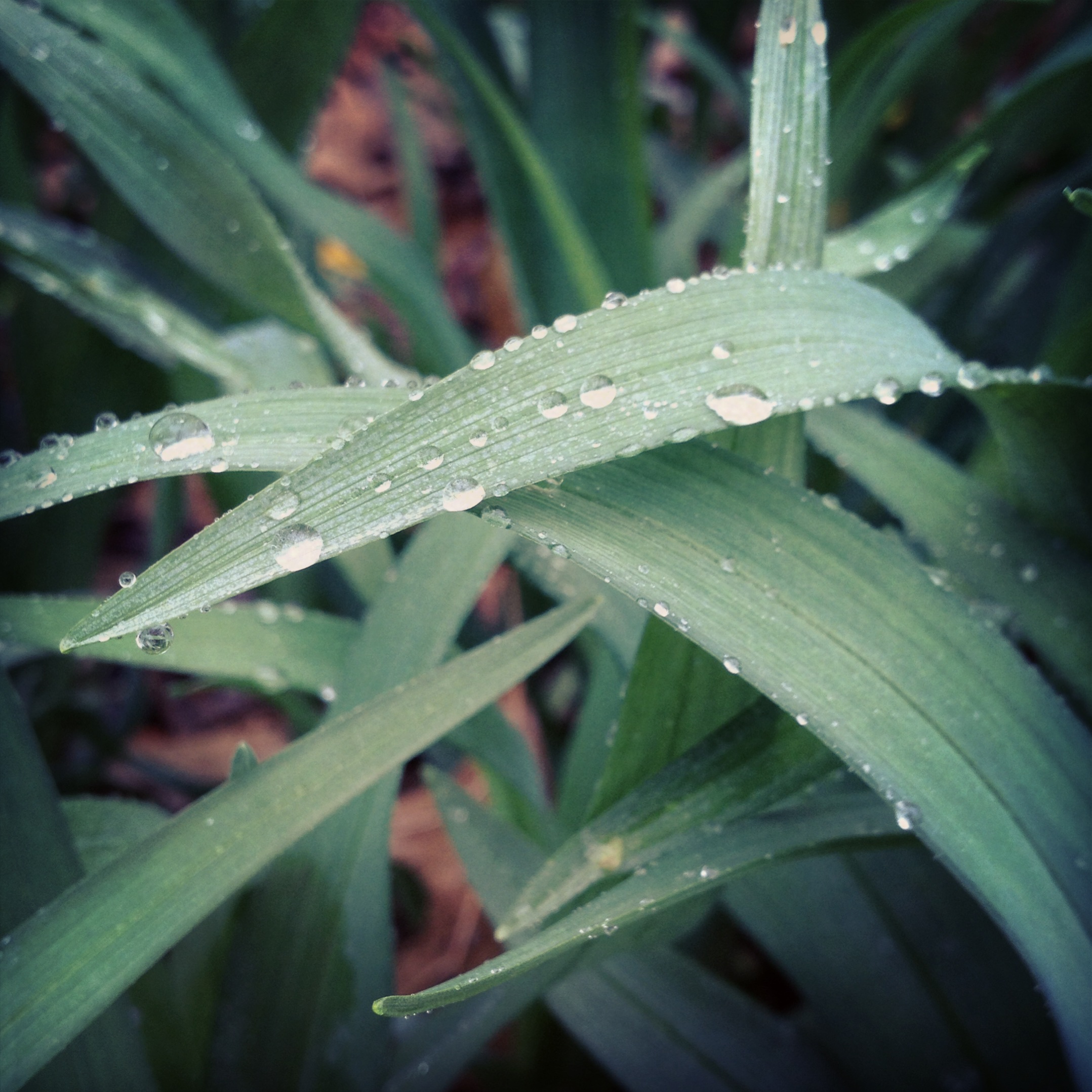
Drip, drip, drop.
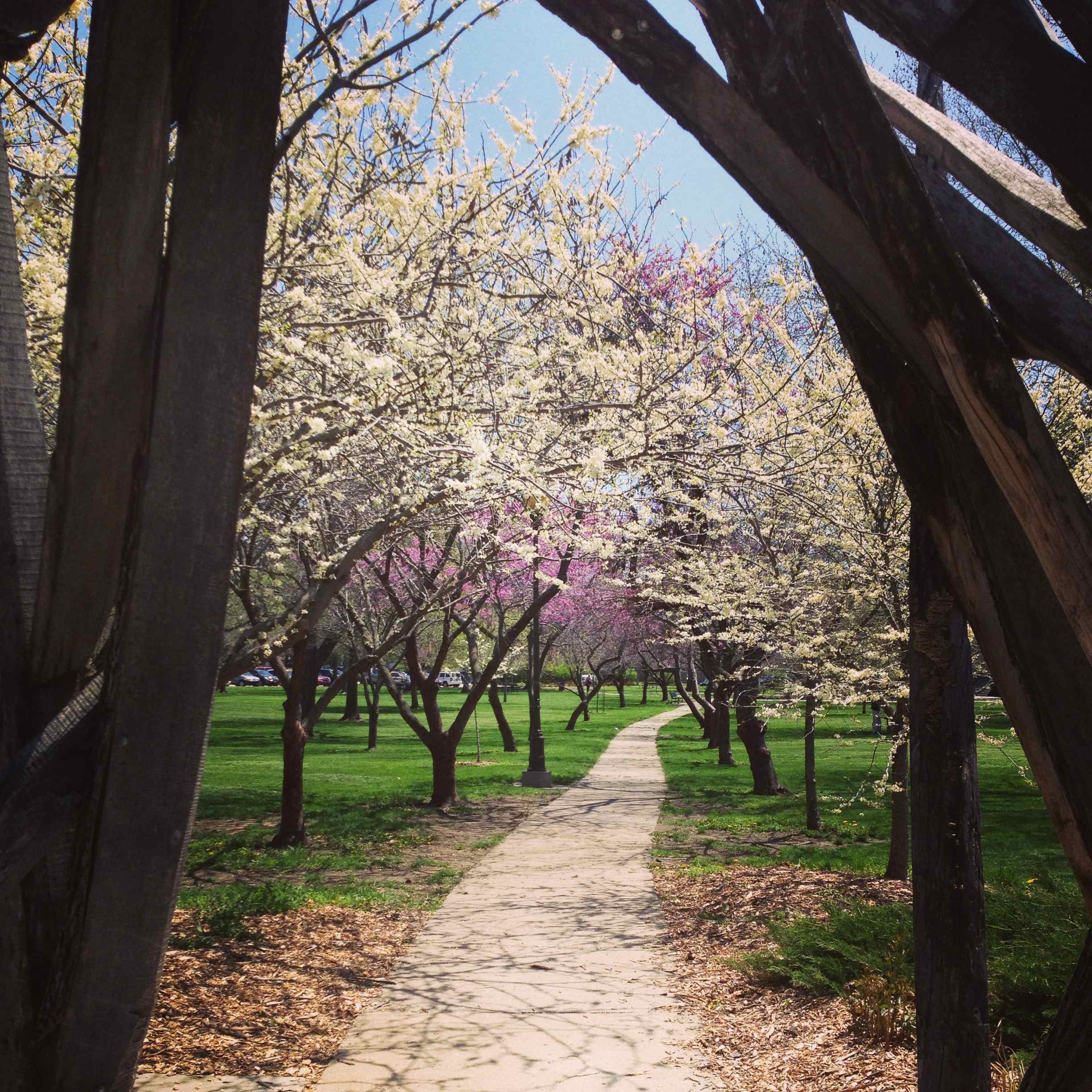
South Park in bloom.
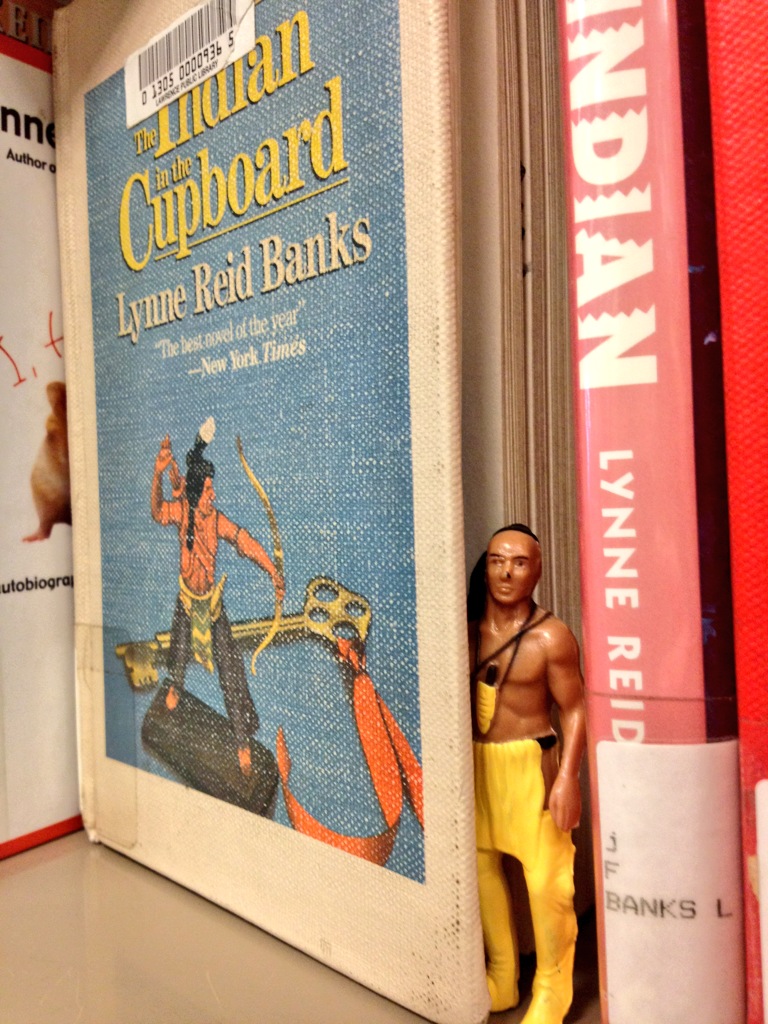
Library magic.
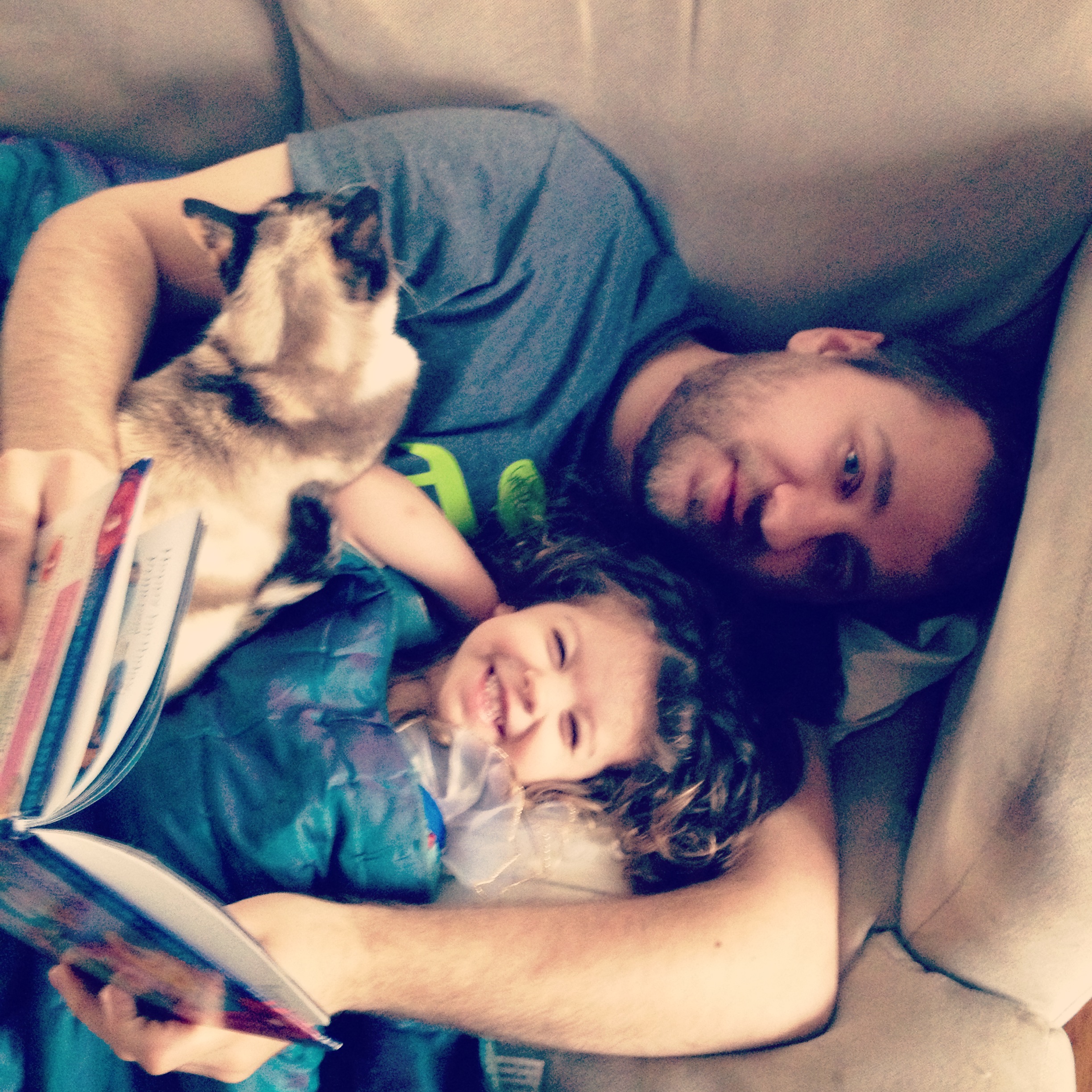
Story cuddle.
“We can talk…. When there is anyone worth talking to.”
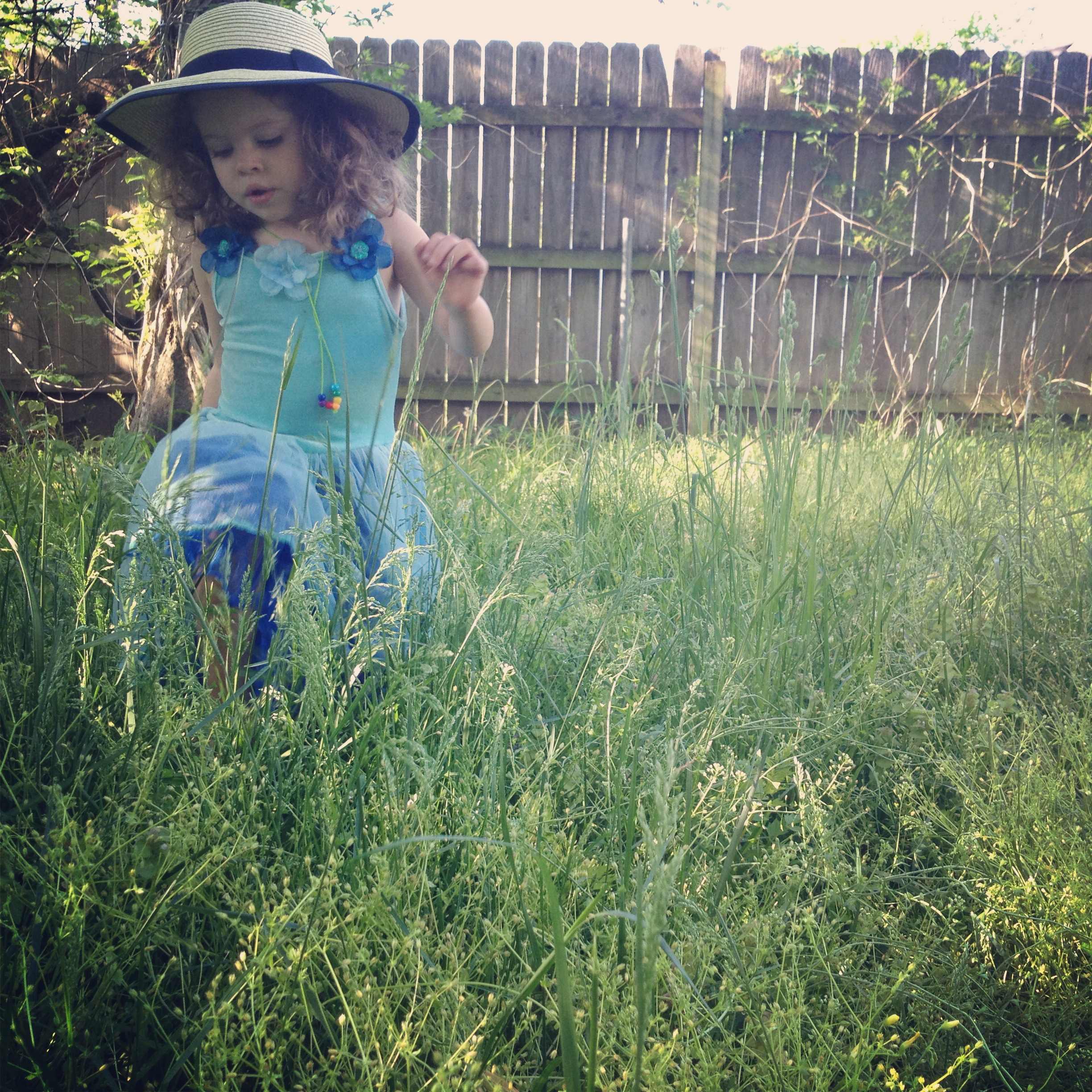
Exploring.
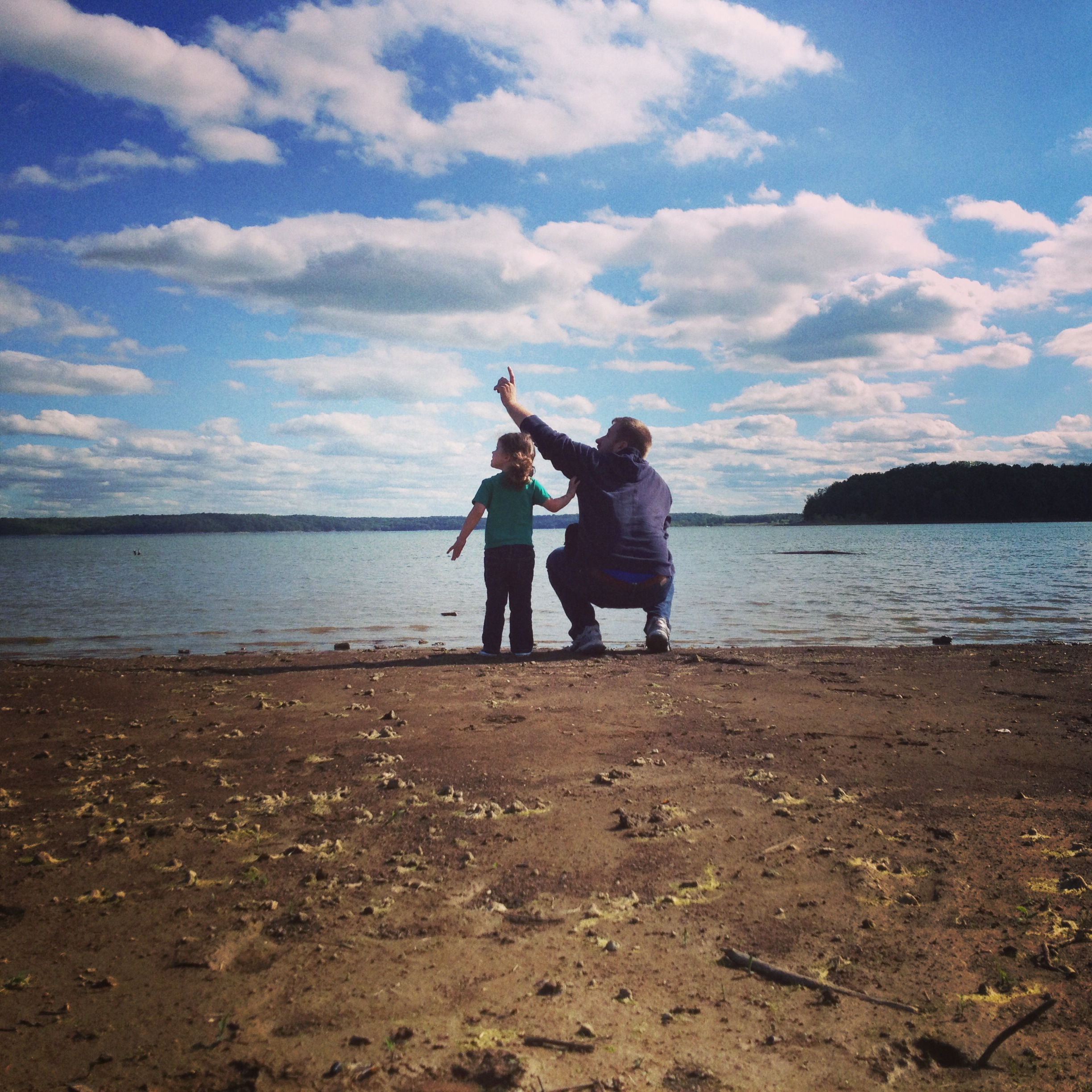
Cloud gazing.
Growing. (Picture taken at 17 weeks.)
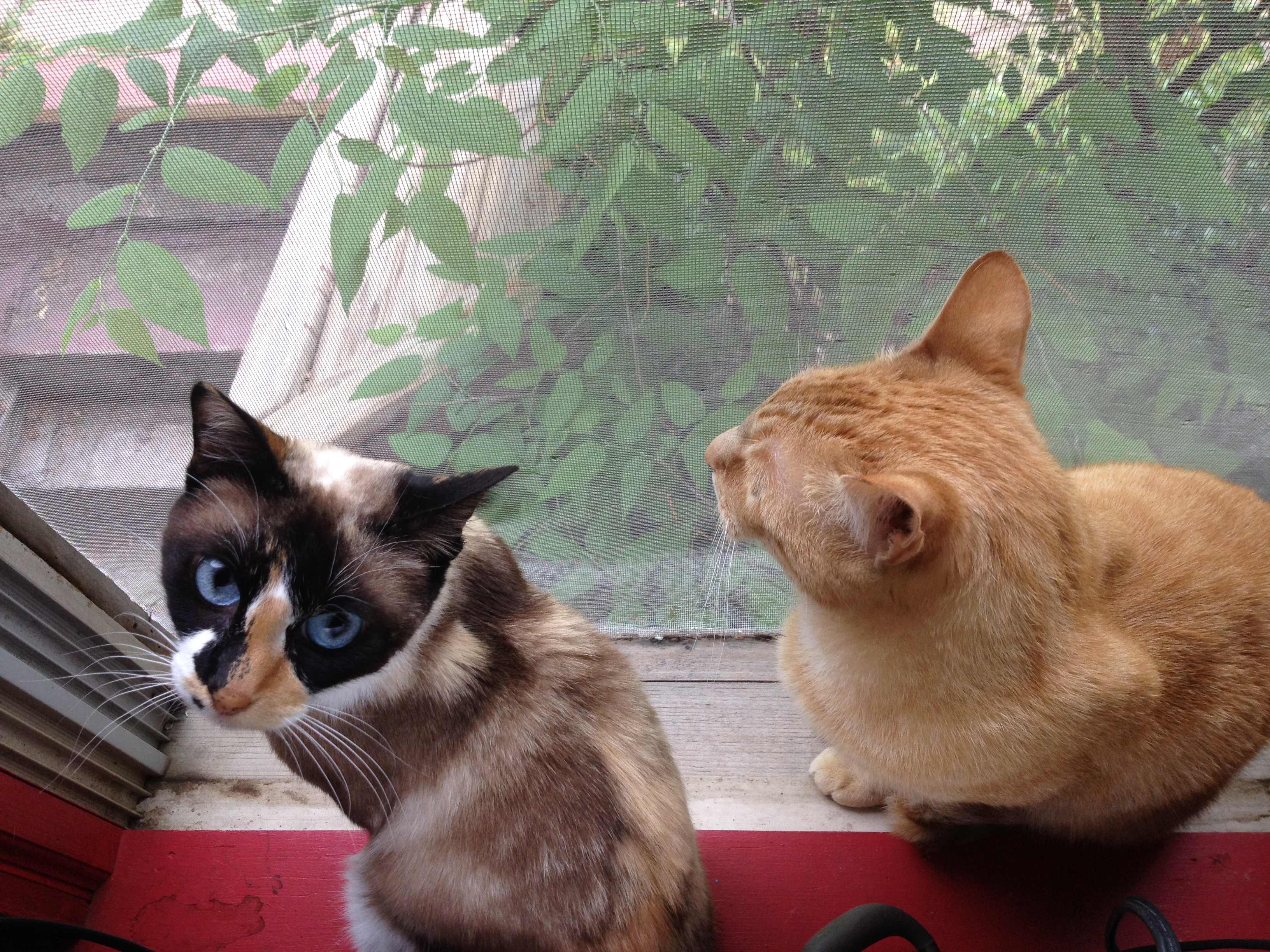
Window watching.
Smiles.
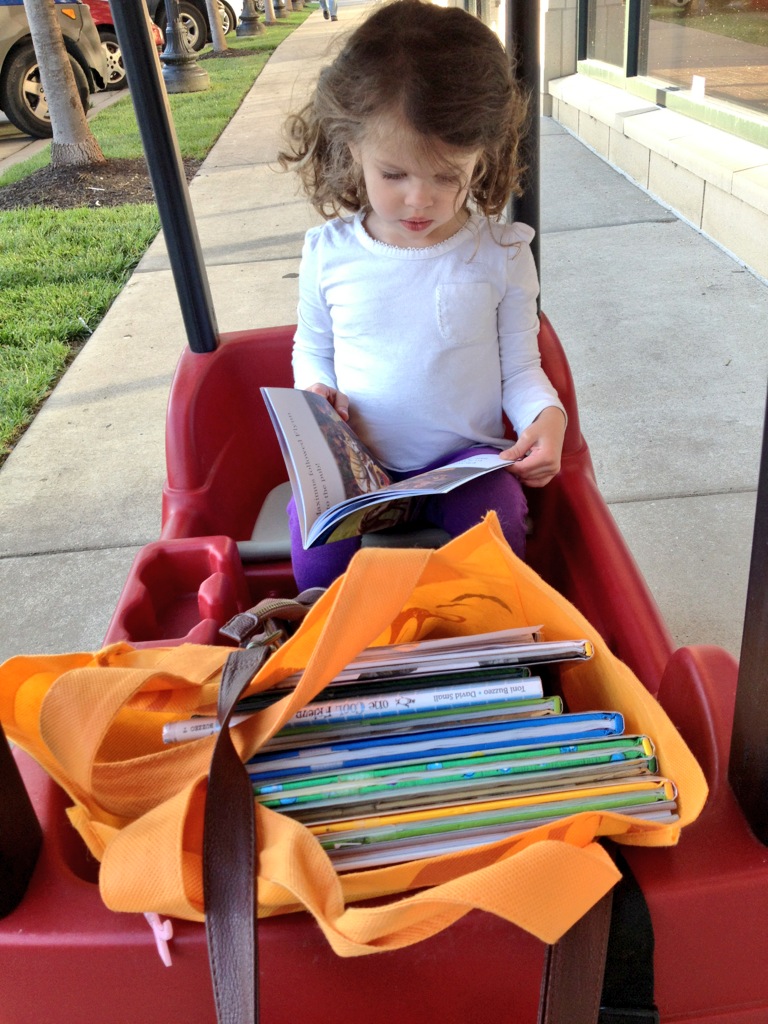
Wagon reading.
Summer fresh.
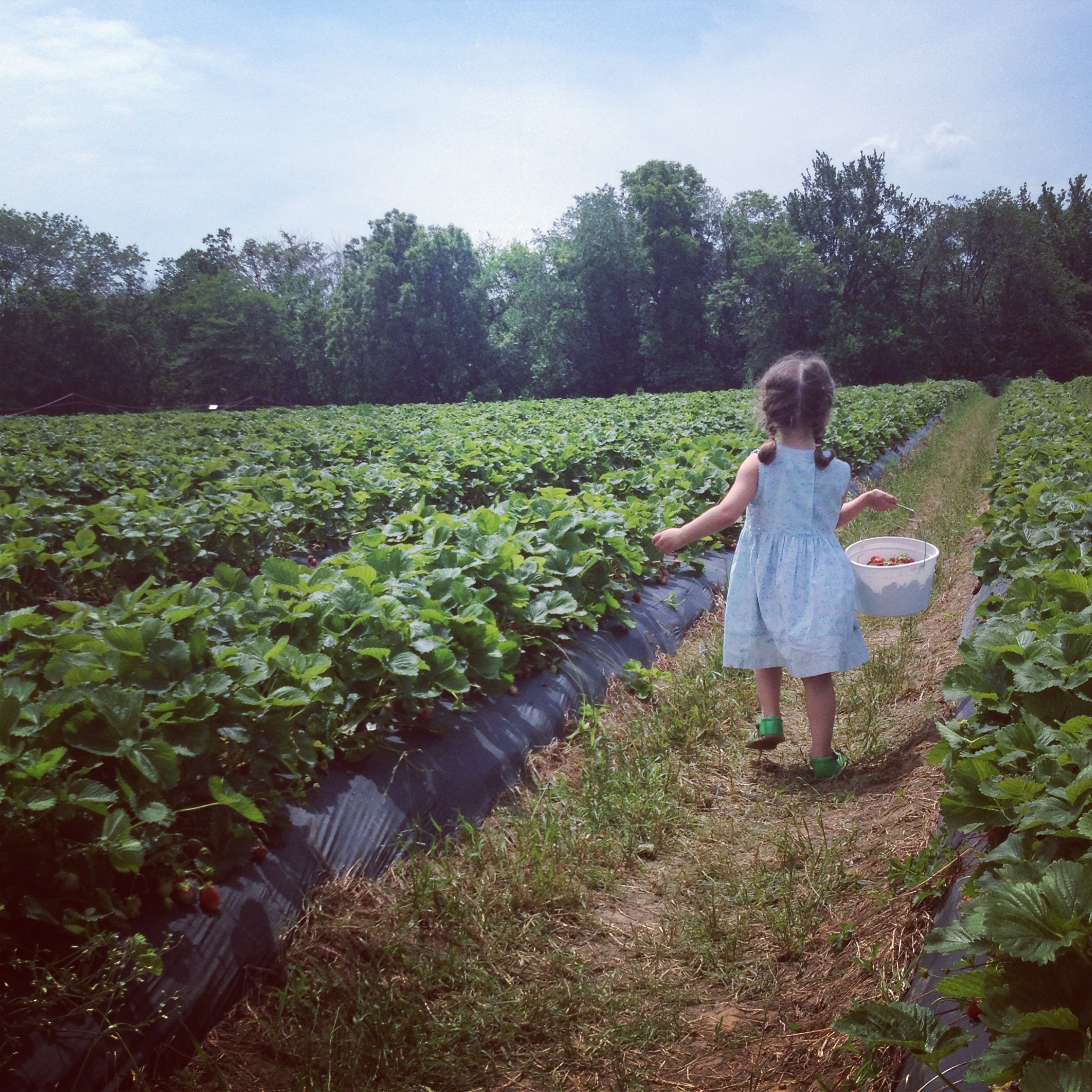
Strawberry breeze.
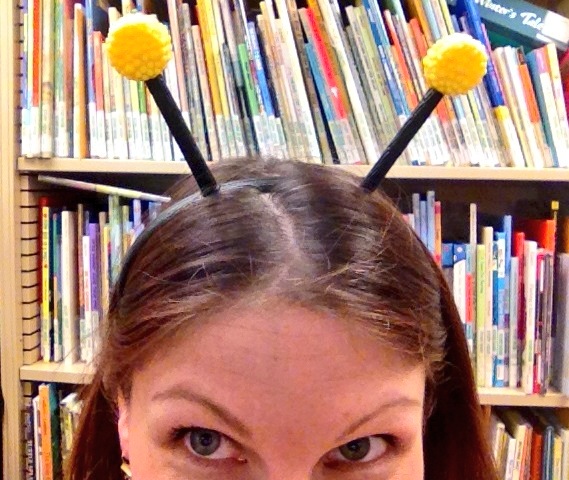
Bzzzzzzy at work.
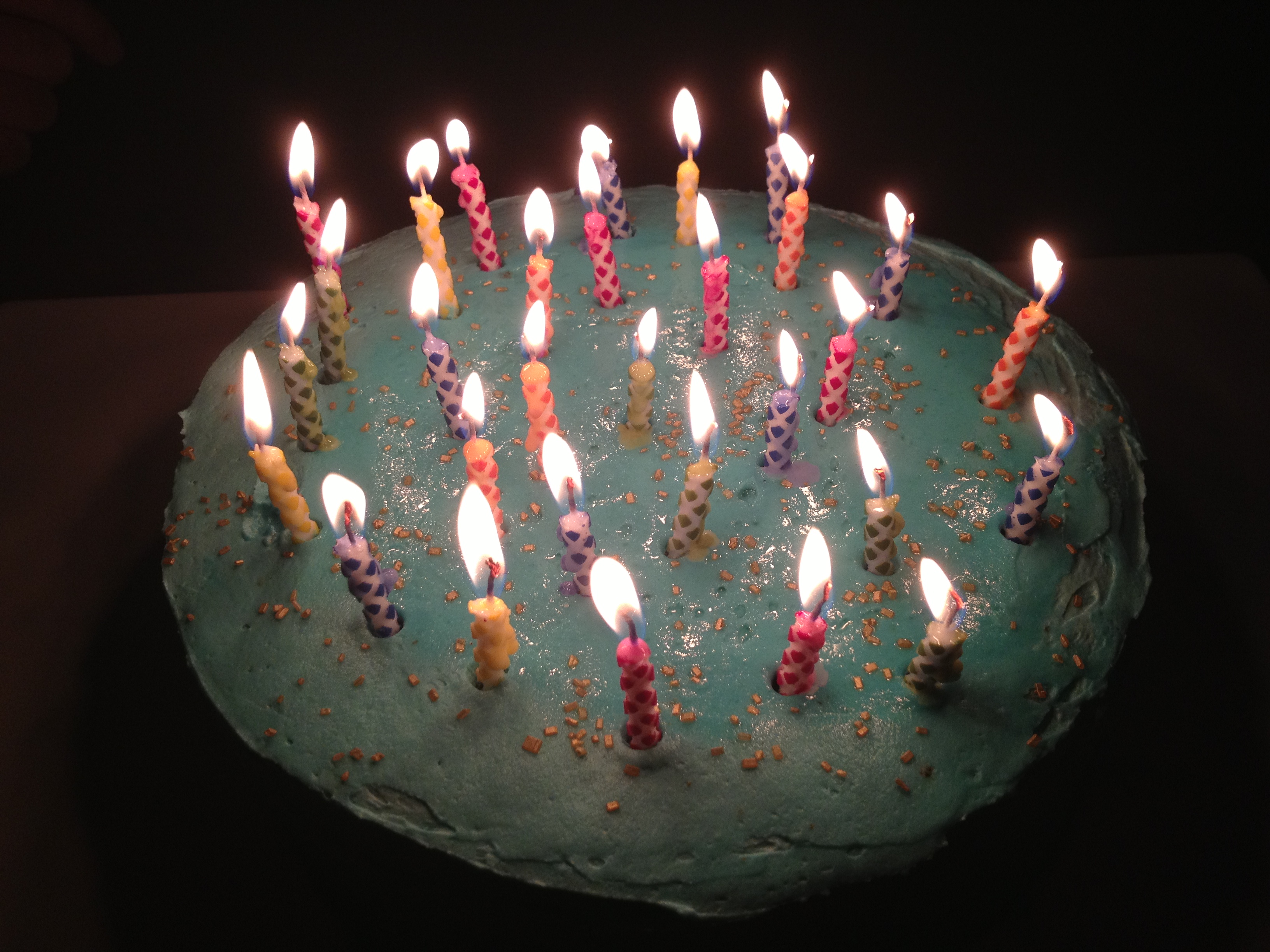
30.
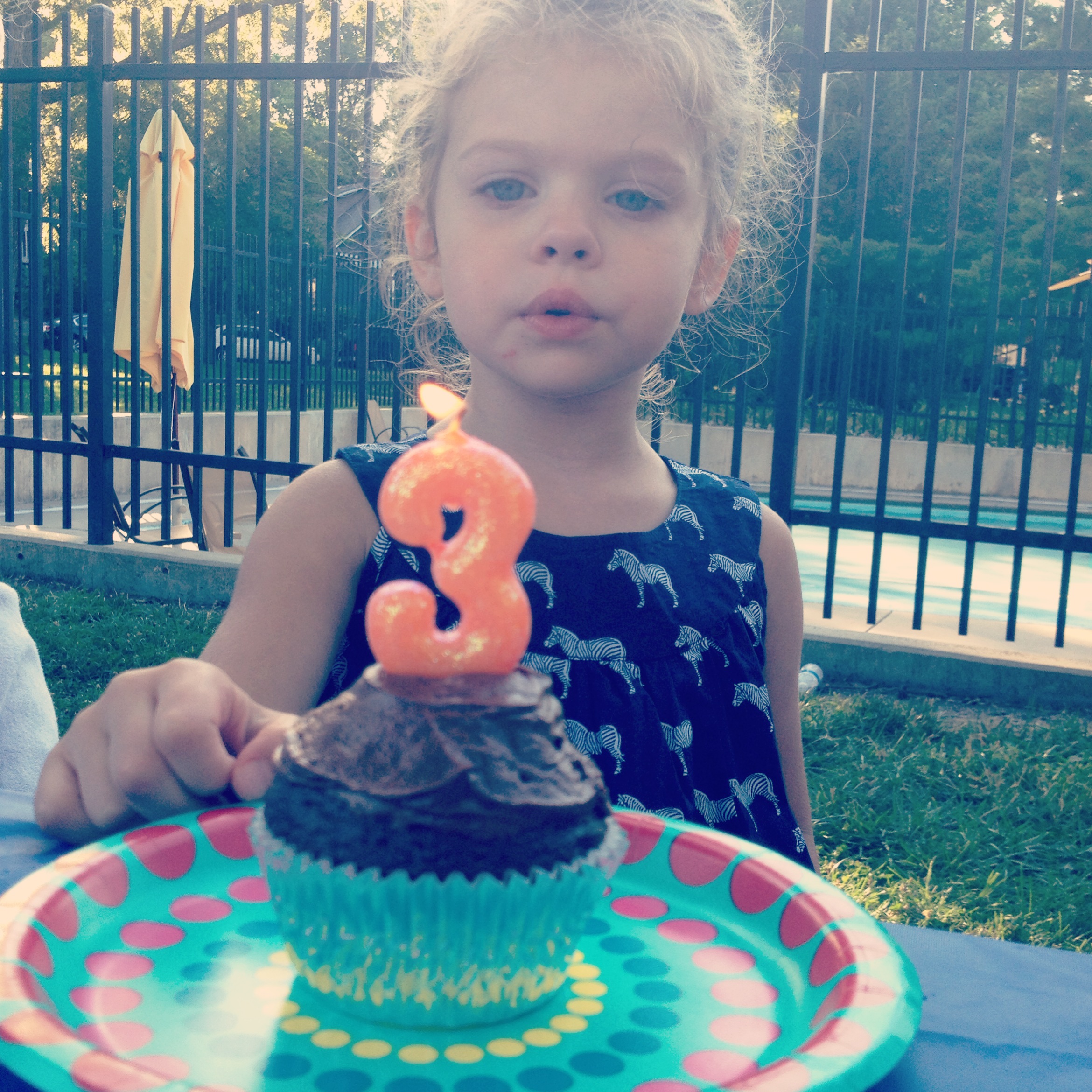
3.
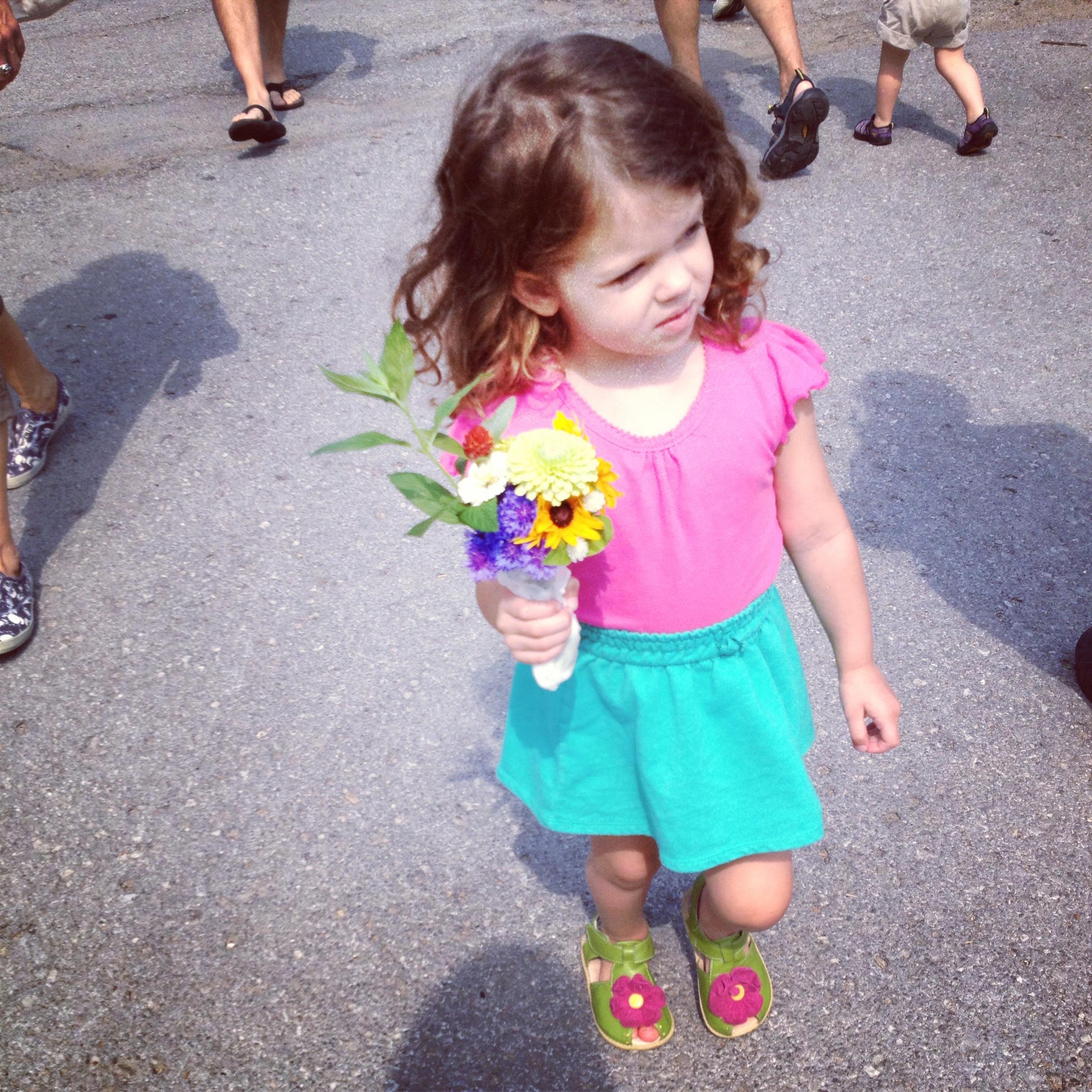
To market, to market.
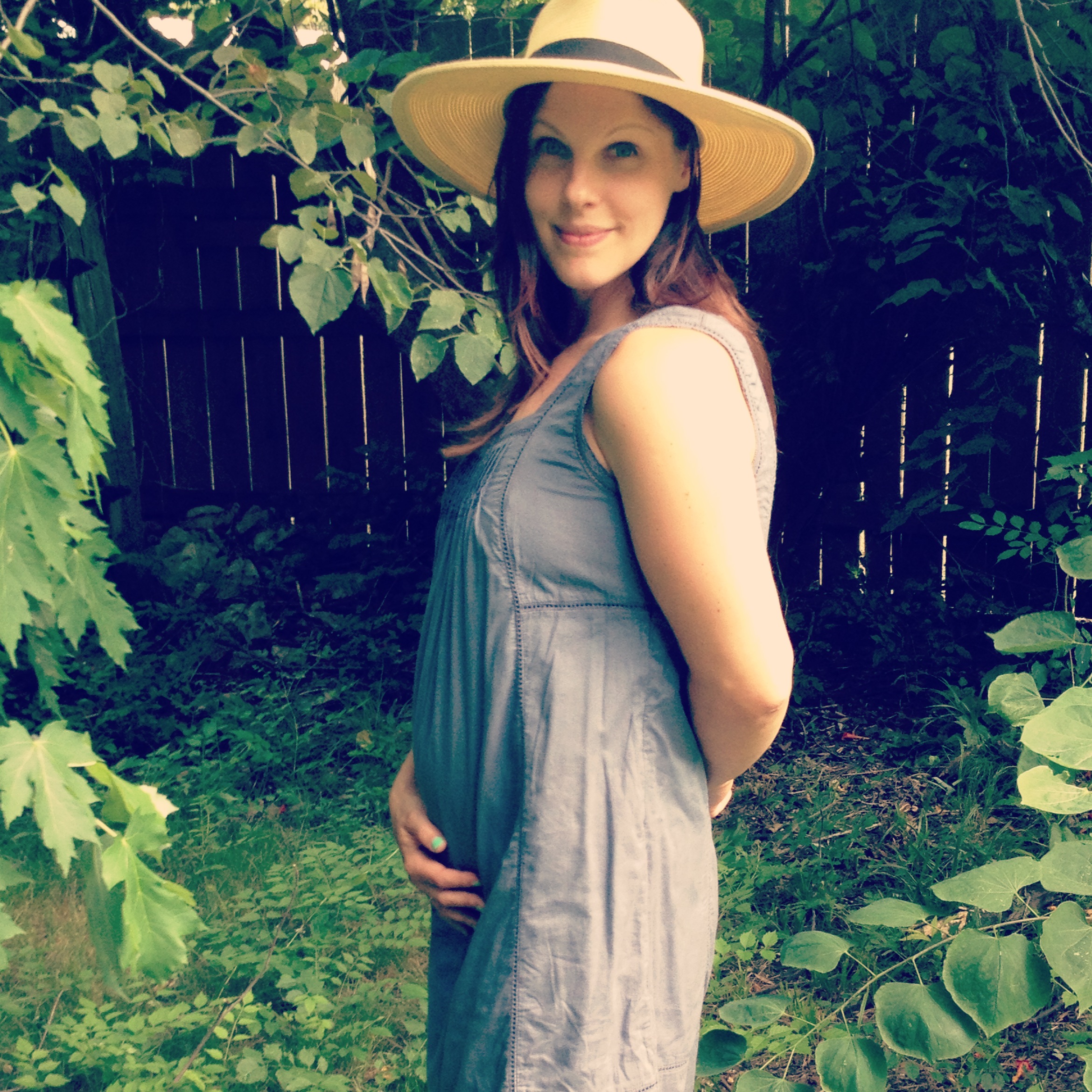
Growing. (Picture taken at 23 weeks.)
Summer came slowly to Lawrence. Not that I’m complaining… It’s been absolute bliss.
L started attending preschool in June. She goes for half the day and is loving it. Since she is in school now, my schedule has changed quite a bit. Instead of working nights a weekends, I work one full day and then mornings the rest of the work week. I actually get to see my husband. It’s awesome! Over the summer, I’ve been conducting the library summer club for kids 5-6, hosted an early literacy event, a few author talks, and the rest of my time goes towards planning for Read Across Lawrence for Kids.
Let me see… What else?
Oh, yes. Baby is growing. I’m 23-weeks pregnant this week and we found out we were having a GIRL just the other day. The nausea is gone. I’m less tired. The baby is kicking and healthy. She and I are doing a-okay so far.
Last weekend, my husband and I started packing our house up. We’re moving to a different home (only a block away) at the end of the month. I register for classes next week, and school starts in September. Baby is due in November. Will finishes summer school at the end of the month, will have his last semester of school in the fall, and then will student teach in the spring while looking for a job. It’s going to be an eventful rest of 2013! Here we go!
17
Jul
Review: Doll Bones

Doll Bones
by Holly Black
Find it at: Your library | Amazon | Indiebound
Published: Margaret K. McElderry Books, an imprint of Simon & Schuster for Young Readers (May 7, 2013)
Recommended reading age: 9 & up
In a nutshell: I picked up Doll Bones by Holly Black not knowing what to expect and without having any prior knowledge as to what it was about. I’ve seen a few reviews pop-up here and there, but I admit I didn’t read them. Not so much as a skim. Actually, I couldn’t get past the cover and the image of that eerie doll. For awhile, every time I saw it, it would send shivers up my spine.
I prefer to read books this way. Cracking the spine having neither expectations nor any idea what it’s about.
I’ve been terrified to write this review as I don’t want to reveal too much. Now that I’ve read it, when I read synopses online I feel like they reveal too much. So, this is what I’m going to do. In this review, I’m giving you the option to opt out of learning anything more about this book so that you can enjoy it in the same way I did. Diving in unknowingly. If you choose this option, go pick up a copy. It’s spectacular. Holly Black did a masterful job. Doll Bones is as hauntingly beautiful as it is riveting. That’s all you need to know.
STOP READING NOW
For the rest of you folks who like a little insight before you commit to reading a book, or have had the pleasure of reading Doll Bones already, let’s talk.
Zack, Poppy, and Alice are best friends. In most ways they’re like every other middle school-er, little budding identities with their fair share of insecurities- but they also harbor a secret that makes them different for other kids at their school; they still play with toys.
But it’s more than that. They have fabricated an entire fantastical story filled with pirates, thieves, mermaids, and deadly quests, using old Barbies, action figures, and anything else they have accumulated over time. Behind closed doors they become their characters and it was as real to them as anything. Out of all the toy accomplices in their tale, there is one doll they do not play with. Poppy’s mother found an old doll at an estate sale and is convinced it will make her rich one day. Poppy is not permitted to even touch it, but nonetheless the old doll, “the Queen”, made her way into Zach, Poppy, and Alice’s stories.
All is in jeopardy when one day when Zach’s dad decides it’s time for Zach to grow up. Turmoil spawns within the group, and the trio’s story looks to be coming to an abrupt end. That is until Poppy has a startling dream about “the Queen” that launches them into an entirely different story, a real-life quest to put an old ghost to rest.
I’d had an advanced reader’s copy of Doll Bones on my nightstand for a good 5-months before deciding to give it a shot. What took me so long? That freaking doll on the cover; with her droopy, pathetic one-and-a-half-eyed stare. My husband likes to say that I’m “easily affected.” Translation: I’m a wuss. I wanted to read it, but that doll made me nervous. When I was in fourth grade, I went to a friend’s house for a sleepover. She was older than me naturally I thought everything she did was cool. We watched Chuckie that night and I had nightmares for a year. Around that age I also owned quite a few Madame Alexander dolls. They were gifts given at Christmas or on my birthday, but they rarely were played with. They stood on a my dresser in their upright stands and I would faun over them occasionally, but they mostly went untouched. I could barely look at them when the lights went out. I finally decided to give Doll Bones a go when our library received the audiobook version. For some reason that was less intimidating? Once I started listening ,about half-way through the book, I tore through that neglected ARC that has been sitting on my nightstand. While the audiobook version is fantastic, I wasn’t patient enough to listen when I could read the book at twice the speed.
Other than my initial doll phobia, this is a coming-of-age tale really hit home for me. I played with toys throughout middle school and had an extremely hard time giving up my imaginary worlds. Leaving your childhood behind is hard, especially when peers and parents are encouraging you to “just grow up”. The thing I love the most about Zach, Poppy, and Alice’s story is that it tells kids that it’s not all or nothing. You don’t have to leave anything behind. Sure, growing up is a natural part of life, but telling a story is a universal that can be done at any age. And if you are able to create a story with friends, what a valuable and unique experience that is to have.
Holly Black captures the limbo of adolescence perfectly. The prose is pitch-perfect. Evocative, filled with heart, and a dash of ghoul, Doll Bones is easily a best read of the year and one that will delight readers of all ages for many years to come.
Don’t take my word for it: “Creepy and atmospheric, this story has just the right amount of horror mixed in with a good deal of adventure and friendship.” – review from Abby the Librarian
Extras: Visit Holly Black on her website.
Source of book reviewed: Advanced reader copy provided by the publisher AND audiobook from my local library.
13
Jul
Review: Miss Moore Thought Otherwise
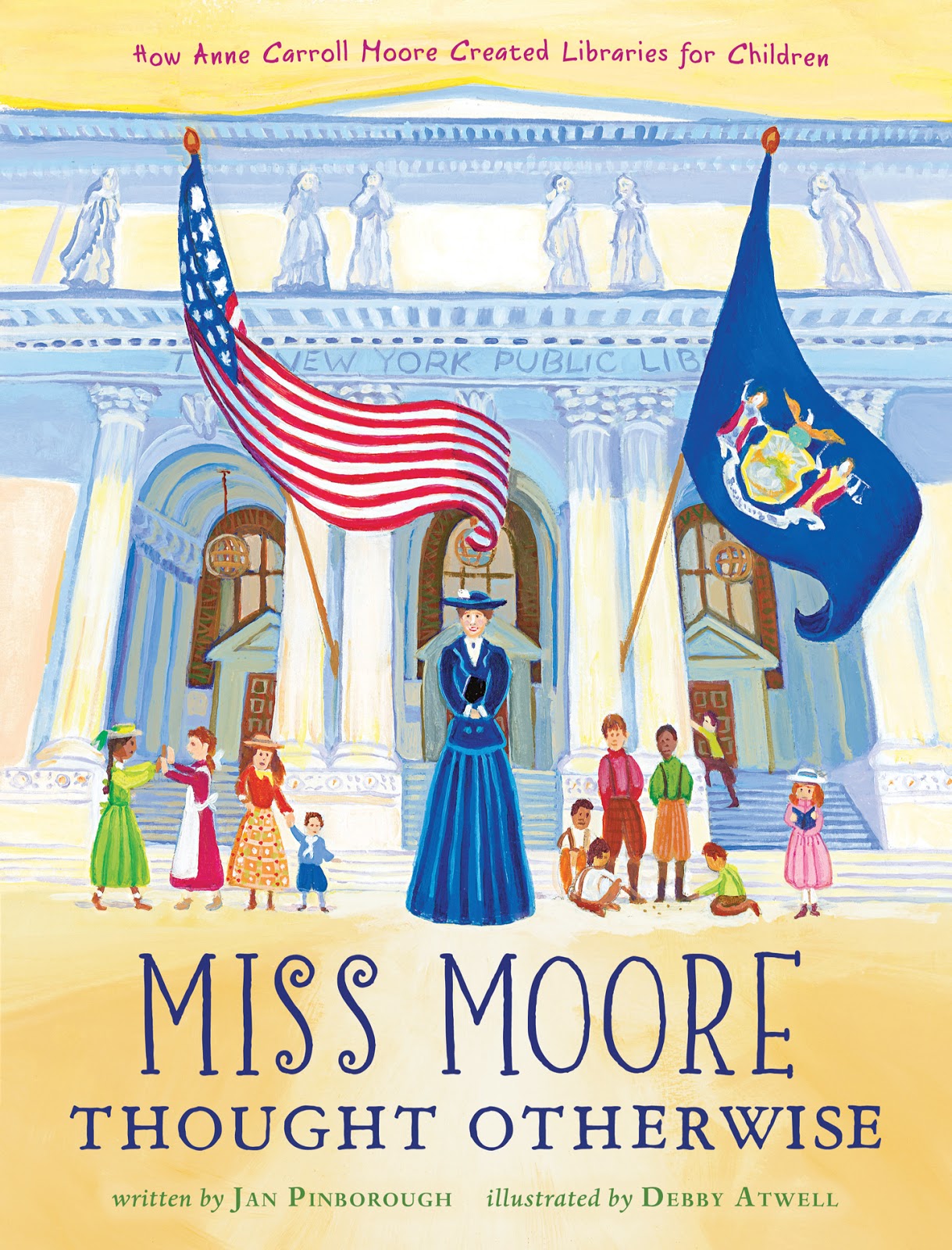
Miss Moore Thought Otherwise: How Anne Carroll Moore Created Libraries for Children
by Jan Pinbourogh, illustrated by Debby Atwell
Find it at: Your library | Amazon | Indiebound
Published: Houghton Mifflin Books for Children (March 5, 2013)
Recommended reading age: 6 & up
In a nutshell: The plan was to write about this book on Annie Carroll Moore’s birthday yesterday (July 12, 1871), but I’m going to pull a Dunn family tradition of celebrating a birthday the entire week. (We never mean for it to happen that way. It just does.) I couldn’t help myself but reveal many of the beautiful illustrations and tell you a little about Anne Carroll Moore’s story though this gem of a picture book.
Miss Moore Thought Otherwise is a colorful, new nonfiction picture book that celebrates the life of Anne Carroll Moore, one of the most celebrated pioneers of children’s librarianship. Anne Carroll Moore, also known as Annie, was an independent thinker and lover of people from very early on in her life. As a girl, her father read a great deal to her even though it was not thought important for children to read. This was shared notion across the country as libraries did not allow children within the establishment.
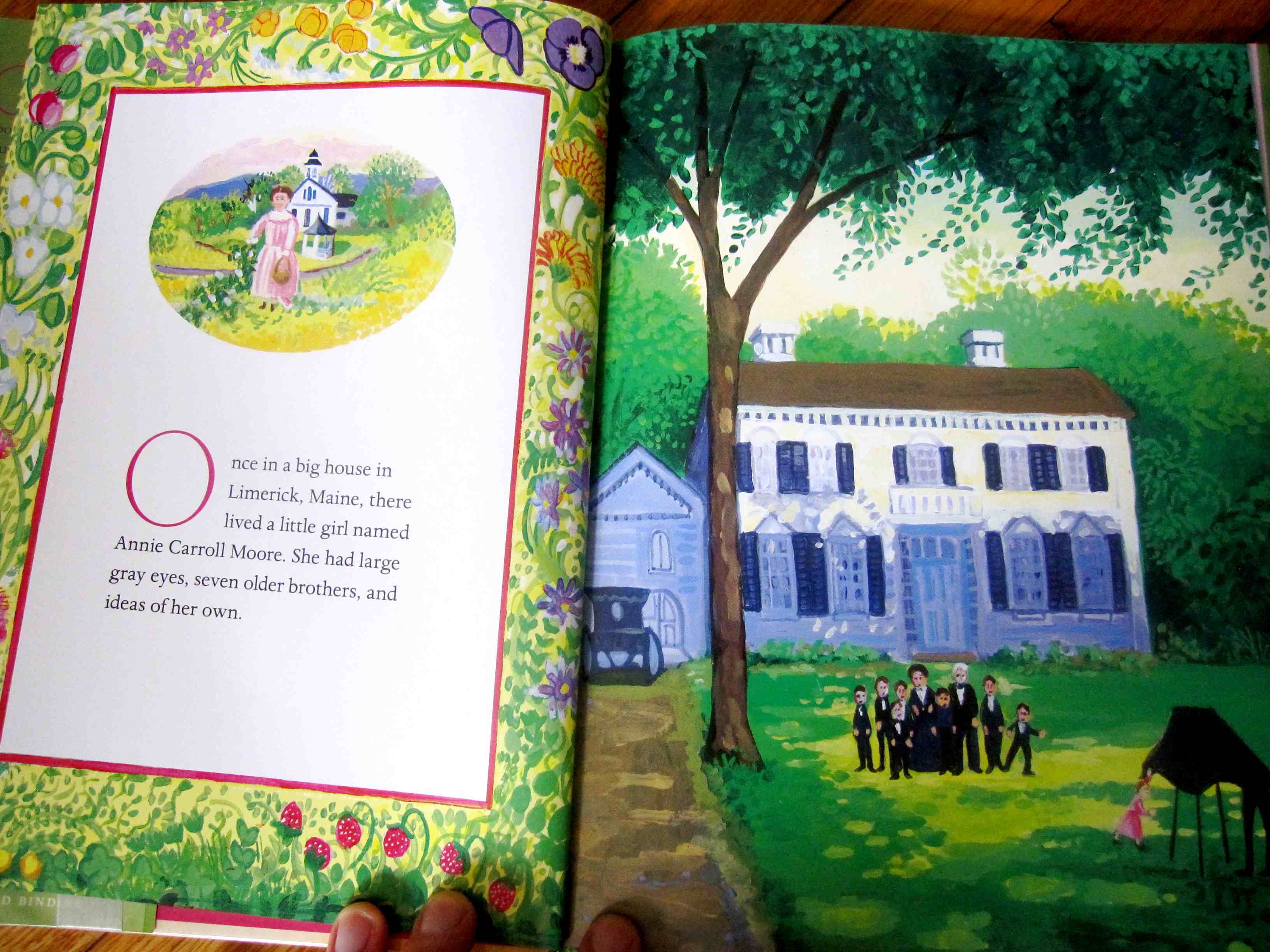
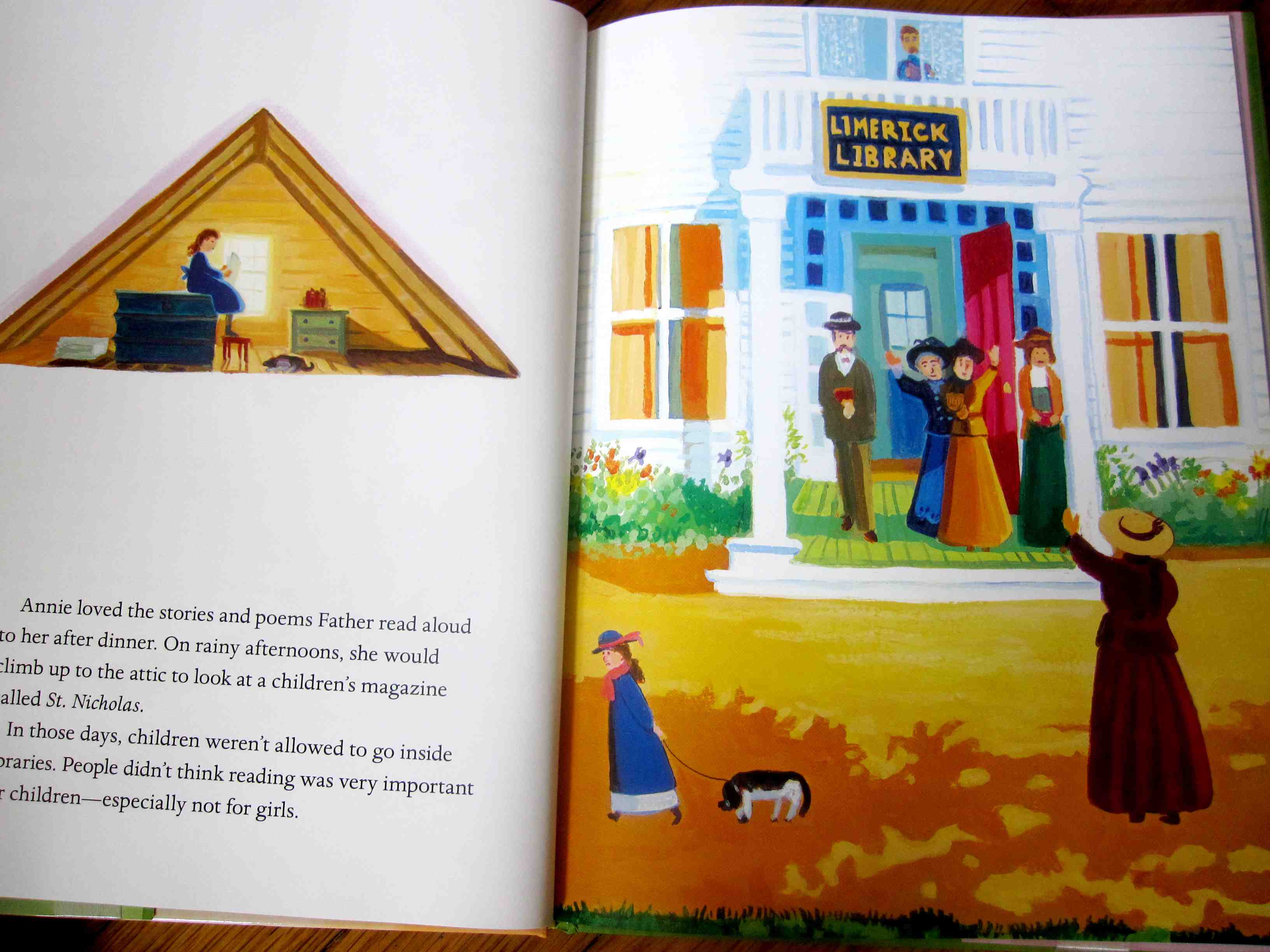
In the early part of Miss Moore’s life, she wanted to be a lawyer. But the death of both her parents and her sister-in-law delayed that dream. She stayed with her brother and helped care for his children until he found a wife. When that time came, it was around the same time there was a bigger need for librarians. Annie set off for New York City to study at the Pratt Institute Library in Brooklyn.
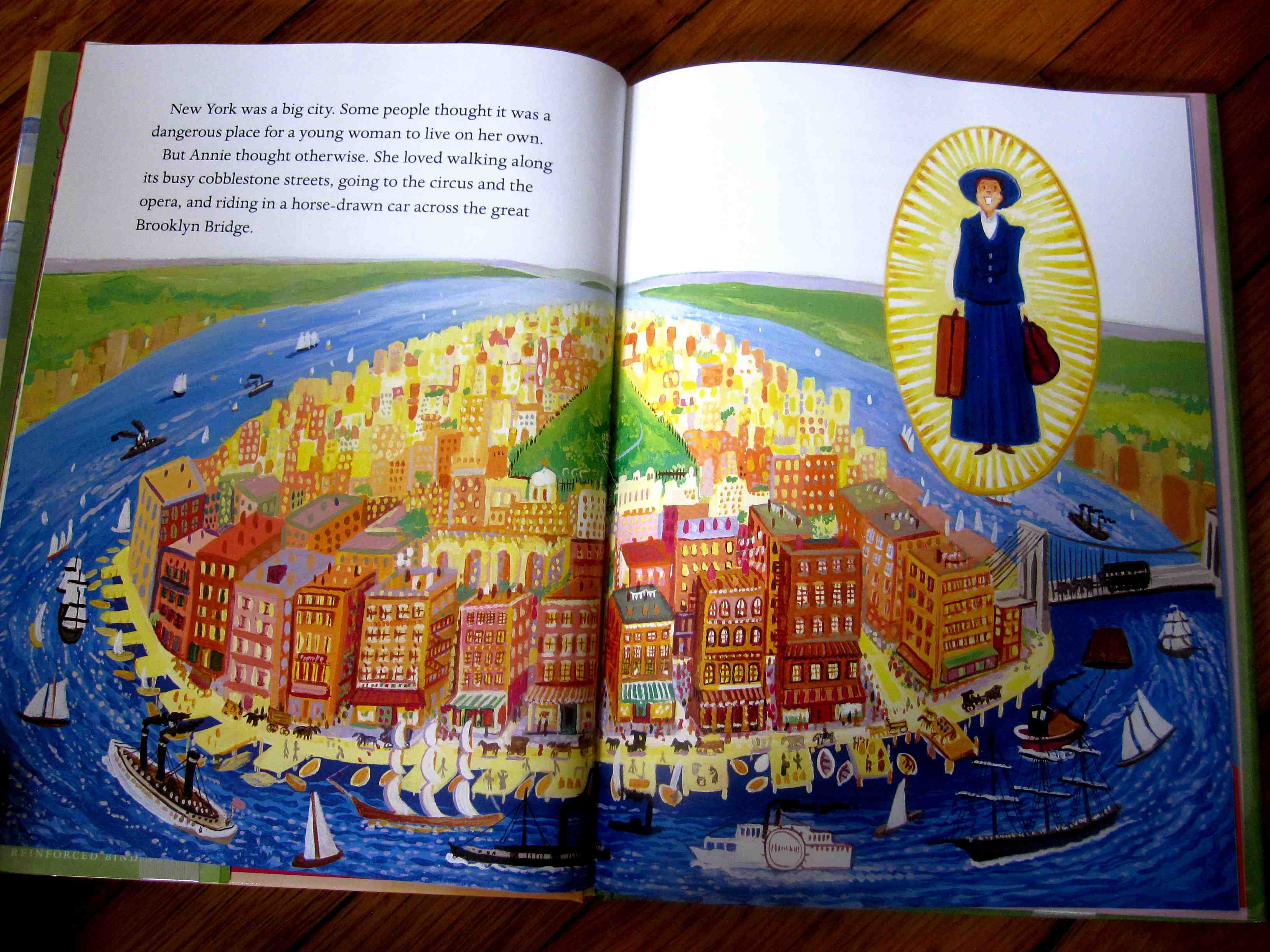
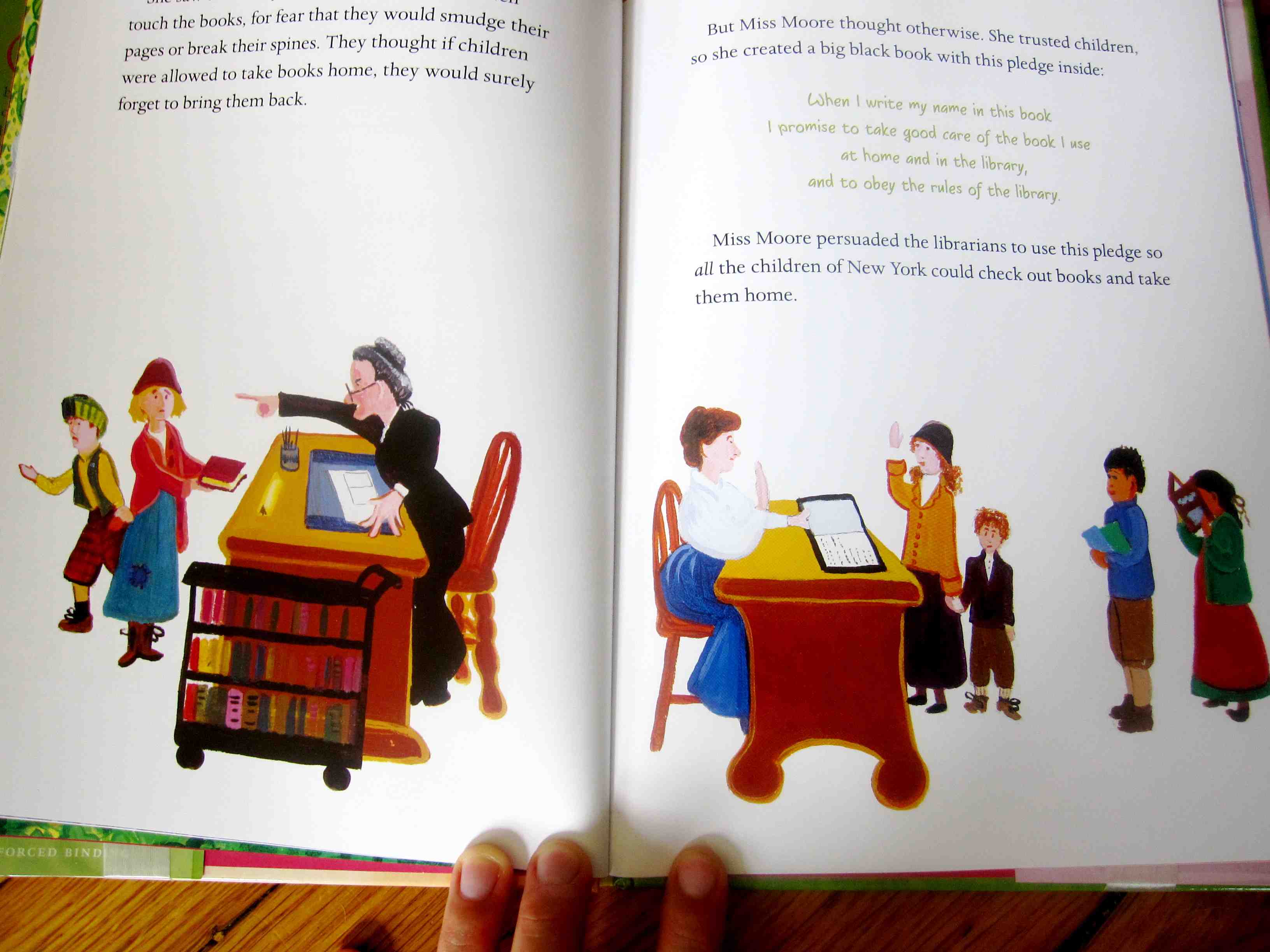
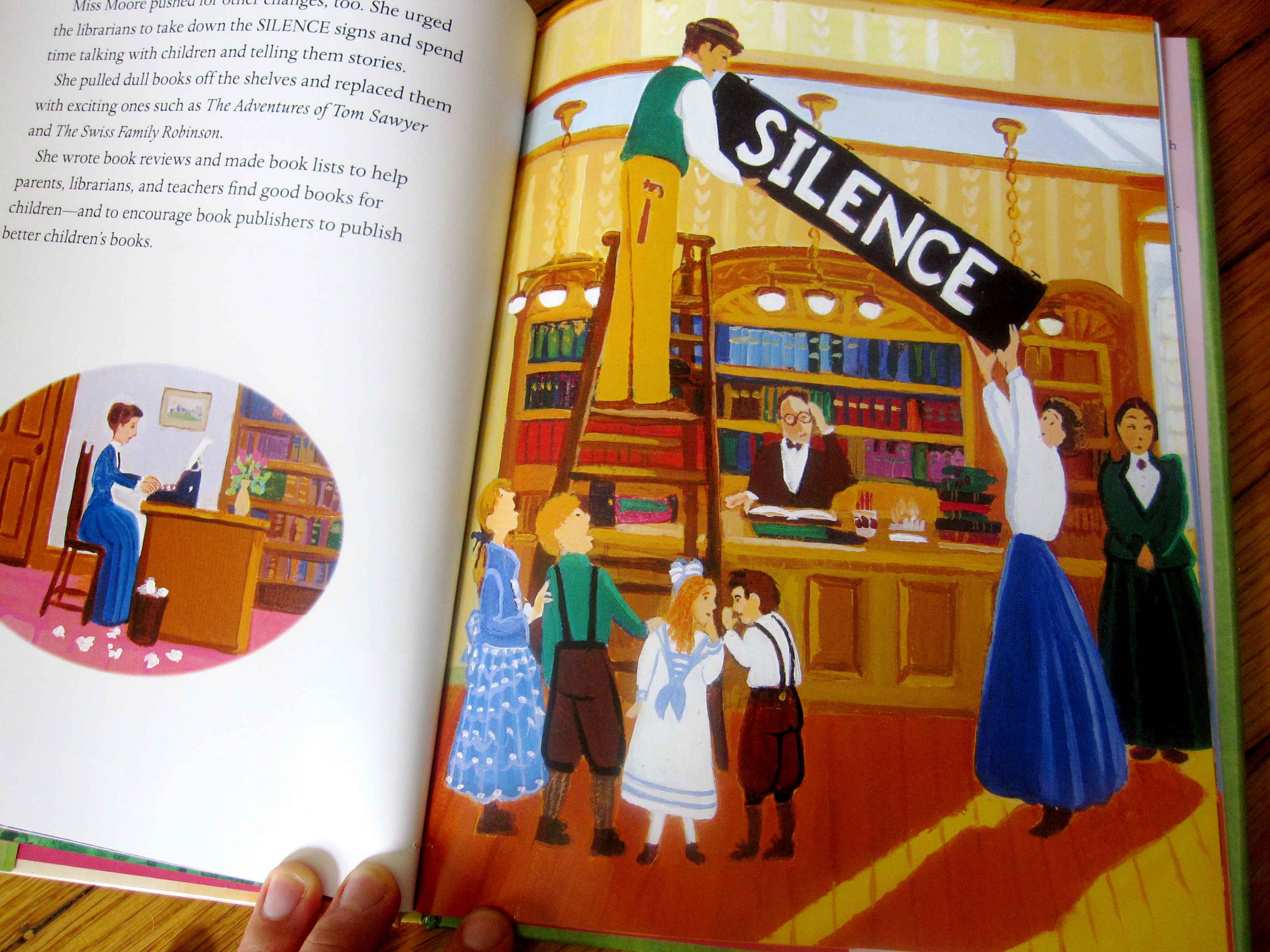
Upon completing her course work libraries were just beginning to allow children in the library – but with restrictions. Children were not allowed to check out books, and they were not allowed to do much of anything upon entering a library. Well, Miss Moore thought otherwise! She took down the silence signs and urged librarians to take time telling children stories and talking with them about books. She also thought children should be able to check out books, so she instituted a pledge that each child would take when checking out a book.
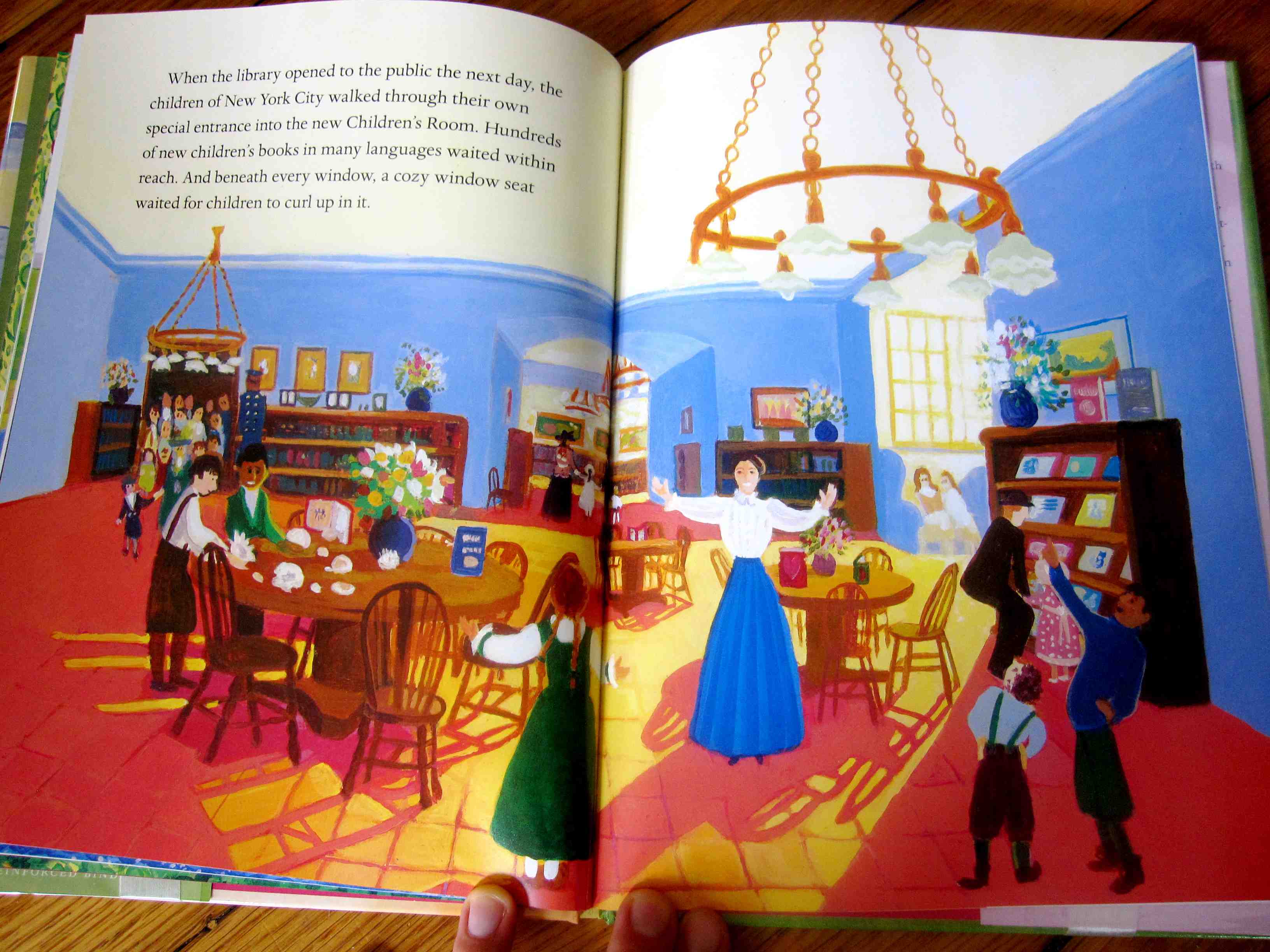
Miss Moore worked at the Pratt library until taking a position at the New York Public Library at the now famous landmark location on 5th ave and 42nd street. This new library would have a special area entirely devoted to children, so when the library was under construction before it opened in 1911, Miss Moore had special tables and chairs made, chose warm and inviting colors to decorate the room, as well as look for display items such as shells and butterflies. Most importantly, she looked for the best children’s books to put on shelves and in all languages.
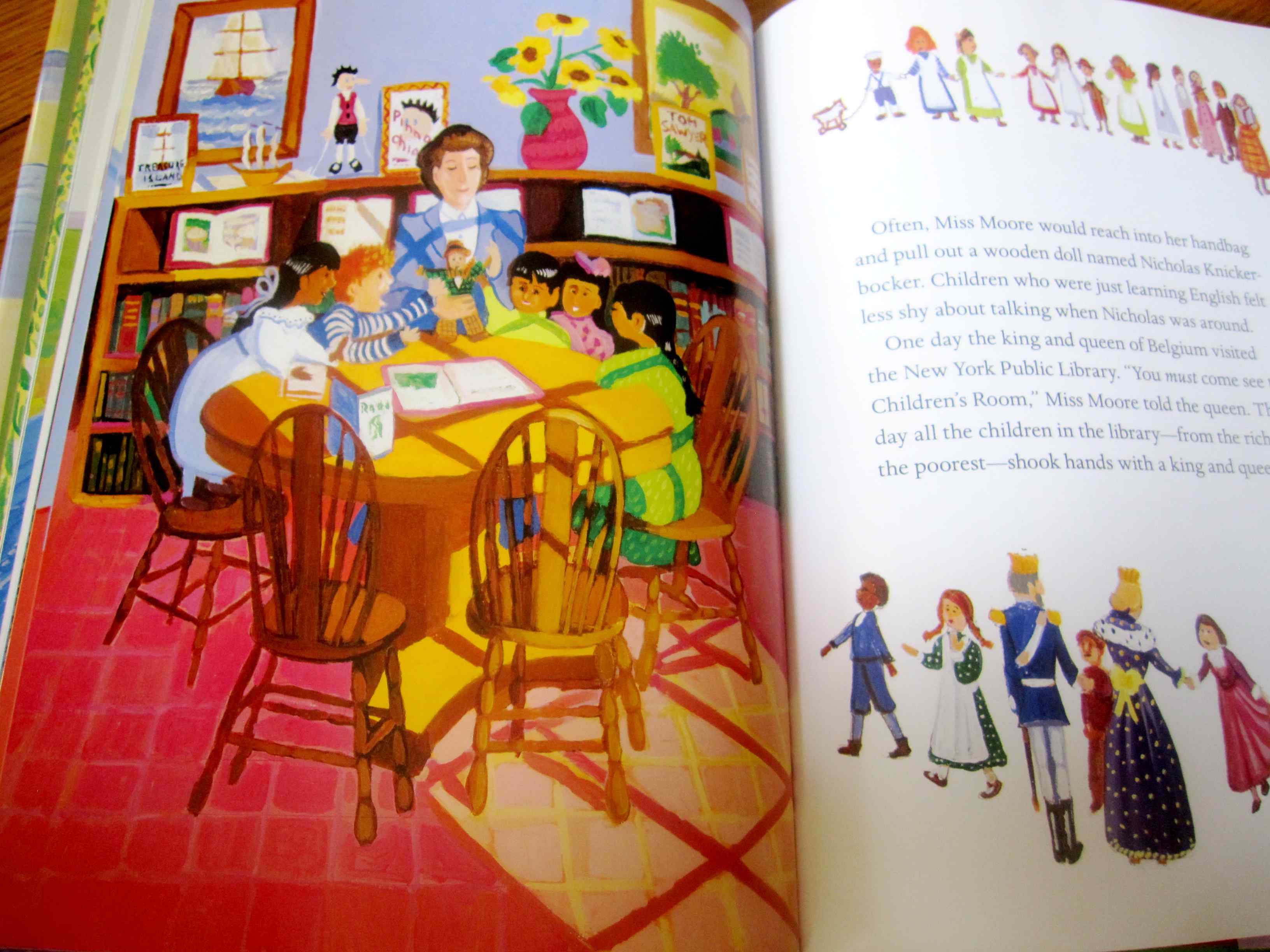
My favorite part of this story is the recounting of Miss Moore’s famous doll, Nicholas Knickerbocker, a wooden doll that immigrant children could talk to. Nicholas was a good listener for those ESL students who were shy or embarrassed when learning to speak English.
As a person who has decided to devote herself to being a children’s librarian, this was a story of inspiration and also served as a reminder of the innovative thinking that came from a few spectacular women during the beginning of children’s libraries. These champions of children in the library stepped outside the library’s walls and engaged their communities, promoted the best of children’s literature, created innovative programming, and always put the needs of a child first. Children’s librarians today do just as their predecessors, and are faced with some of the same struggles that those pioneers had to overcome at the turn of the century. Being an proponent for change is one battle that stands out. You have to be an advocate and a person who thinks outside of the box. You have to redefine today for tomorrow’s future, just like Anne Carroll Moore.
Don’t take my word for it: Review from The Nonfiction Detectives.
Extras: If you are interested in this book and the life of Anne Carroll Moore, please check out the Miss Moore Thought Otherwise website which includes a virtual exhibit of Miss Moore’s doll, Nicholas’s Treasures.
There is also a wonderful article written about Anne Carroll Moore featured in The New Yorker.
Source of book reviewed: My local library!
8
Jul
Adventures as Annie: Midnight on the Moon
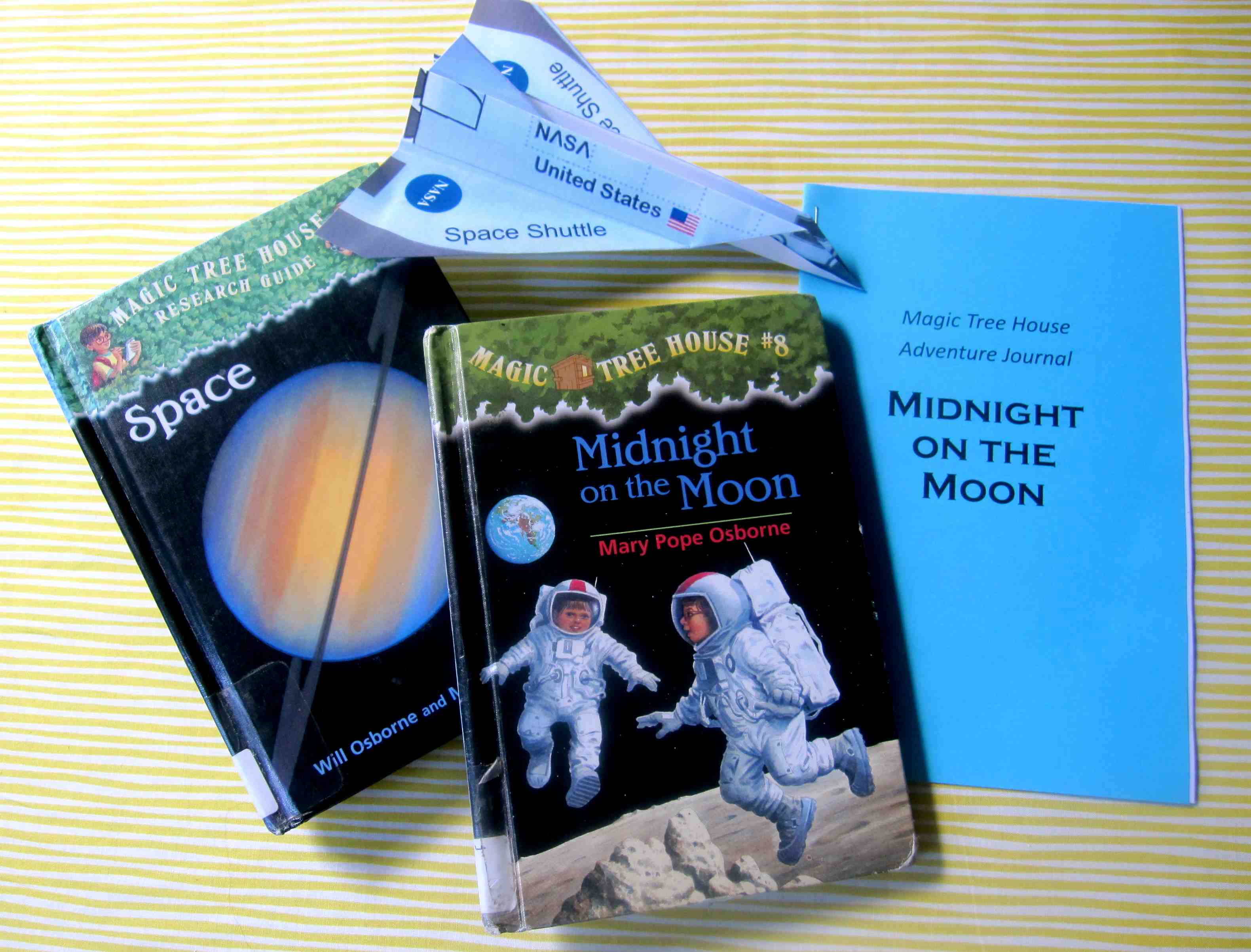
The last Magic Tree House Adventures session of the year took place on the moon! If you’re not familiar with Magic Tree House Adventures, it’s a library program that I conduct for kids ages 5 & up. Each session focuses on one book from the popular Magic Tree House series by Mary Pope Osborne which consists of guest speakers, games, crafts, science, discussions, and fun! Each one is different from the next and at the end, each child takes home their own journal (just like Jack!) that includes facts about the theme of the day and activities they can do at home. This session was based around the book Midnight on the Moon and was by far my favorite session with the Magic Tree House Adventures group.
Where Are We? Who Are They?
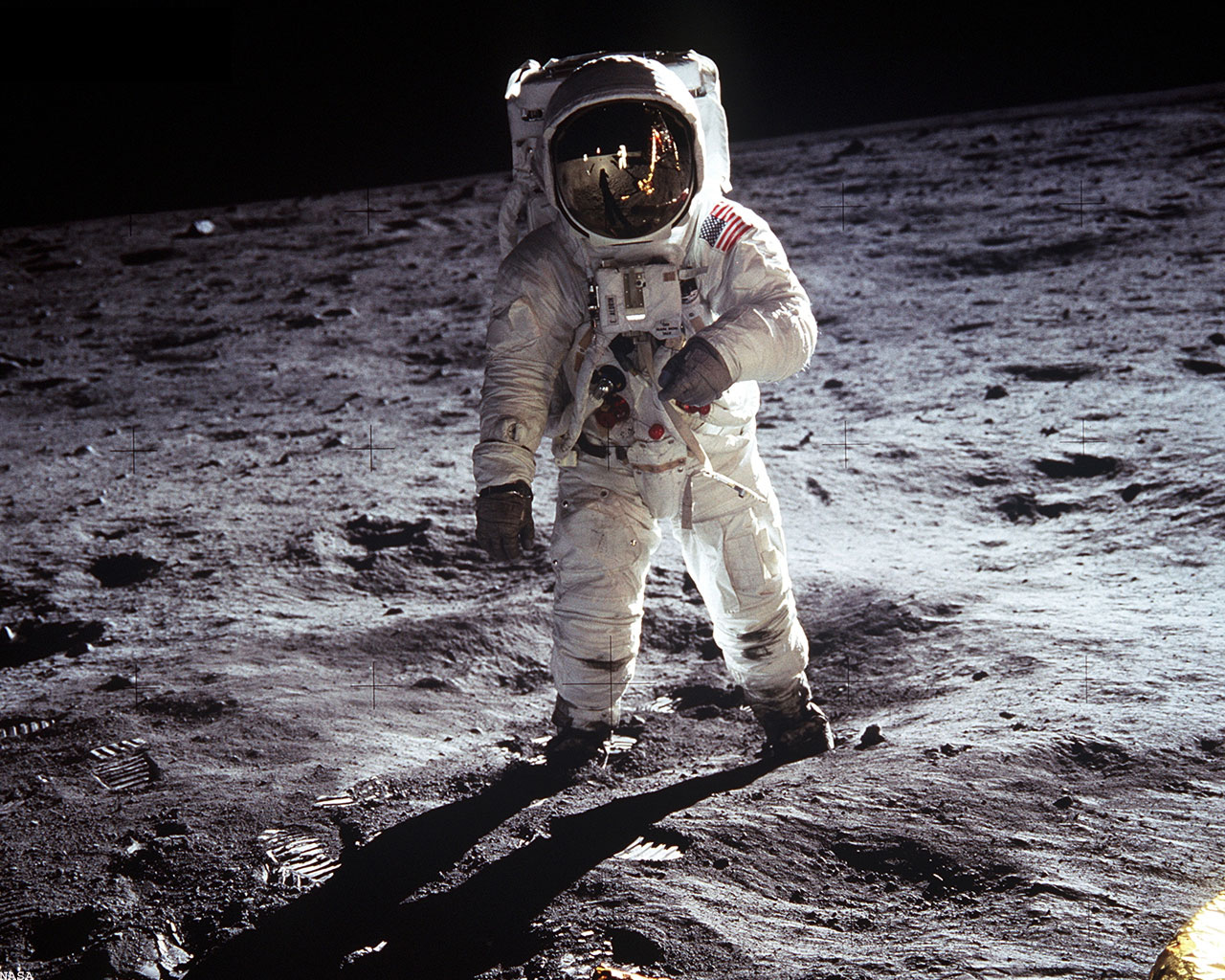
Where Are We? Who Are They? is a Magic Tree House Adventures staple. It’s a “game” that I play with the kids where I flash a picture up on a projector and they have to tell me what the picture is about. After a few guesses, I tell them the answer and we move to the next picture. This goes on for 10-12 slides. For example, for Midnight on the Moon I showed pictures of the universe, the sun, our solar system, the moon, space travel, etc. We also watched a couple of video clips afterwards. The first was the recording of when man first landed on the moon, and I also showed 2-3 minutes of clips of astronauts in space.
I don’t typically show videos, but I felt they were necessary visuals for the kids to imagine what it’s like to be in outer space. They seemed to really enjoy them as well (especially the last clip).
Making Moon Craters
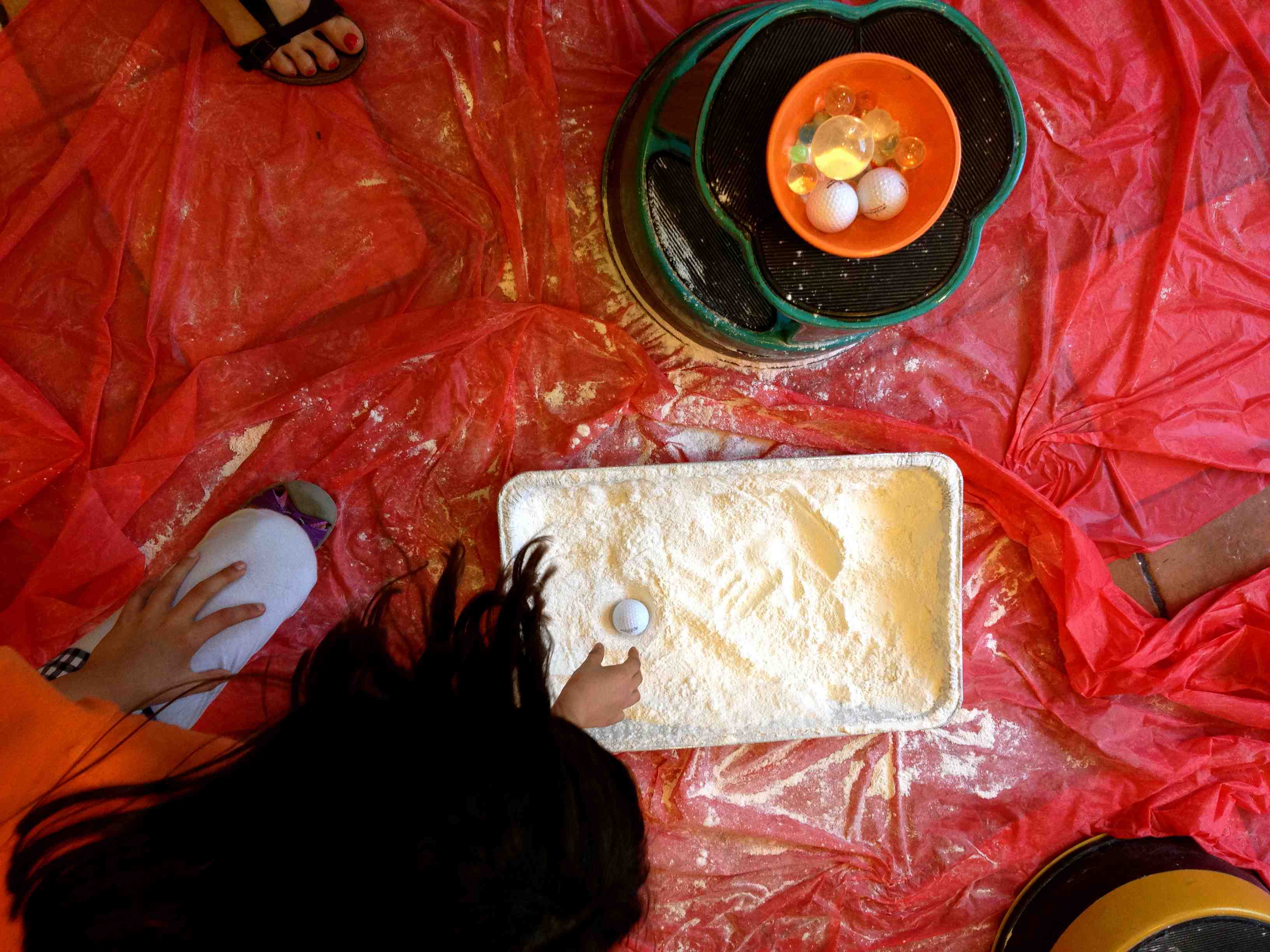
Next I divided the group into four teams for rotating activities. One of these activities was “Making Moon Craters”, an idea that I snagged from A day in first grade. Using different asteroids (golf balls, marbles, and acrylic balls) the kids experimented with how the size and distance they drop the asteroid effects the moon’s surface (a large tray filled with flour). They stood on step stools to drop their asteroids from farther distances, and they also tested them closer.
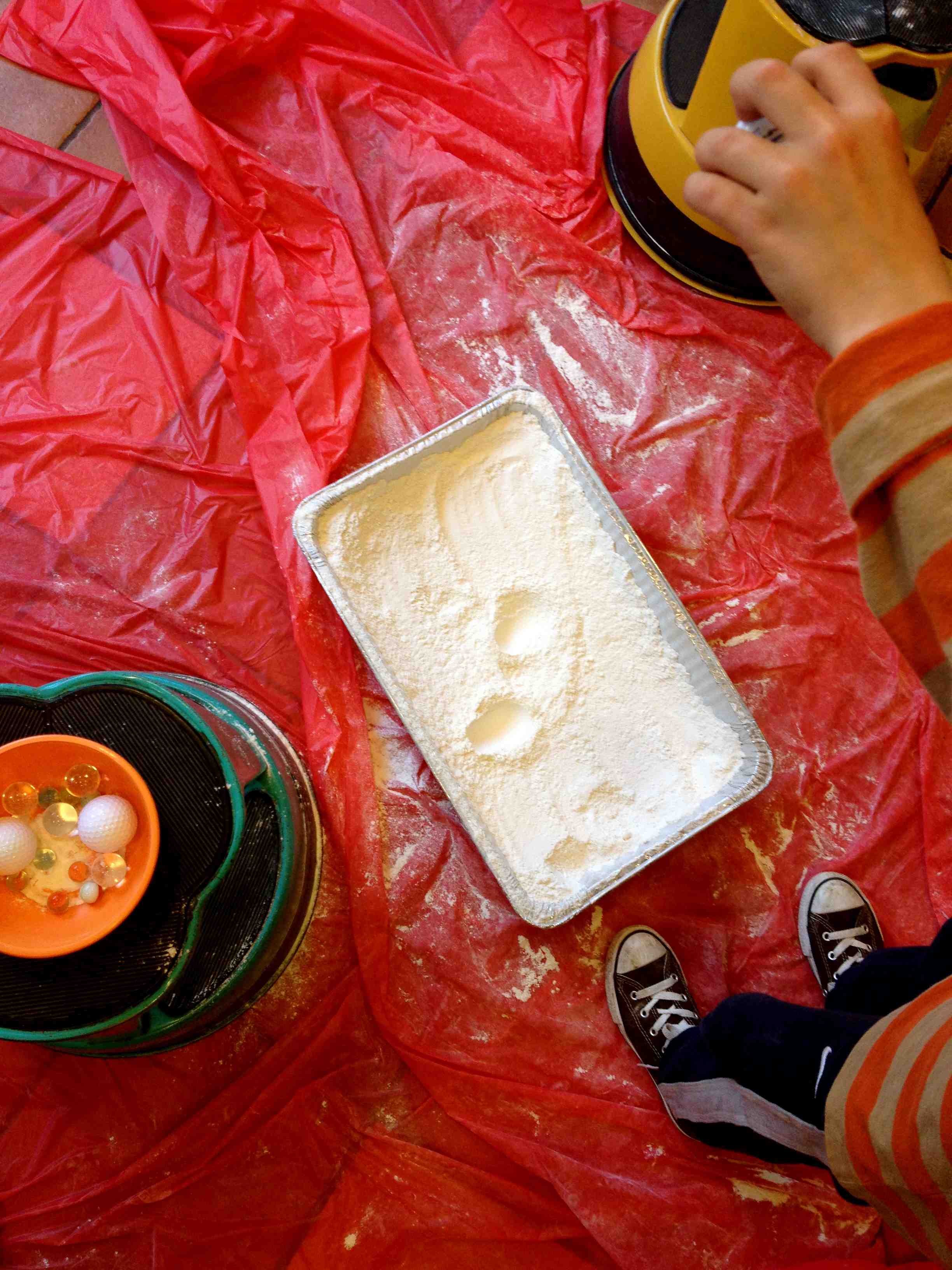
It was messy, but the nice thing about flour is that you can just brush it off your hands and clothes.
Phases of the Moon Craft

During “Where Are We? Who Are They?” we discussed the phases of the moon. To exercise what was discussed, the kids made a Phases of the Moon chart which was inspired by this craft from learn create love. Beforehand I taped two pieces of cardstock together for each child and also pre-cut all the moon phases (print out found here) and the labels (which I made in a word doc) with help from a few volunteers.
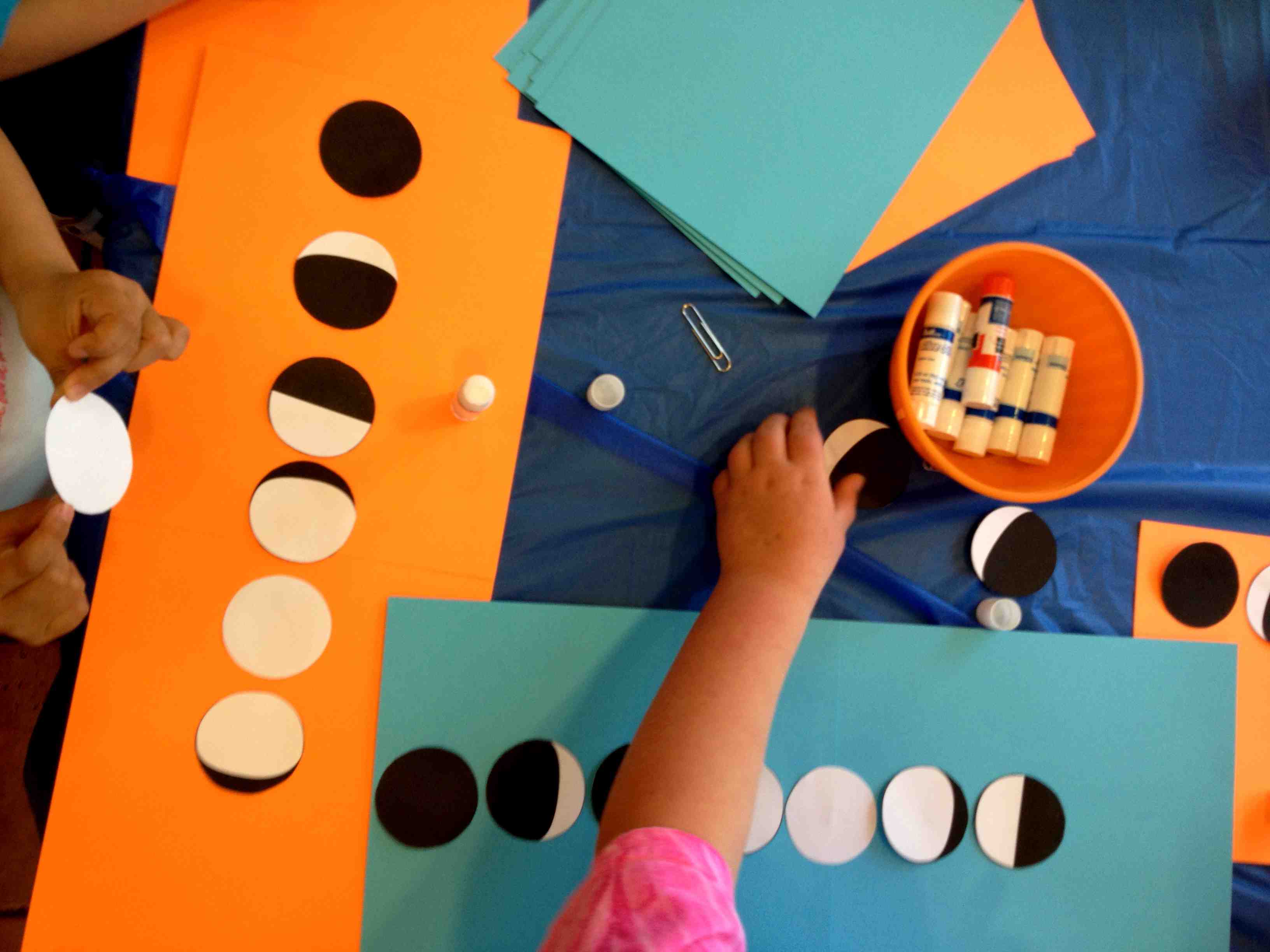
A few of the younger kids still have a hard time with scissors, so I thought It would be better to work on the actual activity instead of having to struggle with the basics of cutting all the moons out. All they had to do was glue the order of the phases of the Earth’s moon with their labels and decorate. Now they have their very own chart so they can note the different phases of the moon at home.
Hubble Telescope Chalk Drawing
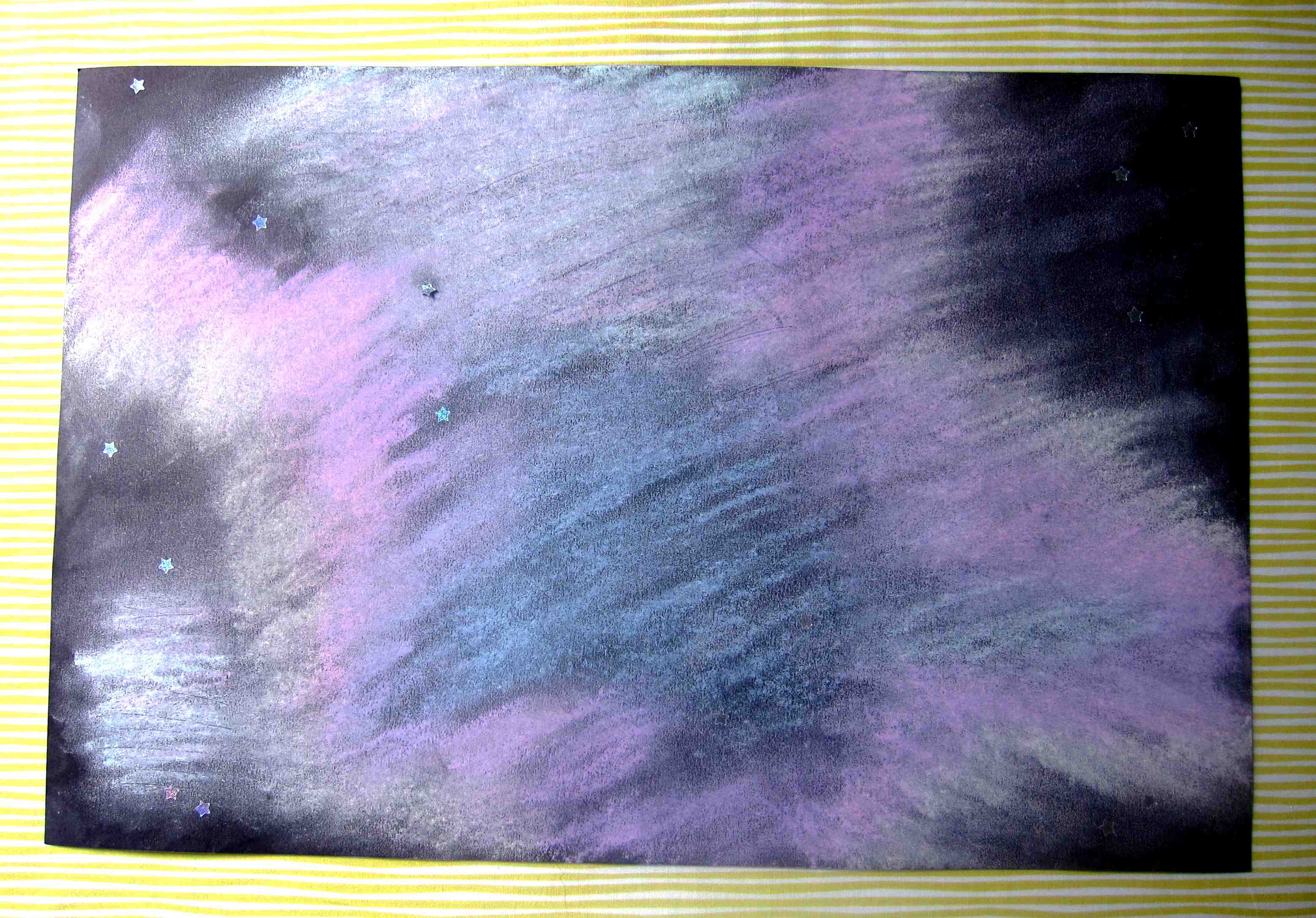
The Hubble Telescope takes incredible pictures of places we have not yet been. Pictures that are alluring and are a work or art.
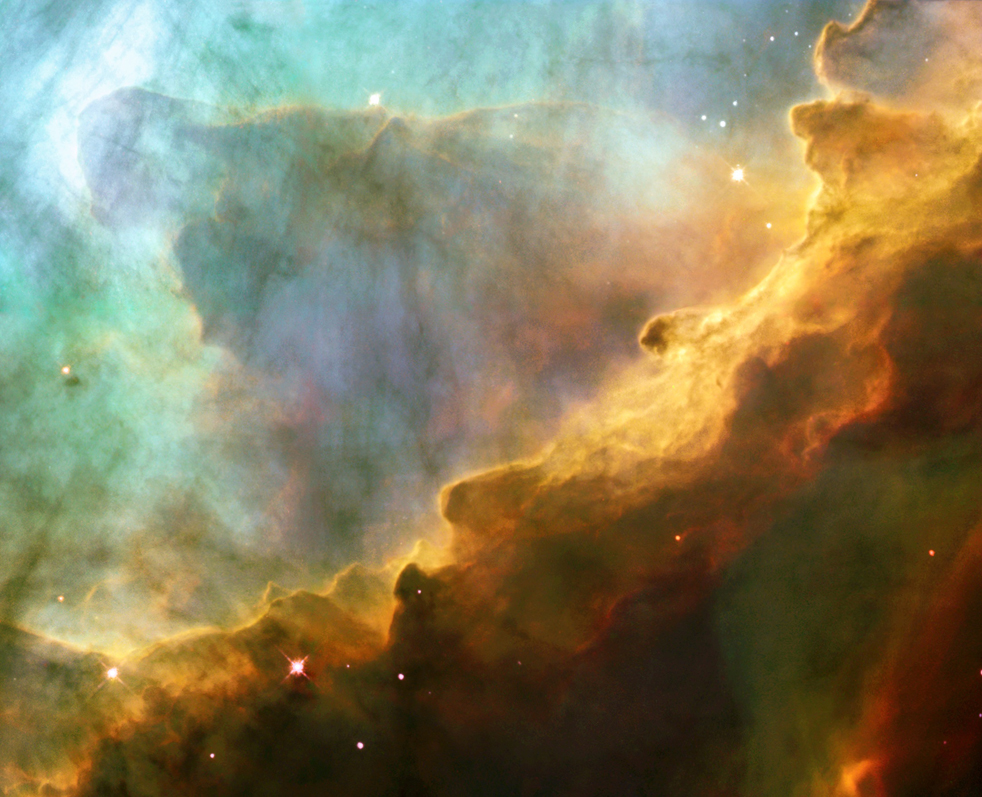
During “Where Are We? Who Are They?” I showed the kids a few of these images, and at this activity table prodded them to create their own Hubble telescope picture using black construction paper, chalk, and star stickers. At this table, I also had a few Hubble telescope images I printed out to use as inspiration.
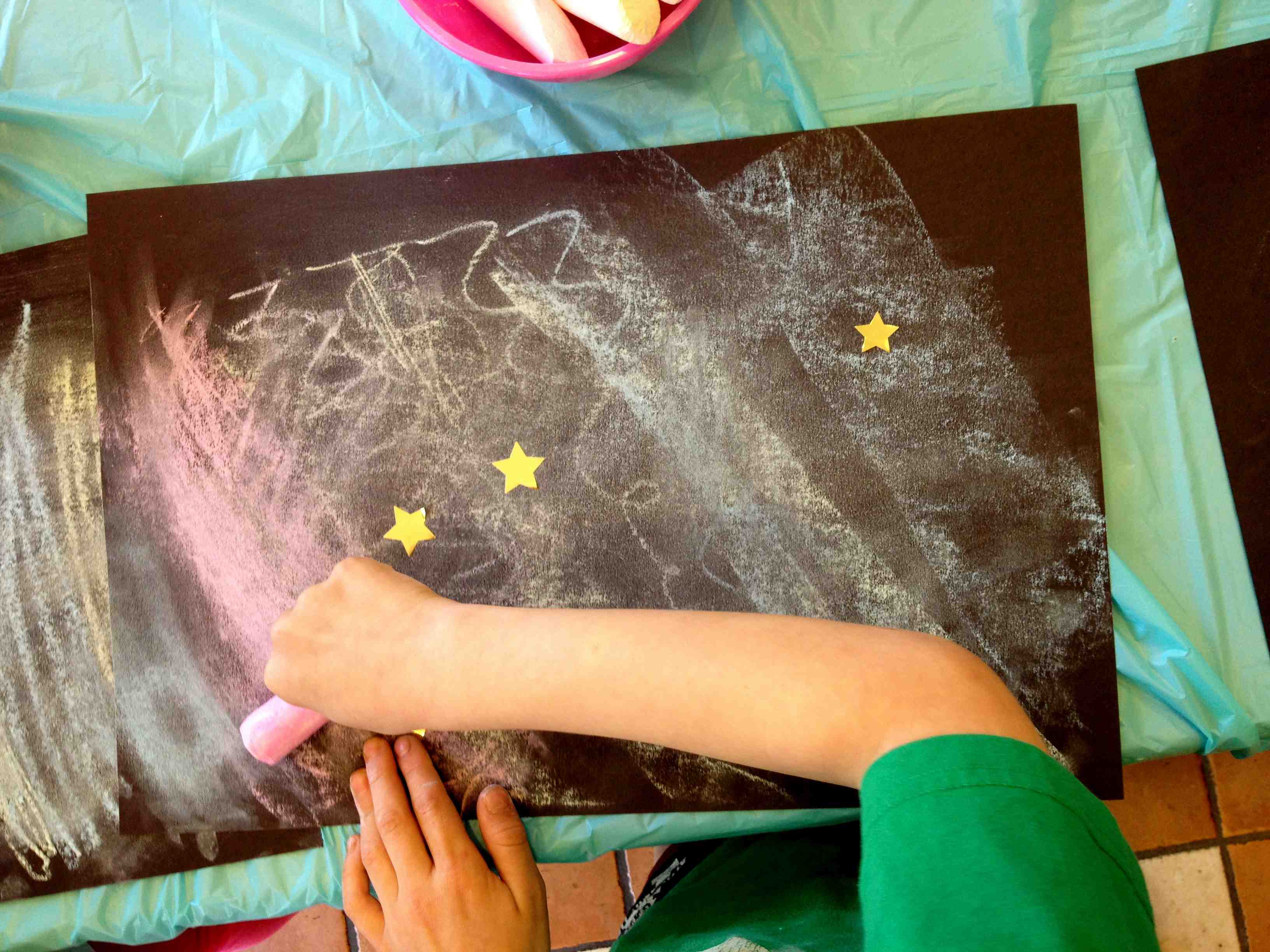
This idea came from Make it.. a Wonderful Life, but I modified it for younger kids. You can check out the incredible work a 5th grade art class did using this concept here.
Fly to the Moon Game
For the fourth activity, the kids tried their hand and landing on the moon.. Using paper airplane space shuttles. This idea came from Libraryland and was more of a just-for-fun activity where the kids tried to fly a paper airplane space shuttle into a large paper moon.
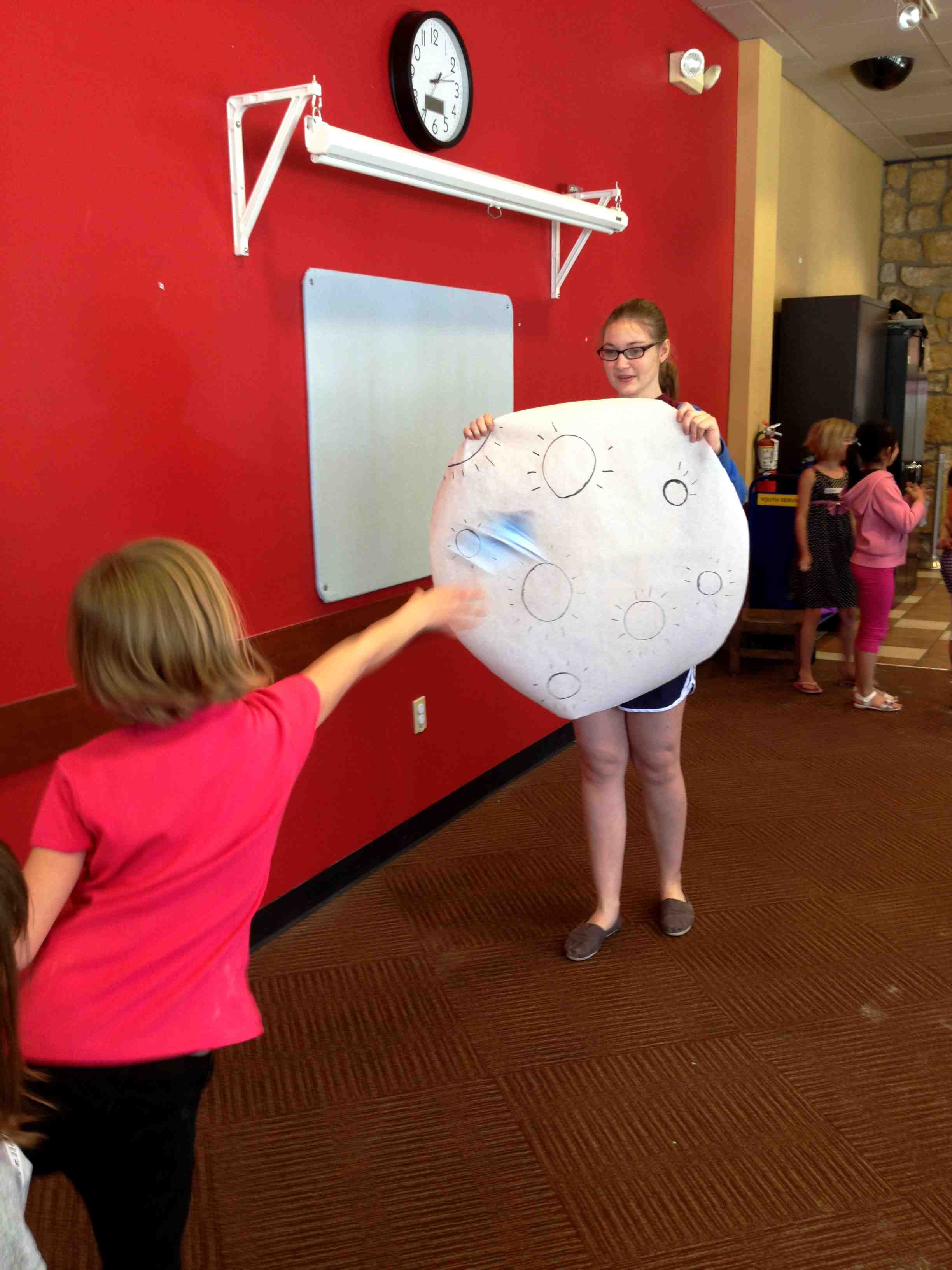
This activity was extremely low maintenance. All I had to do was print off a few copies of this space shuttle paper airplane template, fold the planes, and cut out a large moon from white paper. That’s it! My volunteer would stand in different places and the kids would try and hit the moon target with the paper shuttle. Short and sweet.
Read-Aloud How to Bicycle to the Moon
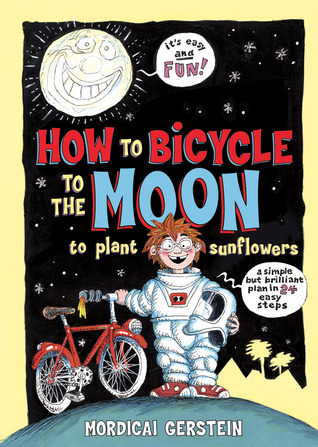
I’m glad there were a few extra minutes to spare after each group completed all four activities because I got to read a new favorite book of mine, How to Bicycle to the Moon to Plant Sunflowers: A Simple But Brilliant Plan in 24 Easy Steps by Mordicai Gerstein. It is a wonderfully silly story that is infused with facts about the moon. If you haven’t read this book yet, be sure to check it out. You’ll be so happy you took the 3 minutes to do so!
Magic Tree House Adventures Journal
As I mentioned before, after every Magic Tree House Adventures each child receives their own Magic Tree House Adventures Journal that I put together using the Magic Tree House nonfiction companion guide. I also incorporate a few fun activities that are from the Magic Tree House website, or anything I can find from various books or educational websites.
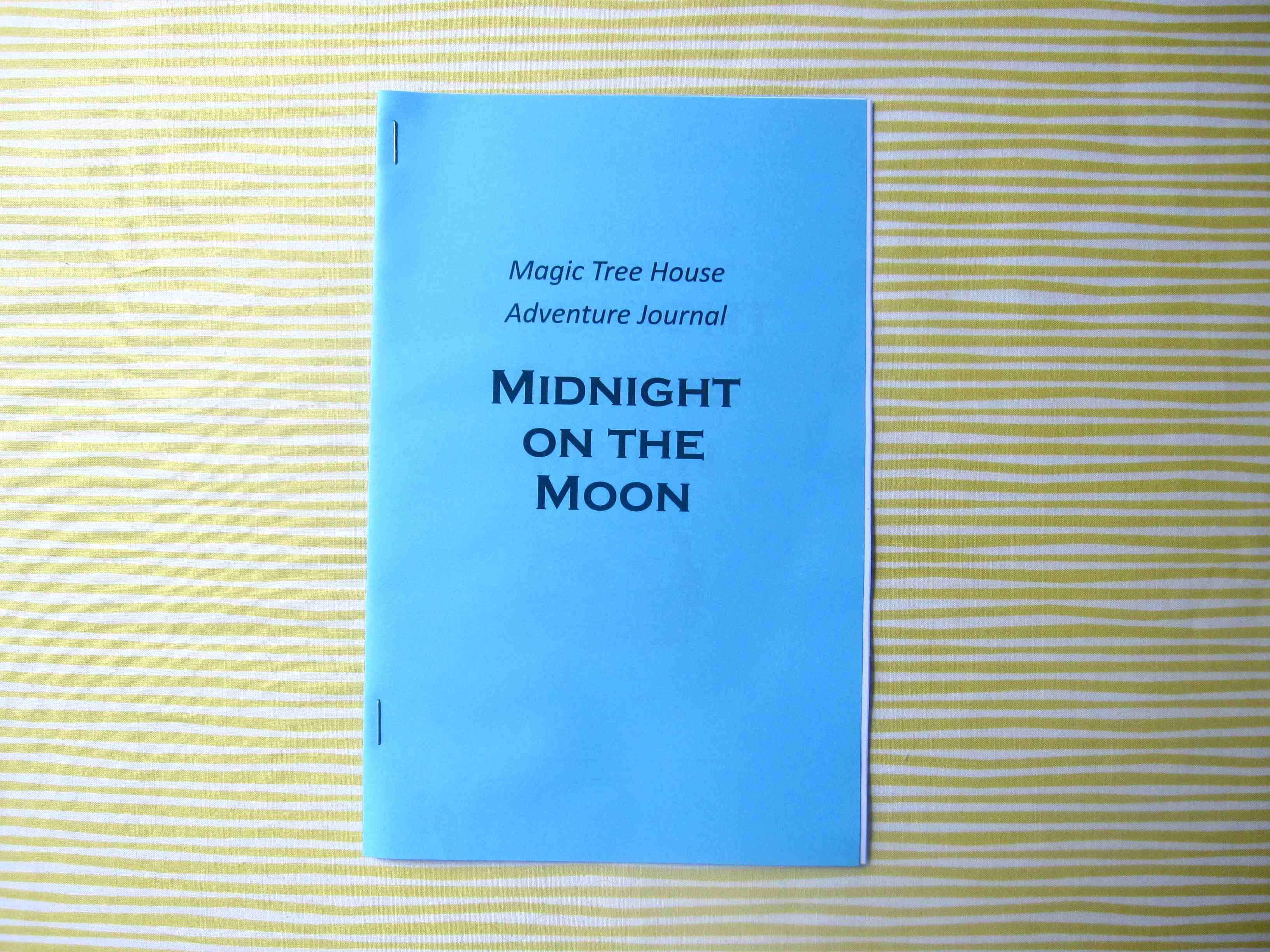
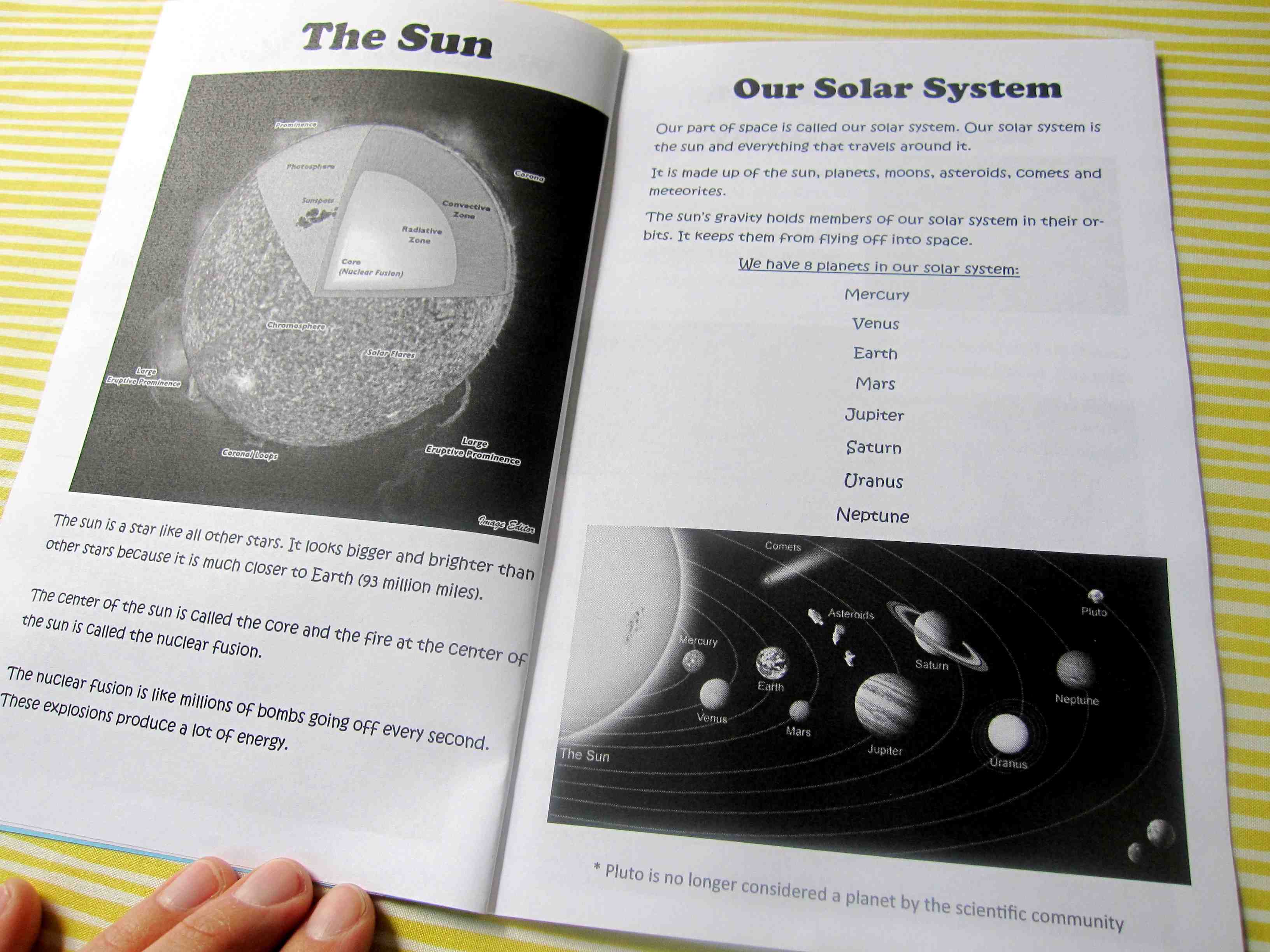

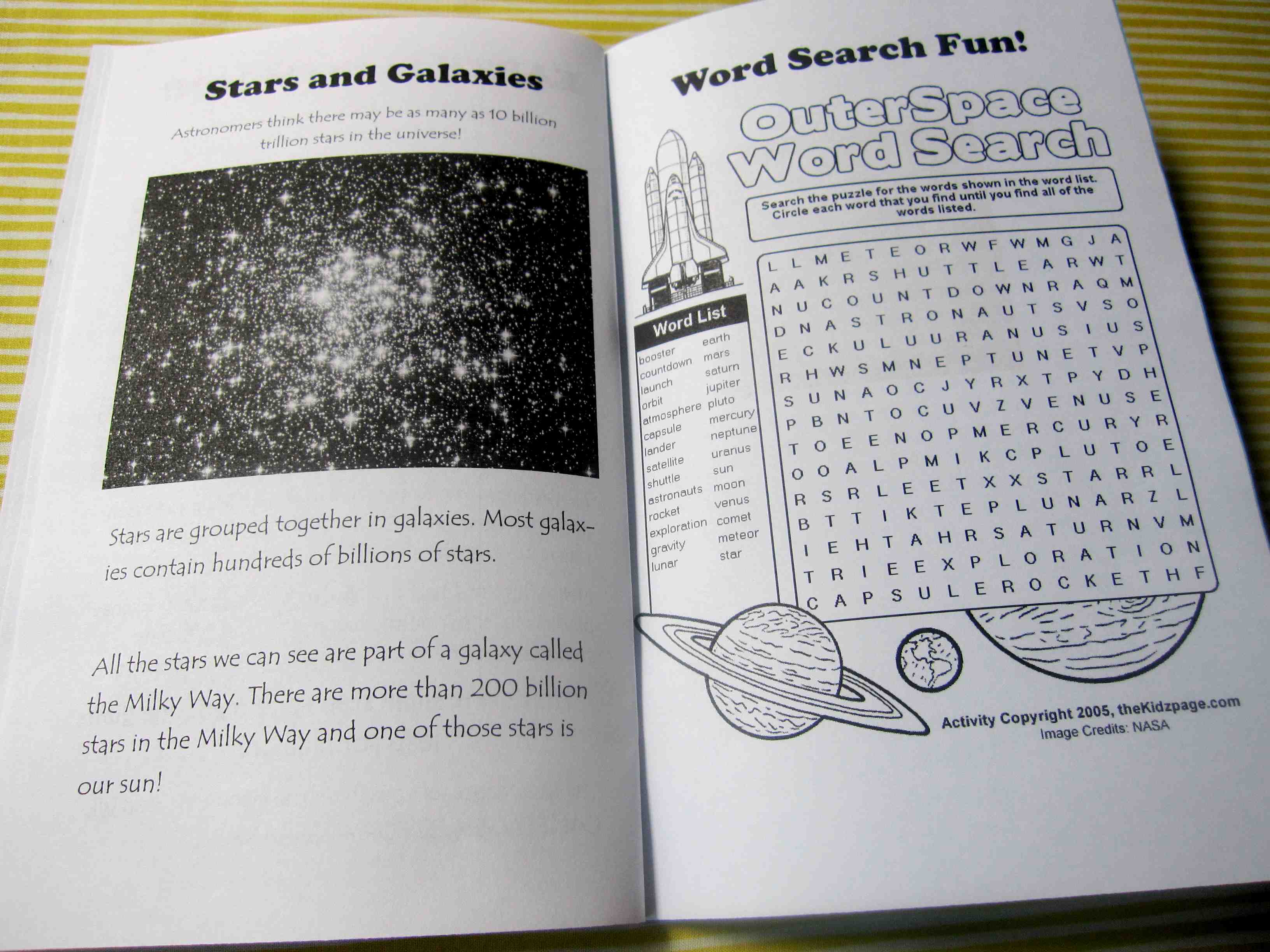
If you would like a copy of the Midnight on the Moon Journal to use in your classroom or library, please send me an email using the contact form or by emailing me at sturdyforcommonthings (at) gmail (dot) com. I receive requests daily for Magic Tree House Journals, and it’s much easier for me to keep track of who I’m sending what if you email me.
That sums up my last adventure as Annie for awhile! This has been an extremely enjoyable program to put on, and one that was very popular with the kids as well. ‘Til next time!
image sources: man on the moon, hubble telescope image


