6
Oct
Farm Stand Storytime

Farm Stand Storytime is a new outreach program created by myself and Anna Chill of Crabtree Farms as an outlet for children to foster a healthy curiosity of the natural world around them, as well as their place in the local food system. Back in August, I took my girls to Crabtree Farms to admire their sunflowers and found myself immediately attracted to the farm. It had the same intoxicating effect on my children. We were high on fresh air and blue skies for days. Seeing all the joy that walking around the property brought to my family, I wanted to share that same experience with other families. Thus, Farm Stand Storytime was born with the inaugural storytime taking place last week. So far it is a monthly program scheduled for September, October, and November with themes dependent upon the crops and seasons. September’s theme was “Fall & Harvest” and it couldn’t have taken place on a more perfect day just after the autumnal equinox.
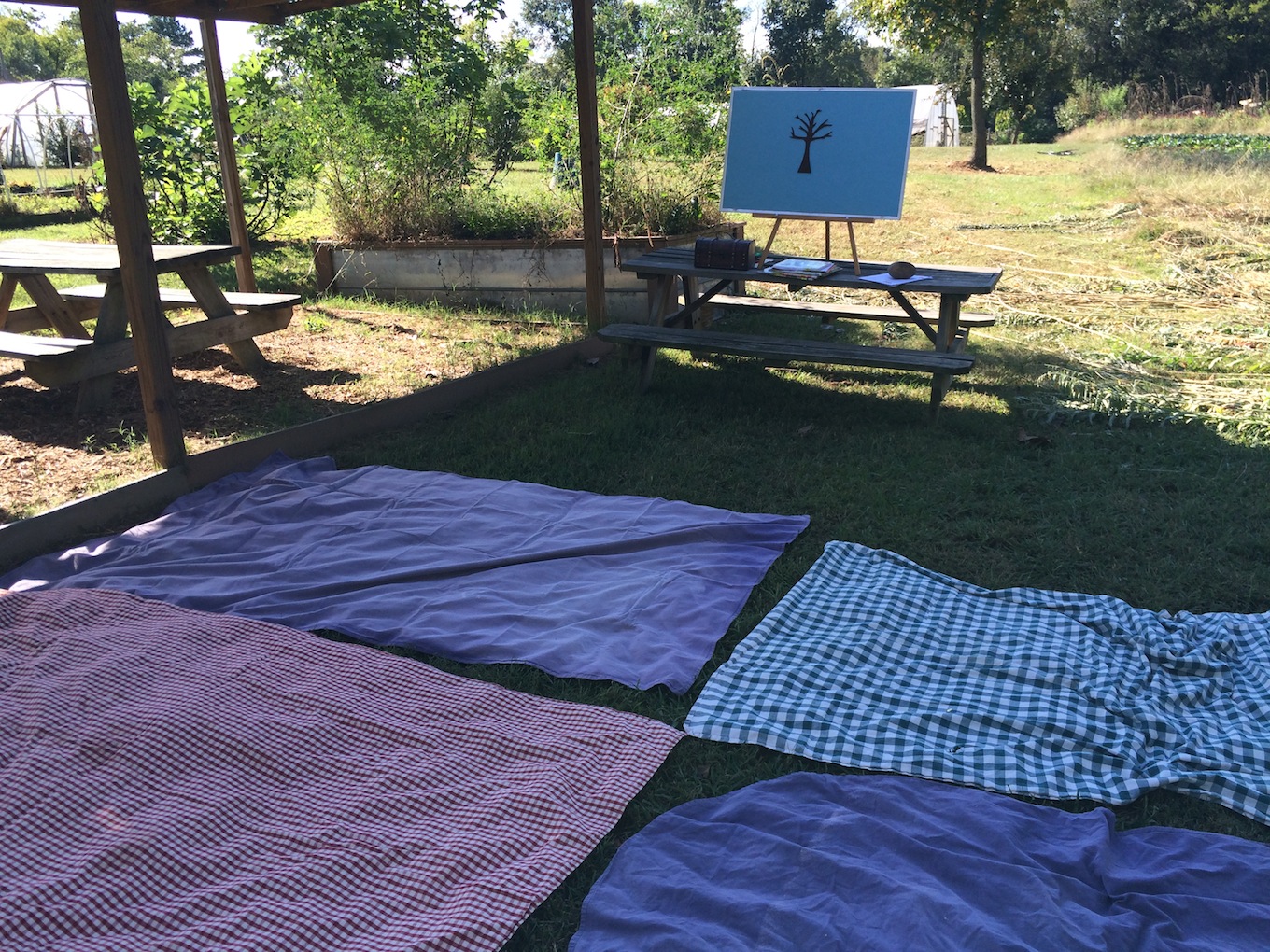
Even with an extremely large population of homeschooled children in Chattanooga, the age of kids who attended was much younger than I had expected. I’m thankful I brought a variety of books and had to be flexible with my songs and activities. I have a feeling I’m going to have to prepare for a wide age range each time until a regular following is established.
Here is the outline for the first Farm Stand Storytime “Fall & Harvest”:
Fall & Harvest Storytime
Welcome: Anna from Crabtree welcomed everyone and talked a little bit about the farm, the events, and how everyone is welcome to use it as a public park. After, I jumped in and introduced myself, welcomed everyone again and thanked them for joining us on such a beautiful day. I explained that after storytime kids will have the option to do an activity, run and play on the farm, or both, and then went into this “Wiggle My Fingers” rhyme, but modified it a bit to this:
I wiggle my fingers,
I wiggle my toes.
I wriggle my shoulders,
I wiggle my nose.
I give my hands a clap,
I put them in my lap.
The Wondering Box: Then I asked the kids if we should take a look inside “the wondering box” to see what we will be learning about that day. The wondering box is a prop I created inspired by the show Tumble Leaf and is my new favorite way to kick things off for a storytime. I first face the box towards me, look inside, and then close it very quickly to build intrigue. I do this a couple times and then open slowly open it and turn it to the group..
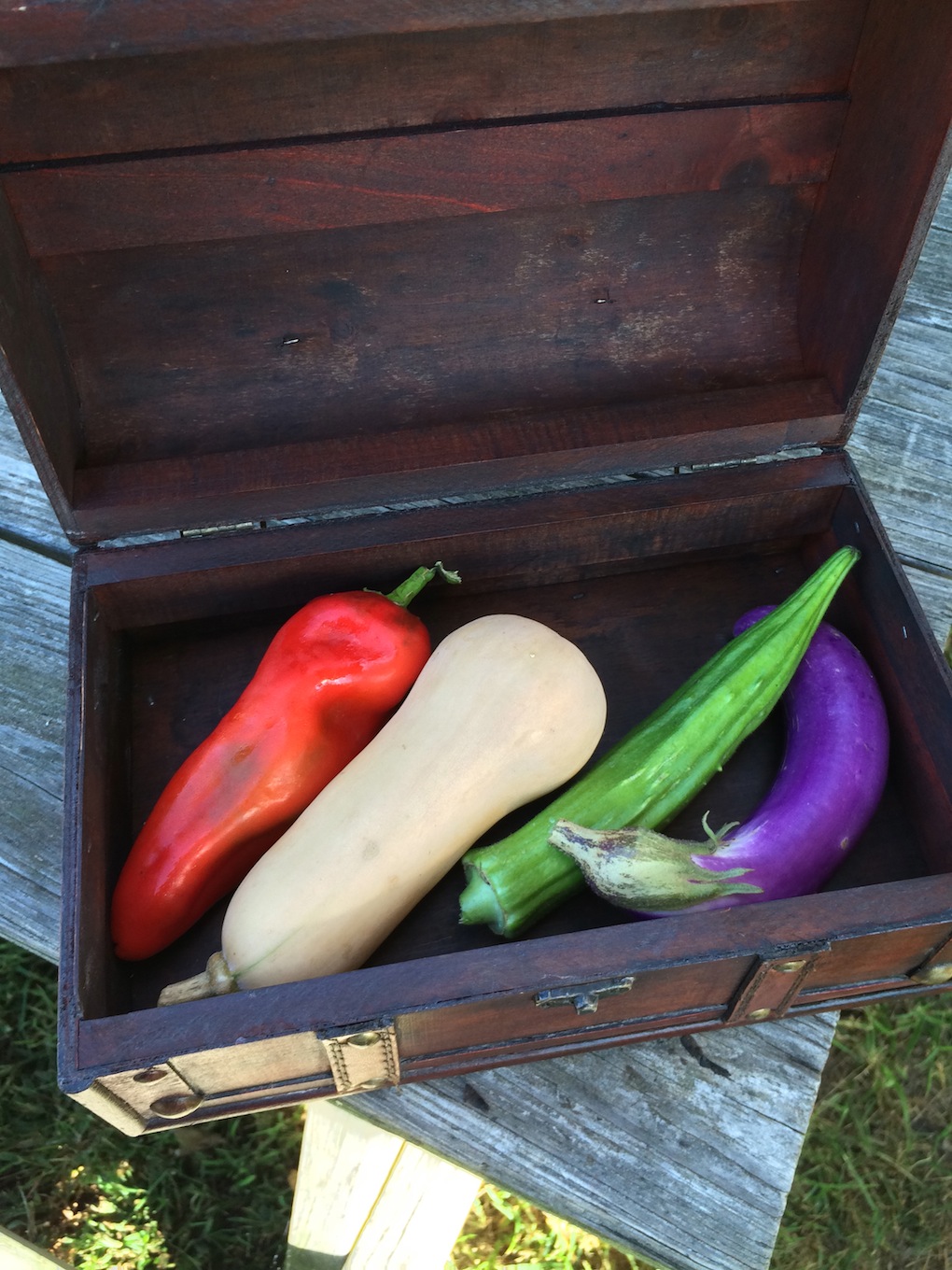
I talked about how inside the wondering box were seasonal vegetables freshly harvested from the farm, and how fall is a very important time of the year because it is a time when farms are gathering all the foods like these up before winter. We also talked about how Tuesday was the first day of fall, and that for storytime we’re going to talk a little bit about the fall season, growing food, and harvest.

Fall is Not Easy by Marty Kelley
As suggested by Anne Clark (So Tomorrow) and Cate Levinson (Storytiming), I read a fun fall favorite, Fall is Not Easy. I also made sure to create a flannel board to go along with it. I stared by asking the kids if they notice changes about the fall season and the leaves on the trees and that this is a rather silly book about one tree that has a difficult time with its leaves changing colors.
I read the book without using the flannel until the part in the story when the leaves change colors. I set the book down and kept putting up the different leaf scenes asking the kids if that was how fall is suppose to look. “Noooooooo!” they would say They laughed and laughed! By the time the (SPOILER) leaves begin to fall off, I picked the book up and started at that part and read from the book until the end. It was a hit. Thanks for the suggestion, Anne & Cate!
The Leaves on the Trees Are Falling Down By Irmagard Guertges, modified by Rebecca Z Dunn
(To the tune of “The Wheels on the Bus”)
The leaves of the trees are orange and red
orange and red, orange and red.
The leaves of the trees are orange and red
All through the town.
The leaves on the trees are falling down,
falling down, falling down.
The leaves of the trees are falling down,
All through the town.
The leaves on the ground go swish, swish, swish
Swish, swish, swish, swish, swish, swish
The leaves on the ground go swish, swish, swish
All through the town.
What is “Harvest”? – After singing a song I held up a sign I made with the word “HARVEST” on it. I asked the the kids if they could say the letters in this word with me and then I said the word a couple times. The first time I slowly moved my finger over the word, and then went a little faster subsequent times. Then I explained that harvest is a process or period of time when crops, like the ones seen on the farm we were at, are gathered. That fall is a very important time for harvesting before the cold winter months come.
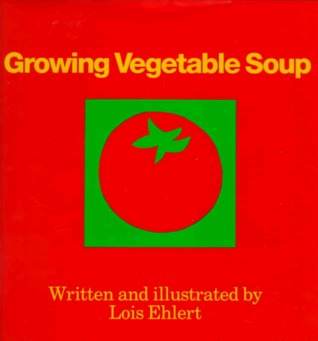
Growing Vegetable Soup by Lois Ehlert
Originally I was going to read How Groundhog’s Garden Grew by Lynne Cherry, but the crowd was younger, so I opted for this story instead about the growing, harvesting, and eating of vegetables. Not as in-depth as I would have preferred, but it did the job. As I read, I invited the kids pretend to do the activities that were being described in the book (plant seeds, pick vegetables, etc.). After the book was finished we sang a few more songs/fingerplays about harvest:
Harvest Time by Unknown
(Sung to “Twinkle, Twinkle Little Star”)
Harvest time is here again
In the garden we must dig
Carrots, radishes, onions too
All so fresh and yummy too.
Harvest time is here again
Won’t be long till you know when!! (Guess upcoming fall holidays)
Lunch Fingerplay By Jane Willis Johnston
Rabbits eat carrots with a crunch, crunch, crunch.
(Hold your hands on your head and make floppy rabbit ears, then make your hands into fists and hold one on top of the other in front of your mouth to make a carrot to crunch.)
Monkeys eat bananas by the bunch, bunch, bunch.
(Hold your fists over your ears too make monkey ears, then flop your hands, fingers down, in front of your mouth to make banana bunches.)
Raccoons eat sweet corn with a munch, munch, munch.
(Hold your hands like glasses over your eyes to make the raccoon’s mask, then shape your hands in a long ear of corn in front of your mouth and move it from left to right.)
And I eat ______________________ for my lunch, lunch, lunch!
(Point to yourself, then call out the name of a food you like to eat, hold your hands up to your mouth and pretend to eat your lunch!)
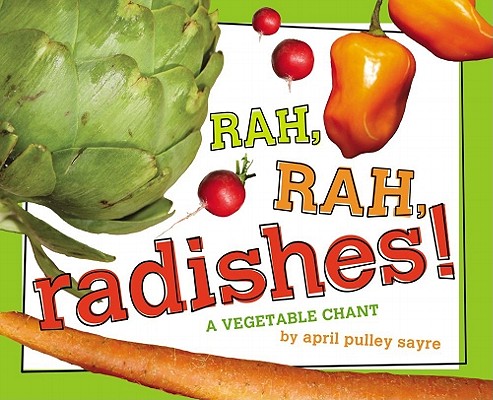
Rah, Rah, Radishes!: A Vegetable Chant by April Pulley Sayre
This was also a suggestion by the wonderful Cate from Storytiming and was so much fun to read and really was the perfect story for the storytime theme and location.

Leaf Man by Lois Ehlert
Storytime concluded with a personal favorite, which was also the segue into the post-storytime extension activity. After reading it I talked about how you never know what you might find if you look closely at the world around, especially during a time when the seasons are in transition (a fancy word for changing). I thanked everyone for coming to storytime, and shared with them the optional activity, making ephemeral art.
Ephemeral Leaf Art
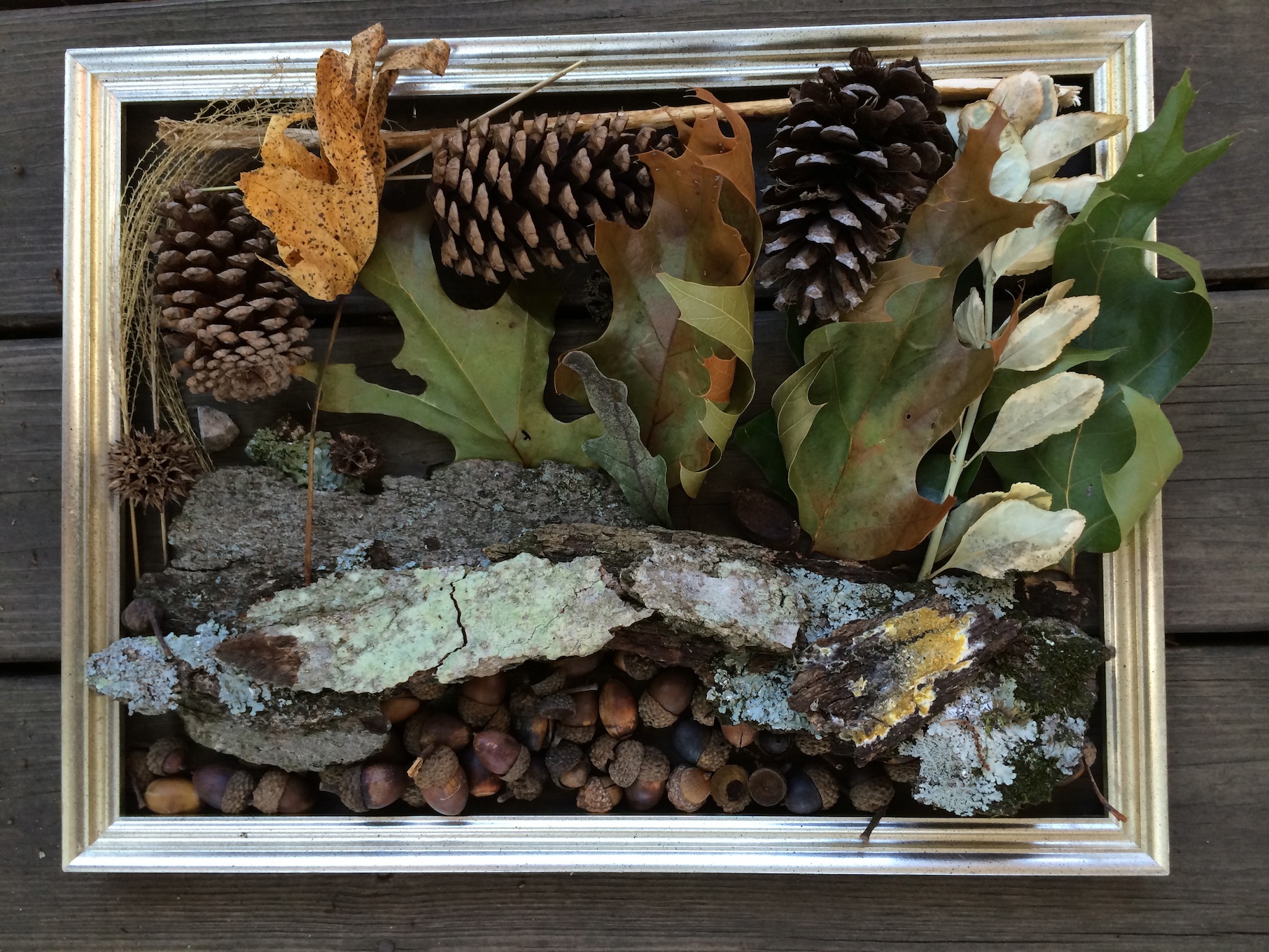
As mentioned before, I have been deeply inspired by nature and the Reggio education pedagogy over the past several months. After storytime, I invited the kids and their caregivers to create pictures inspired by natural items found around the farm. Before storytime I had gathered leaves and acorns and such from my backyard, and Anna collected items found around the farm.
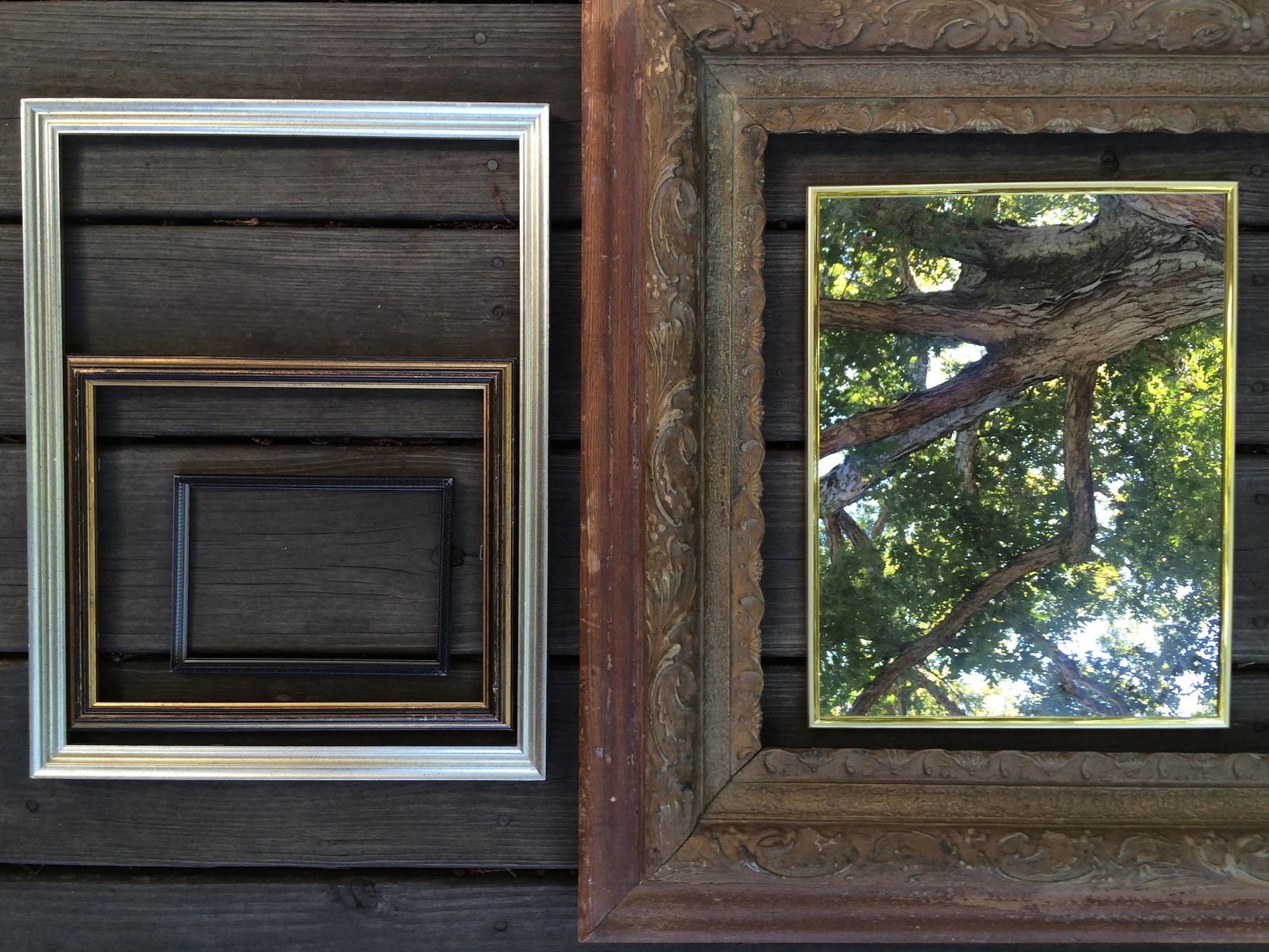
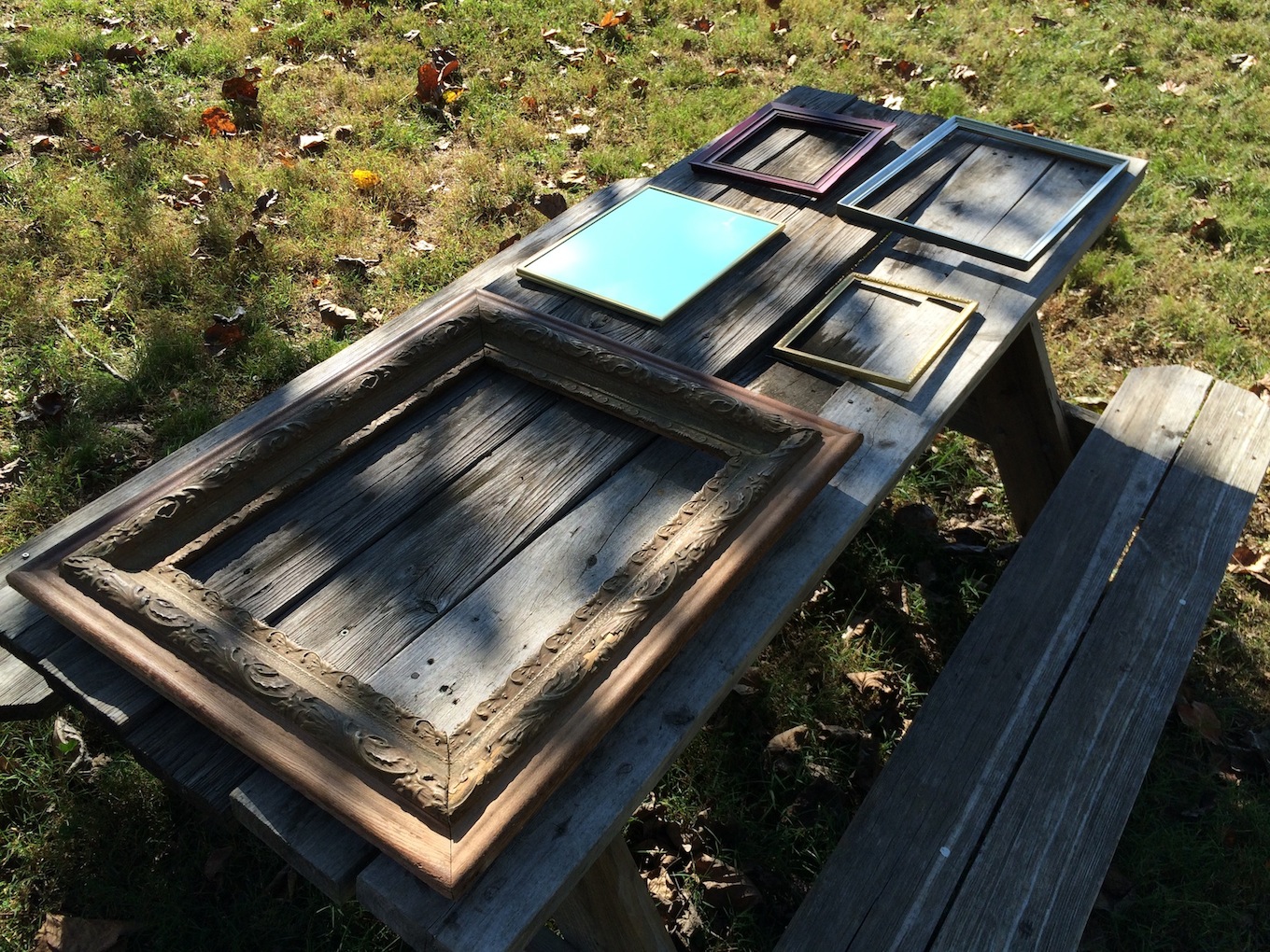
I laid out old picture frames and small mirrors purchased from Dollar Tree on picnic tables not far from where the storytime was held. Piles of nature’s treasures that Anna and I found earlier were grouped around on the ground near the tables, plus the kids could use whatever else they found around them. These are some of the images they created:
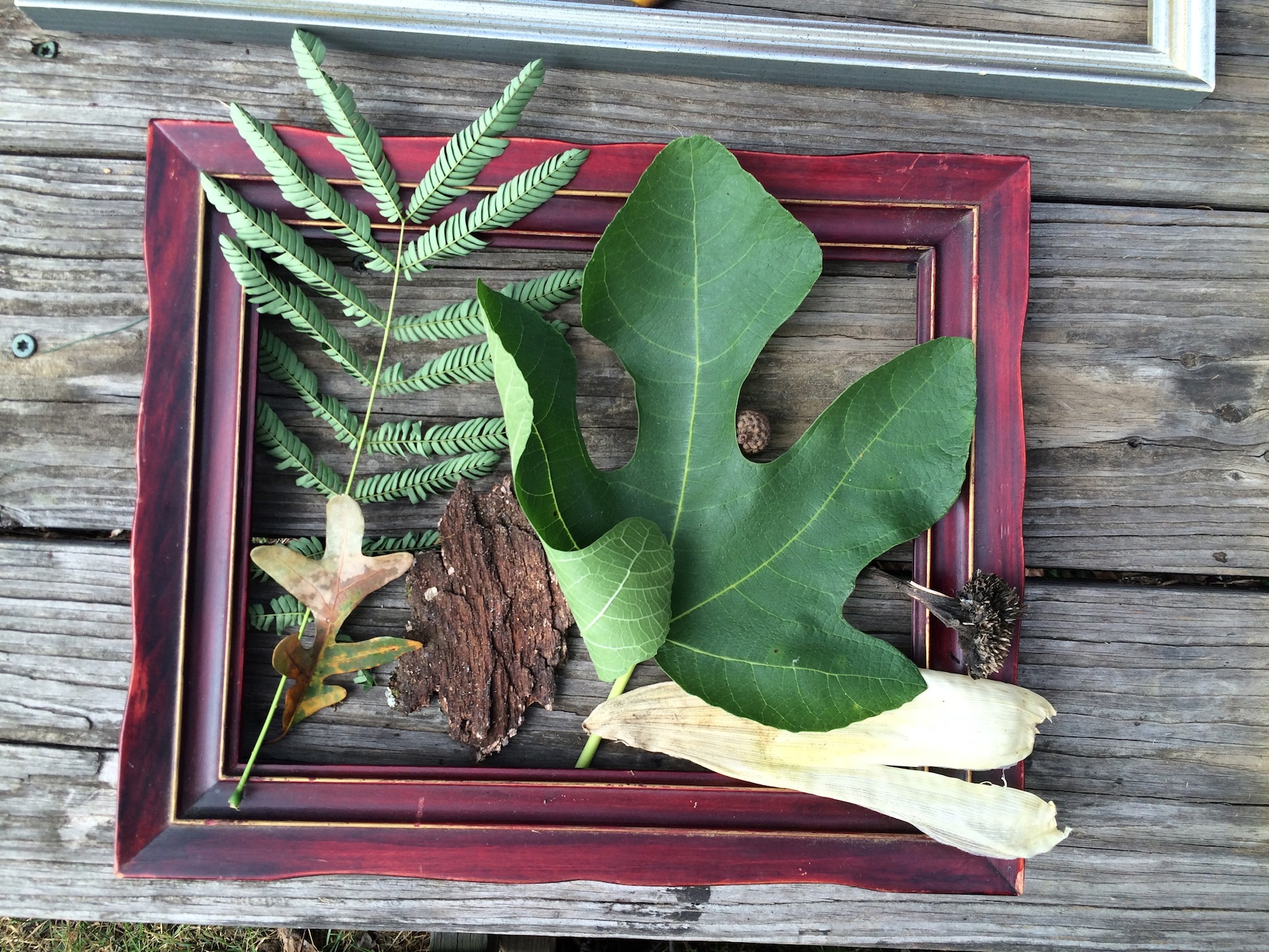
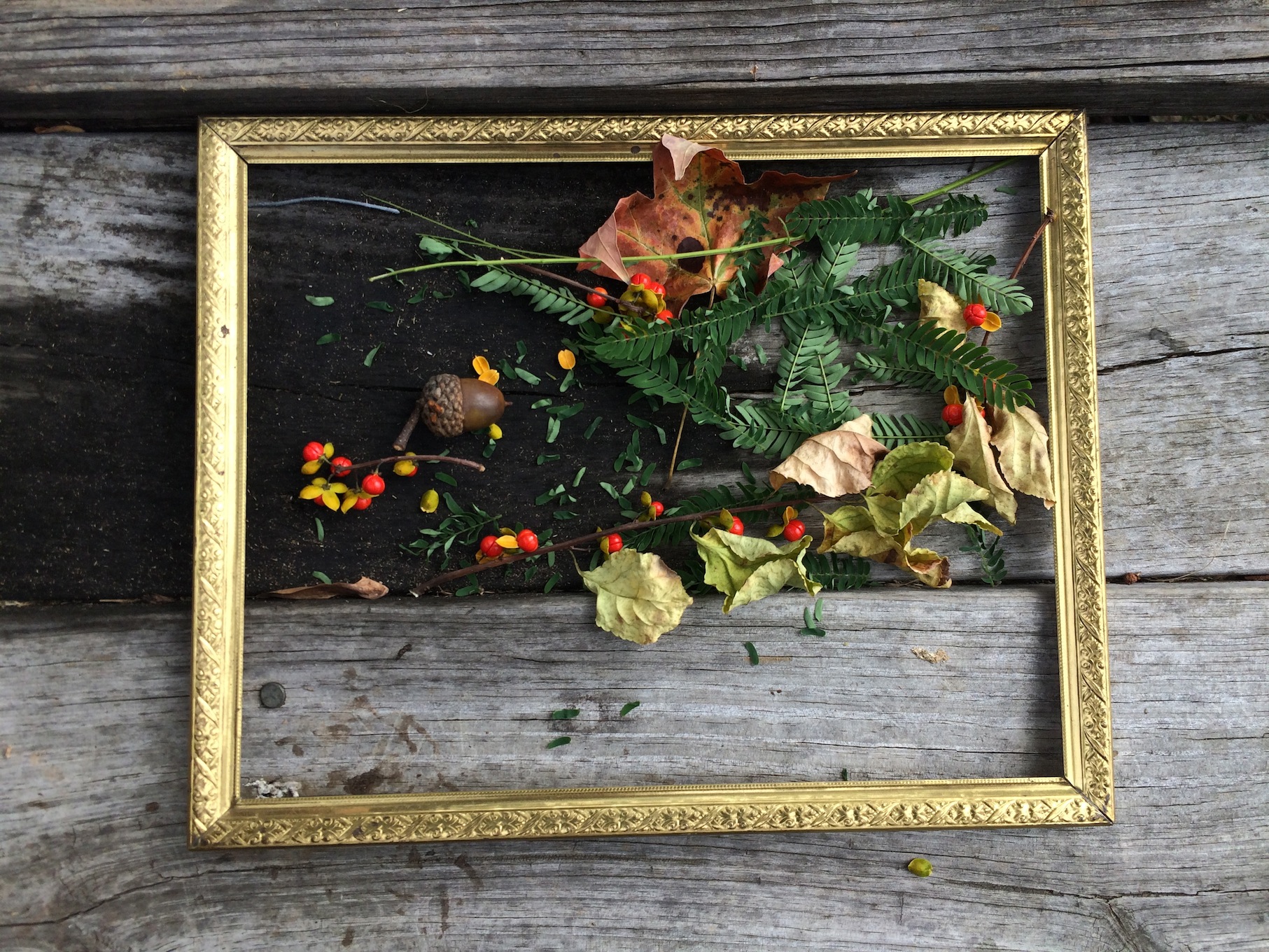
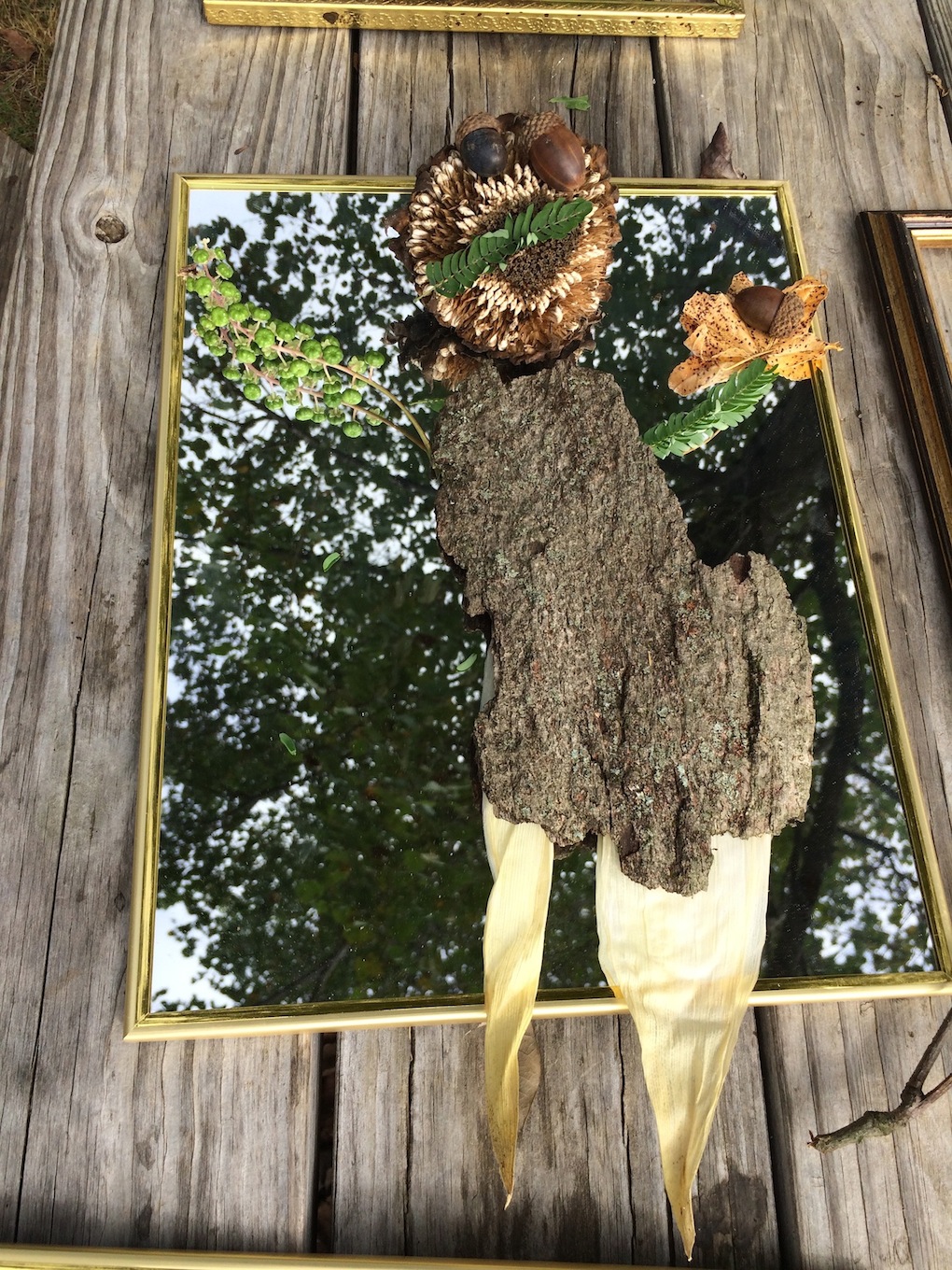
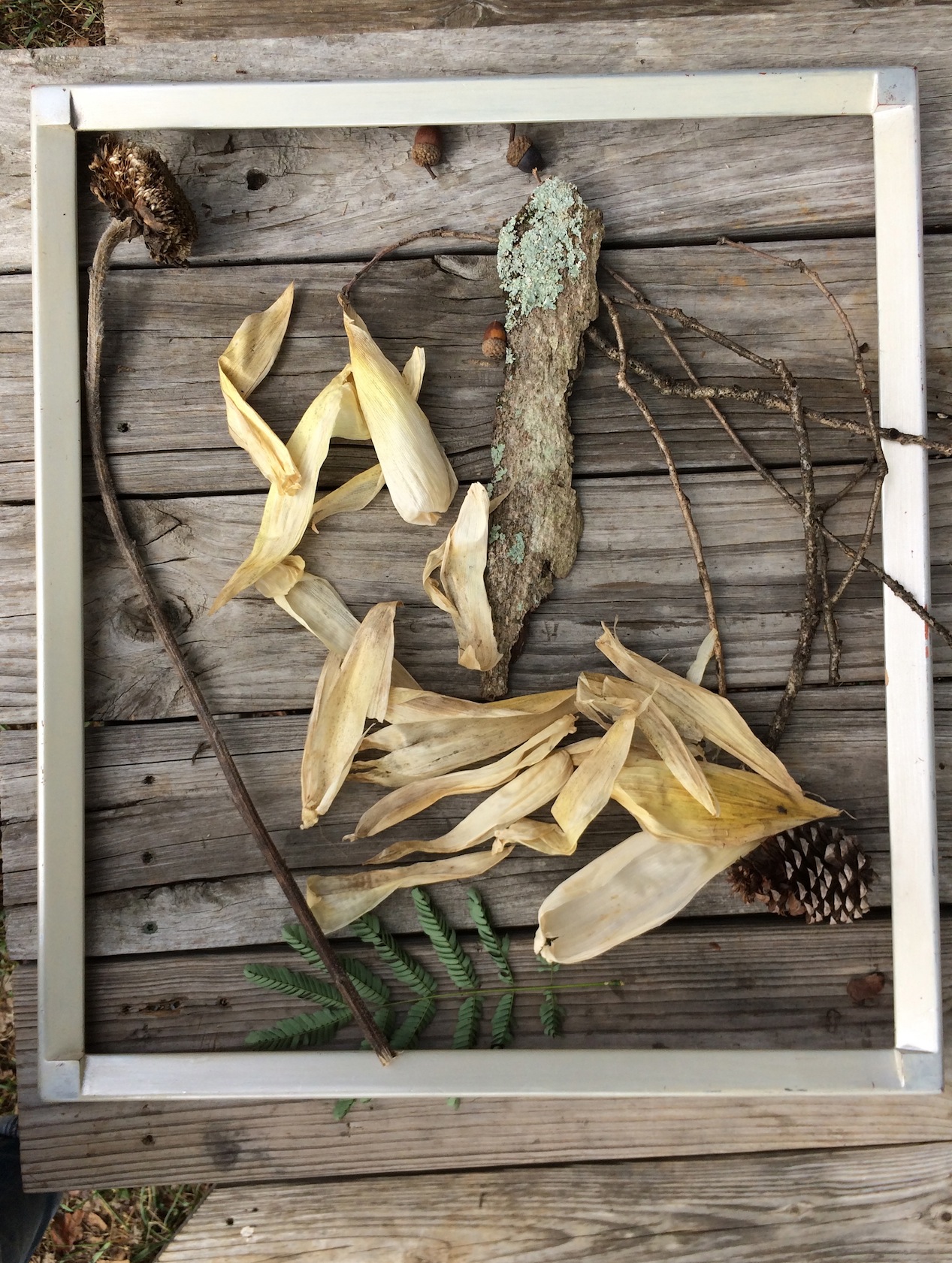
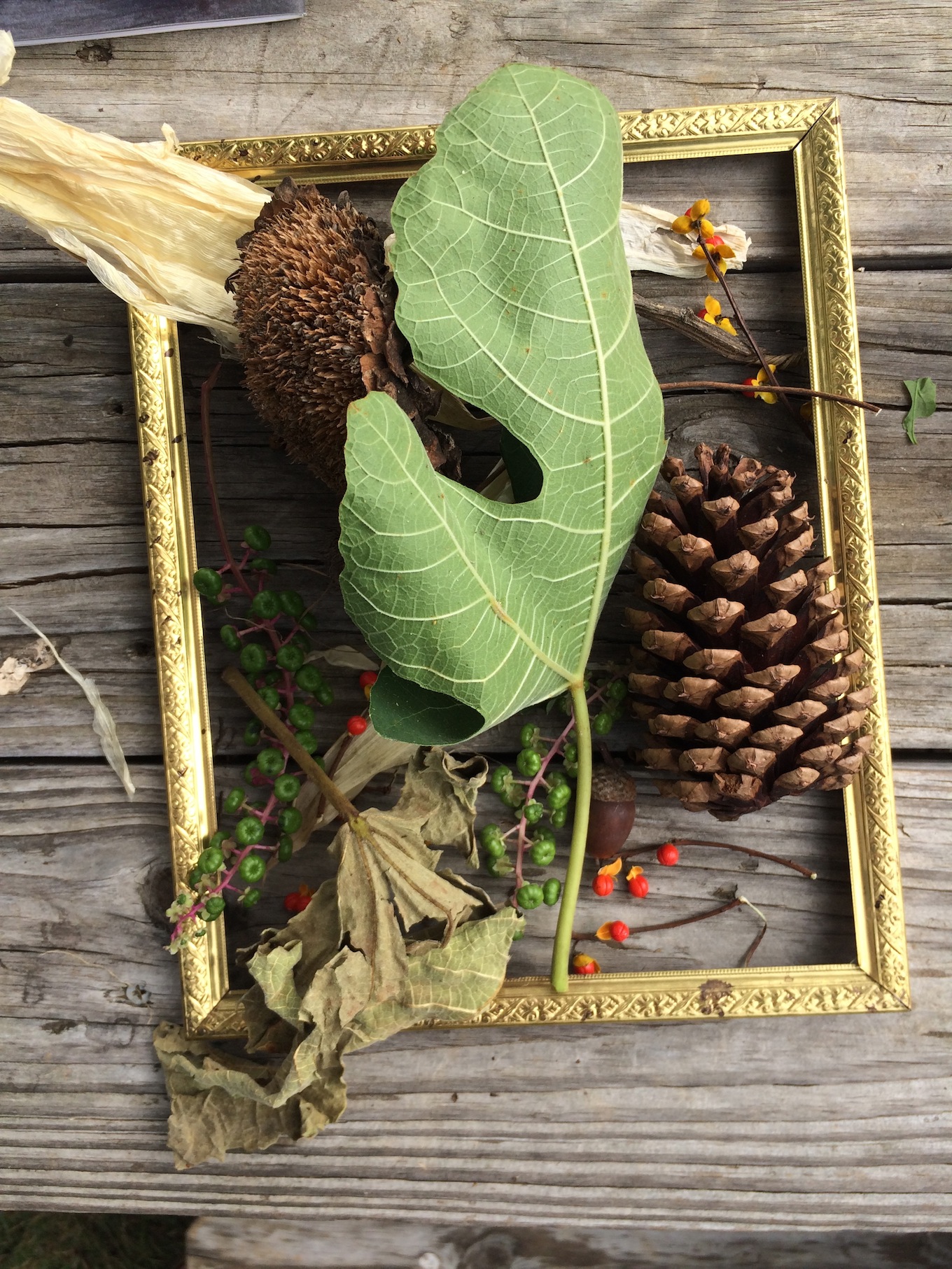
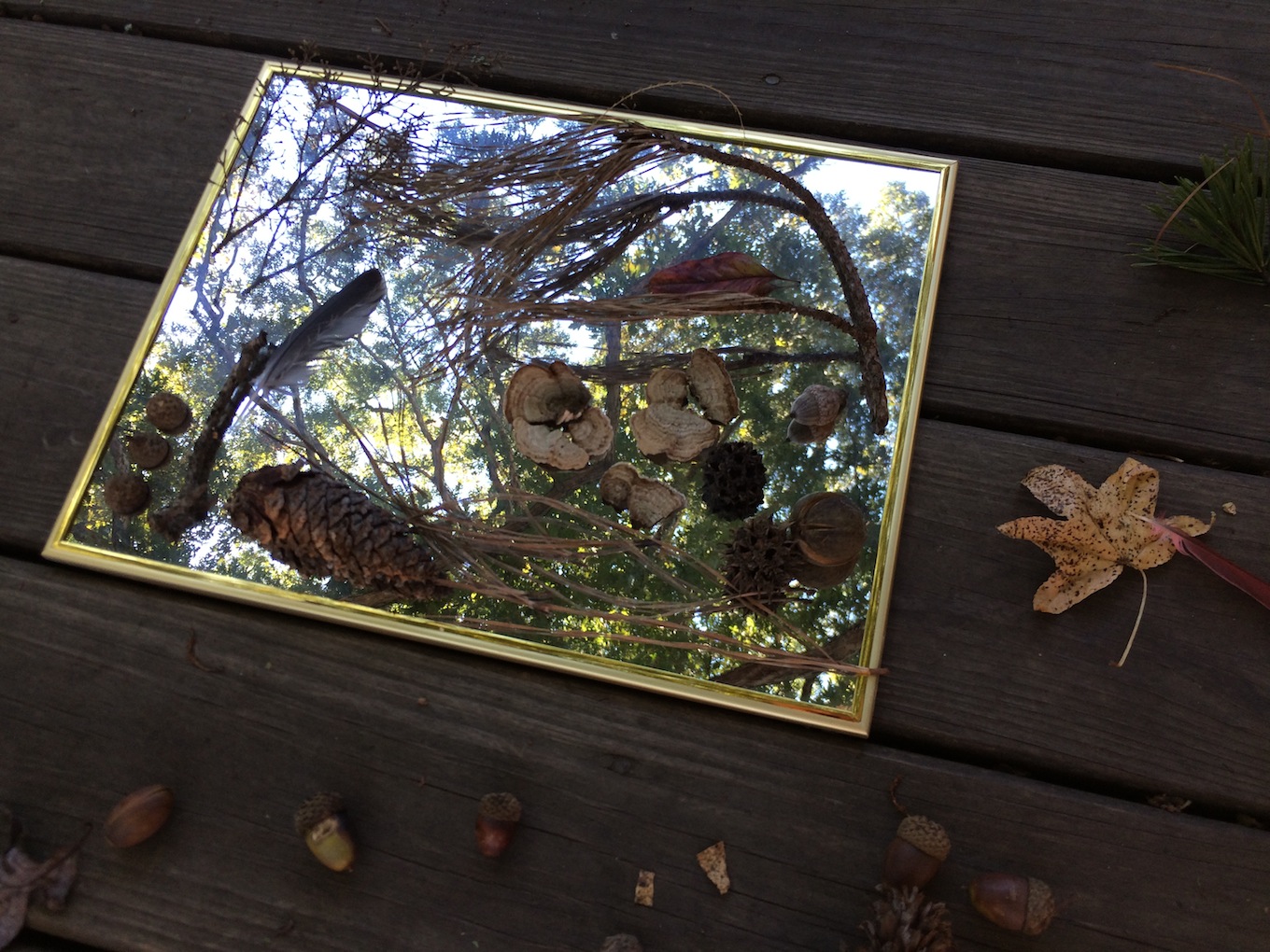
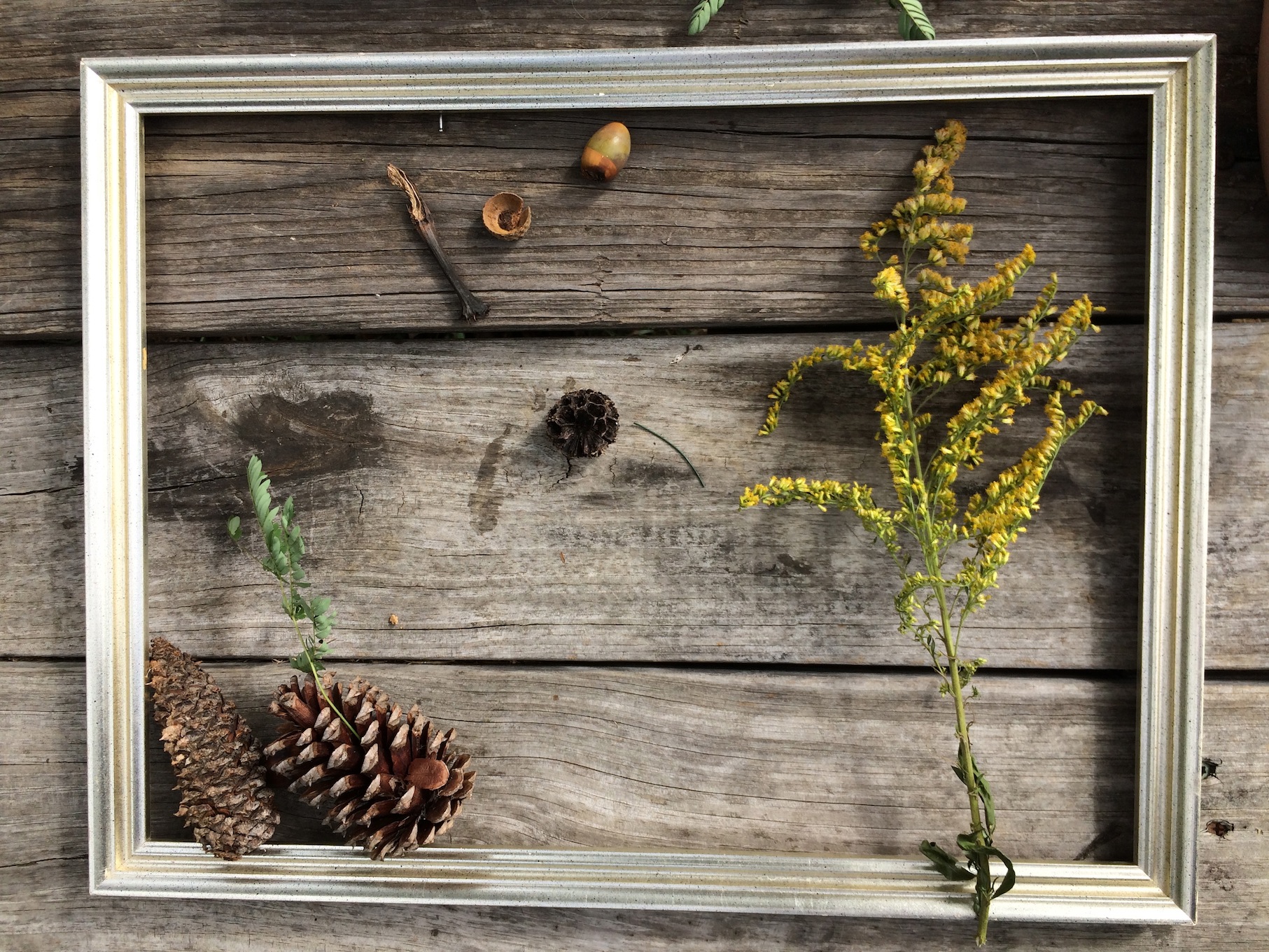
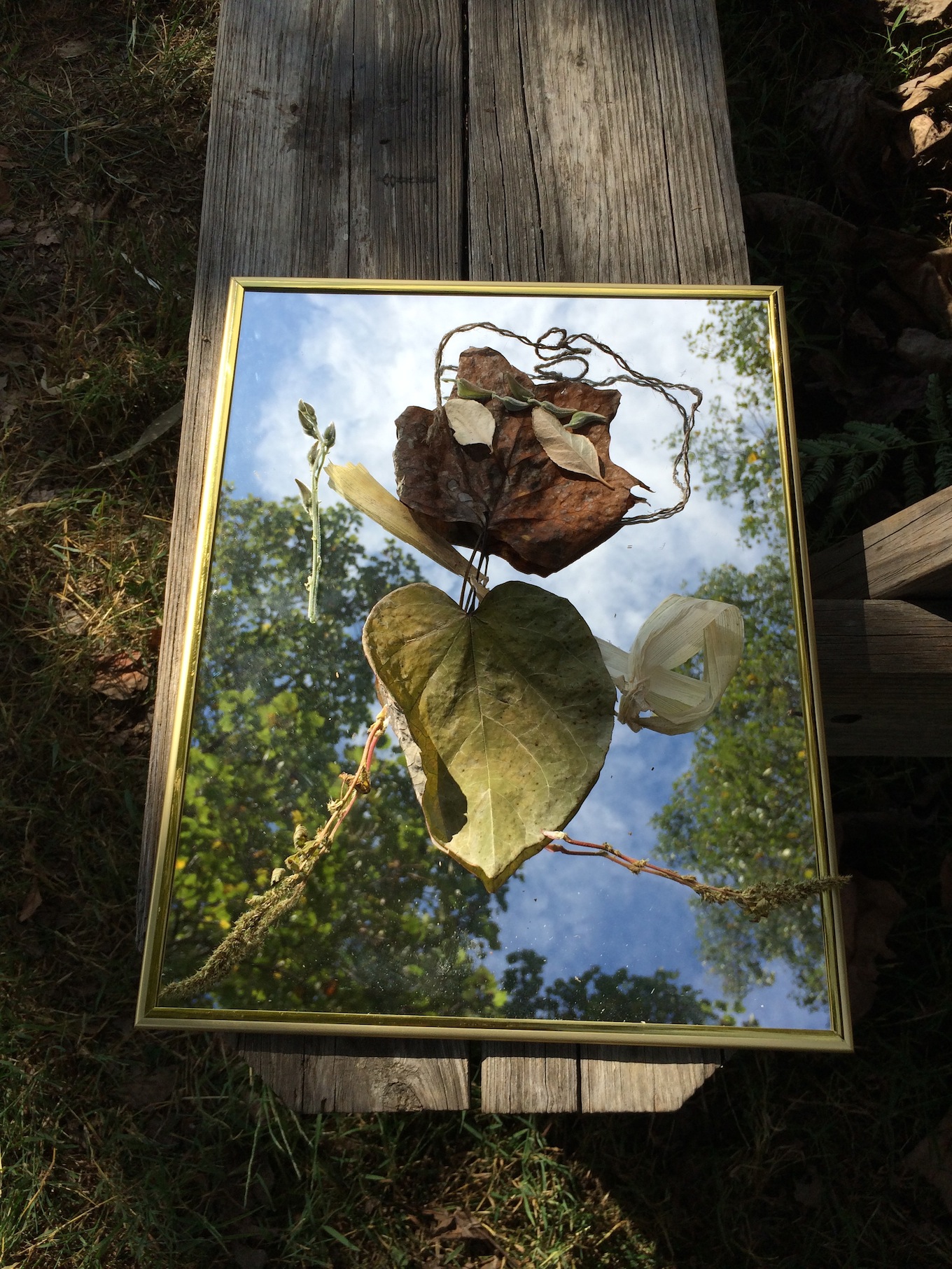
It was a magical time. More details about this project are available HERE on Library as Incubator Project.
What would I have done differently? I wish I had time to make this wonderful fall time flannel from Mel’s Desk, but I ran out of time. It too would have been perfect for the age group! Next time! The upcoming theme for October is composting, and I plan on featuring songs and stories about pumpkins and how to compost just in time for jack-o-lantern season!
For fun, I thought I’d leave you all with the Butternut Squash Chocolate Chip Cookie recipe Anna distributed to our storytime group. Because COOKIES!
Crabtree Farms Butternut Squash Chocolate Chip Cookies
- 1 cup butter, softened
- 3/4 cups maple syrup
- 1 cup butternut squash puree
- 1 egg
- 1 teaspoon vanilla extract
- 2 cups white whole wheat pastry flour/unbleached all-purpose flour
- 1 teaspoon cinnamon
- 1 teaspoon baking powder
- 1/2 teaspoon baking soda
- 1/2 teaspoon salt
- 1 cup semi sweet or dark chocolate chips
Preheat oven to 375F. In a large mixing bowl, cream butter and maple syrup till smooth and fluffy. Add squash, puree, egg, vanilla, and mix until blended. Sift together flour, cinnamon, baking powder, baking soda, and salt in another bowl, add the wet ingredients and stir to combine all ingredients. It will be a soft batter. Stir in the chocolate chips. Drop using small ice cream scoop (generous tablespoon) onto a baking sheet lined with parchment or a silicone sheet. Bake for 10-15 minutes, until toothpick comes out almost clean.

6
Oct
Pages to Projects: Ephemeral Leaf Art
There is a new Pages to Projects up over on Library as Incubator Project! Check out how to make seasonal Ephemeral Leaf Art inspired by Lois Ehlert’s Leaf Man HERE! I’ve also been busy updated the Pages to Projects Pinboard with more ideas for fall time stories and projects too. More about the storytime that inspired this project COMING SOON.
1
Oct
Shared Story Provocation: Bookmaking & Kids’ Library
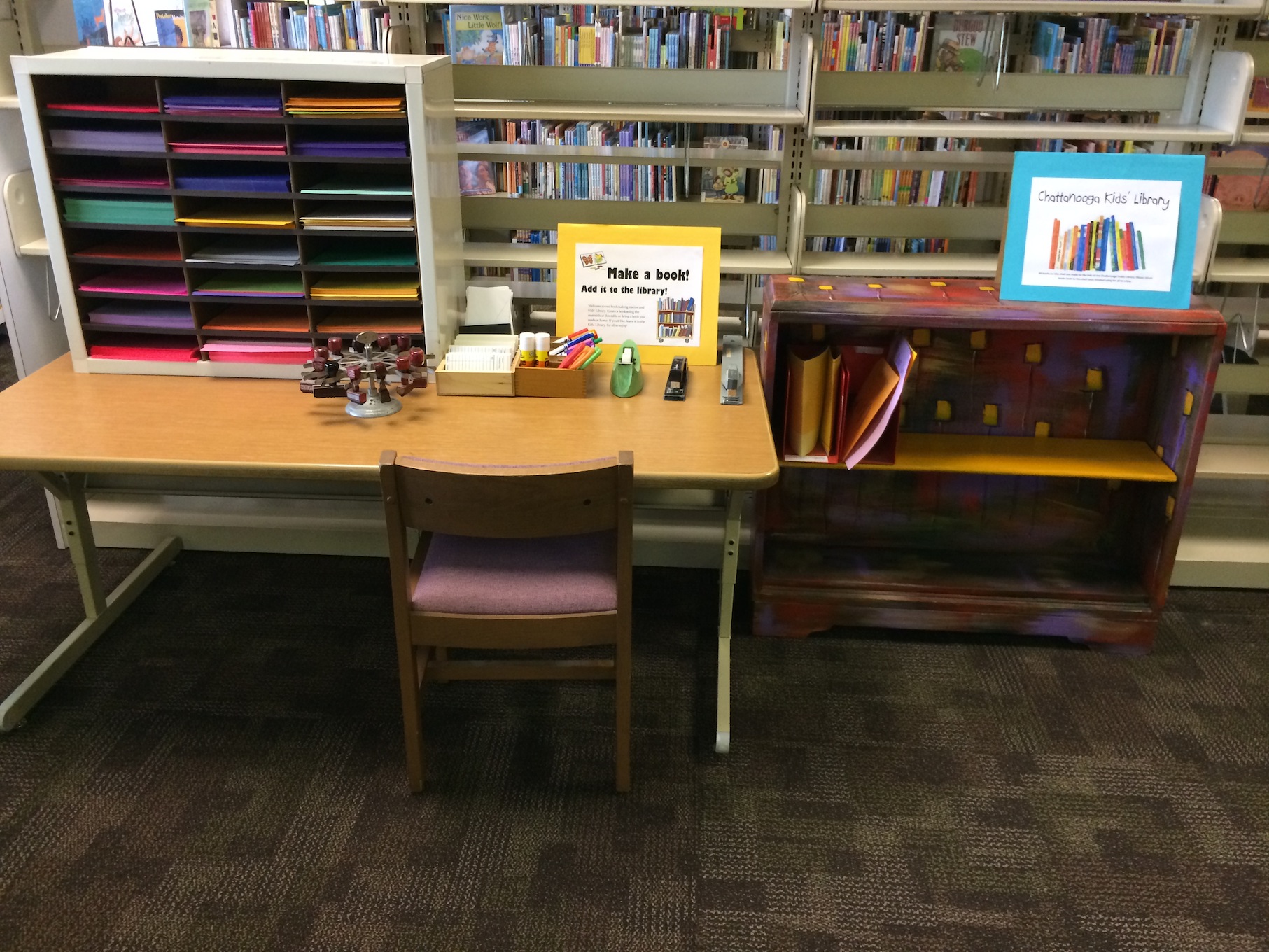
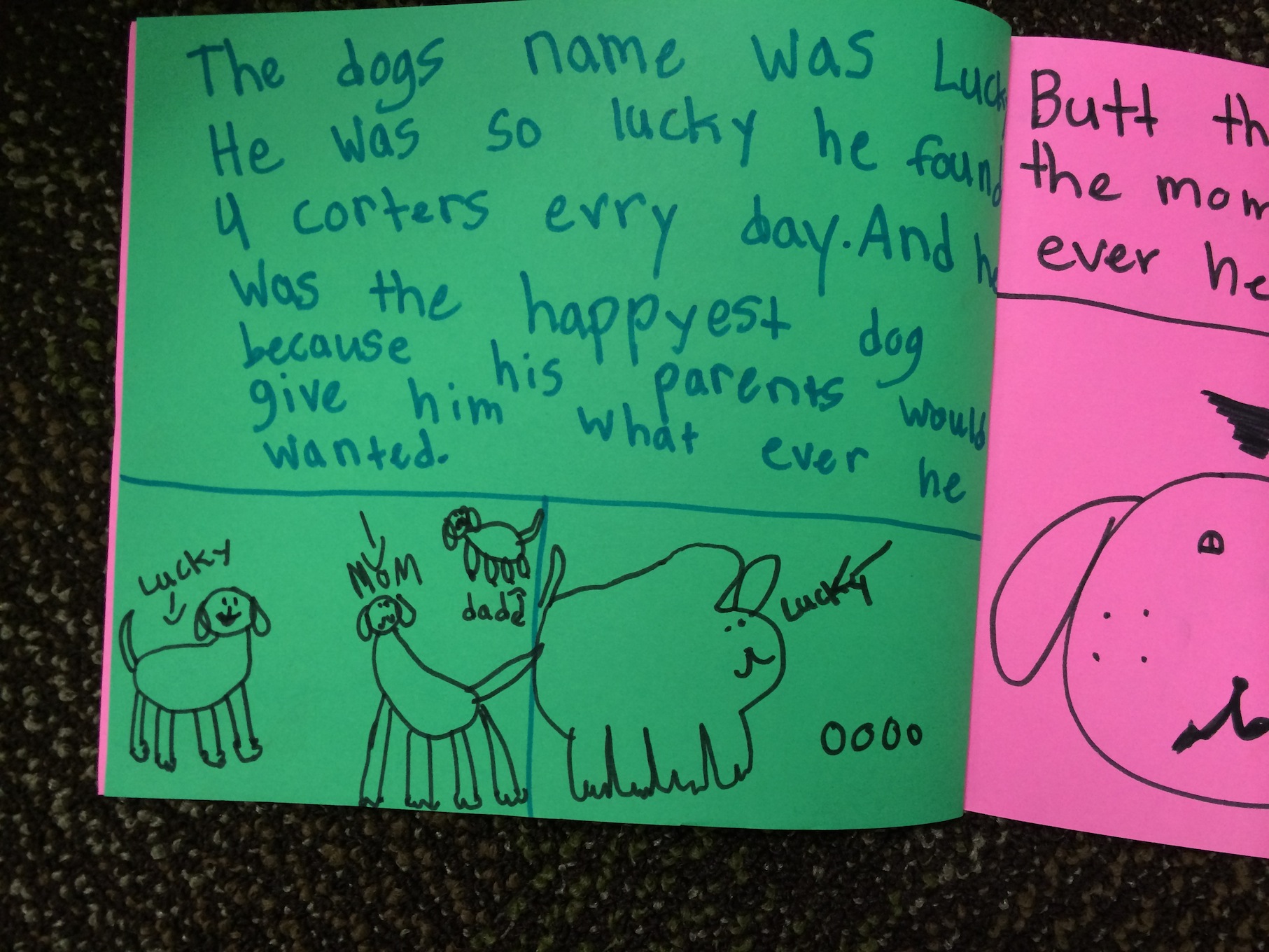
The Bookmaking Station and Kids’ Library are two new provocations I have created that have become a popular fixture for kids of all ages (as well as adults). This idea stemmed from my daughter’s sudden interest in creating her own books. This is one of her earlier creations that is “for kids at the library, but they have to bring it back”:
After watching the process she goes through in making her own books several times and 6 weeks into conducting the The Picture Show, I thought it might be an interesting experiment to create a space where the sole purpose is creating stories that become permeant fixtures in the library. I started collecting items I found around the library that I thought the kids would enjoy using for their bookmaking. The local history department donated all kinds of old library equipment: due date cards, card catalogue cards, envelopes, lots of stamps, a book-mending stapler, and a stamp pad. I found an old paper file and a lot of odds and ends around my own department and set up shop in the kids’ room.
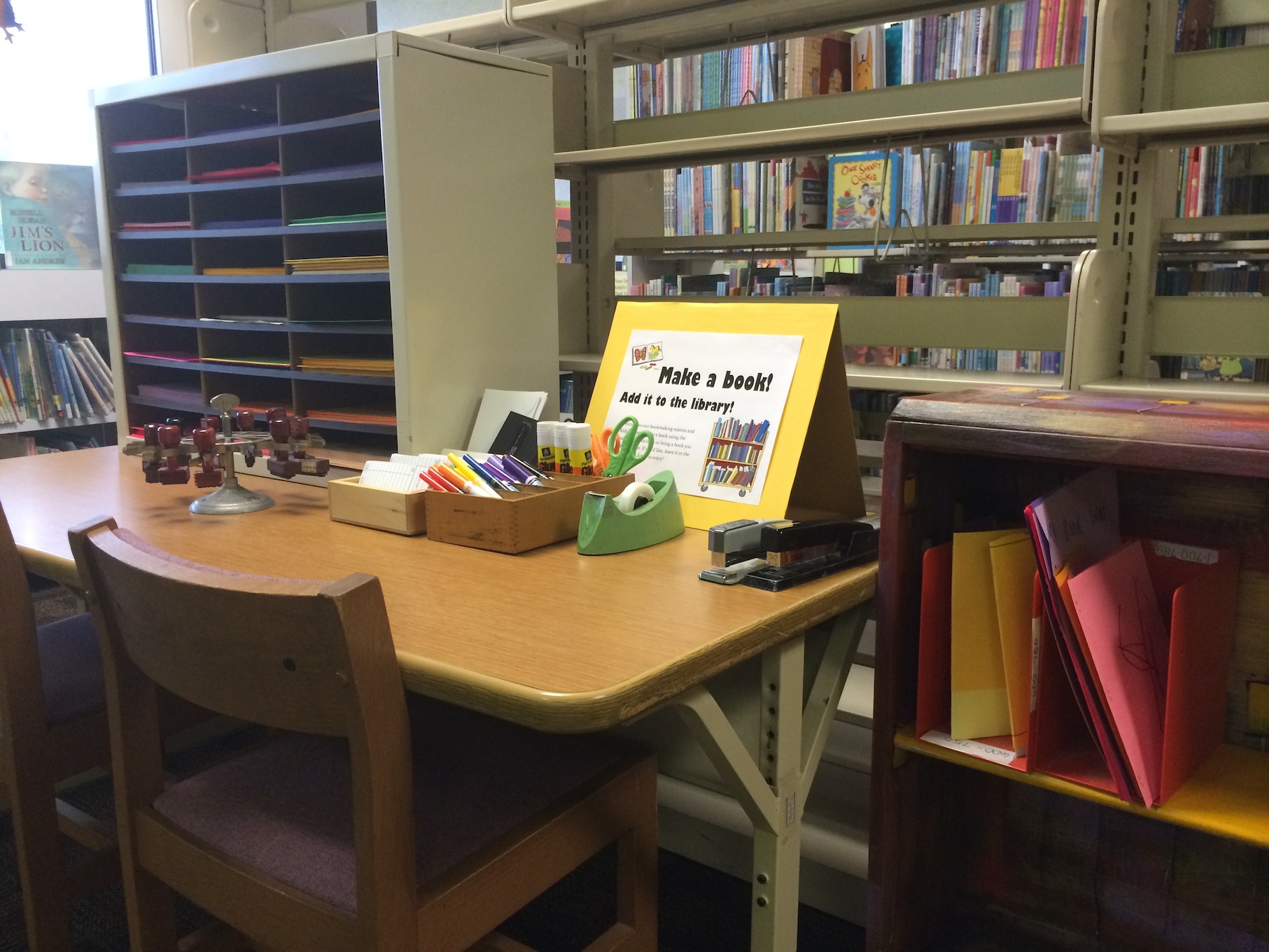
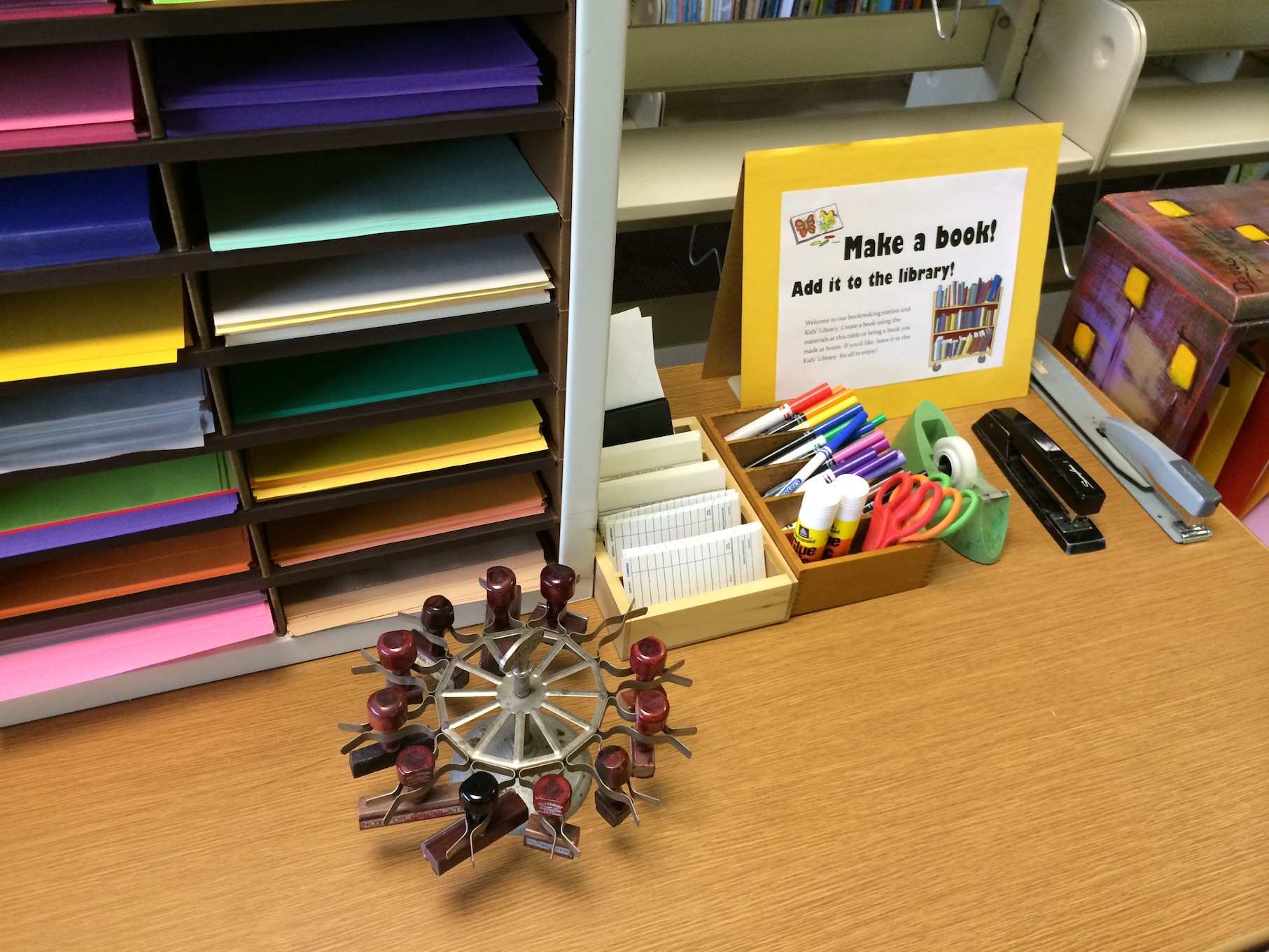
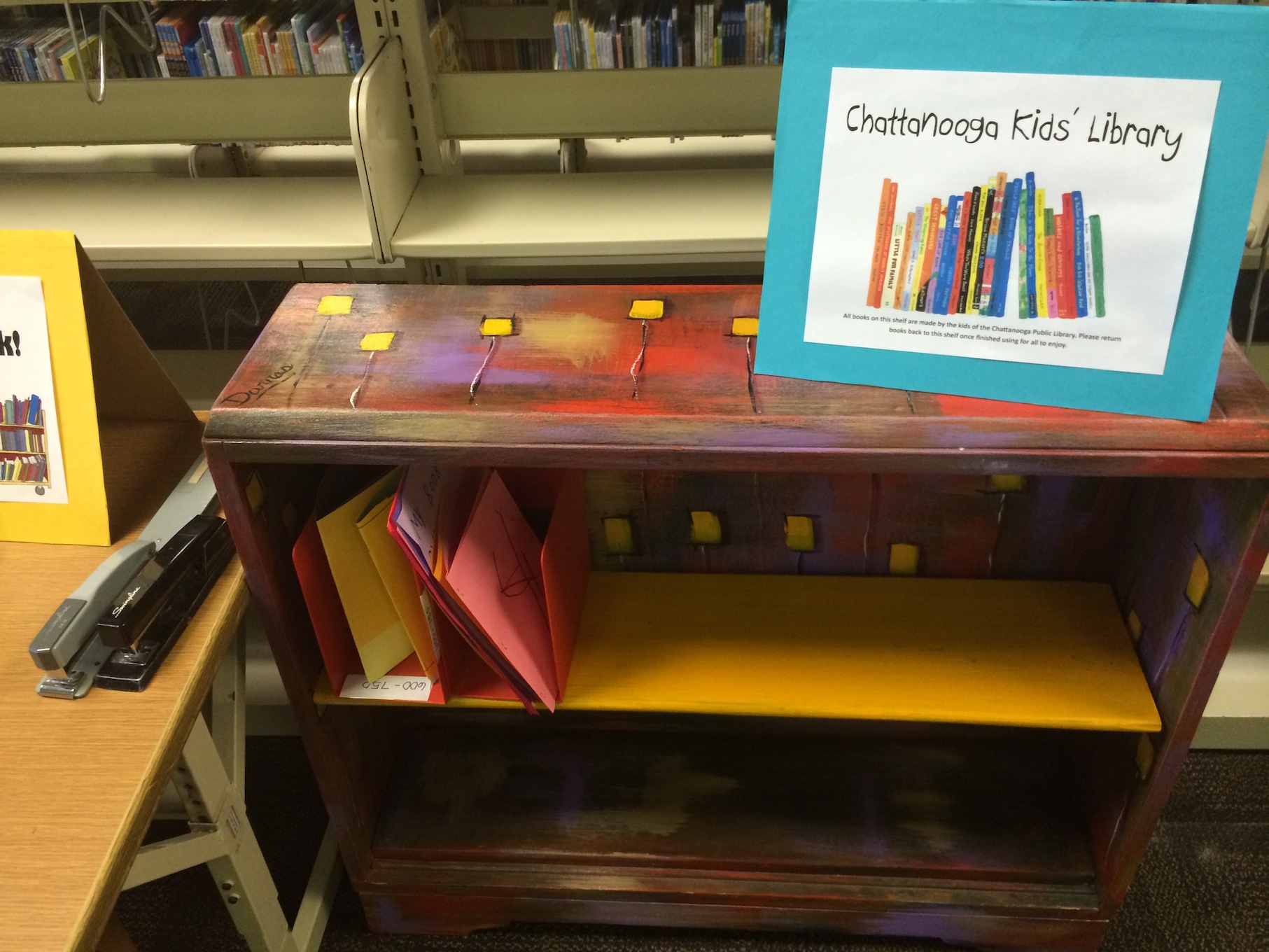
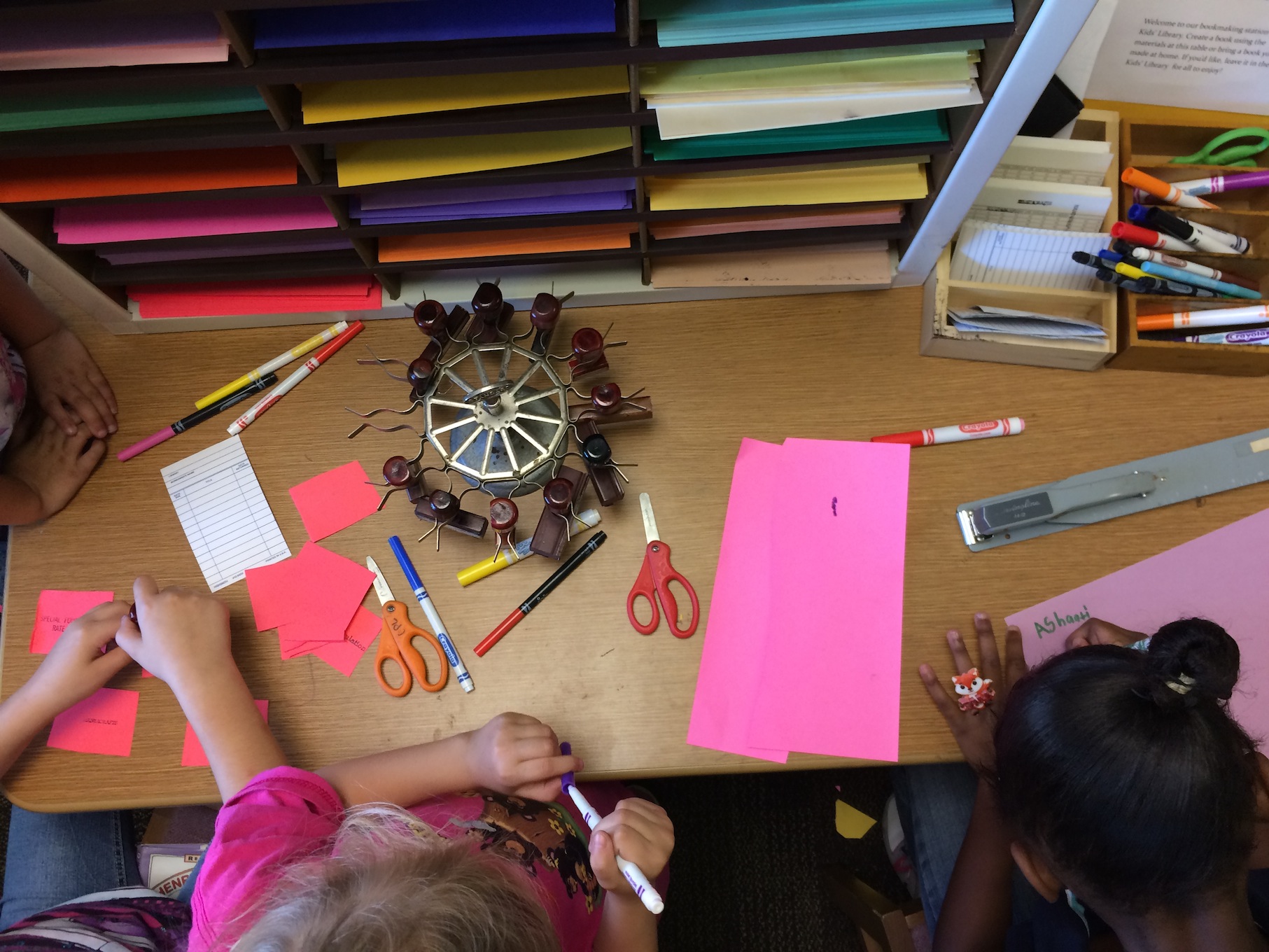
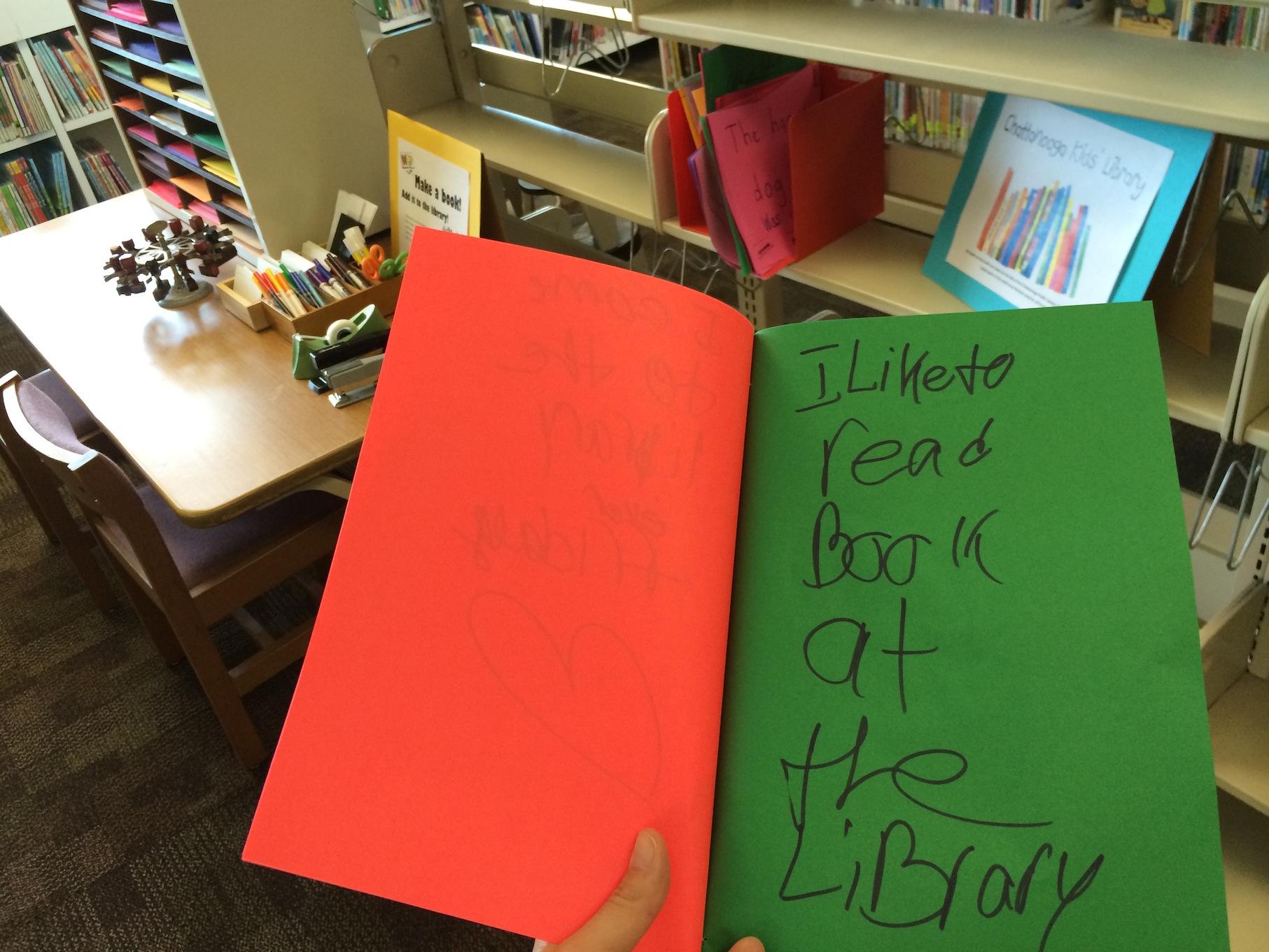
The idea behind the Kids’ Library is that it would be a place to share the books made with other library patrons. It’s a non-circulating (books cannot be checked out) library entirely of books created by patrons. So far, 100% of the books have been created in-house. The images are of the library when it first opened and boy, oh boy, has the collection grown!
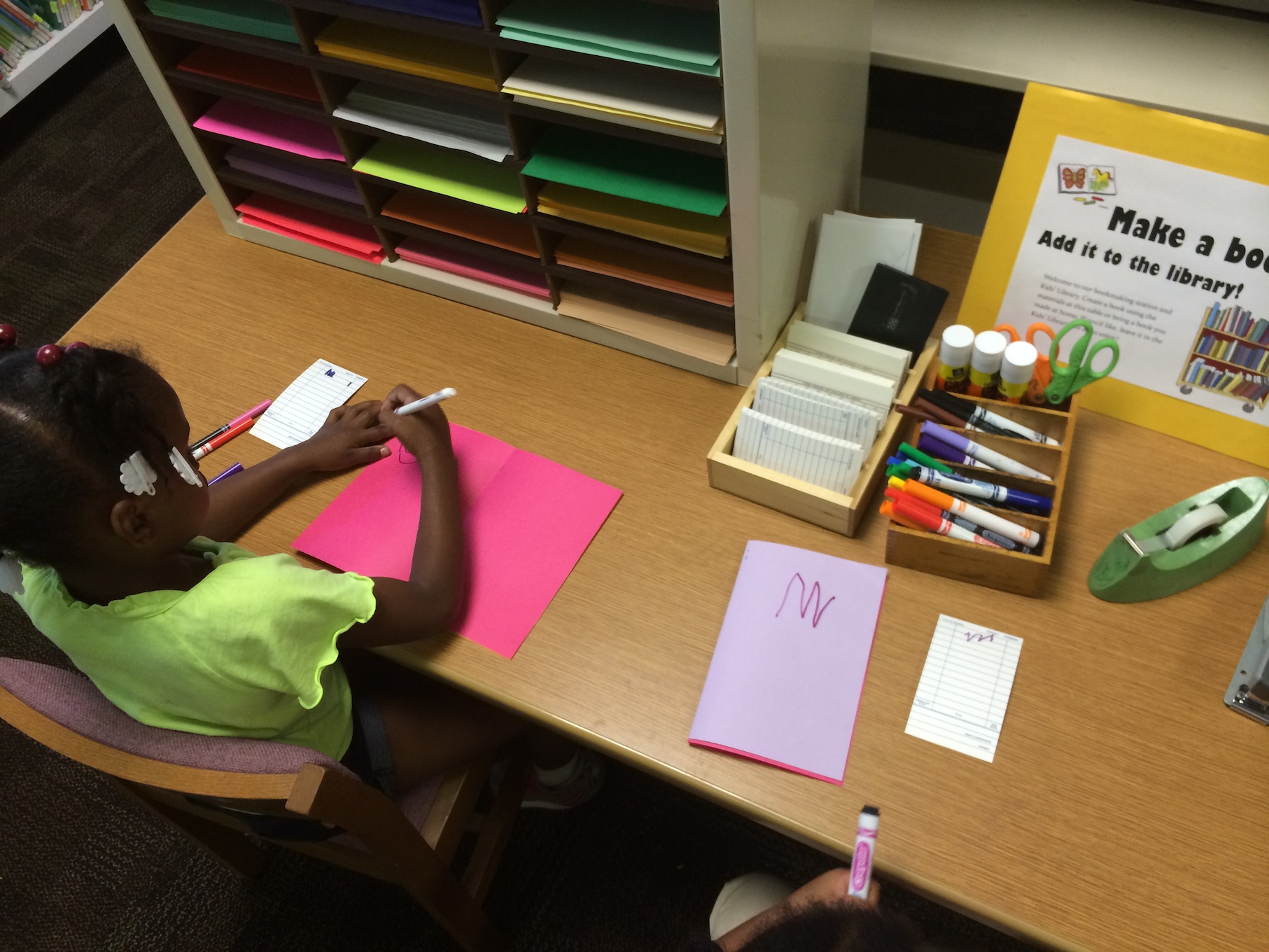
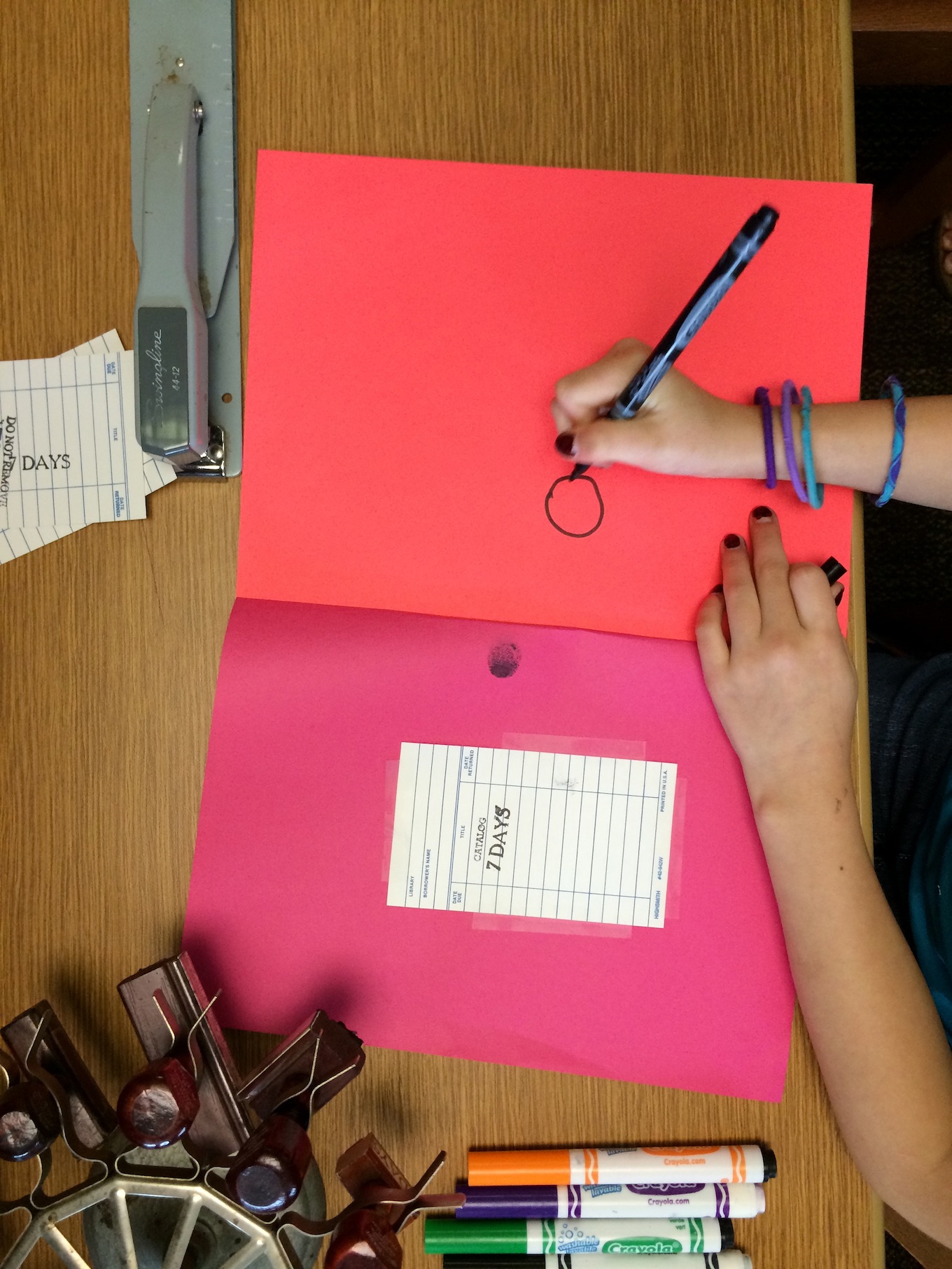
Like The Picture Show, the Bookmaking provocation has become a place for self expression and community storytelling. Kids too young to write their stories down in text draw illustrations to depict their tale, or dictate their stories to caregivers. Those old enough to write leave story after story in books that sometimes are all text and sometimes text paired with illustrations. They thumb through other handmade books in the Kids’ Library, curious of the stories held there. The concept of shared story, whether it be physical or oral, is innate and goes back in time to the earliest social interactions. What is your story? How do we learn for one another? How do we grow from one another?
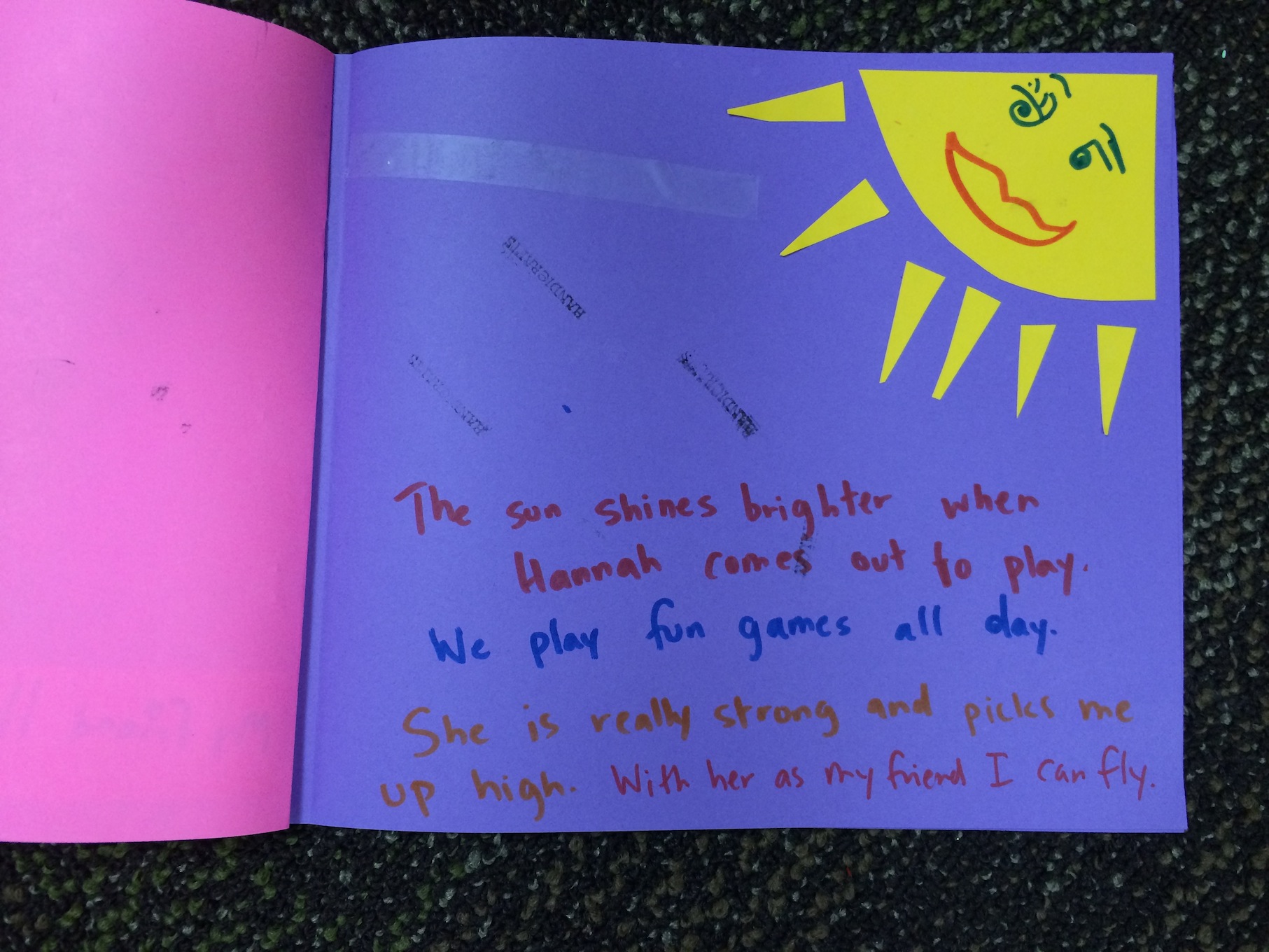
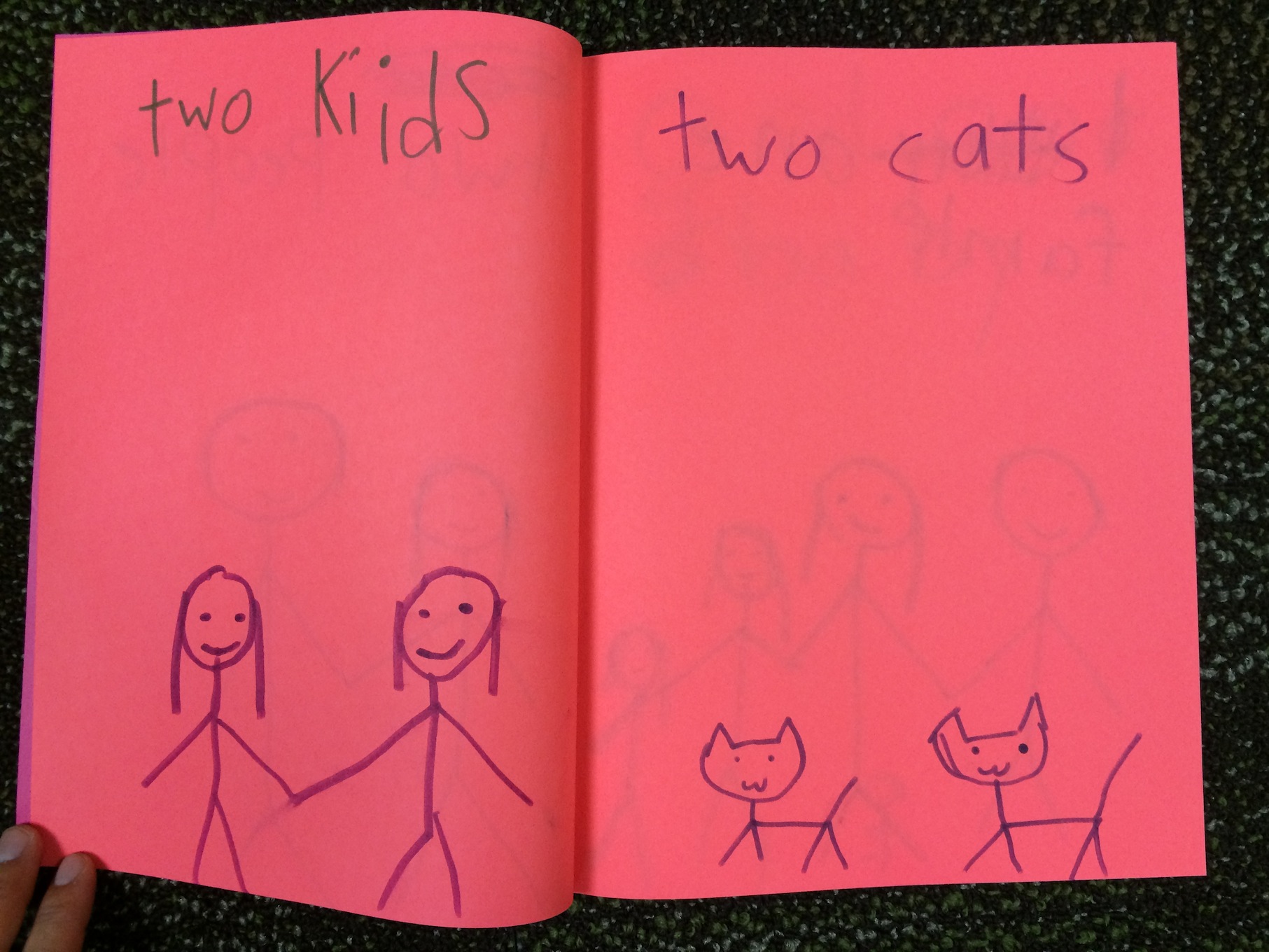
The bookmaking station has reminded me a great deal of Lois Ehlert’s picture book autobiography, Scraps. She describes a time during her childhood when she had a space to grow creatively:
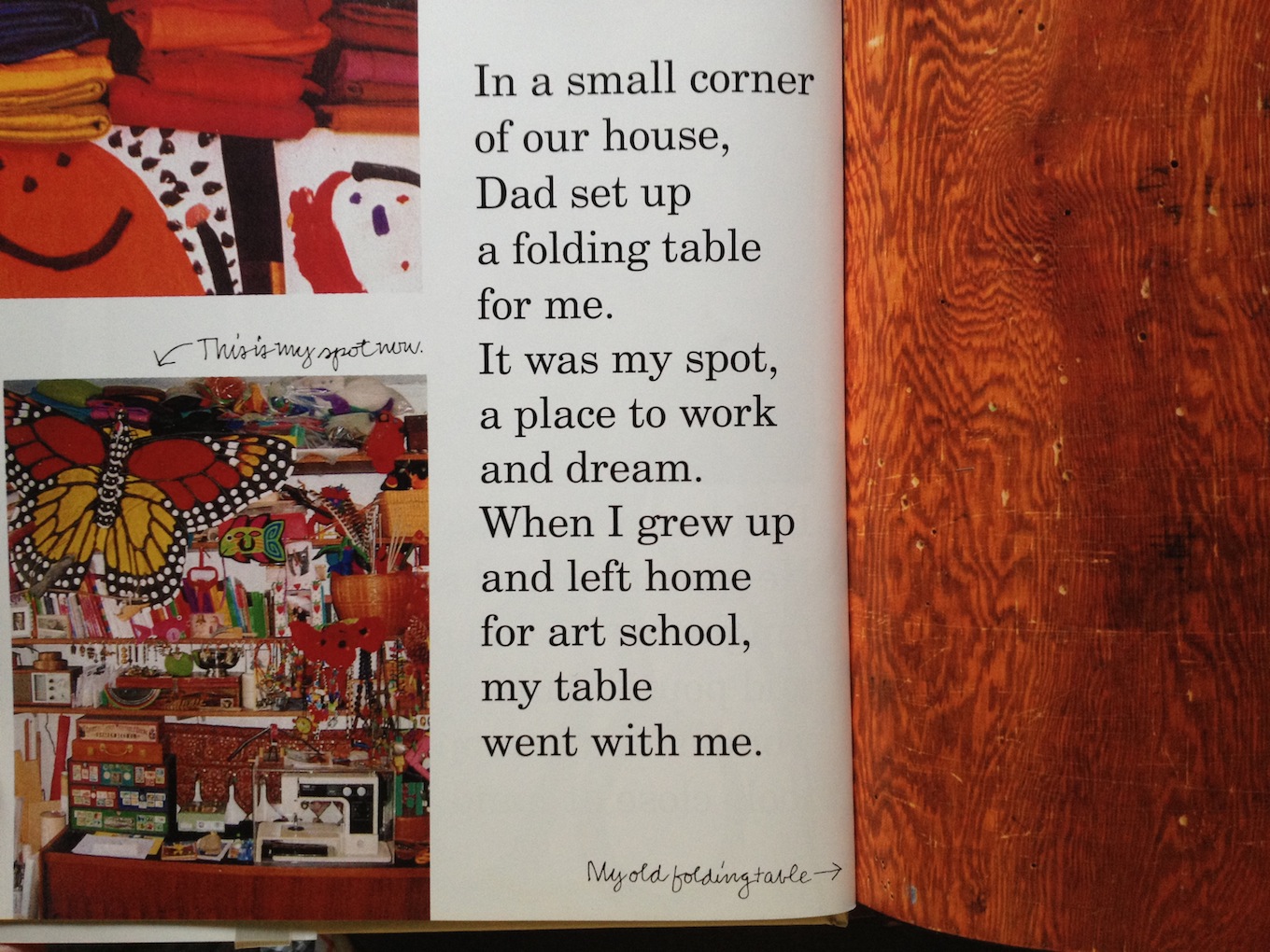
It doesn’t take much, but we all need space to grow. It is my hope that this little wooden table in the library’s children’s room serves as a safe space for their dreams and creative exploration for all who visit it.
29
Sep
Provocation to Connect With Nature in the Library
Finally! A teeny amount of free time to blog! Over the past several weeks I’ve been working on setting up provocation stations in the library, so the next several posts will be devoted to the creation of these exhibits. The goal of the provocations, which will be modified seasonally or monthly like the new post office, is to give kids hands-on exploration opportunities as well as a chance to flex their creativity and self-expression. I’ve been fervently reading about the methods and philosophies of several educators over that past few weeks, two of which have been the biggest inspirations in my research and practice working with kids in the library: Loris Malaguzzi and David Hawkins. Loris Malaguzzi was the founder of the Reggio approach, an emphasis on providing children an environment with materials and tools to express themselves and explore the world around them, to observe, document, and communicate with a strong emphasis on community and inquiry-based learning. Reading Malaguzzi’s “The Hundred Languages” for the first time this summer had a very strong impact on me and my relationship with the children I serve and with my own children. David Hawkins was a scientist, philosopher, and educator who conducted a variety of studies/projects with children involving “unscripted explorations of materials and surroundings” in an outdoor environment.
But before I fall down that rabbit hole (I will go into this more in-depth at another time), lets get to the Nature Center! Since the weather has started to cool here in Tennessee, the girls and I try to go on nature hunts daily. We have so much fun taking the time to watch the sun filter through the leaves of an oak tree, looking for snails, and picking mushrooms. After each hunt, we layout whatever treasures we’ve found that day to observe and discuss. I also use that time to note what my 4-year-old picks up and how to further those areas of interest.
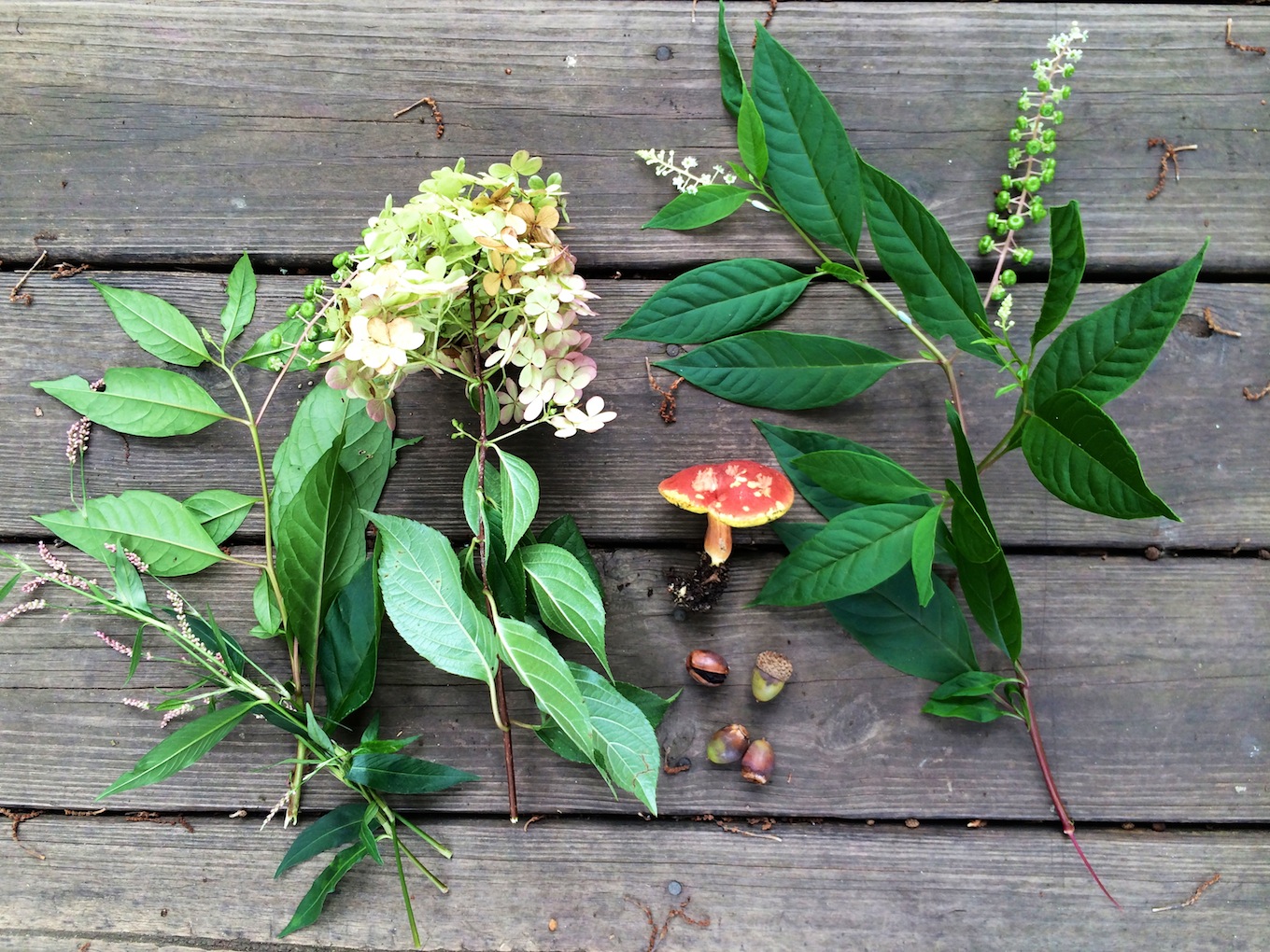
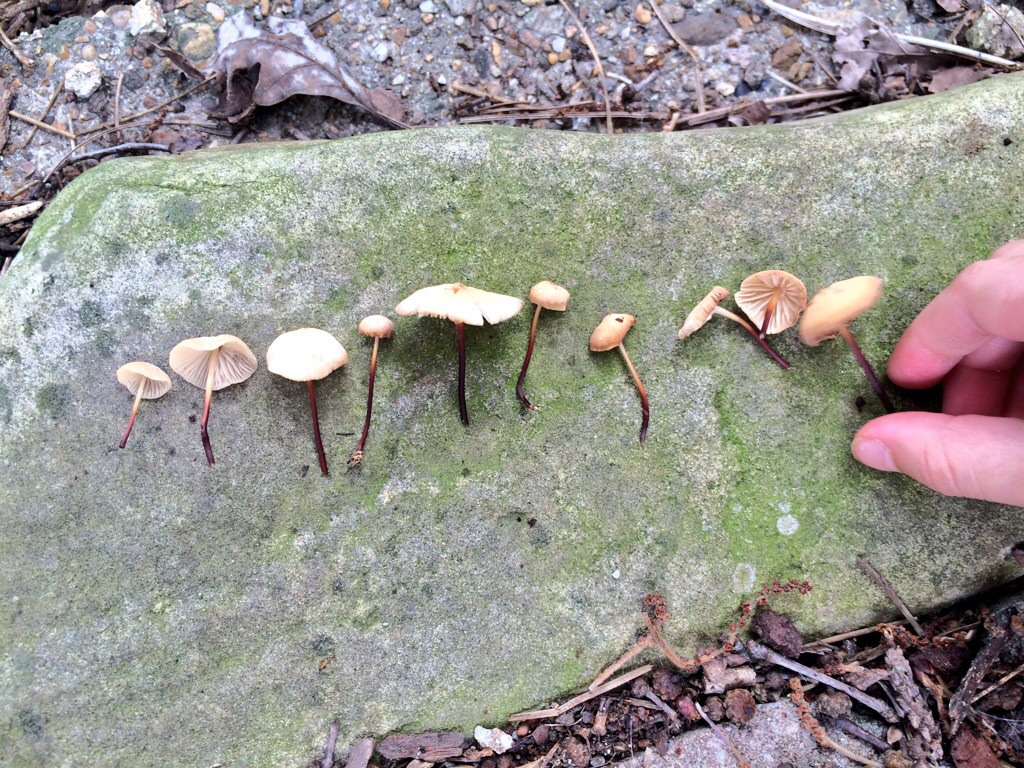
Each day at work I interact with and learn from children and families who come from neighborhoods that aren’t safe to walk around and explore. While reading a story the other day, a child around the age of 6 or 7 pointed to an image of a pinecone and curiously wondered what it was. He had never seen or held a pinecone. It was from these types of experiences that I decided to create a space where they could touch and discover items found in nature from the city which they live. The goal would be to spark a connection with themselves and the natural world around them.
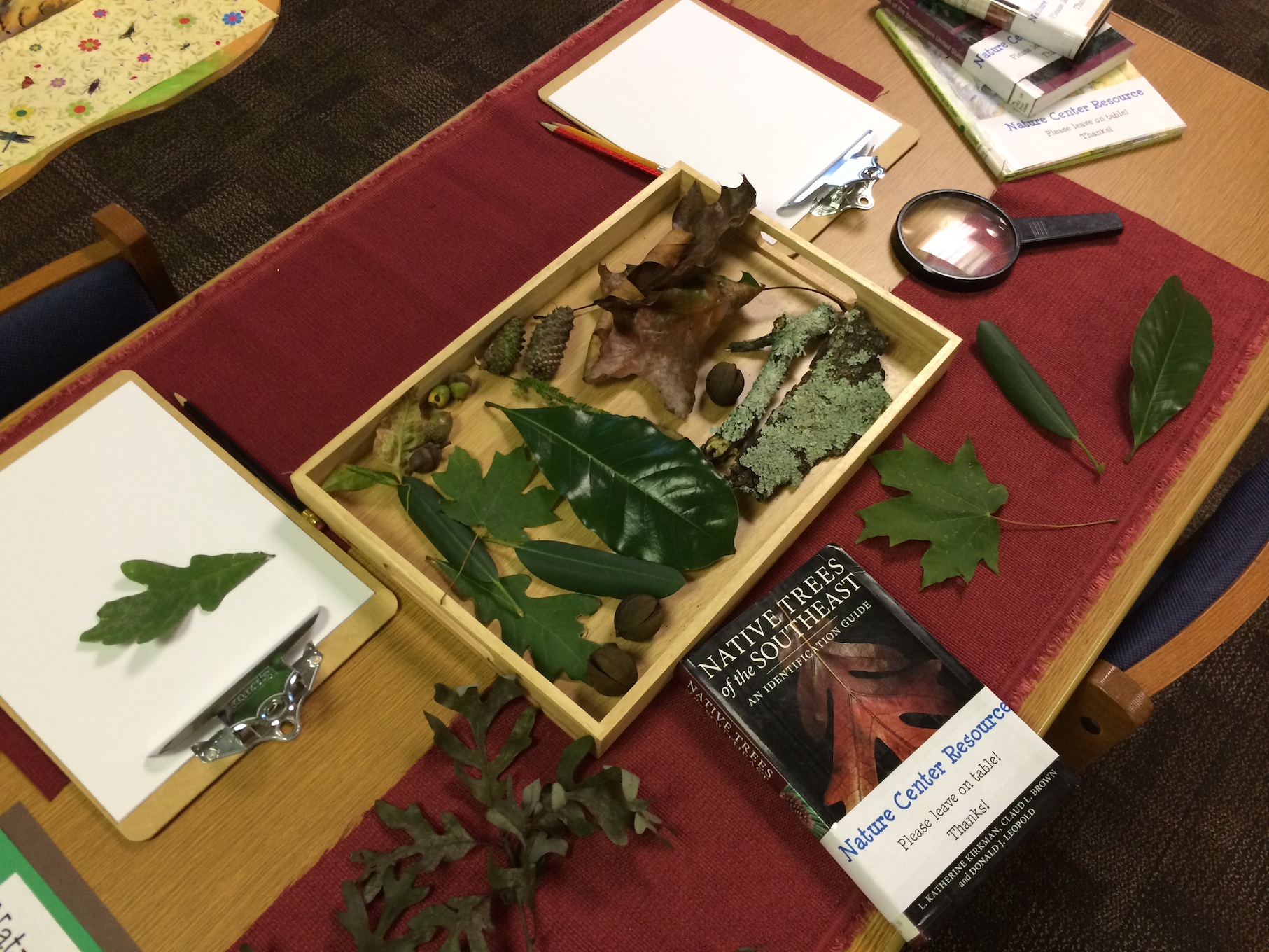
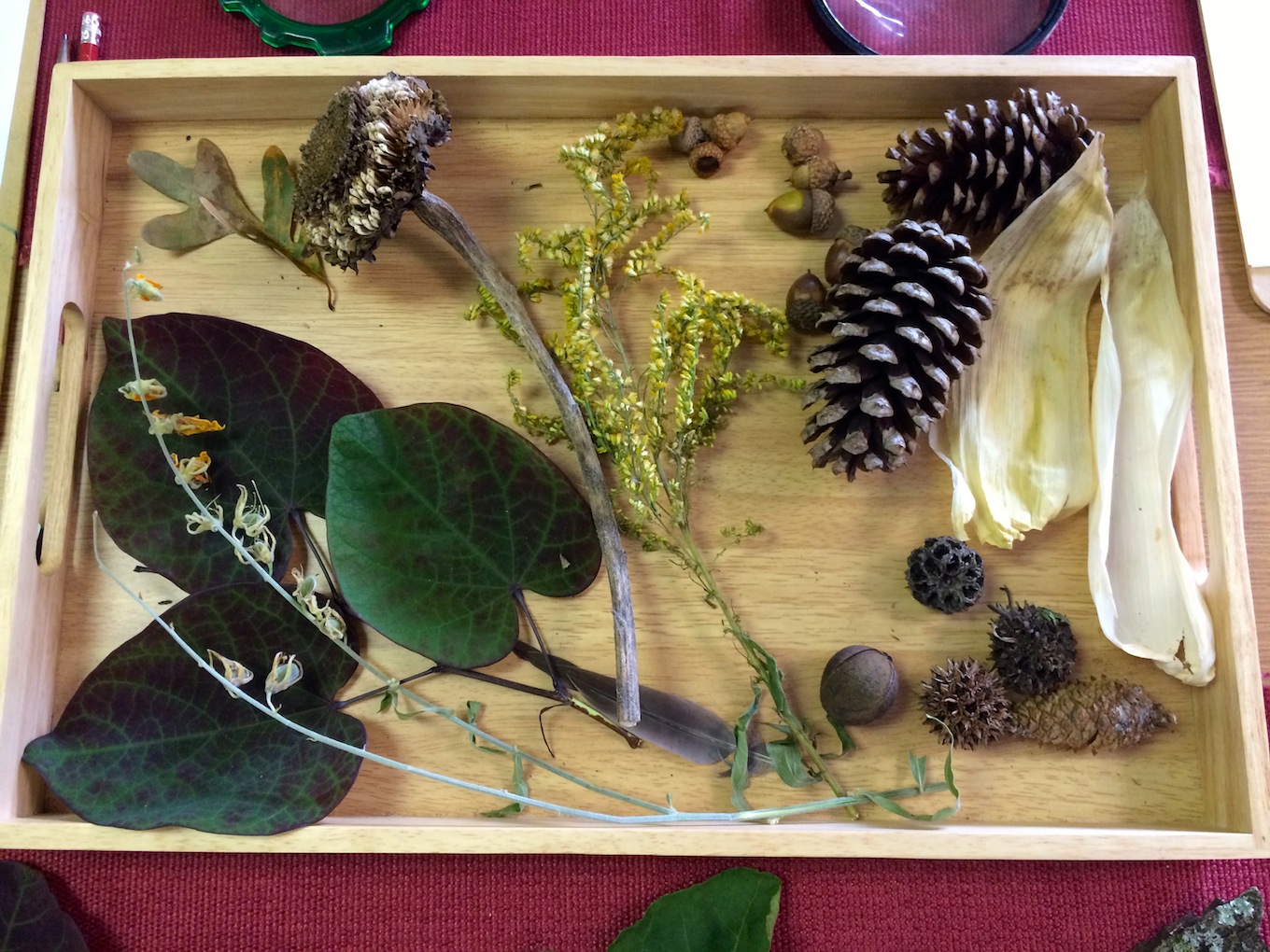
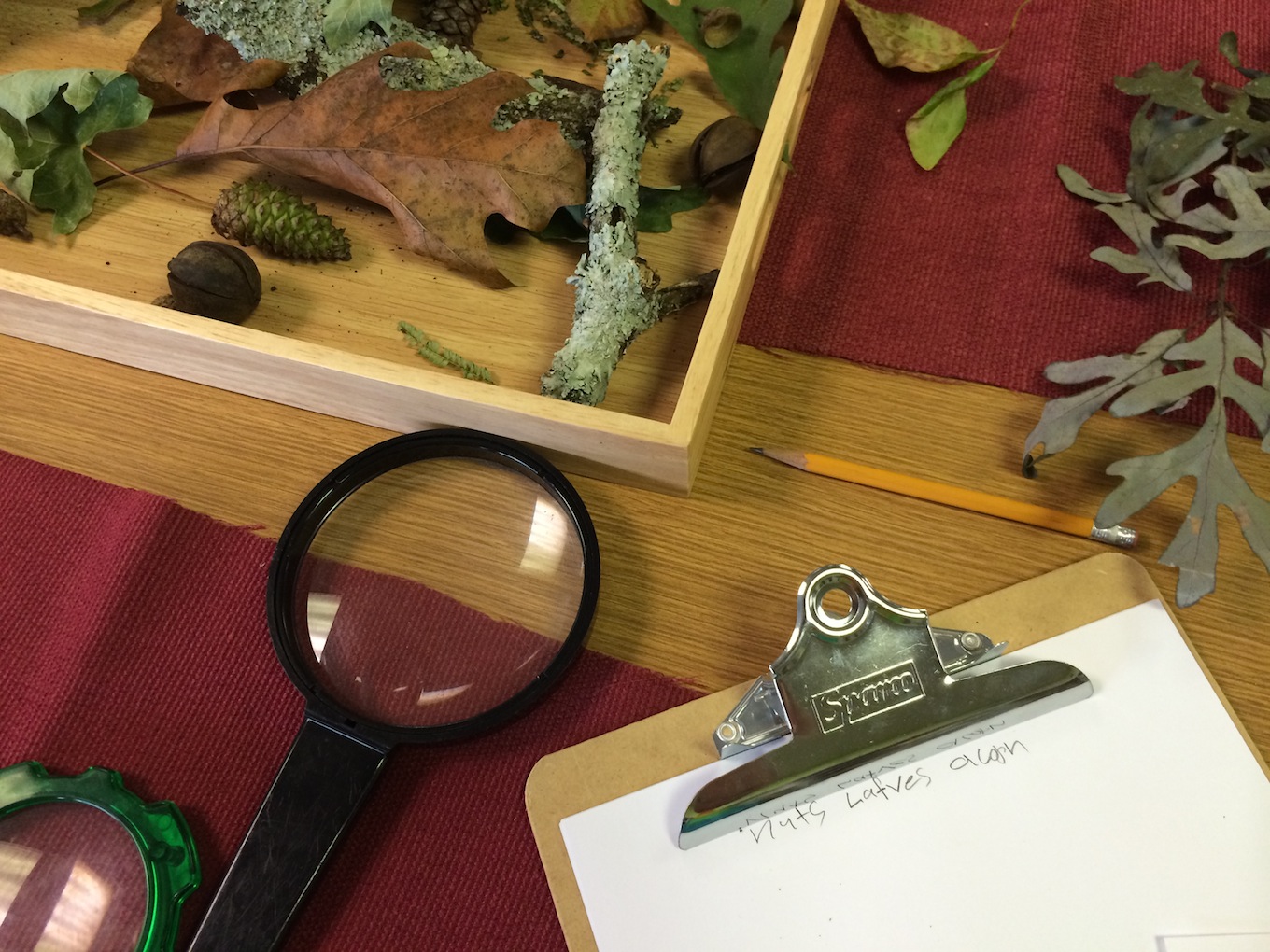
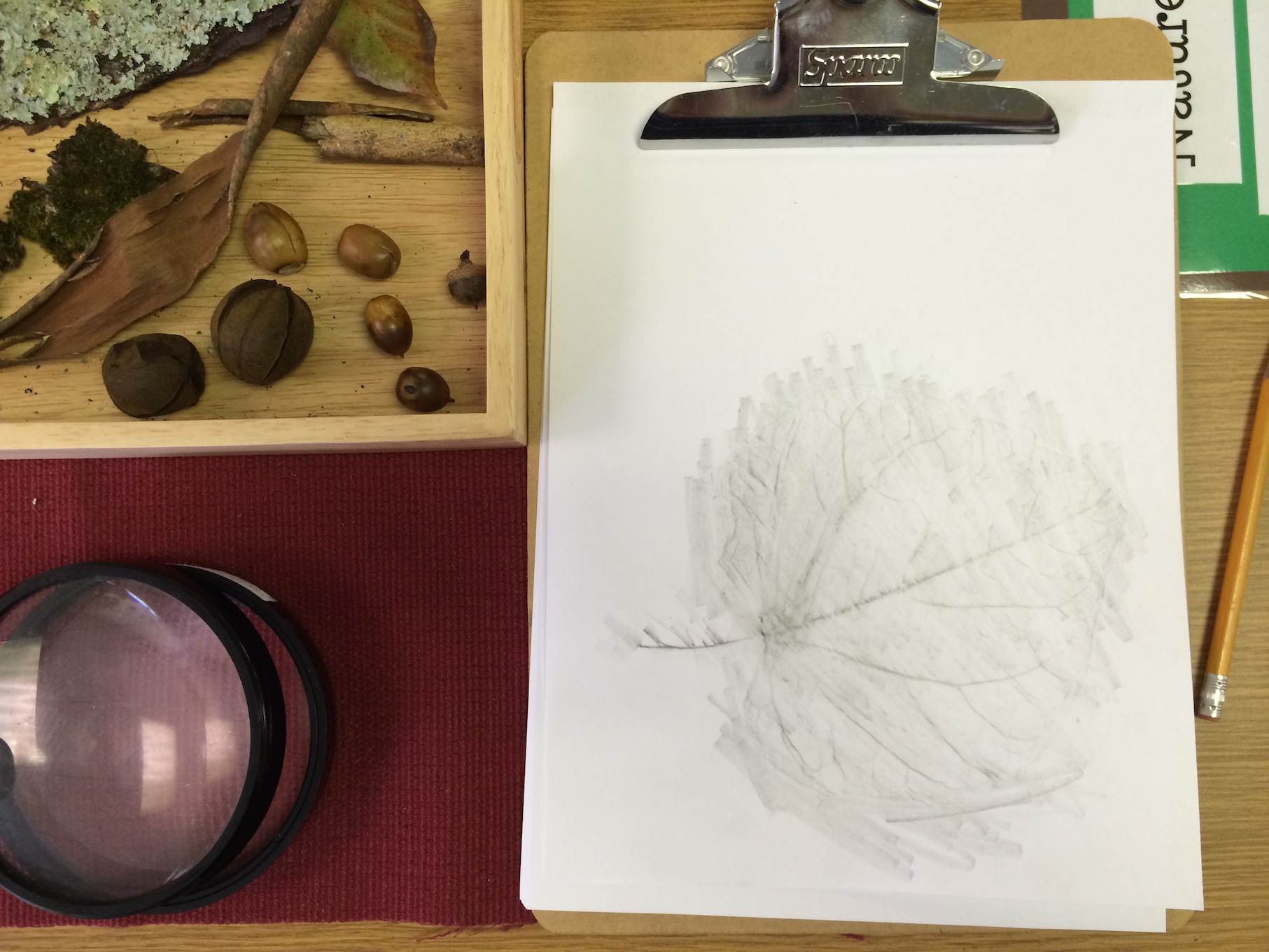
I purchased a wood serving tray on clearance and everything else I found around the library. Magnifying glasses, fabric, clipboards, paper, pencils, as well as image-heavy identification guides. The leaves, pinecones, acorns, branches with lichen, and all natural items were found by my daughter and me. I posted a few prompts at the end of the table such as:
- Look closely at the specimens on the table – What do you see?
- How do these objects feel?
- Can you identify what these objects are?
- Did you know scientists document their observations by drawing illustrations of what they find? Can you draw a picture of one or more of items on the table?
- Look for these plants when you are outside next time on a walk or at recess. They all from our Chattanooga neighborhood!
A couple days after setting up this station, my coworker told me a child saw the Nature Center and said, “Mom, look at all these treasures!” Bingo. Ever since, kids curiously walk up to the Nature Center daily and take the time to touch and feel and observe what is displayed. Weekly, I refresh what’s on exhibit. I also posted some information about Leafsnap for families with smartphones that would like a fun way to explore and identify plants they happen upon. Personally, the best part is finding the drawings the kids leave behind:
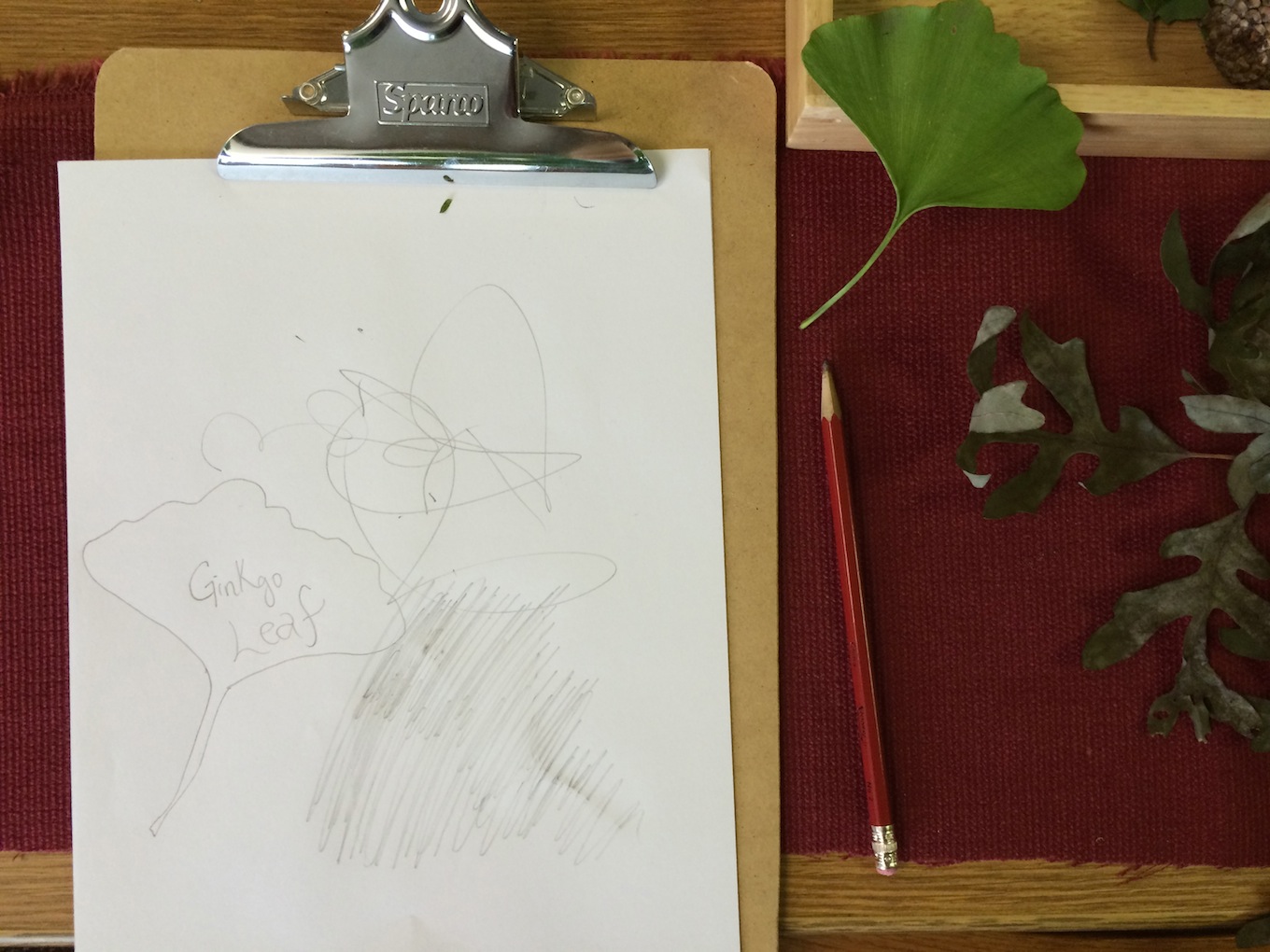
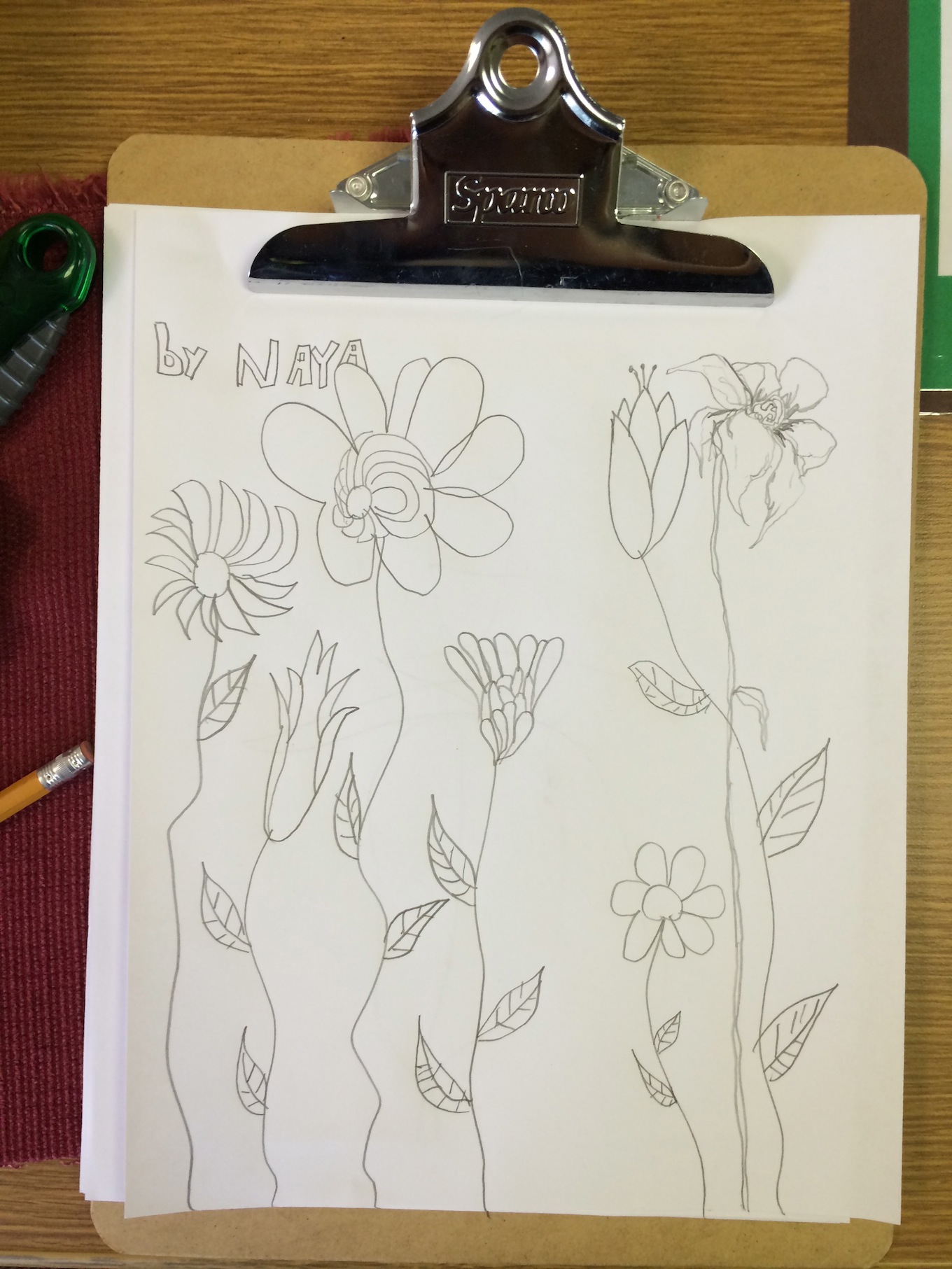
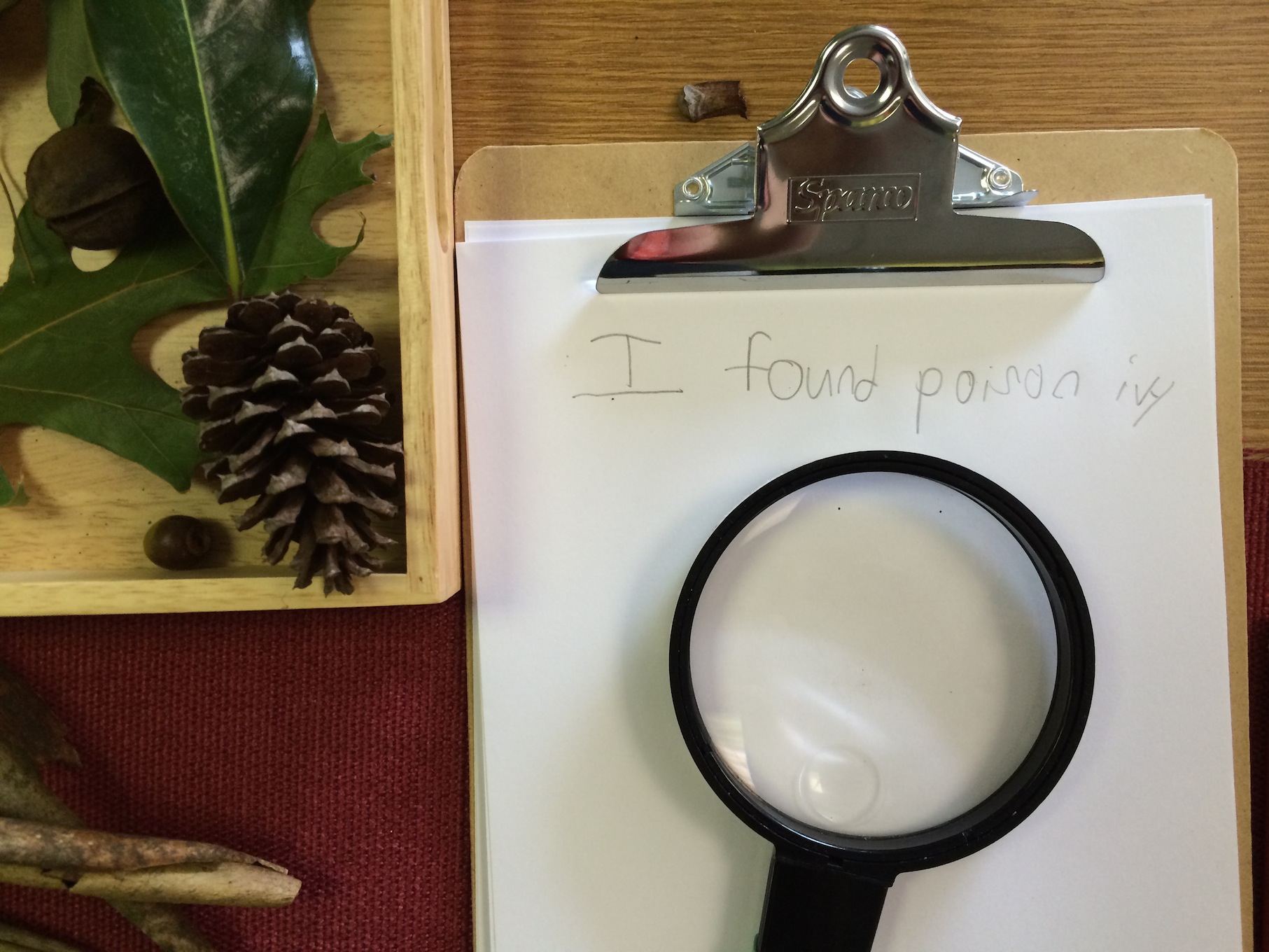
I have been keeping them all in a folder and hope to bind them into a field guide and add it to the Kids’ Library (a new station that holds books created by kids – more on that in a day or two!).
And since a certain someone has been having a hard time sharing our findings with the library, I set up a Nature Center for her at home:
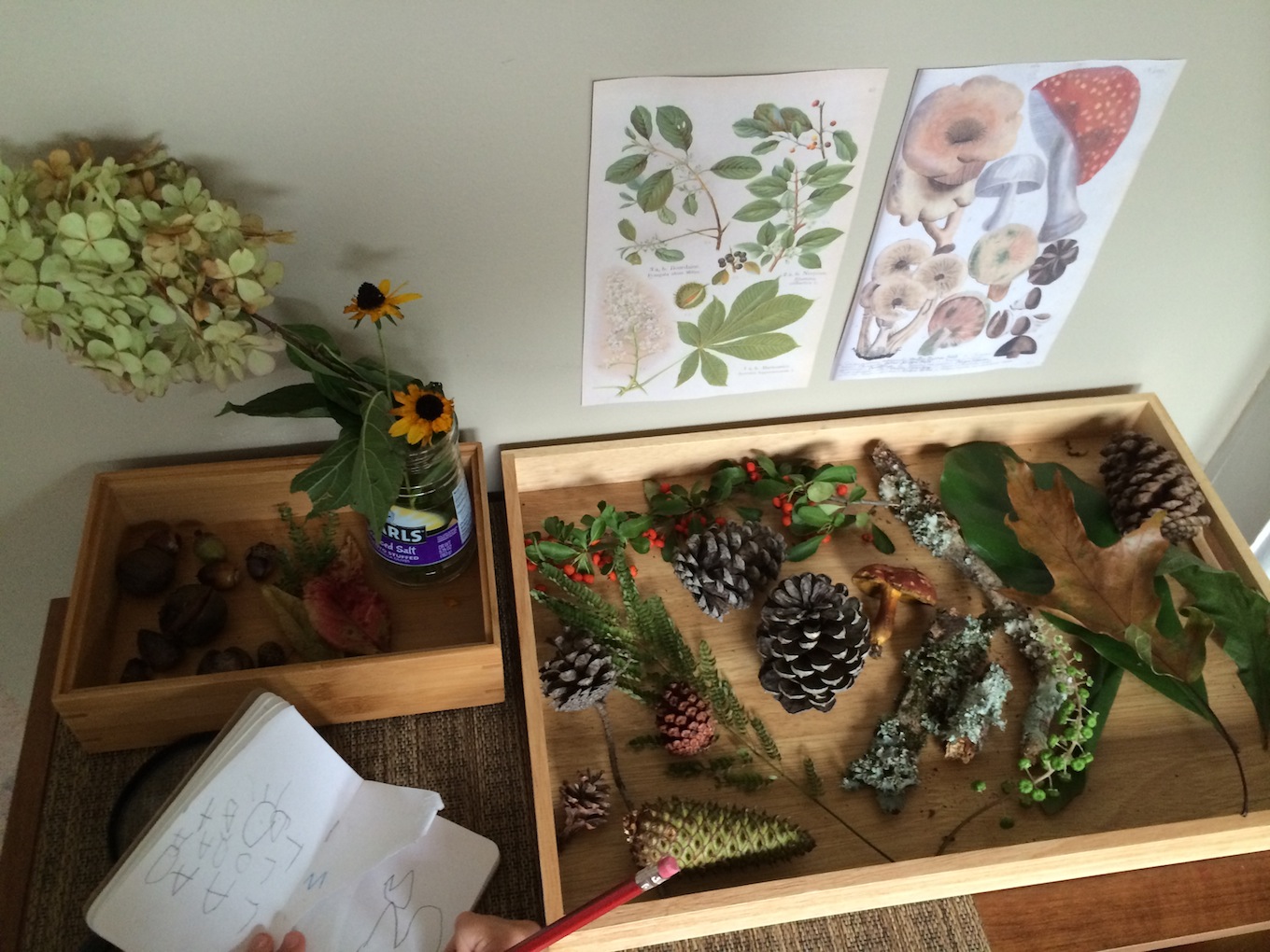
I created our home Nature Center on a bookshelf close to her art space. It is comprised of a placemat and 2 wooden trays found on clearance at Target, a magnifying glass from Dollar Tree, a recycled olive jar to hold flowers, an old notebook, and a pencil. I also printed out old botany illustrations for display/inspiration.
I’ve had a very large perspective shift in the past few months that has strongly influenced my services, research, and interactions with youth in the public library. This includes the above refernced teachings of Malaguzzi and Hawkins, but also equally as inspiring are the many early childhood educators that incorporate like-minded concepts in their practice. So much growth and learning has happened that it’s difficult to articulate.
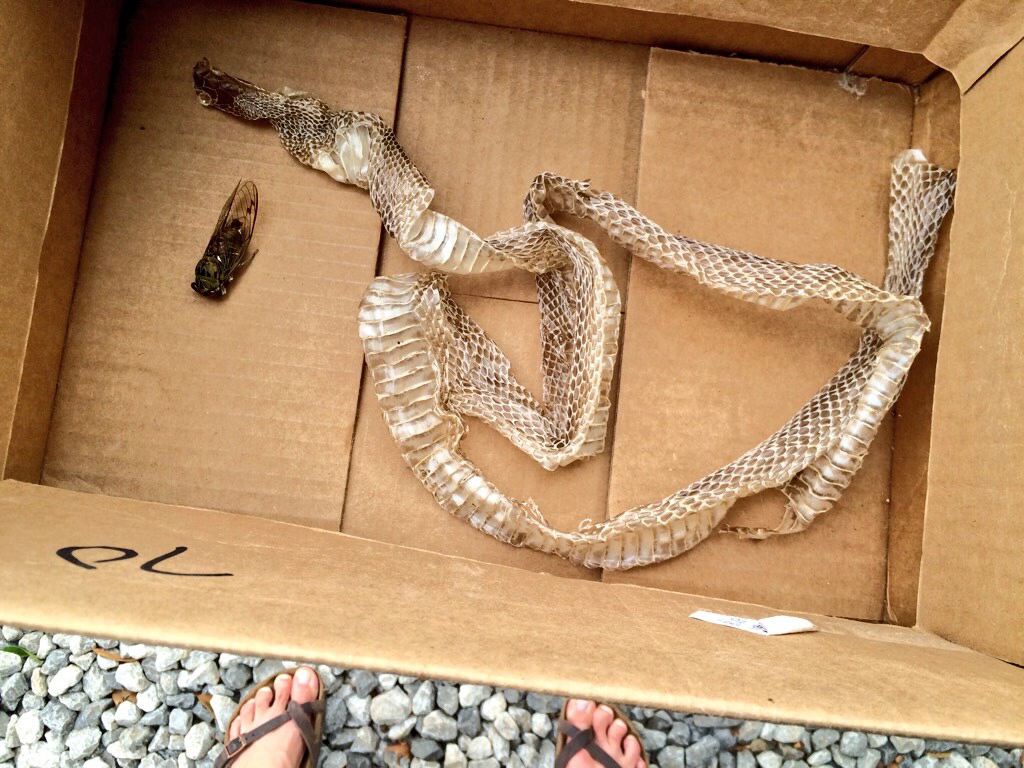
Until I’m able to find those words, I will leave you with the newest Nature Center additions, courtesy of Crabtree Farms:
26
Aug
3 Magical New Pictures Books

As with most children (and adult children), magic is pretty much the best thing in the world. Picture books featuring mermaids, unicorns, dragons, or fairies are an automatic win. This fall, there’s a surge of unique stories with magical creatures so full of imagination and wonder that really go above and beyond. Notably, Julia’s House for Lost Creatures by Ben Hatke, Uni the Unicorn: A Story About Believing by Amy Krouse Rosenthal illustrated by Brigette Barrager, and Day Dreamers: A Journey of Imagination by Emily Winfield Martin.

Julia’s House for Lost Creatures
by Ben Hatke
Ben Hatke, author of graphic novel awesomeness Zita the Space Girl series, has a much anticipated picture book out early September, Julia’s House for Lost Creatures! It all starts when Julia moves to town (her house rests on a giant turtle!?!?!). Once she settles in, she feels it’s a little too quiet for her liking, so she decides to transform her house into an inn for lost creatures. All too soon her house is flooded with a troll, folletti, goblins, ghosts, a mermaid… You name it and it was living at Julia’s house causing a ruckus.


To tame the wild rumpus, Julia devices a clever plan to add a little order to her fairyland woes. I’m such a fan of Ben Hatke and am just thrilled with Julia’s House for Lost Creatures. I 100% plan on using it as a tool to discuss chores with my own kids. It;d also be a phenomenal book for preschool or early elementary grades to talk about classroom jobs. Highly recommend!

Uni the Unicorn: A Story About Believing
by Amy Krouse Rosenthal, illustrated by Brigette Barrager
I grew up loving unicorns, and regardless of what anyone said a little part of me did, and always will, believe they exist. Uni the Unicorn is a darling tale by Amy Krouse Rosenthal and about just that same faith in the impossible. In a lot of ways, Uni is just like other unicorns, a swirly horn, the power to heal, and the ability make wishes come true. But despite what her friends and parents said, she believes with her whole unicorn heart that little girls are real. And so the reader follows Uni’s dream of all the fun things she and her best friend, this very real little girl, would do together if someday they happened to meet.


The illustrations by Brigette Barrager are like sliding down rainbows, whimsical and vibrant, and the story is a sweet as pink rock candy. It’s anything a child (or grownup child) could ask for in a unicorn story.

Day Dreamers: A Journey of Imagination
by Emily Winfield Martin
“They say there are no dragons left / And that’s the way it seems. / To find them you must visit / The land of waking dreams.” The open line of Emily Winfield Martin‘s Day Dreamers: A Journey of Imagination invites the reader to revel in the extraordinary. You never know where you mind can take you or what magical animals you might meet while on seemingly ordinary daytime occurrences. Watching the clouds go by, visiting the beach or the museum, or even reading a book can reveal fantastical possibilities.


Curiosity of the imagination is a beautiful thing, and this story’s lyrical prose and otherworldly illustrations will surely captivate daydreaming readers young and old.
Source of books reviewed: Review copies provided by the lovely people over at First Second Books and Random House Kids


