14
Mar
Review: Edgar Allan Poe’s Pie
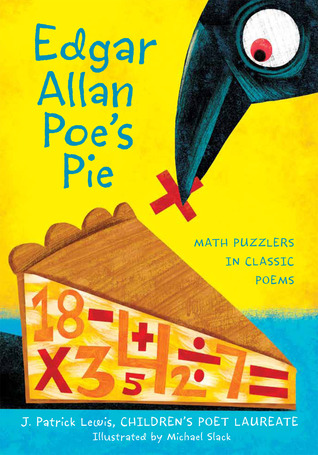
Edgar Allan Poe’s Pie: Math Puzzlers in Classic Poems
by J. Patrick Lewis, illustrated by Michael Slack
Find it at: Your library | Amazon | Indiebound
Published: Harcourt Children’s Books (April 3, 2012)
Recommended reading age: 7 & up
In a nutshell: Today is Pi Day, which means it’s Pie Day in our neck of the woods! It’s also the perfect excuse to review Edgar Allan Poe’s Pie: Math Puzzlers in Classic Poems by Children’s Poet Laureate J. Patrick Lewis. Edgar Allan Poe’s Pie is a clever collection of fifteen poems inspired by classic poems, but with a twist of math added to the mix. Combining both verse and mathematics, together the poems are word puzzles asking for answers (provided in small print upside-down on the bottom of the page). What fun!
“Edgar Allan Poe’s Apple Pie” (Inspired by “The Raven” by Edgar Allan Poe) Once upon a midnight rotten, Cold and rainy, I’d forgotten All about the apple pie Still Cooling from the hour before. I ignored the frightful stranger Knocking, knocking . . . I, sleepwalking, Pitter-pattered toward the pantry, Took a knife from the kitchen drawer, And screamed aloud, “How many cuts Give me ten pieces?” through the door, The stranger bellowed, “Never four!”
The answer to the puzzle is “cut the apple pie across 5 times to make 10 equal slices”. Walt Whitman, Emily Dickinson, Langston Hughes, and other various wordsmiths are represented providing the reader the opportunity to tap into poetry by the masters and tests their math skills to boot.
And check out these colorful and entertaining illustrations by Michael Slack…


When I was a kid I hated math. Let’s be real… I still don’t enjoy math. But I’ve always taken to poetry and a good brainteaser. Edgar Allan Poe’s Pie would have been the excellent remedy for my lack of interest in math as a child. It’s for math lovers, poetry lovers, and those hesitant in either category.
Don’t take my word for it: “…it’s sacrilege of the best kind. Kids will have fun reading and solving these. Hopefully some smart teachers will share the originals with kids and maybe even have them try some mathematical parodies of their own.” – review from The Miss Rumphius Effect
Extras: Visit these websites for more information on author J. Patrick Lewis and illustrator Michael Slack.
Source of book reviewed: My local library!

12
Mar
Review: How to Be a Cat
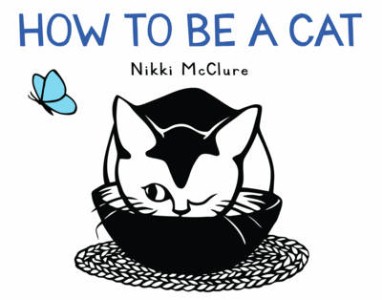
How to Be a Cat
by Nikki McClure
Find it at: Your library | Amazon | Indiebound
Published: Abrams Appleseed (March 12, 2013)
Recommended reading age: 0-5
In a nutshell: As a long time fan of cut-paper artist Nikki McClure, and as lifetime cat-lover, I’m extremely excited about the release of her latest book, How to Be a Cat. Black and white images with a subtle appearance of a sky blue butterfly, How to Be a Cat follows one kitten’s exploration in cat behavior guided by an adult cat. With large print words describing each action such as “Stretch”, “Listen”, “Explore”, the reader might feel so inclined to try their hand at being a cat.
There’s something very pure and gentle about Nikki McClure’s cut-paper illustrations that I’ve always been drawn to, but even more so since I’ve become a mother. Themes of parenthood, growth, and nature ring true in all her children’s books, Mama, Is it Summer Yet?, Apple, All in a Day, To Market, To Market; all beautiful stories my daughter L and I enjoy to sharing together over and over again.
With the black and white contrast favorable for stimulating a baby’s vision, and short, one-word-to-one-page pacing, How to Be a Cat is ideal for babies and toddlers both. I’m hoping in the not too distant future the publisher decides to make this book available in a board book format as it would be a fitting read for even the smallest of readers.

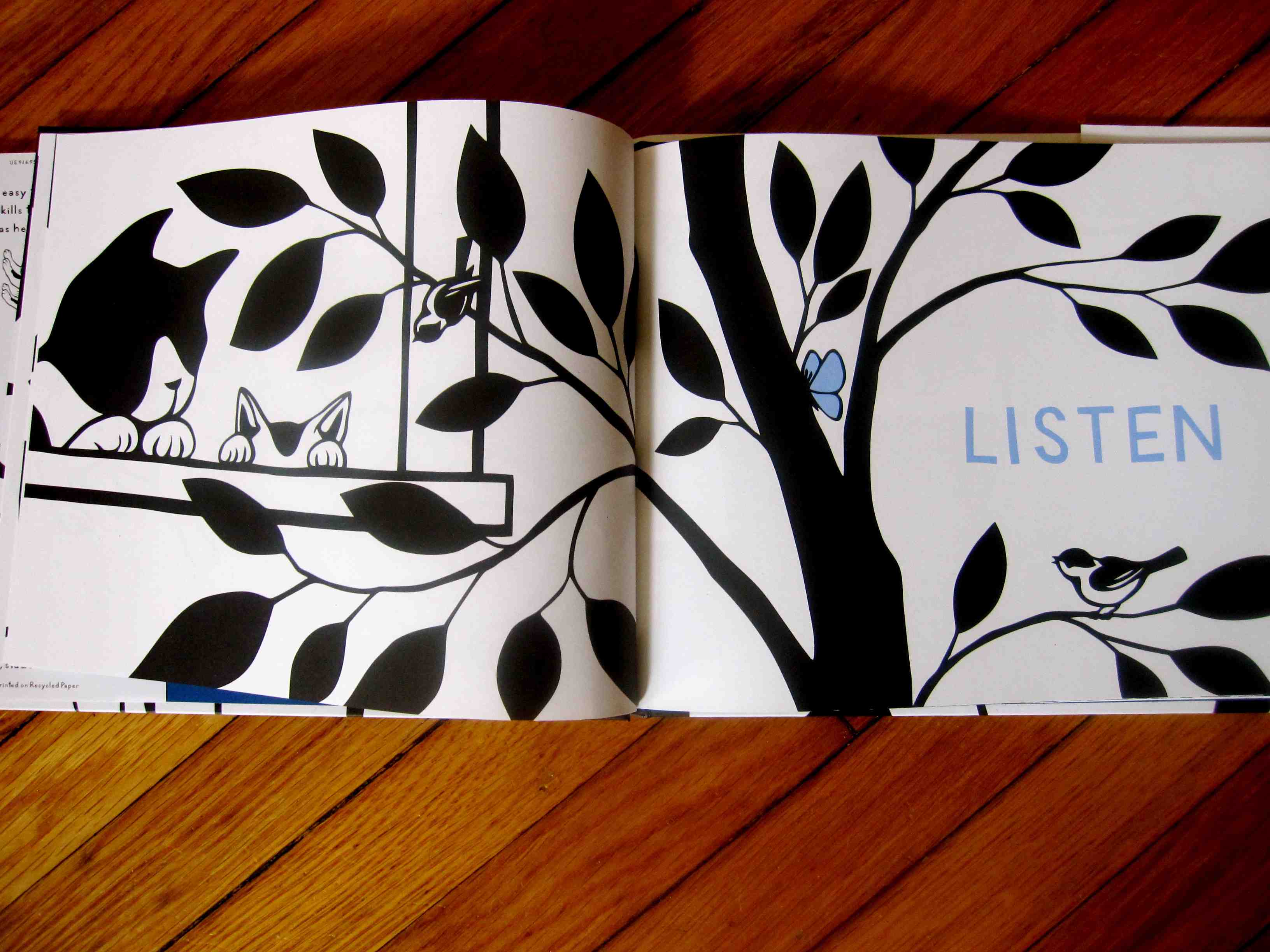
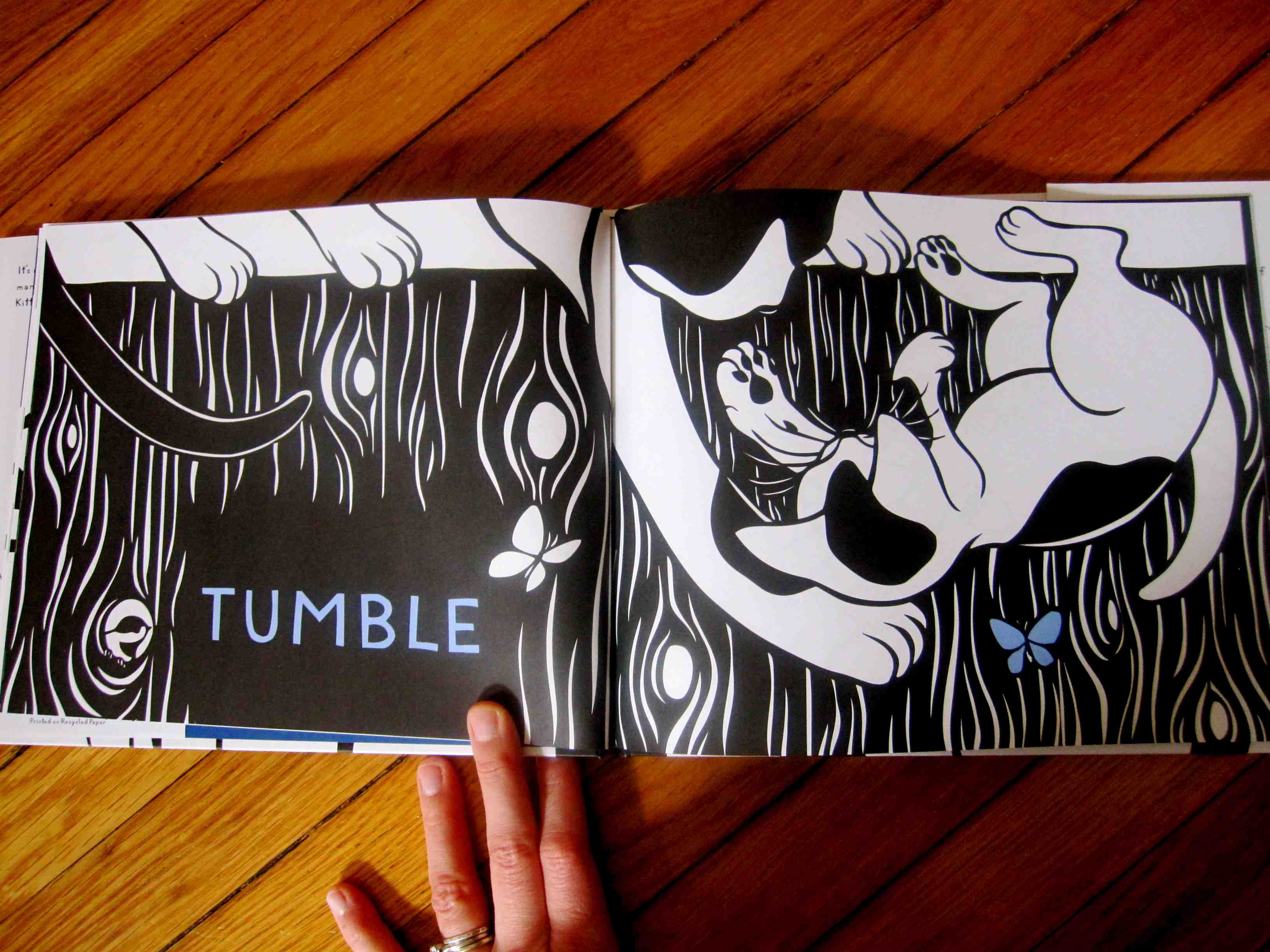
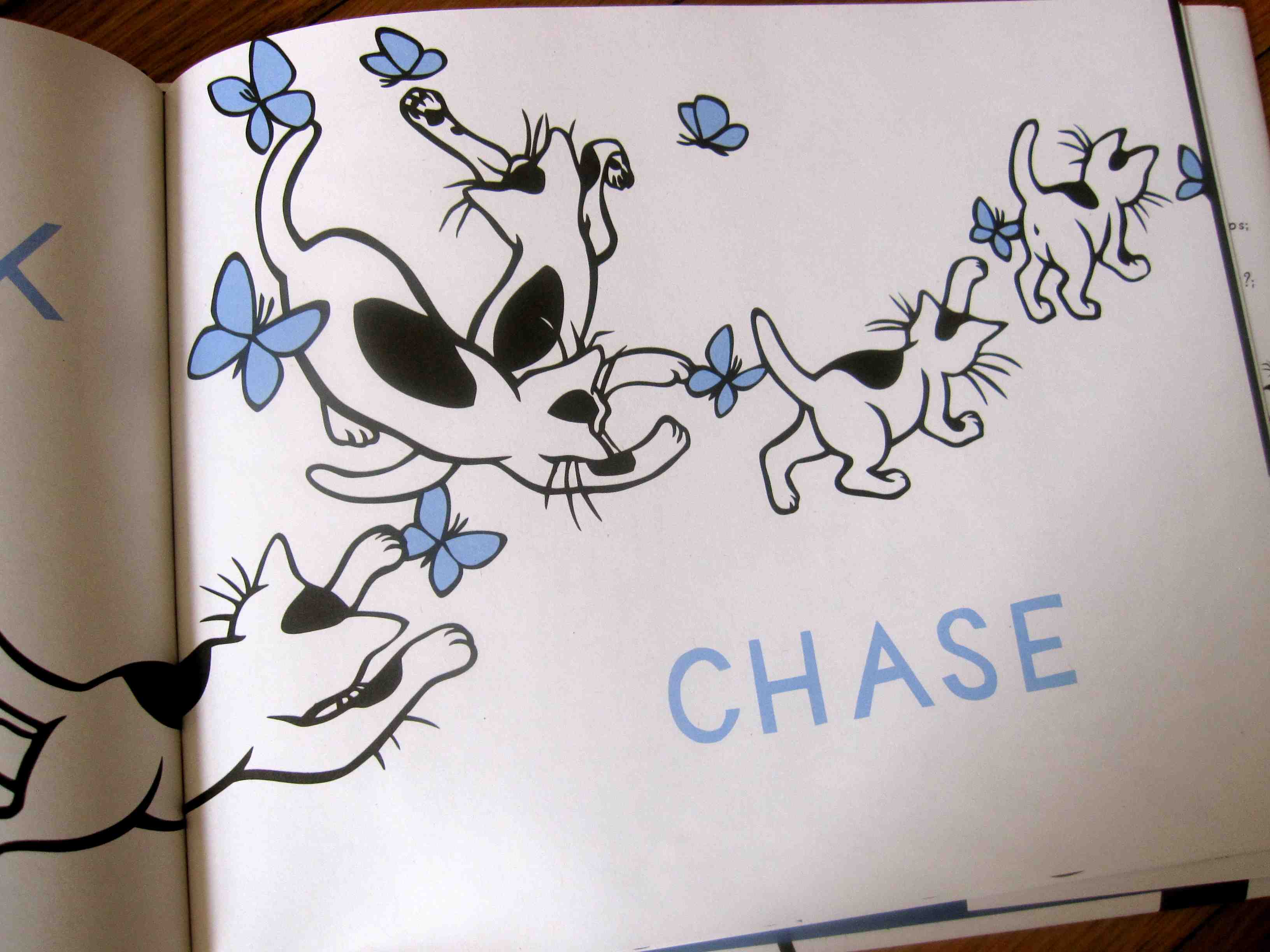
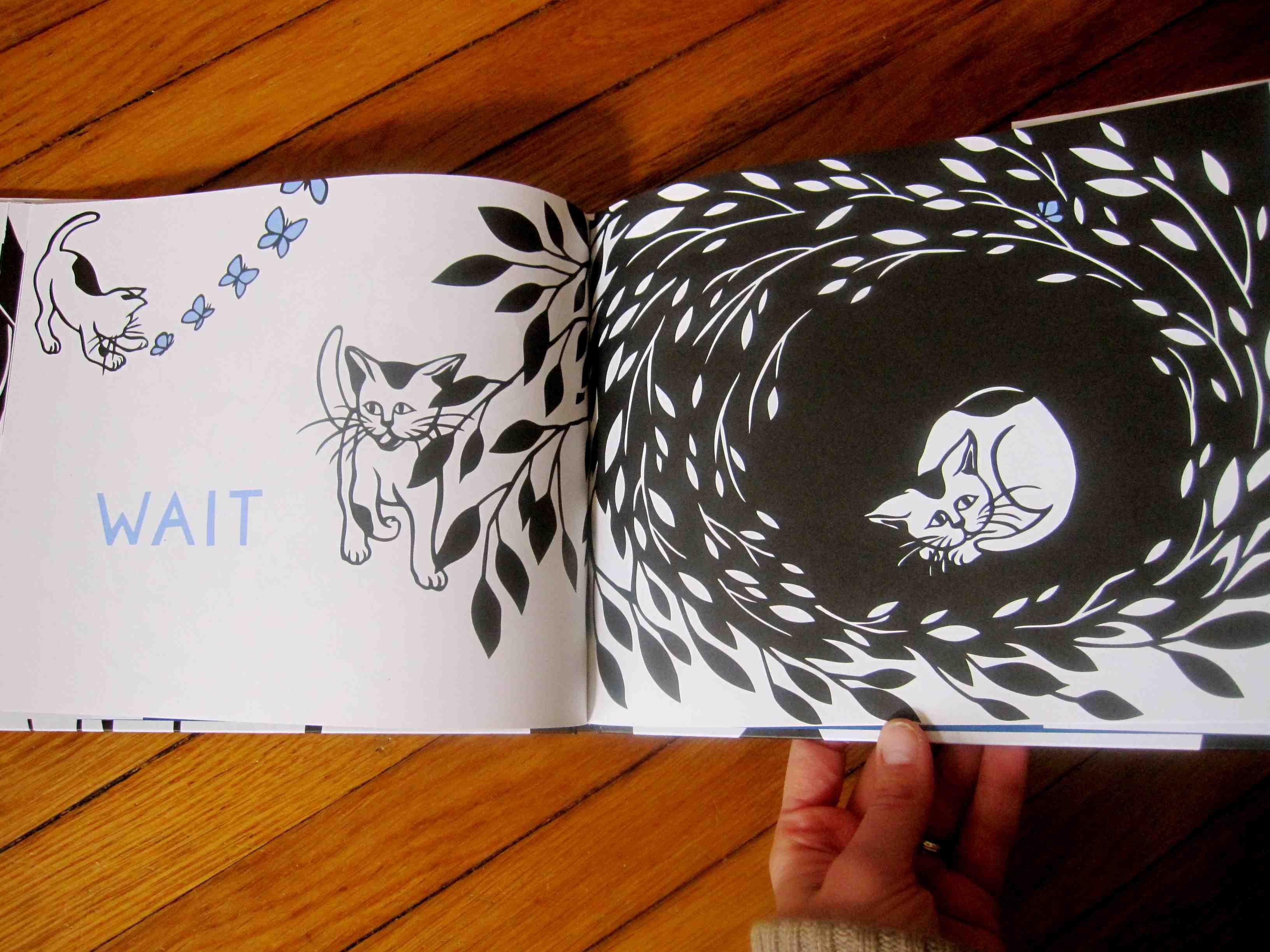

All readers in our house, even the one’s with four legs, adore this sweet and loving story about How to Be a Cat.
Don’t take my word for it: Starred review from Kirkus Reviews.
Extras: Take a peak inside the home of Nikki McClure in “A Visit with Nikki McClure” on the Abrams Blog. The post has a few sneak peak pictures of sketches for her next book!
Enjoy Nikki McClure’s artwork? You can purchase prints and notecards of her work from Buy Olympia.
For more on Nikki McClure visit her website.
Source of book reviewed: Purchased at ALA Midwinter.
11
Mar
Food Fun Storytime

This week’s storytime was all about food. Reading about food, singing about food, and even painting with food. It was a dreary rainy day, so there were lots and lots of kids looking to have some indoor fun and that’s just what we had.
Food Fun Storytime Line-up:
Pete’s a Pizza by William Steig
Since it was raining outside, this was a great read as it also starts on a rainy day. Pete was planning on playing ball with his friends, but the rain spoiled that plan. In an effort to cheer Pete up, his father decides to make him into a pizza. Lots of giggles were heard while reading this story. We even had a little activity that brought about more laughs after the story was over…
Make Your Own Kid Pizza
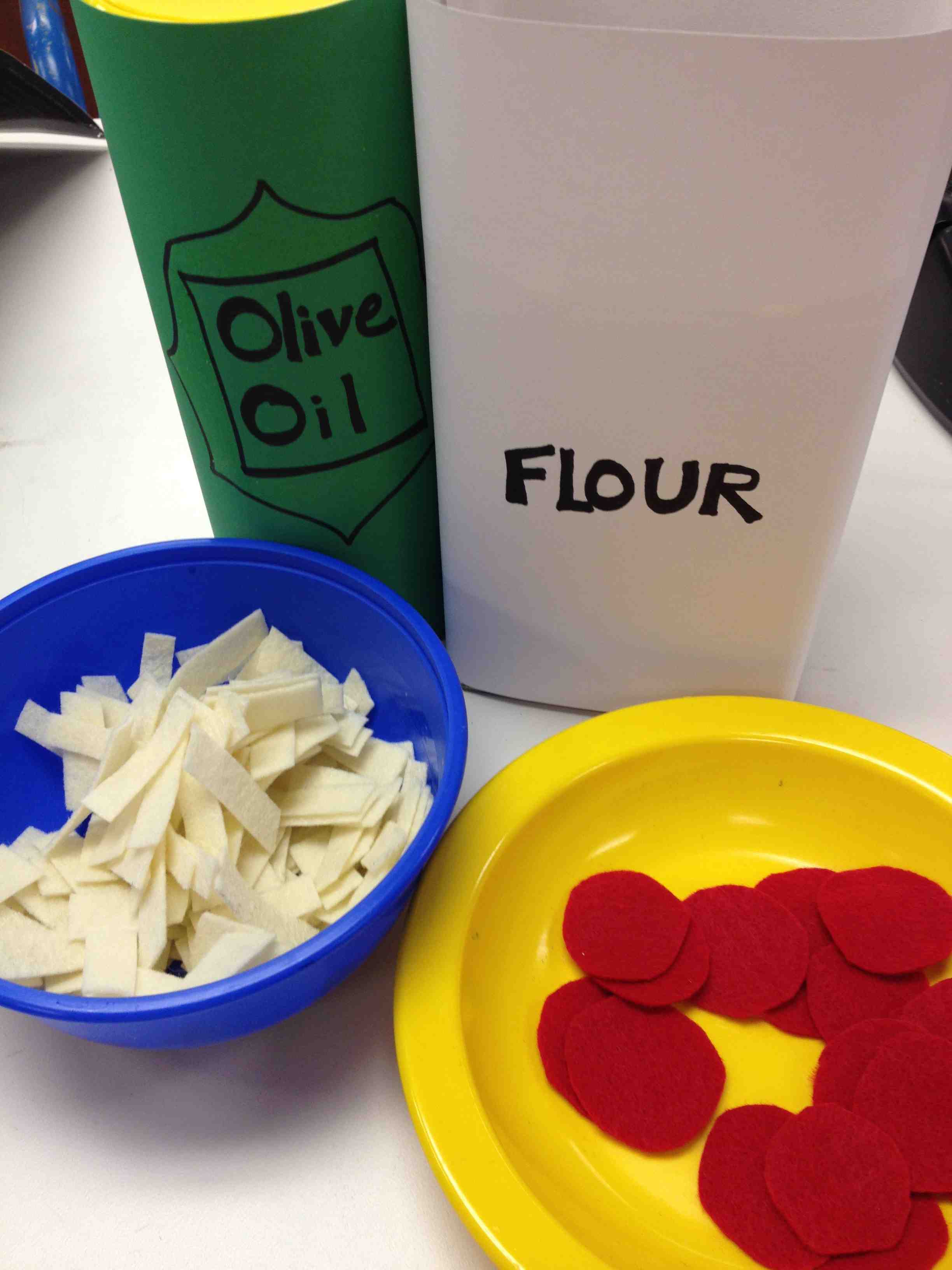
Browsing Pinterest, I stumbled upon this activity idea for Pete’s a Pizza via Tunstall’s Teaching Tidbits that I modified for library storytime. After reading Pete’s a Pizza, I asked the crowd if they thought we should make our own pizza. They all cheered, so I asked who would want to be my pizza and invited a storytime audience member up to the front and asked them to lay down. I sat beside them and sprinkled some oil (which was really a used wet wipes container), and then sprinkled some flour (which was really an old tin), and then asked the audience what else I should add. Mostly cheese and pepperoni were shouted back, so I added cheese (cut up felt pieces), and pepperoni slices (also felt). I vocalized each step as I went along and when I was finished, and after many giggles, for the crowd and my pizza volunteer, I asked the crowd if we should put the pizza in the oven. “Yes, yes, yes!” they replied. So I sent the pizza back to their spot, toasty warm with the other children to listen to more stories. I quickly picked up the felt pieces and started the next story.
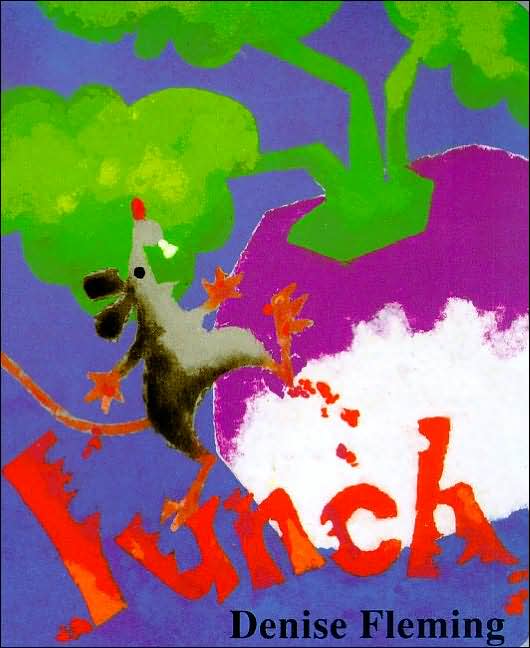
Lunch by Denise Fleming
One hungry little mouse snacks his way through many different colorful fruits and vegetables during lunch. While I read this book, I cued the audience to guess what fruit or vegetable the mouse was eating on the next page.
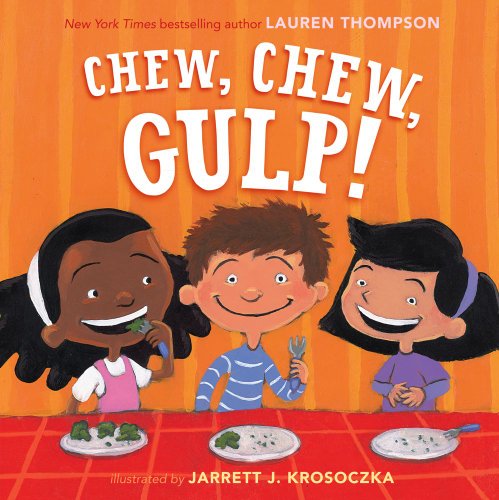
Chew, Chew, Gulp! by Lauren Thompson, illustrated by Jarrett J. Krosoczka
A simple book about how to eat different types of food. There’s a picture in the book that I went back to after the story was over. I held it up and asked the storytime kids if they could guess what the children in the book were eating (pancakes). I used as a segway into the next story.
“Flip-Flap Jack” Song & Flannel Board
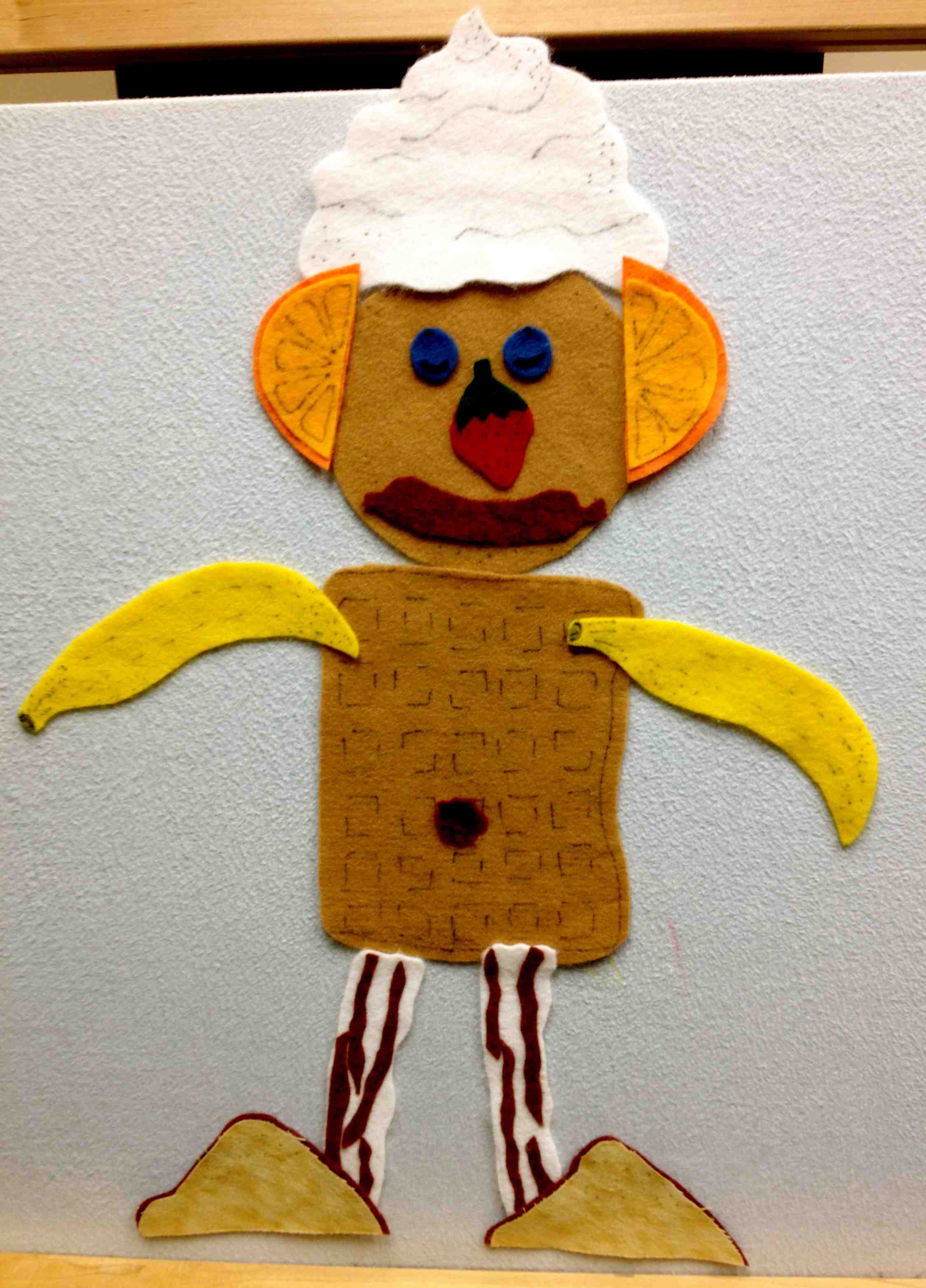
“Flip-Flap Jack” is a song from Ready-To-Go Storytimes by Gail Benton and Trisha Waichulaitis. My library has a “Flip-Flap Jack” flannel in our storytime collection, so I decided to give it a go for this storytime and I am so glad I did. The kids really enjoyed it. It’s a silly song about Flip-Flap Jack, a man made of breakfast food, and as you sing the song you add the parts of his body. The song goes like this:
“There was a man made of food. Made of food? Made of food! There was a man made of food. His name was Flip-Flap Jack. And he danced upon a table, a table, a table. He danced upon a table. His name was Flip-Flap Jack. His head was made of a pancake. A pancake? A pancake! His head was made of a pancake. his name was Flip-Flap jack.”Additional verses:
His hair was made of whipped cream His eyes were two blueberries. His nose was a strawberry. His mouth was a sausage. His ears were made of oranges. His body was a golden waffle. His arms were two bananas. His legs were strips of bacon. His feet were made of french toast. His belly button was a raspberry.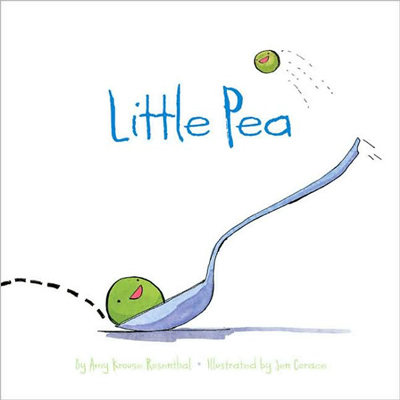
Little Pea by Amy Krouse Rosenthal, illustrated by Jen Corace
Little pea likes doing lots of things, but one thing he does not like is when he has to eat his candy; what all little peas have to eat to grow-up big and strong. A fun spin on eating the bare essentials to get to the best part– dessert!

The Doorbell Rang by Pat Hutchins
Speaking of desert, I ended storytime with the Pat Hutchins’ classic, The Doorbell Rang. A story that’s not only about sharing cookies, but incorporates simple elements of math. I rang a small bell each time “the doorbell rang,” which I think the kids really liked.
Food Stamping Craft:
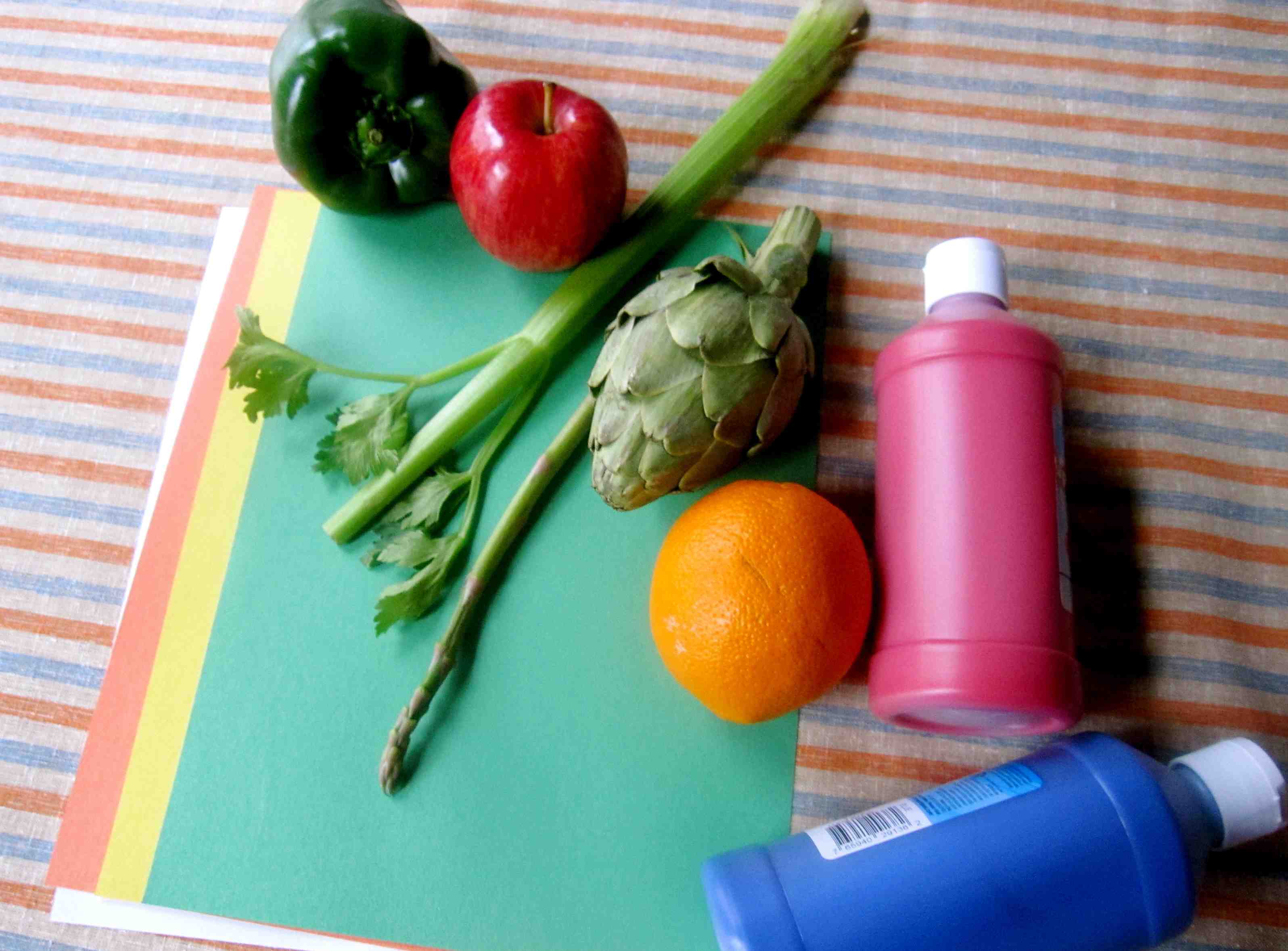
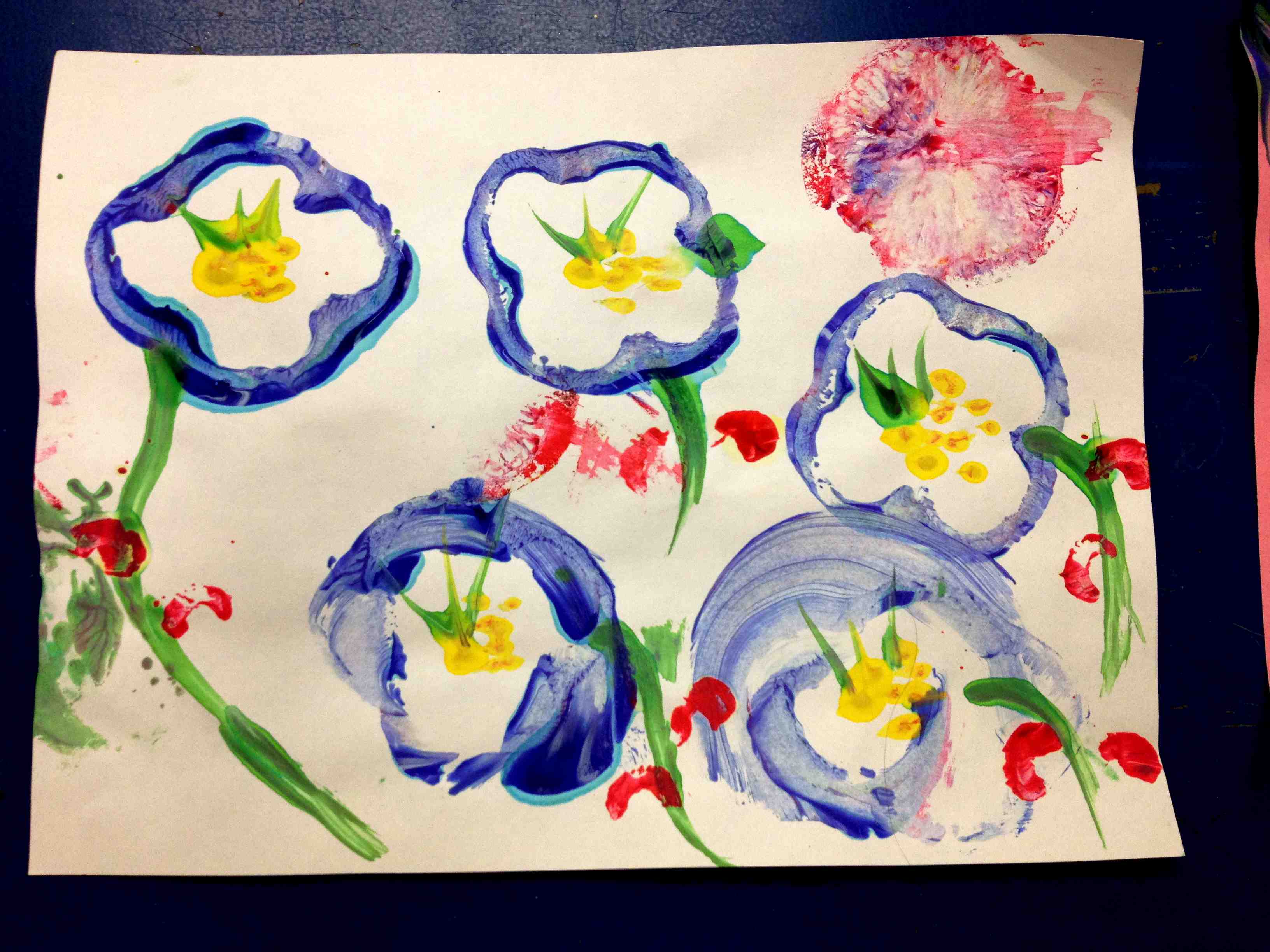
Who says you can’t play with your food? For our post-storytime craft we used sliced fruits and vegetables to stamp and paint pictures. The inspiration behind this craft came Create with Maisy, a new toddler craft book by Lucy Cousins. Materials used included: washable paint, construction paper, apples, celery, artichokes, oranges, and asparagus.
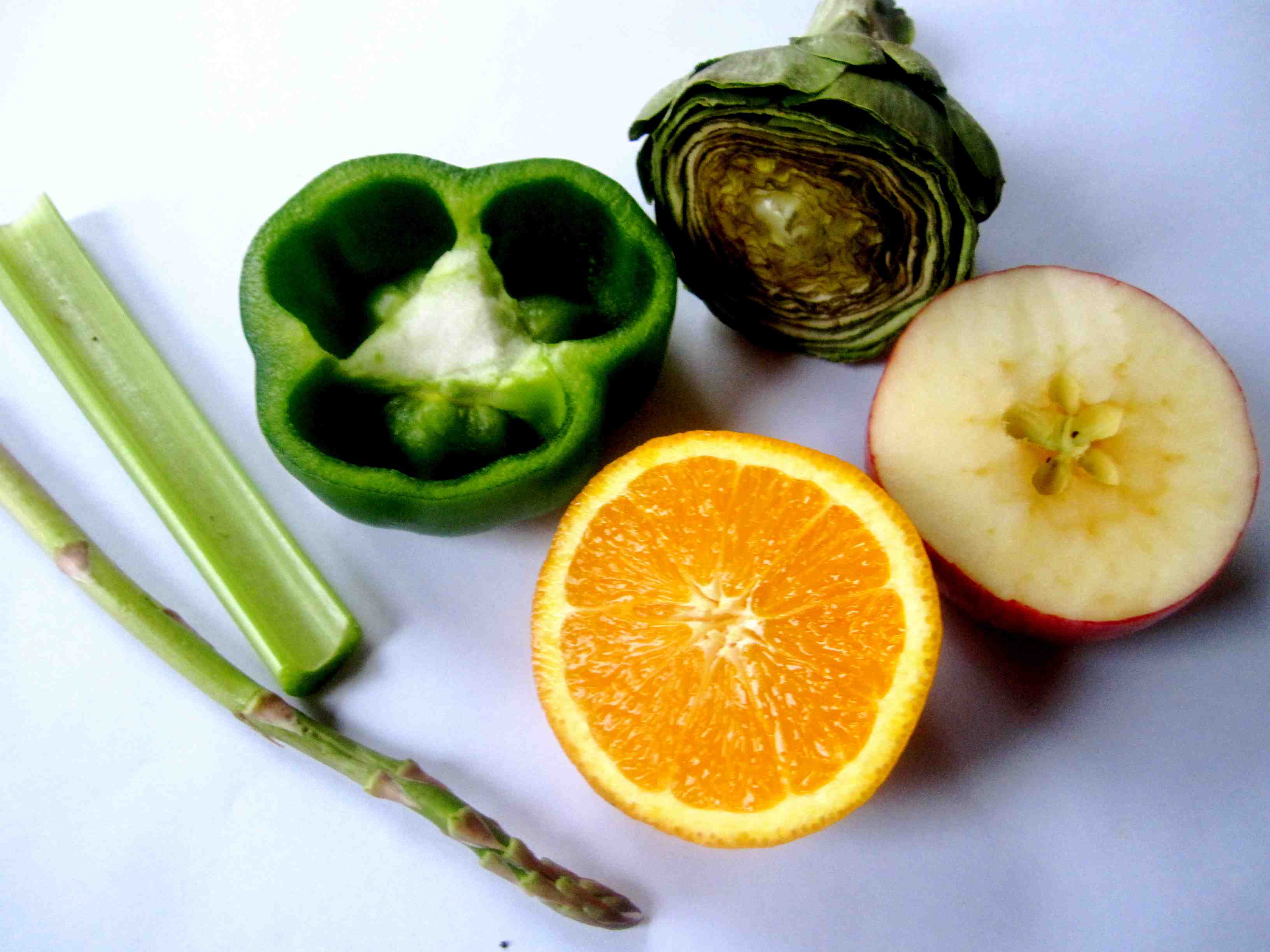 A couple hours before storytime, I sliced the fruits and vegetables. I did this quite a bit ahead a time so the fruits would dry out a bit. I left the asparagus intact. Right before storytime I set out small paper plates with a kiwi-size drop of paint.
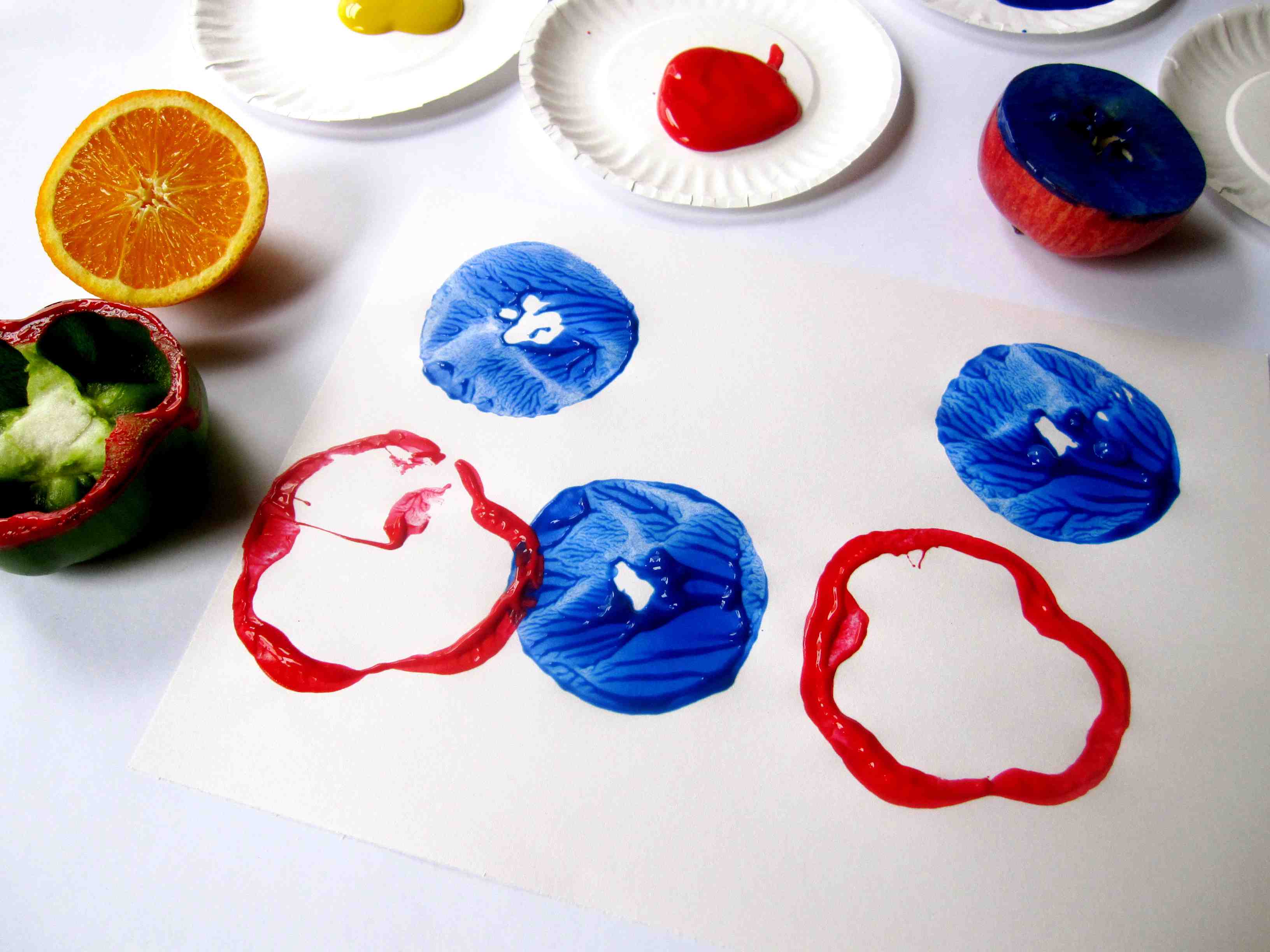
Once the stories were finished the kids used the sliced fruits and vegetables as stamps. They also used the asparagus as paint brushes. I showed them my picture and my daughter’s picture (below) so they could see examples of figurative and abstract paintings.
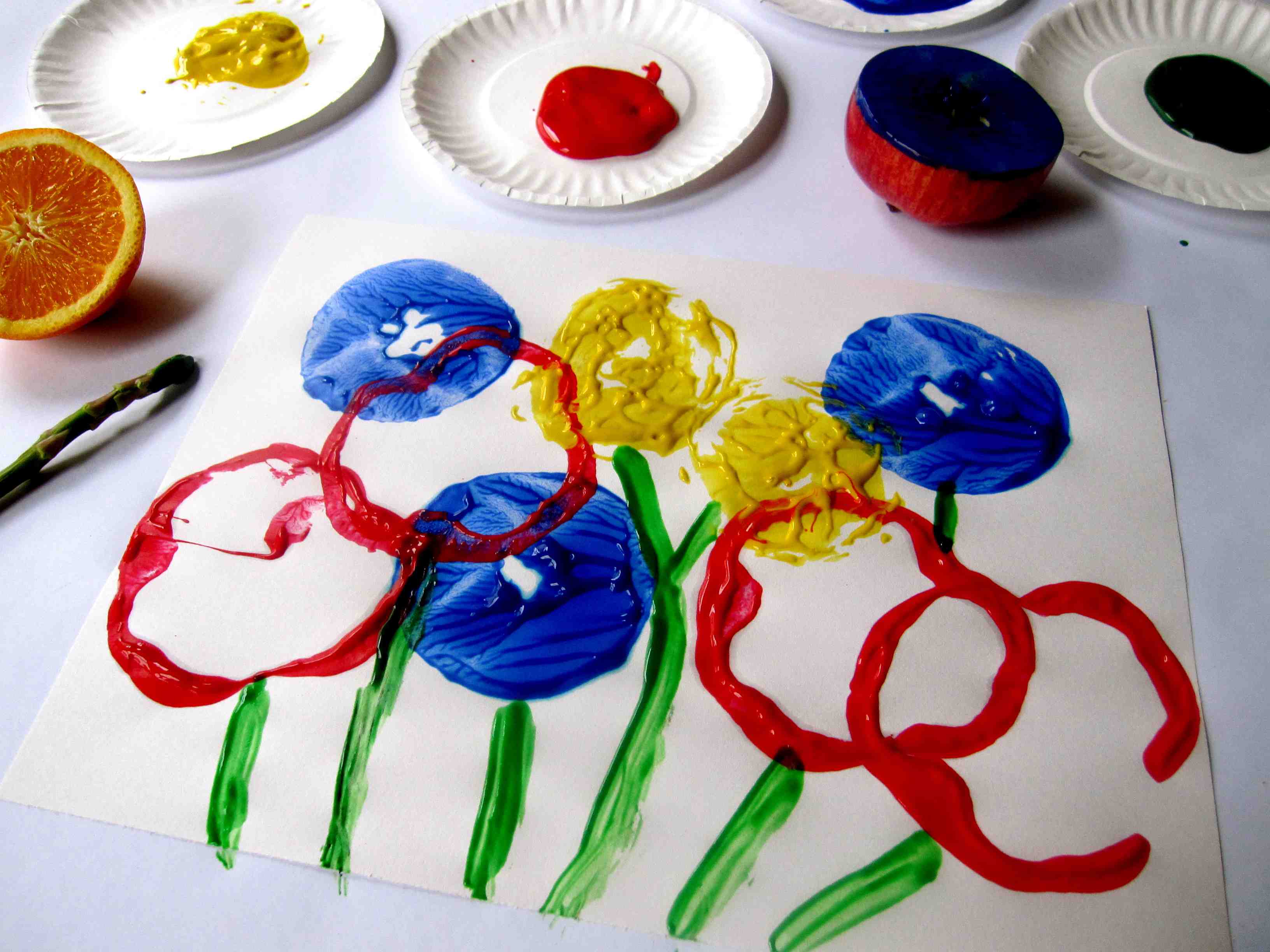
Since it was such a murky weekend, I used the shapes to make a colorful bouquet of flowers. Also, I set up a little ‘clean up’ station which included baby wipes and paper towels next to a trash can. I also allowed kids to leave their pictures to dry if they planned to stay and look at books.
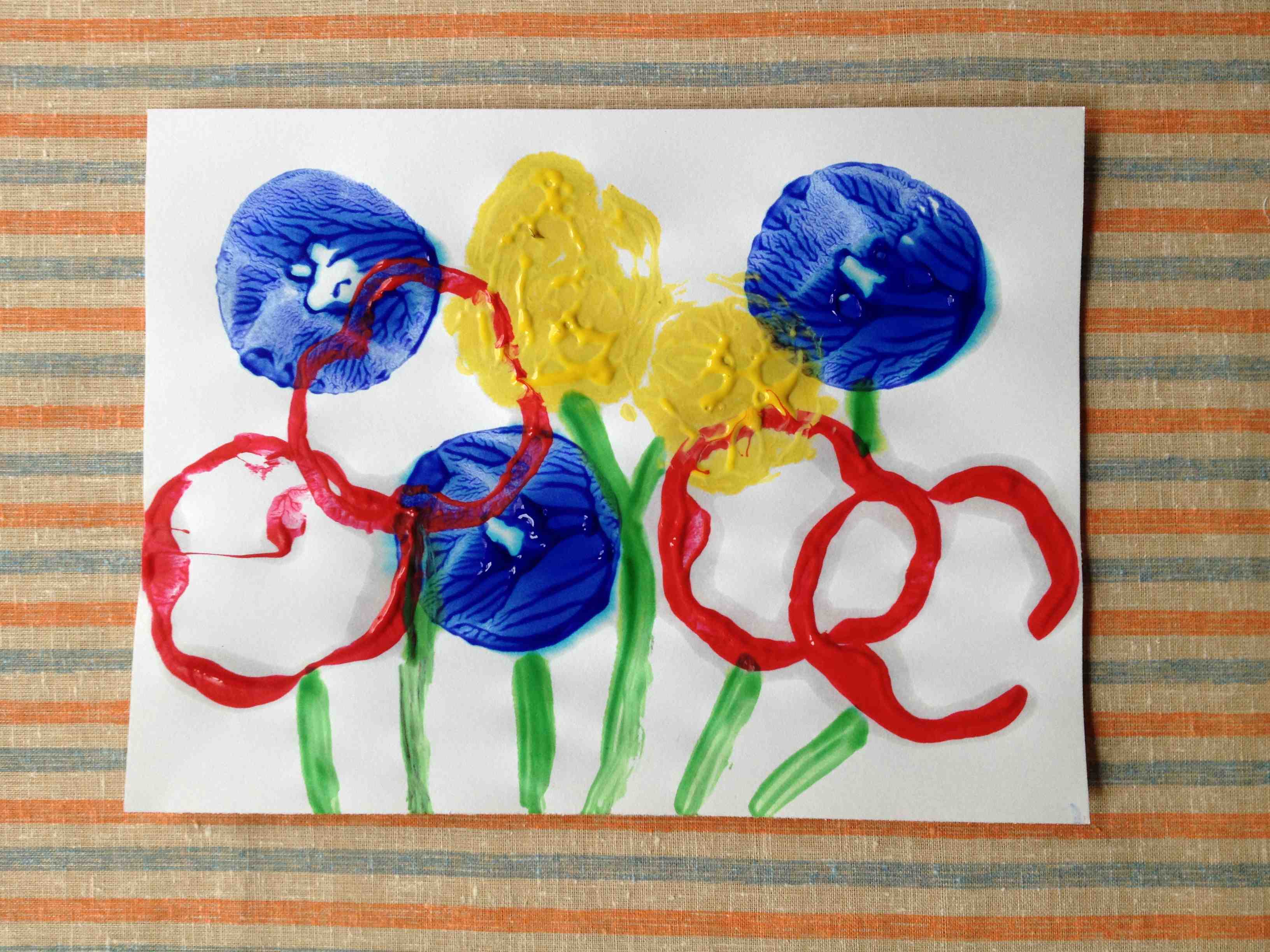
My picture example.
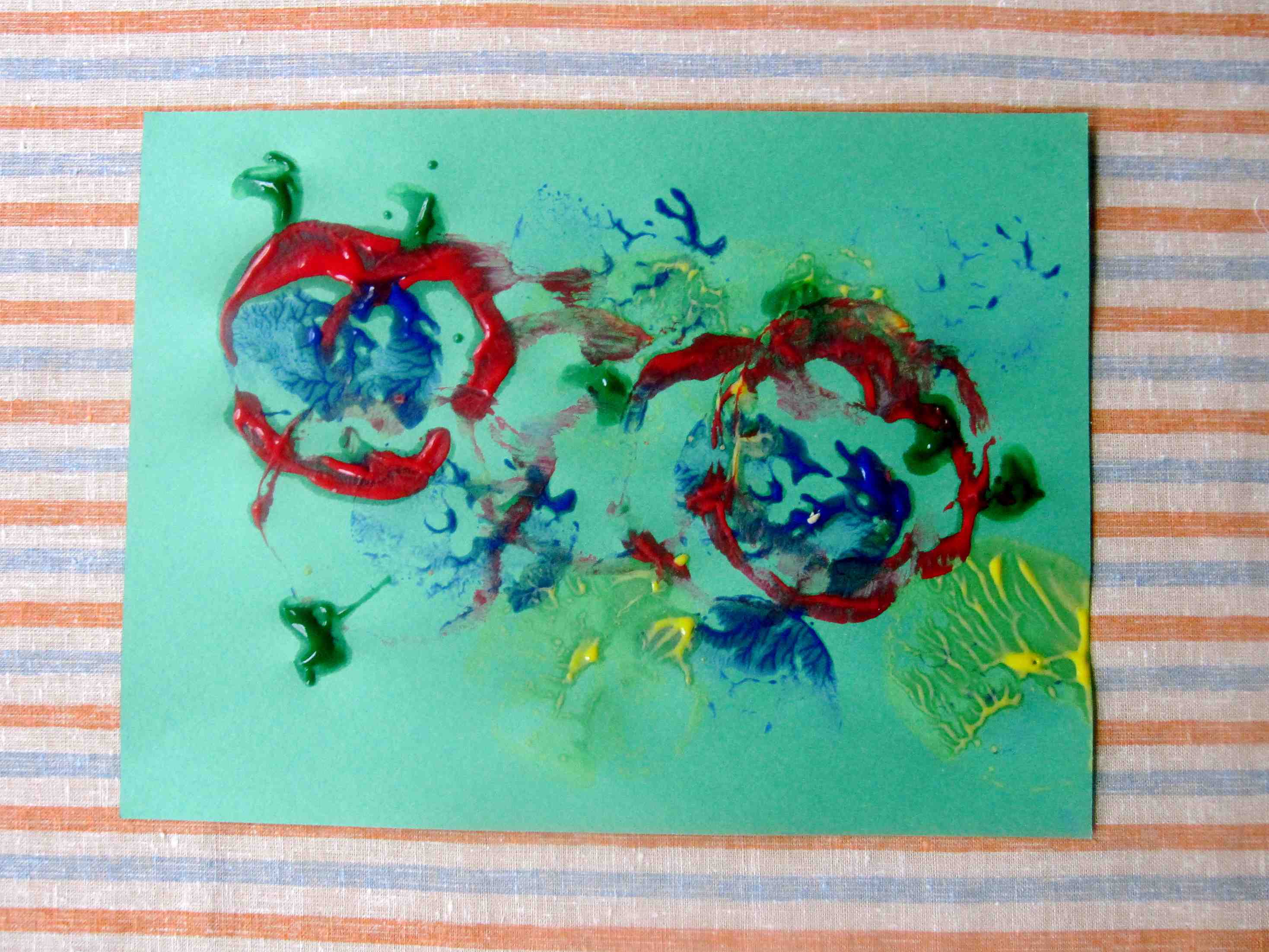
L’s picture.
I thought she did a wonderful job with her stamping if I do say so myself.
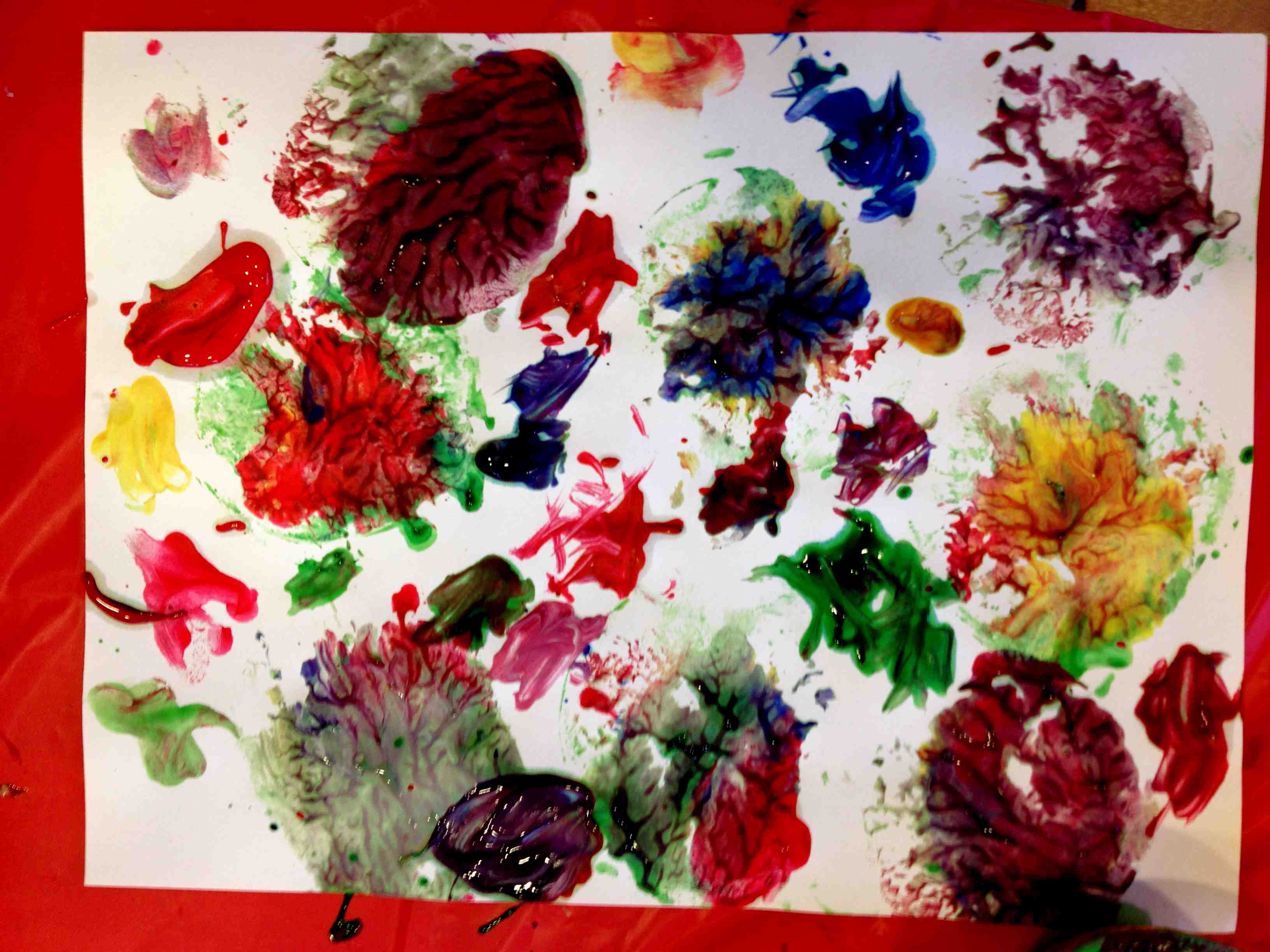
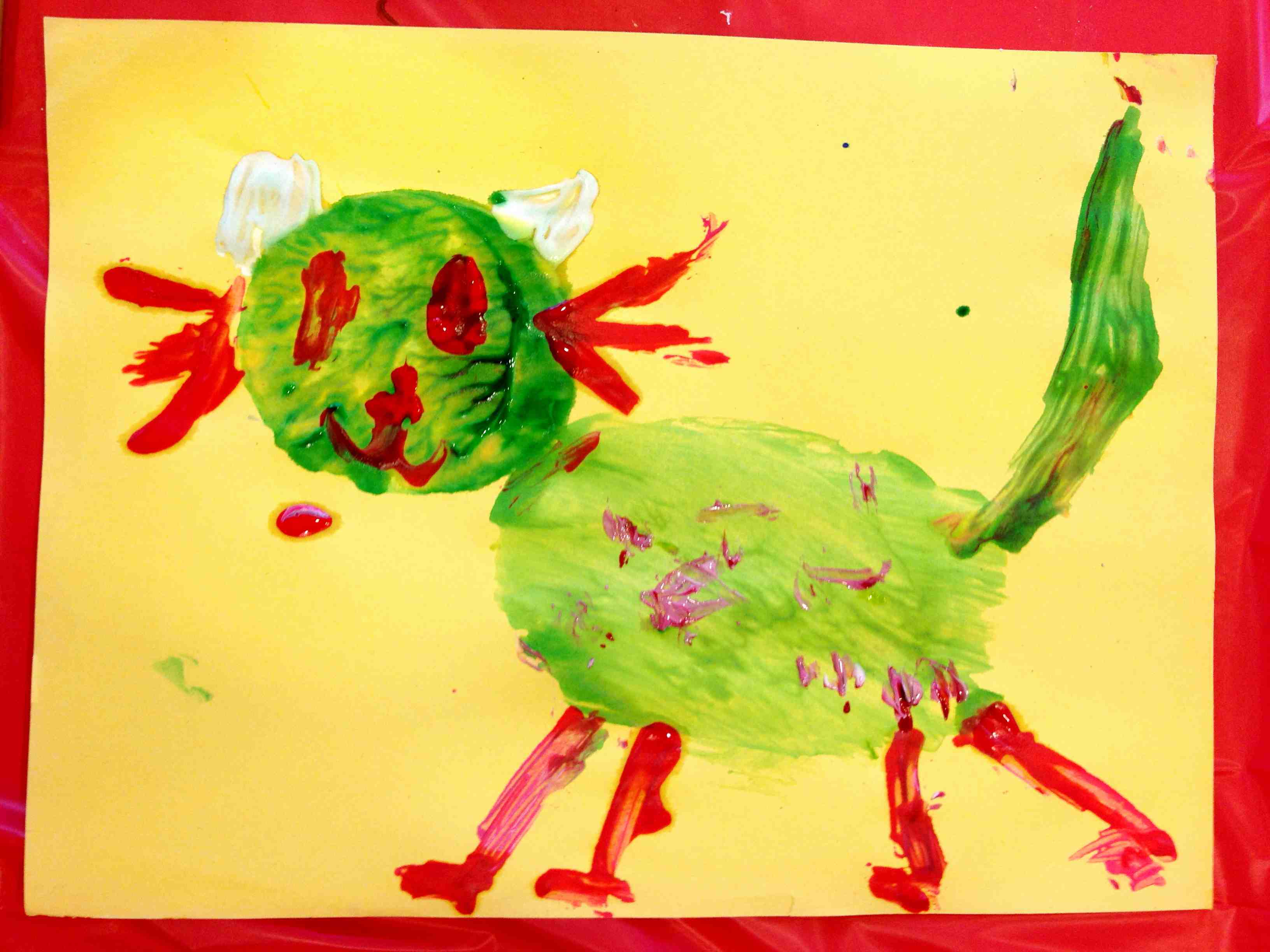
And here are a few masterpieces from the storytime kids….
11
Mar
Review: Lucky Ducklings
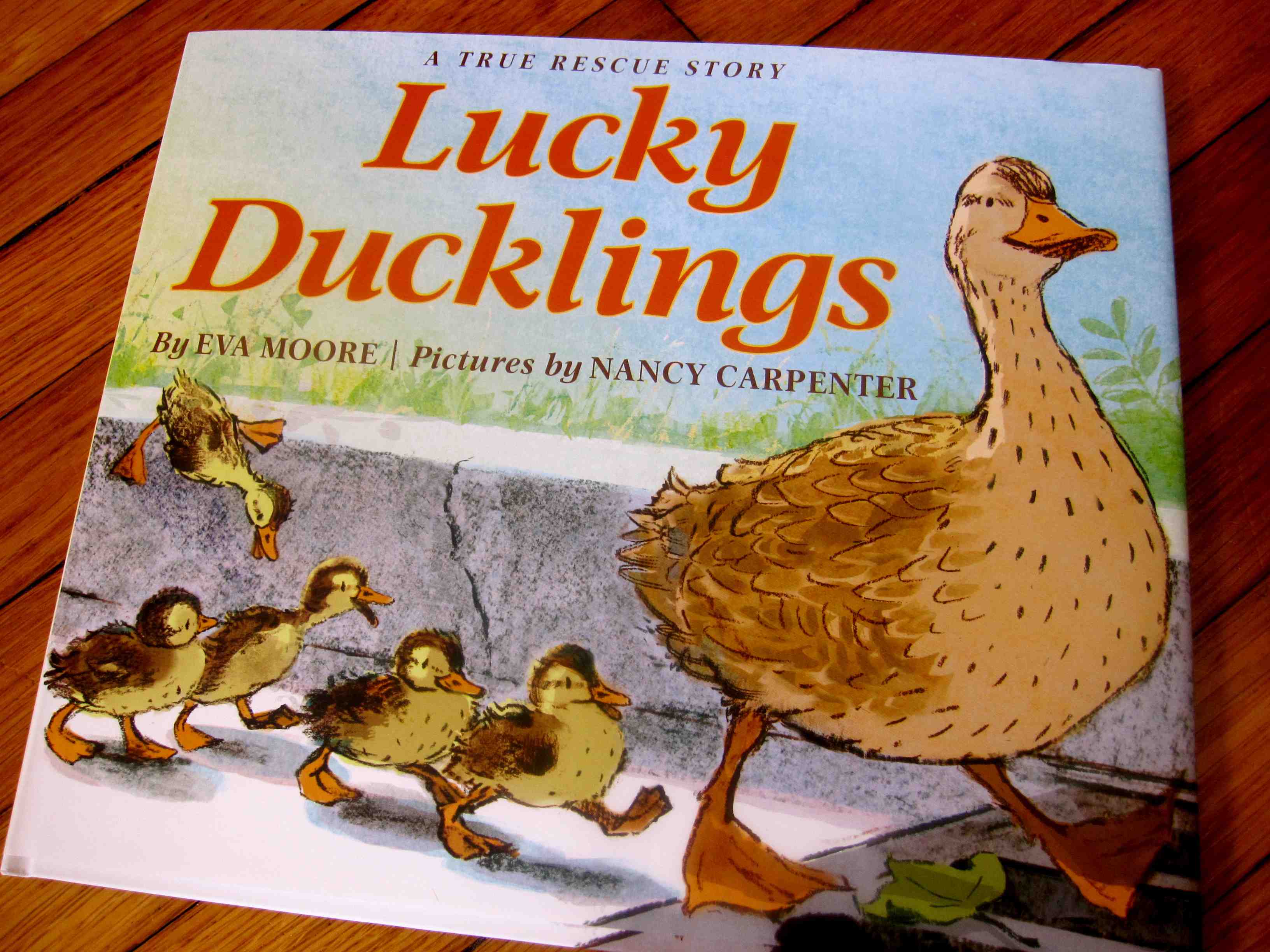
Lucky Ducklings
by Eva Moore, illustrated by Nancy Carpenter
Find it at: Your library | Amazon | Indiebound
Published: Orchard Books, imprint of Scholastic (February 1, 2013)
Recommended reading age: 3 & up
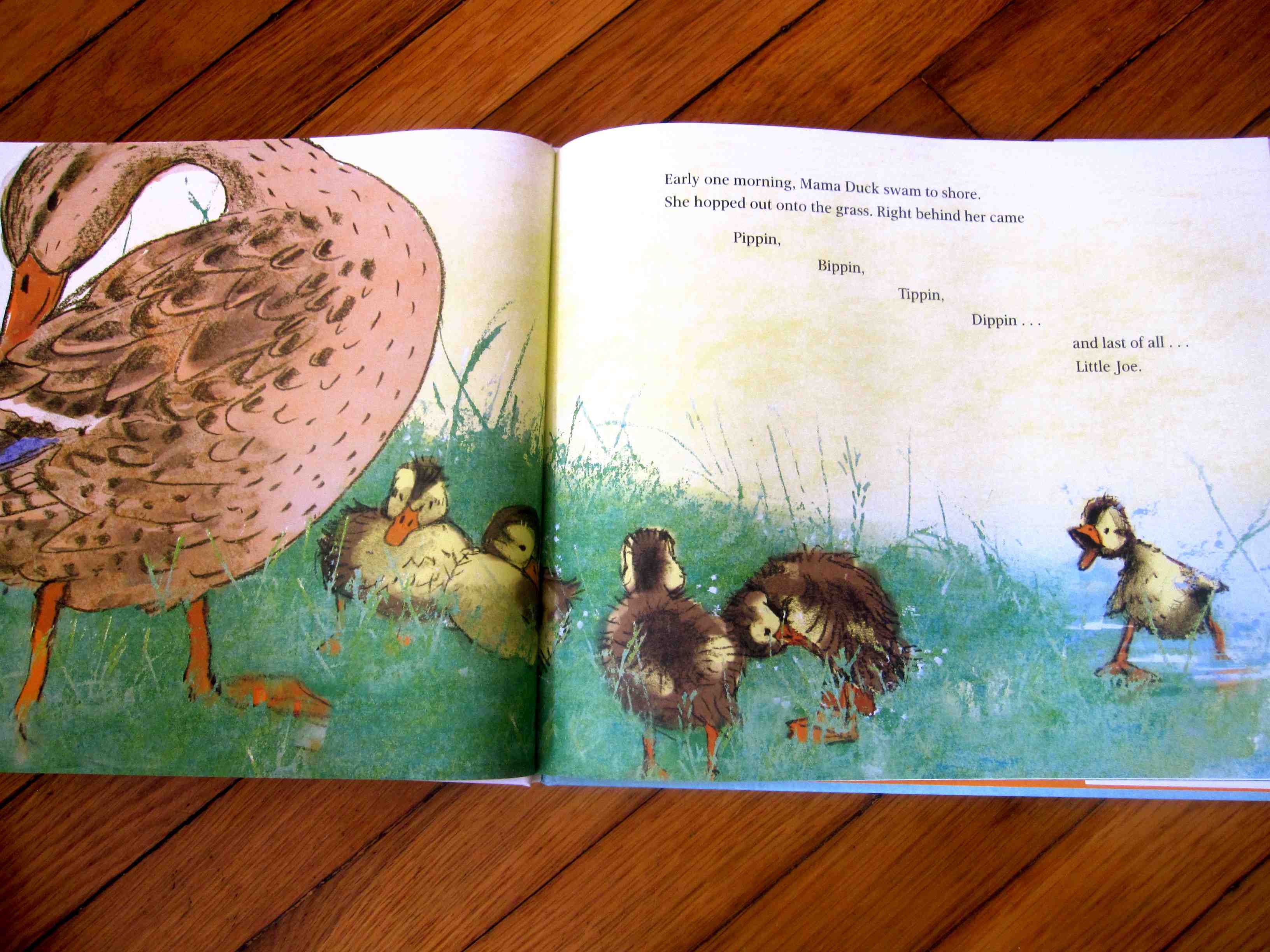
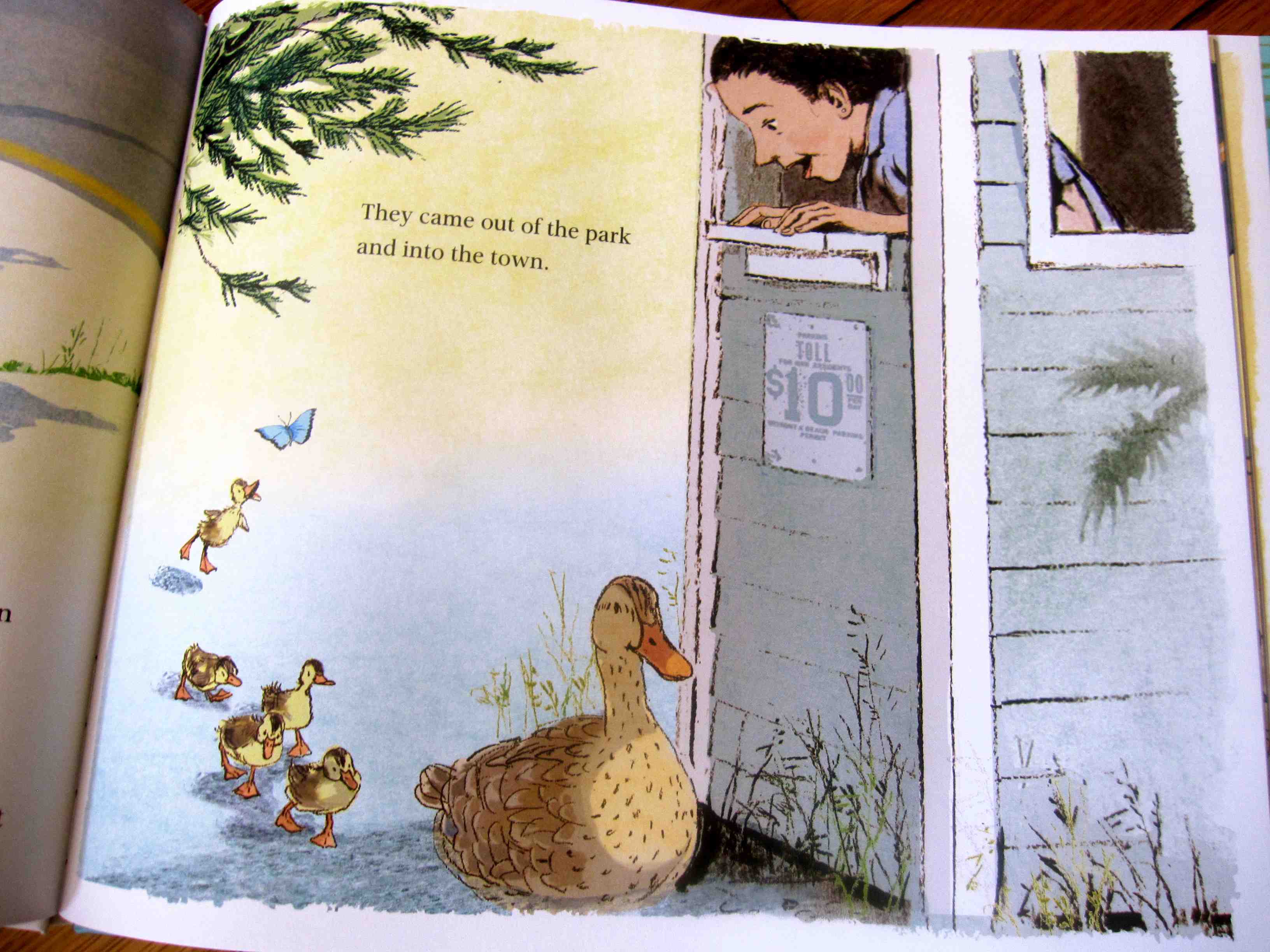
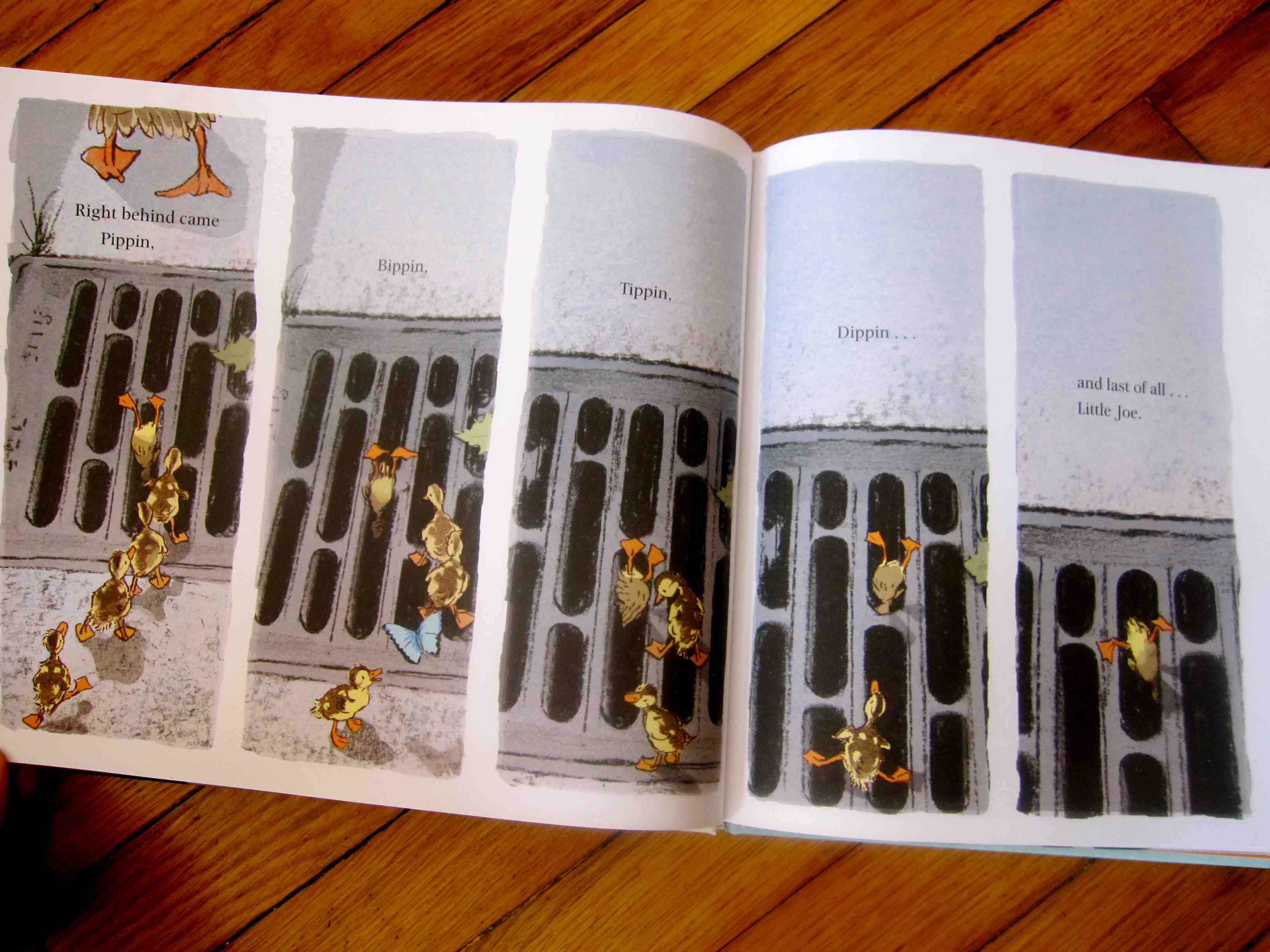
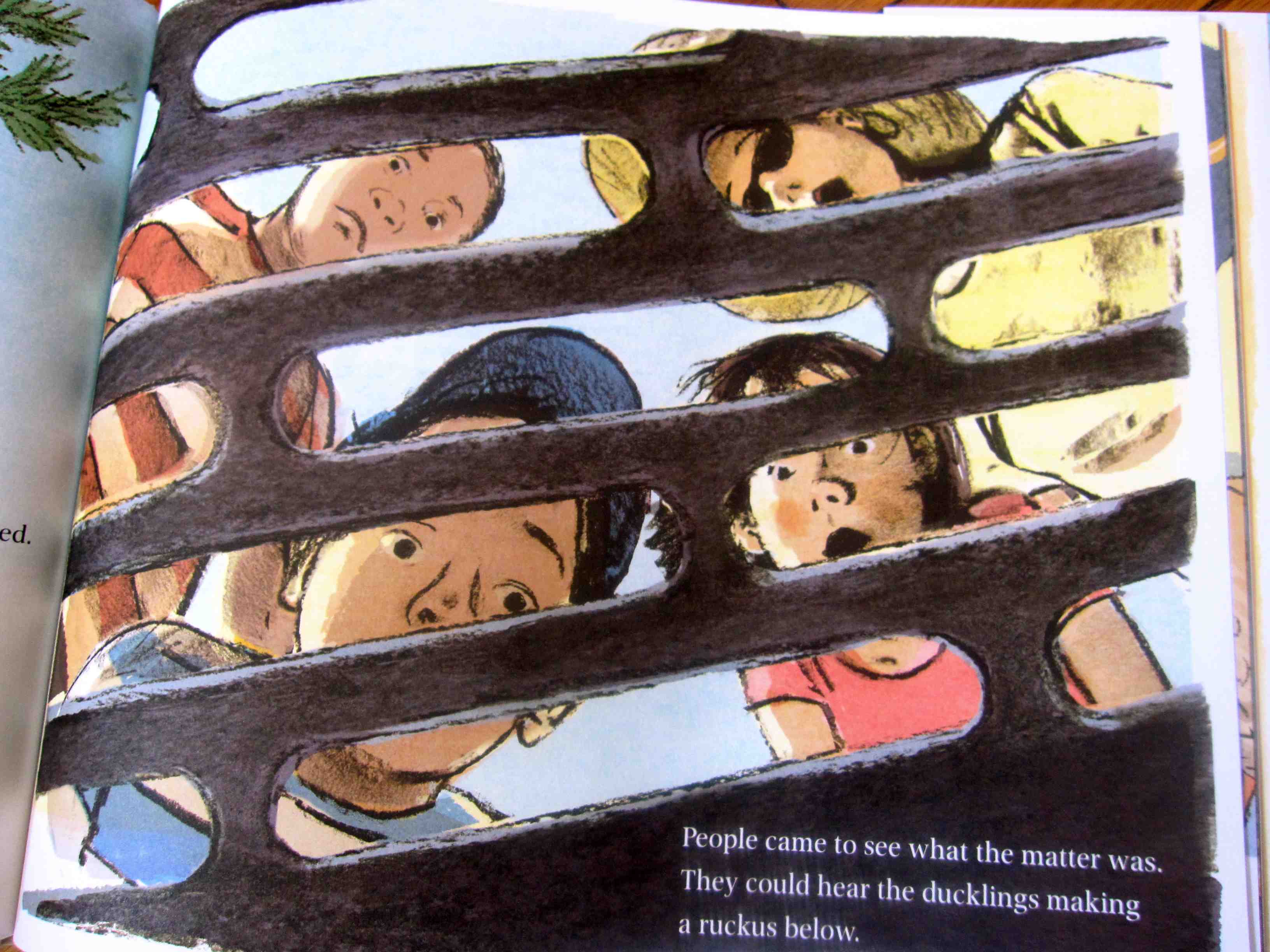
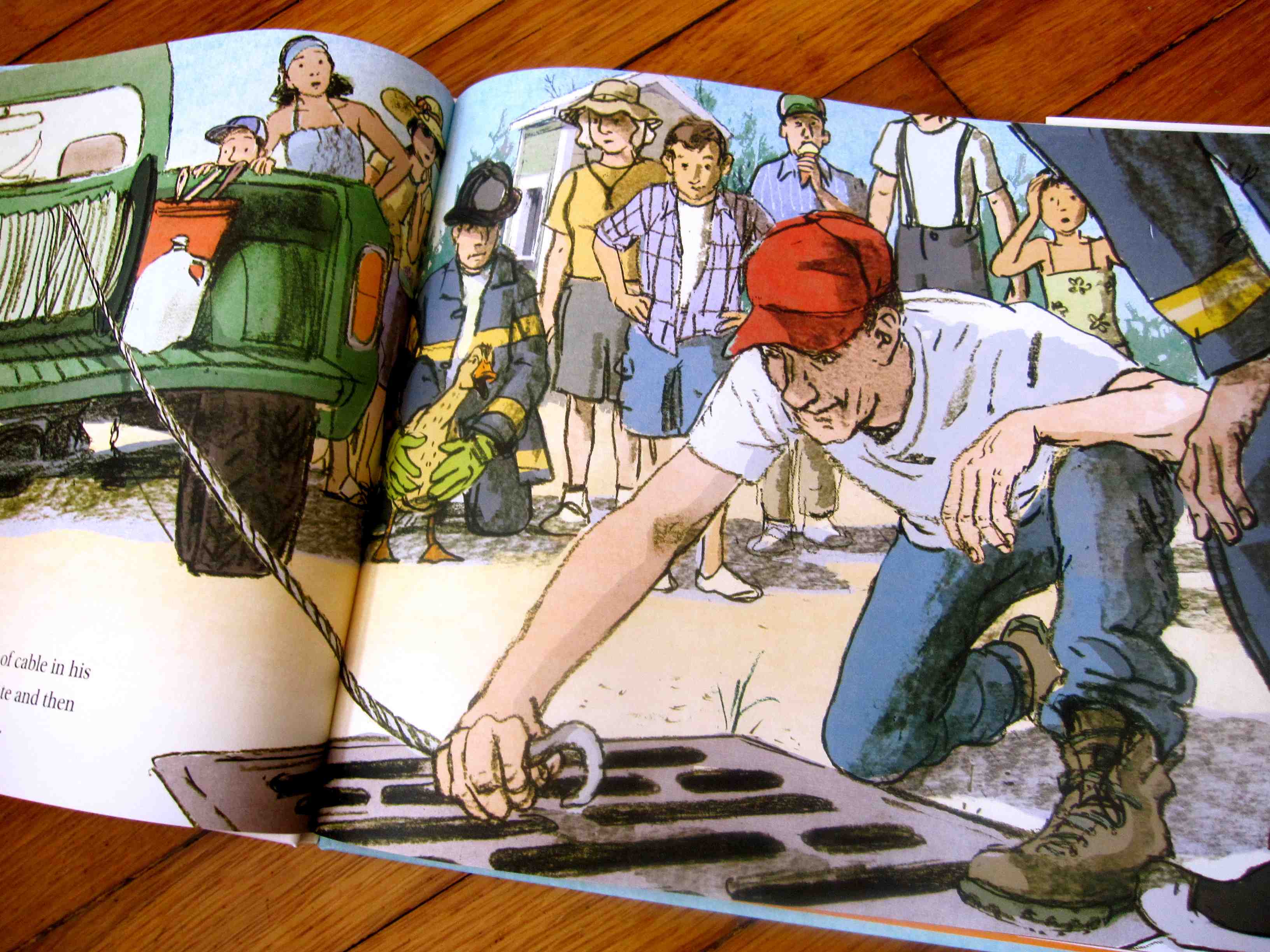
In a nutshell: It’s Make Way for Ducklings for a new generation. Lucky Ducklings is the true story about about five little ducklings who got stuck in a storm drain in Montauk, New York in June of 2000. One morning, Pippin, Bippin, Tippin, Dippin, Little Joe, and Mama Duck decide to go on a walk out of the park and into town. They have a bite to eat and are on their merry way until Mama Duck walks over a storm drain and her little ducklings follow her lead, but the storm drain openings are too large for the five ducklings and they fall in one by one. Someone saw what happened, called the fire department, and a crowd started to draw around the storm drain, but frantic Mama Duck wouldn’t let anyone close to her stranded babies. The Montauk Firemen Department arrived, and the rescue of the little ducklings got underway.
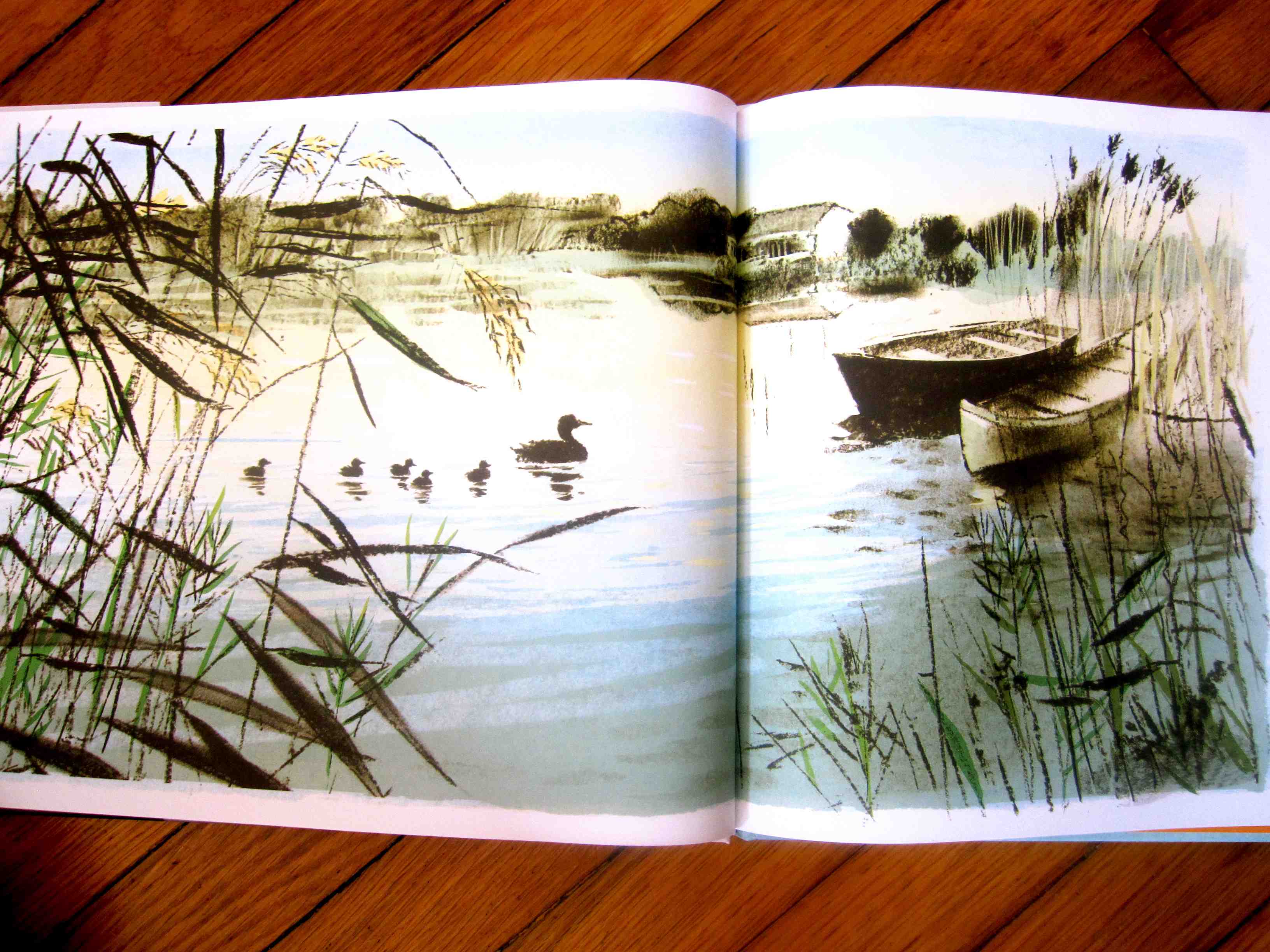
Falling into the storm drain could of been the end of the story for those ducklings, but it wasn’t. Someone was watching and called the fire department, and it was because of that ‘someone’ that those ducklings stood the chance of being saved. The support within the community saved those little waddling balls of fluffy cuteness. I know I’m not the only one in my library that is looking forward to reading this book during storytime, as it will surely be one that kids enjoy and respond to. Plus, it has a few valuable lessons to share. And not to mention, the illustrations by Nancy Carpenter are absolutely stunning.
It is an endearing story about community, a heroic rescue, and a mother’s love. And most importantly, to be aware of the life around you. You never know when you might be needed. A true story with a whole lot of heart, Lucky Ducklings is a whole lot of wonderful.
Don’t take my word for it: “Make Way for Ducklings”, a review from Seven Impossible Things Before Breakfast
Extras: Gah! I had to do it…
Source of book reviewed: Review copy provided by the wonderful folks at Scholastic.
10
Mar
Review: Chickenhare
 Chickenhare
by Chris Grine
Find it at: Your library | Amazon | Indiebound
Published: Scholastic GRAPHIX (February 1, 2013)
Recommended Reading Age: 11 & up
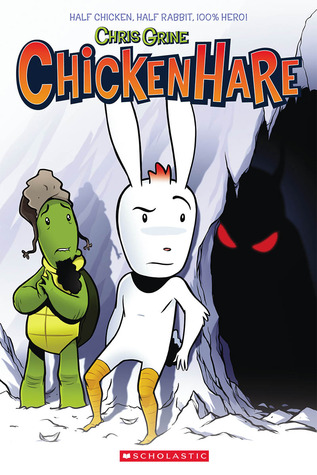
In a nutshell: Chickenhare has the body of a rabbit with the legs and feathers of a chicken. His friend Abe is a bearded turtle. Together, these two friends find themselves caught in quite the predicament. Trekking through a snowy tundra, a foul hunter has captured them and is transporting them to a mad taxidermist who likes to kill, stuff, and dress up exotic animals. Weird right? It gets weirder. Once the hunter hands over Chickenhare and Abe, they are thrown into cages with two other unusual prisoners, a monkey-looking smart aleck named Banjo, and Meg, a small, but intense horned creature with purple hair and a cape. And let’s not forget the ghostly goat wearing a top hat and monocle with unexplained and fleeting appearances throughout. In an effort to escape the insane taxidermist and save their lives, the four team up in a bizarre adventure with humorous exchanges along the way to an ending that is… well… weird.
Suffice it to say, it’s a relatively quick read for the middle school-age kids who welcome a little “dark and strange” in their reading appetites. Originally published as a three part series that was previously released under Dark Horse Comics a few years ago, Chickenhare is now in the limelight of tween readers, re-released under Scholastic’s graphic novel imprint, GRAPHIX. Even though Chickenhare is more accessible to younger readers, it definitely isn’t appropriate for kids younger than 6th grade. Even I was a little creeped out by the lunatic Klaus, the taxidermist, and his sinister gang of thugs. It was a little too bizarre for my taste, but I know there’s an audience of kids who will surely enjoy it.
Don’t take my word for it: See what kids have to say about this title in KIDS SCORE: Chickenhare on the OWL Blog
Trailer:
Chickenhare book trailer from chris grine on Vimeo.
Extras: Chickenhare’s blog home the BEST Chickenhare website… EVER.
Source of book reviewed: Review copy provided by the kind and gracious folks at Scholastic.


