5
Mar
How to Host a Virtual Author Talk
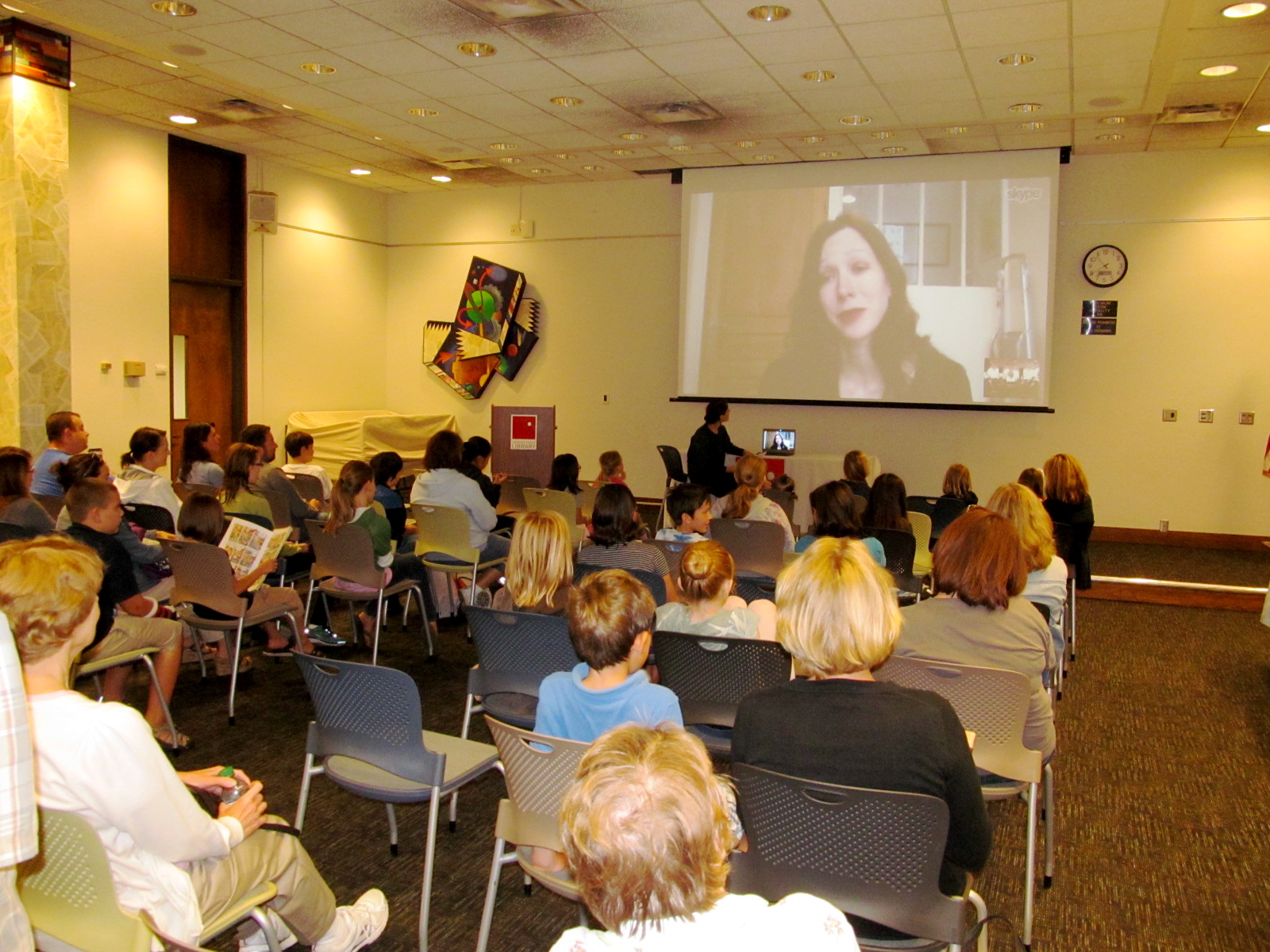
Virtual Author Talk with Marie Rutkoski
How can you take the joy of reading one step further for kids?
Introduce them to the brains behind the magical worlds of children’s literature! The authors and illustrators!
What if you don’t have the budget to bring authors to your public library?
Host a virtual author talk!
I’m a huge fan of hosting virtual author talks at the library. It’s low cost, low maintenance programming that’s inspiring, promotes interest in reading, and is SO MUCH FUN! Some of my favorite things about reading are the connections that occur between the reader and the book, between readers, and between the reader and the author. It is an intimate connection. I’ve hosted author talks as a highlight of large programs like Read Across Lawrence for Kids, and I’ve also hosted them as one-off fun events during the summertime.
The preparation consists of reaching out to the author, a test call, and the actual event. That’s it!
I’ve put together a simple step-by-step of how to host a virtual author talk at your library, with a few tips along the way:
1. Pick an Author
Take note of what books kids are checking out. Take note of what books are coming out around the time you would like to schedule a virtual author talk. If an author has a book coming out, there is extra motivation to promote their new title. Even if they don’t have a new title out, schedule permitting they’re usually down with talking books with young people. Children’s authors are cool like that. Instilling the joy of reading with kids? They’re all about it! We librarians and kid lit people are a team!
2. Contact the Author or Publisher
I’ve found that more often than not it is easier to reach out to the the author directly. That has been my experience at least. They’re usually quicker to respond than the publisher, too. You can find an author’s contact information on their blog or author website. If you would like to reach out to the publisher, visit the publisher’s website. There is usually a contact for the point person that handles school visits and author talks. The ‘big time’ kid lit authors usually have a fee attached when it comes to virtual author talks, and you will have to go through the publisher to book that event. If you can afford it, GREAT! If you are purchasing their books in bulk to give away for say a One Book, One Community program like Read Across Lawrence for Kids, they may waive the fee. If you have no $$ and aren’t purchasing books, fear not. Many authors do not require a fee at all. Email and ask! They will be delighted to hear from you. If they come back and say there is a fee attached, kindly thank them and say you will keep them in mind when you have the budget. No harm, no foul. And if they agree to the event for free? Yippee!
3. Event Format
After you have an author that is interested in participating, figure out what the format of the event will be. The author might have a presentation they would prefer to use or you can do an interview style program where you ask questions that the author answers. If you choose the later route, send the questions the week before so they can be prepared. I like to keep the questions more about the author and the type(s) of books they write rather than the actual stories, in case audience members haven’t read the books. In the programs I host, the kids are in no way obligated to have read books by the author. A few examples of these types of questions include:
“What books did you like to read when you were a kid?”
“When did you know you wanted to be an author?”
“Where do you get your ideas for the books you write?”
“What advice to you give to kids that want to become writers?”
“What is your favorite trick off the diving board?”
I’m happy to send a list of questions I’ve used if you’re interested. Also, VERY, VERY, VERY important–> Budget time for Q&A with the kids! This is by far the best part of virtual author talks. I usually propose 20-30 minutes (depending on the audience age) of presentation/interview followed by at least 15 minutes of Q&A. Whether you went through the publisher or the author, don’t hesitate to ask if they have any books or swag they would be willing to give to the kids. At the end of the virtual author talk, I usually raffle away free goodies. Everyone loves FREE.
4. Promote the Event
Hang up fliers in the library, add the event to your web and paper calendar, post on social media, do whatever you do to get the word out.
Optional step: Hook up with your local bookstore! They might be willing to throw in a few books to give away to the kids. Let them know you are hosting an author talk, because they will want to purchase a few extra copies of the books the featured author wrote. They might even want to hang up a flier for the event (if you have one) so they can stir up interest in their customers.
5. Test Call
Make sure you have a quick test call with the author a day or two before the event. Do the call at the same time and in the same room as the event to make sure there isn’t connectivity issues. And if there are issues, this will give you time to resolve them.
6. The Big Day!
Set up the room. Display books by the author for patrons to checkout afterwards. I usually call the author 5-10 minutes before the event and then turn the audience screen off. When It’s time to start, I turn the screen on, introduce the author, and start. I like to leave lots of room for Q&A and also a minute or two to raffle away goodies. Seeing an author or illustrator in their own environment is unforgettable. The library kids have met an author’s kids and they’ve taken a tour of where an author works. Meeting an author’s pet is also a very popular perk.
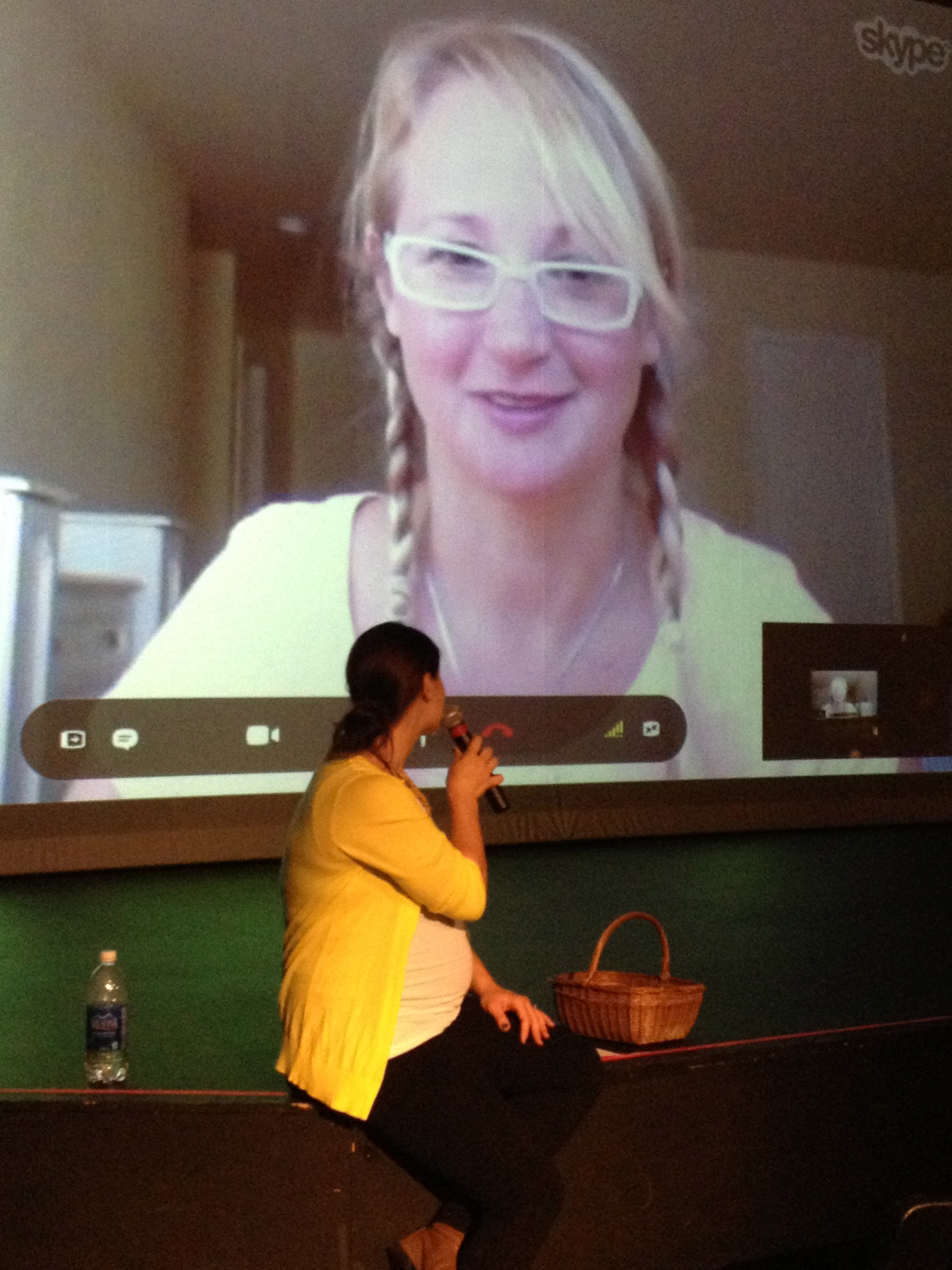
Me (extremely pregnant) interviewing Jennifer Holm.
This last part is mandatory. Be sure to send the author a big THANK YOU email afterwards. More often then not, kids will talk about these types of events well after they have happened. They check out the books the author mentions, and they devour books that the author has written. For the few hours it takes to pull a virtual author talk together, the impact it has on kids lingers for days, weeks, months, years…
If you have any questions about hosting a virtual author talk at your public library, please feel free to email me at sturdyforcommonthings (at) gmail (dot) com.

25
Feb
In The Field: Meet Anne Clark
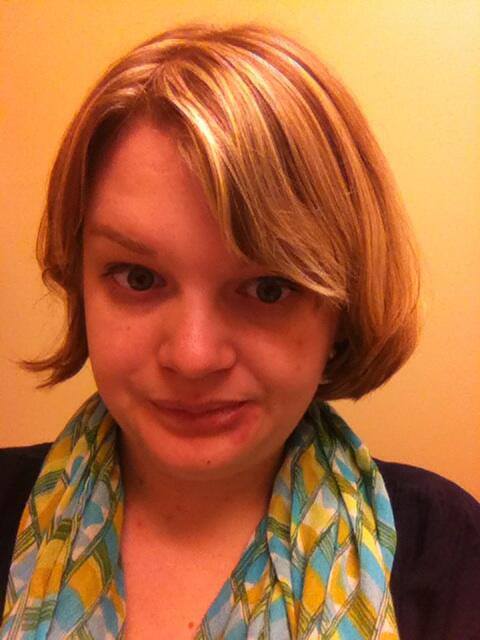
The latest In the Field post is up on the University of Washington iYouth Blog featuring librarian Anne Clark! Anne is the children’s department head of Alice and Jack Wirt Public Library, the main branch of the Bay County Library System in Bay City, Michigan. It was announced just a few days ago that Anne will be receiving the Frances H. Pletz Award from the Michigan Library Association for exhibiting “the same outstanding quality of service to teens during the past year or years as the award’s namesake”. Total rockstar status.
Please be sure to check her interview here: In the Field: Meet Anne Clark
“In the Field” is a monthly series that introduces library students to innovative, awesome librarians rocking the library world and providing amazing services to kids and teens across the country.
Thank you Anne for being the featured guest on iYouth!
18
Feb
A Blogger’s Worst Nightmare

A week ago, I had a good block of time scheduled out to write a few blog posts, a rare occurrence due to grad school and even more so because of the wee ones. The stars were aligned for awesome blogging time, BUT when I went to log into my blog it was’t there. Blank screen. I tried different browsers. Nothing. Nothing but panic.
It turns out the digital server my blog was hosted on fried, so we (when I say “we” I mean my techie brother) had to migrate everything over to a different server and had no idea what was going to survive. I had to wait throughout the afternoon and into the night to learn what the damage was. During that time, all I could think about was what if those three years vanished?
(shivers)
As you can see, all is not lost. THANK THE CYBER GODS! We were able to recover the majority of Sturdy for Common Things. There are handfuls of images that didn’t survive the transfer, so I’ve been combing through to find those. (If you come across one, please let me know and I’ll fix it.)
Obviously, this was a huge sigh of relief. However, I do find myself reflecting on those hours of limbo and the potential of having to start over. It would have been a painful loss, but it would also have been an opportunity to start anew. Sturdy for Common Things has changed so much from when I started writing here. I have changed so much. Sometimes a minor crisis is all you need to figure out the direction you want to go. My blogging will still be a bit on the sporadic side for the time being, but get ready for some changes going into the spring season. Time to hit refresh.
6
Feb
HeARTs!


Oh my heart! I’m over at Library as Incubator Project today with the latest Pages to Projects post, HeARTs!
Pages to Projects is a series on how to incorporate art education and art appreciation into library storytime. This Valentine’s Day inspired post focuses on teaching kids about the heart shape, as well as simple collage construction and color theory, by reading the book My Heart is Like a Zoo, and creating this lovely Suncatcher Heart Collage. I’m still on maternity leave, so my artist-in-residence demonstrated how to construct the featured craft. Here’s the link:
If you enjoy the Pages to Projects series, be sure to check out the Pages to Projects Pinterest board for more art-infused storytime ideas!
And if you’re looking for more Valentine’s Day ideas, my Valentine’s Day Storytime post has a few fun books and craft ideas. Also, the amazing duo from Jbrary have put together this rocking Valentine’s Day Pinterest board full of songs, rhymes, books, and more!
26
Jan
Interview with Bluebird Author Lindsey Yankey

I’m so excited to introduce to you this up and coming children’s book author and illustrator, Lindsey Yankey, who recently published her first children’s picture book, Bluebird (reviewed here). Bluebird follows the story of a little bluebird and her search for her friend the wind, and is available for purchase TODAY.
Tell us a little bit about yourself!
I have a growing collection of children’s books on my shelf. New ones, old ones, ones from the library sales, happy ones, sad ones, ones in languages I can’t read. Sometimes my cat and I get into it over who gets to sit in my studio chair. I often fantasize about what it would be like to discover a new color the world has never seen. I find myself going down rabbit holes researching things like; how many cones do other animals have that allow them to see the color differently, how does the body absorb vitamin-d from sunlight, and all the varieties of baobab trees.
BLUEBIRD is your first children’s picture book printed in the US. What inspired you to become a children’s book author?
I’m working with the folks at Simply Read Books in Vancouver. Bluebird is my first book in English; the others are in Italian. It’s a long story involving two trips to the Bologna Children’s Book Fair, mustering up courage, making a new friend, and discovering my distaste for sparkling water.
I began to piece together that I wanted to make picture books when I started taking studio classes in college. I had changed my mind a lot from education, to art education, to illustration. I rediscovered books I liked when I was little and found new books to admire. I guess a lot of my inspiration has come from reading children’s books as an adult. I think children’s books have the potential to be enjoyed by all kinds of people, young and old. To me the best books possess layers of meanings and interpretations, and have nuances that go unnoticed until the 10th time you open the book. I’d like to lead a happy fulfilling life, and making books combines a lot of my interests; kids, making art, telling stories, education, imagination, research, and tiny details.
Where did the idea for BLUEBIRD come from?
Most of my stories start with a just blip of an idea, just a thought. One night I wrote down a thought of “a bird looking for the wind.” At the time I was living in a little house with two of my best friends. I had one of the rooms upstairs and I had slept with my window open out onto the roof of the porch. Early the next morning I woke up, lying on my back and moved my eyes around the room. The wind was blowing the curtain and sitting on my bookshelf by the window was a little house wren. It hopped around on the shelf, flew in a circle, and straight back out the window. After that I started to develop the idea of a bird looking for the wind. Why would it look for the wind, where had the wind gone, and how do you express the absence of something you can’t see?
What was the creative process like? Did the illustrations come before the story or the story before the illustrations?
The story developed over the last 6 years or so. Bluebird has gone through loads of drafts, and the imagery has grown with me as I’ve developed my way of making illustrations. For the final illustrations in the book I made multiple thumbnail sketches establishing the composition, the goals of the illustration, the movement from one page to the next, etc. I like to use a lot of different materials, so making the final illustration depends on what mediums I’m using.
When do you work on your art? Where and what time of day? What music do you listen to? Or do you prefer silence?
I work from home in a tiny room I share with my studio mate, Meo, the cat. Sometimes she interrupts me for a good scratch and pet. It’s a cozy little room. I try to work during the daylight hours; in the past few years I’ve noticed I my color choices and quality control slip as the day turns to night. Some of my favorite artists to listen to are Devendra Banhart, The Kinks, The Velvet Underground, Gillian Welch and Dave Rawlings. The last year or so I’ve found myself spending a lot of time with audiobooks and talk radio shows like This American Life and Radiolab.
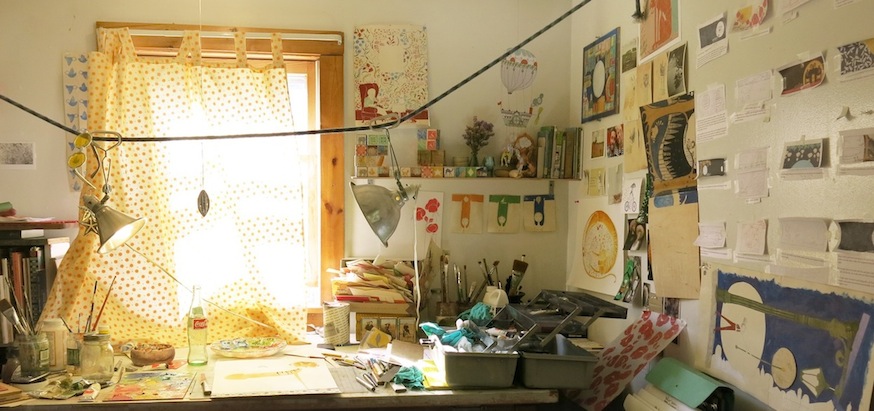
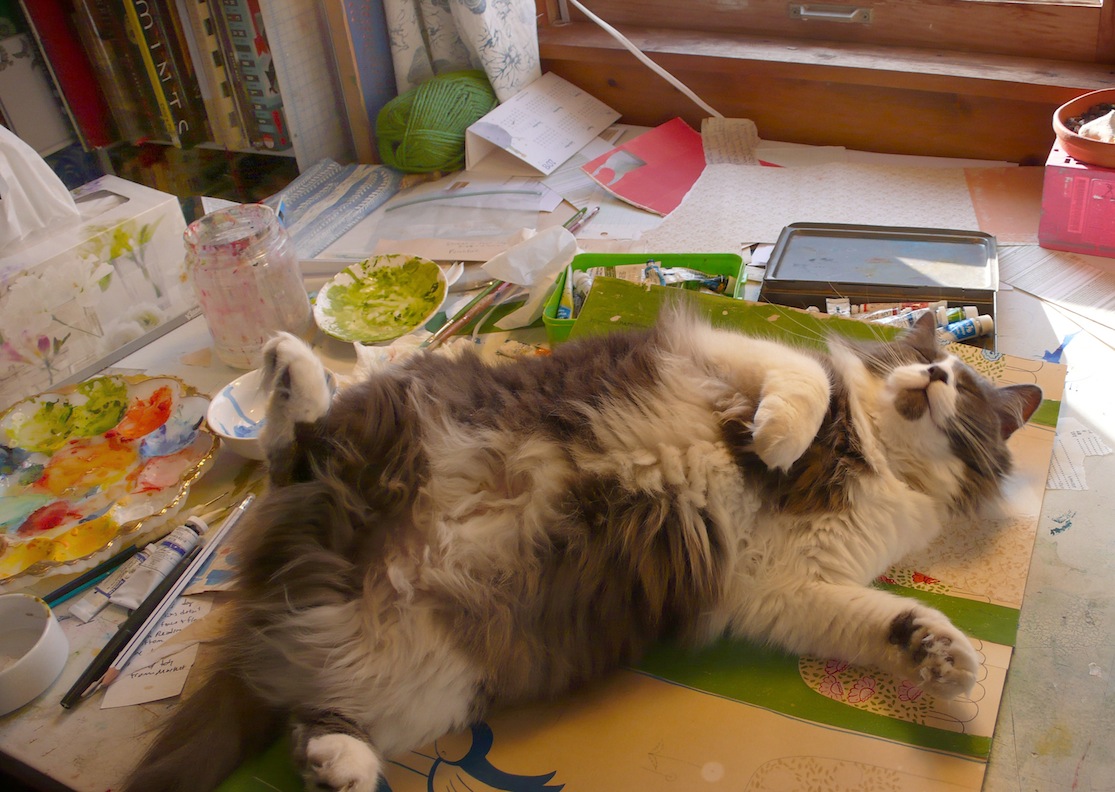
meo
You come from a family of artists – Your father is a ceramicist, your brother is a photographer, your sister is a painter, and you yourself an illustrator! What was it like growing up in a home that openly embraced the arts?
Awesome. We lived in the country without cable, internet, and neighbors. I guess that can sound like torture for some and paradise to others. For me, I think it was a great place to grow up learning to entertain yourself and make your own fun. Both my parents encouraged us to play creatively, build, draw, make, and paint. I spent many diligent hours drawing the characters from our giant red velvet book of Disney stories. As a teenager my parents were nice enough to let my sister and I paint on our bedroom walls and ceiling. I guess I’ve always had art in my life, but I did take some serious time away from it to play sports, then dabbling back into art in college. It’s pretty special to have a family who supports art and who also know so well the reality of trying to make art a profession.
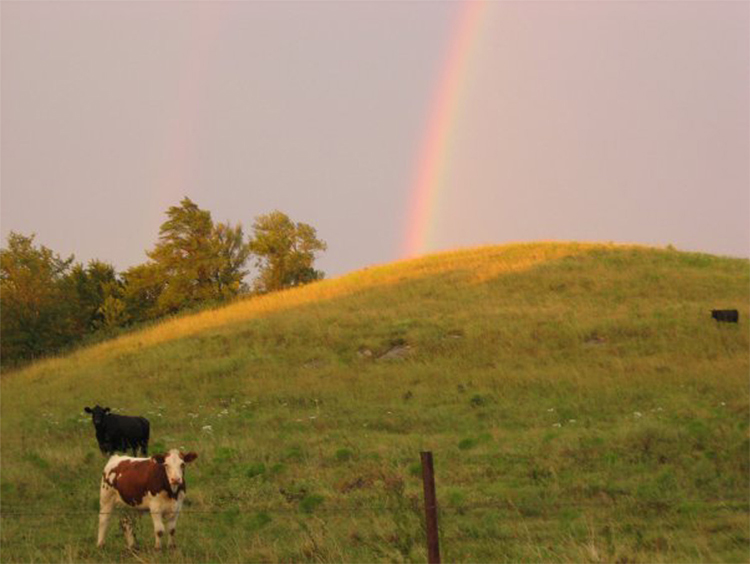
home
What picture book did you read over and over and over again as a child?
Hmmm, honestly I can’t think of my favorite picture book from when I was little. I know I spent a lot of time with the collection of Disney stories; I know I liked The Mitten, Good Dog Carl, Balloon Farm and Where the Wild Things Are. I remember a book called Heckedy Peg mortified me and it wasn’t until a few years ago that I realized the mom in the story in fact did not cut off her legs to save her children from a witch. When I was a bit older I was in love with Roald Dahl’s books and Quentin Blake’s illustrations. I still re-read those books.
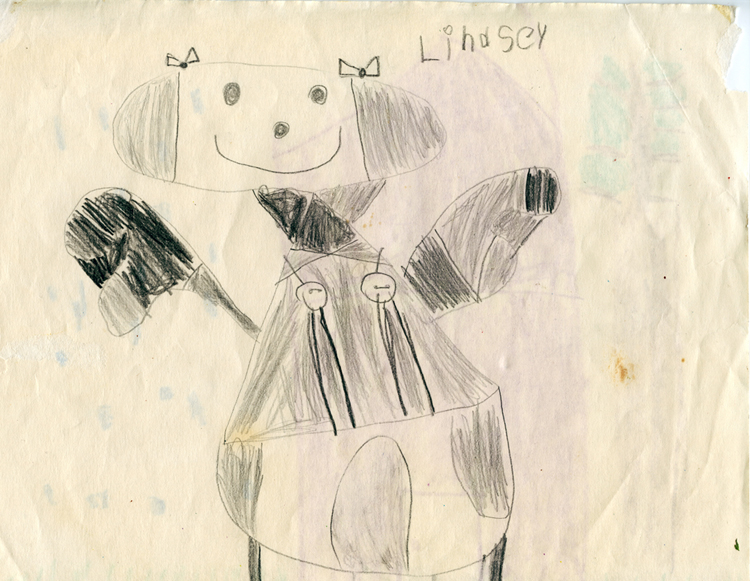
self portrait as a child
What’s next and new? Do we see more children’s books in your future?
Yes, I’m working on another picture book, and if all goes well it will be finished later this year. It’s a story I’ve worked on back and forth with for years, and I’m really pleased to see it come to life. In short, it’s about the sun and the moon.


