18
Mar
Review: The Dark
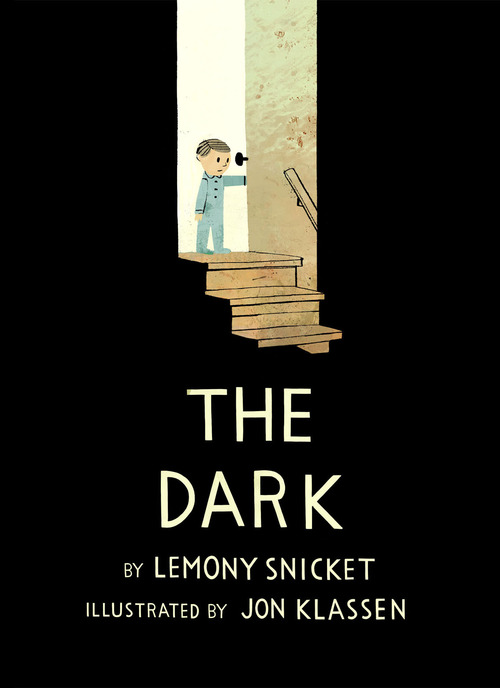
The Dark
by Lemony Snicket, illustrated by Jon Klassen
Find it at: Your library | Amazon | Indiebound
Published: Little, Brown Books for Young Readers (April 2, 2013)
Recommended reading age: 3 & up
In a nutshell: Did you used to run up the basement stairs after shutting off the light? Hide under the covers when you heard creaks in the middle of the night? Do you still? For those whose nerves are tested when the sun goes down the notorious Lemony Snicket (Daniel Handler’s pseudonym), and Caldecott winning illustrator Jon Klassen, have teamed up for a picture book about The Dark.
Laszlo is afraid of the dark. It hides in the closet, behind the shower curtain, and spends most of its time in the basement. But at night it is everywhere. Laszlo would go visit and talk to the dark during the day, hoping this would help it steer clear of visiting his bedroom at night. That is, until one night when his nightlight inexplicably goes out, and the dark comes to his room. And it talks back. Creepy! Well, just a wee bit creepy. The reader follows Laszlo through his house, flashlight in hand, exploring the usual dark hangouts as the dark persuades him to enter the basement. In the darkness of the basement, he finds an unexpected surprise which will reassure readers that the dark might not be so bad after all.
As someone who is still timid of the dark, I know all too well of the anxiety that comes with turning the lights off. Like most children, the fear is terrifying and plays tricks on your senses. The Dark takes into account these fears and curiosities most children (and some adults) have when it comes to the things that go bump in the night, the complete unknown, and uses that fear to shed light on what the dark really is. Dark is the house that keeps you warm. Dark is the nighttime sky looking down from above when you look up at the stars. Day and night, light and dark are elements of life. Without one the other wouldn’t exist. Laszlo is much braver than I would have ever been. The child version of me would have been riddled with fear and stayed under my covers until dawn. It is reassuring that he was more interested in the dark than afraid. It is a good lesson for readers to test their fears and not to be so distressed by the unknown.
Now, let’s take a minute to talk about the talent that is Jon Klassen. Jon Klassen’s warm hues during the daytime and sharp, geometric contrasting illustrations during the Laszlo’s adventure during the nighttime are mesmerizing. I couldn’t imagine a better companion to Lemony Snicket’s pitch-perfect prose.
Take a gander…
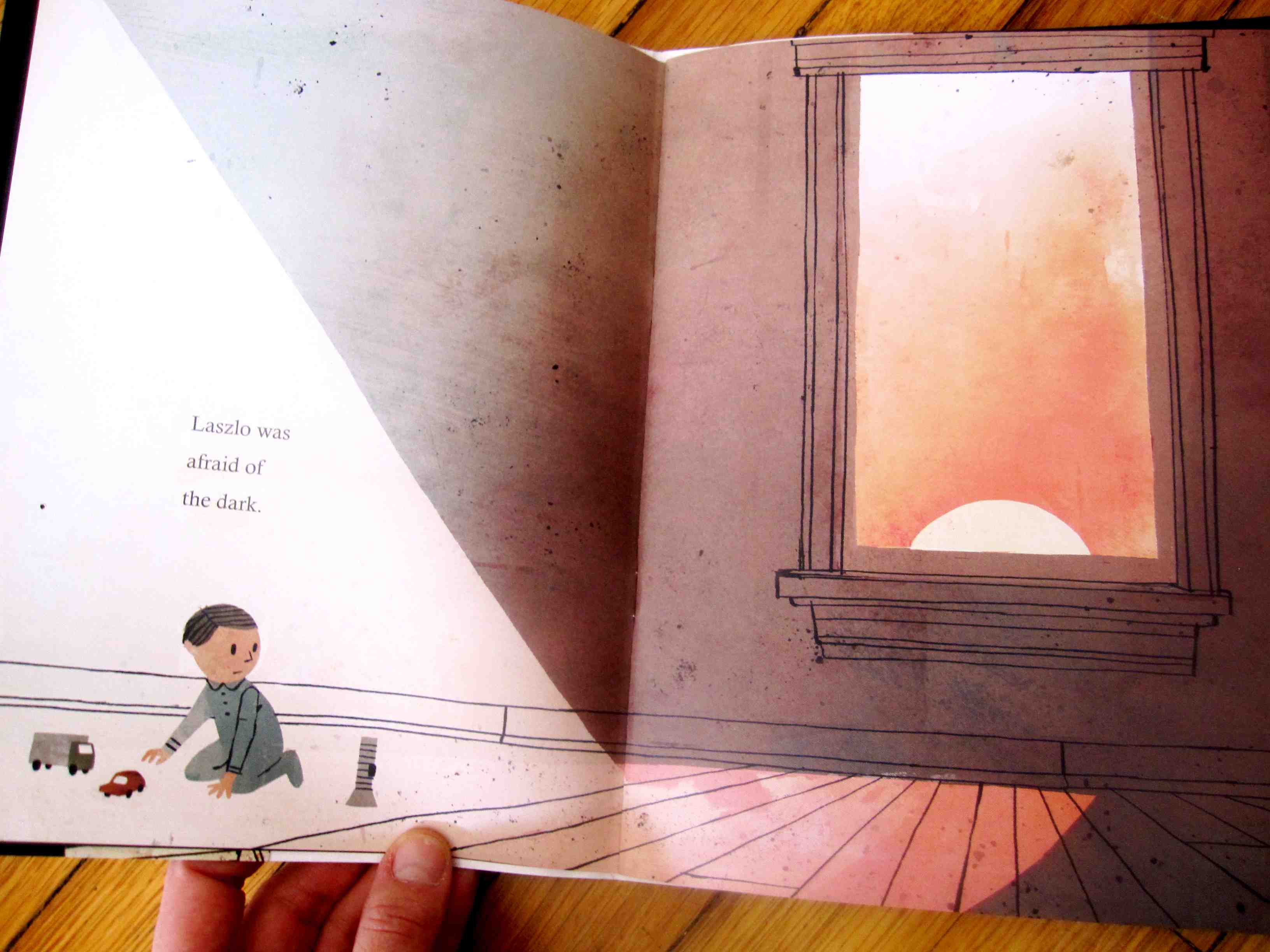
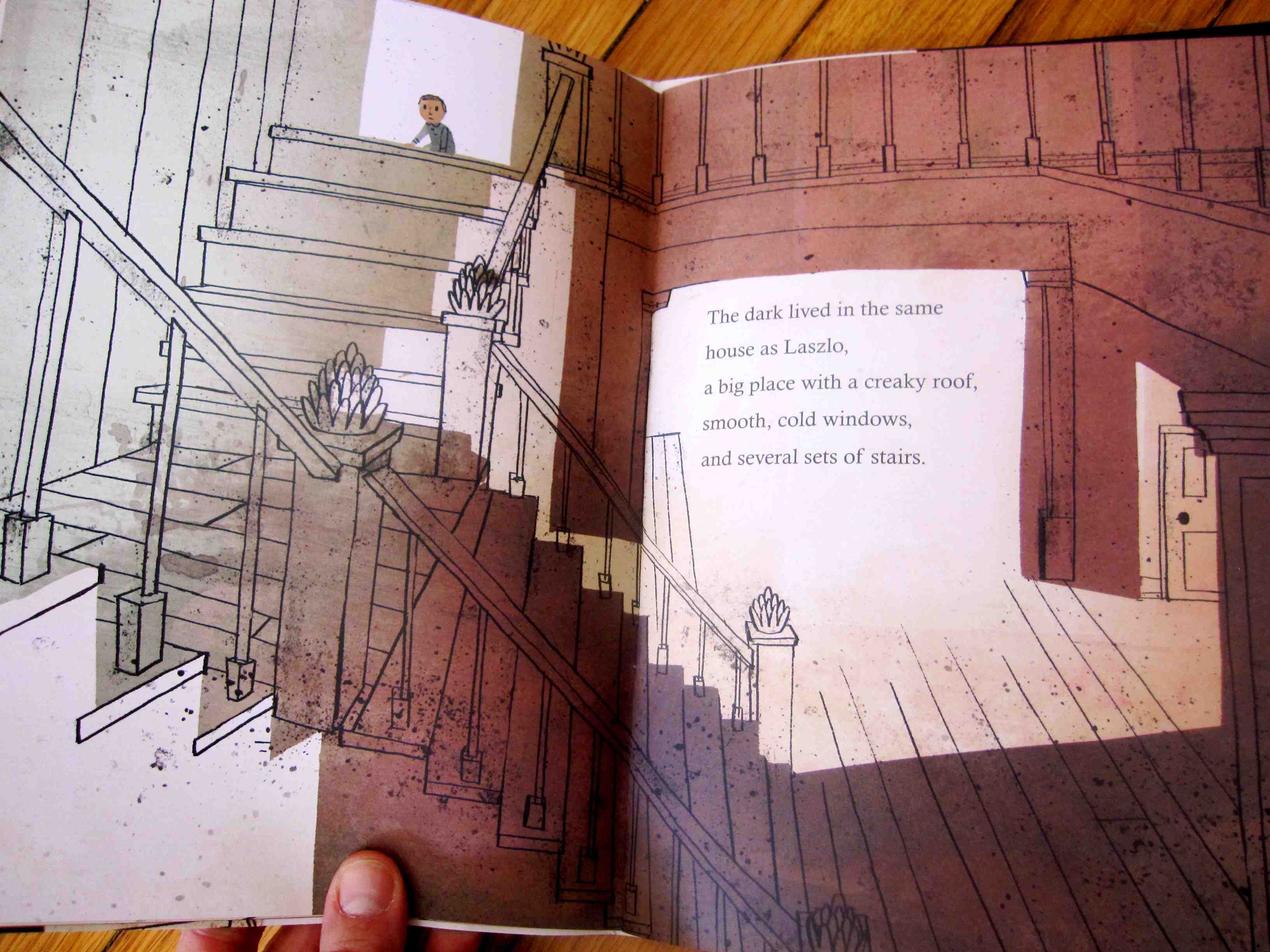
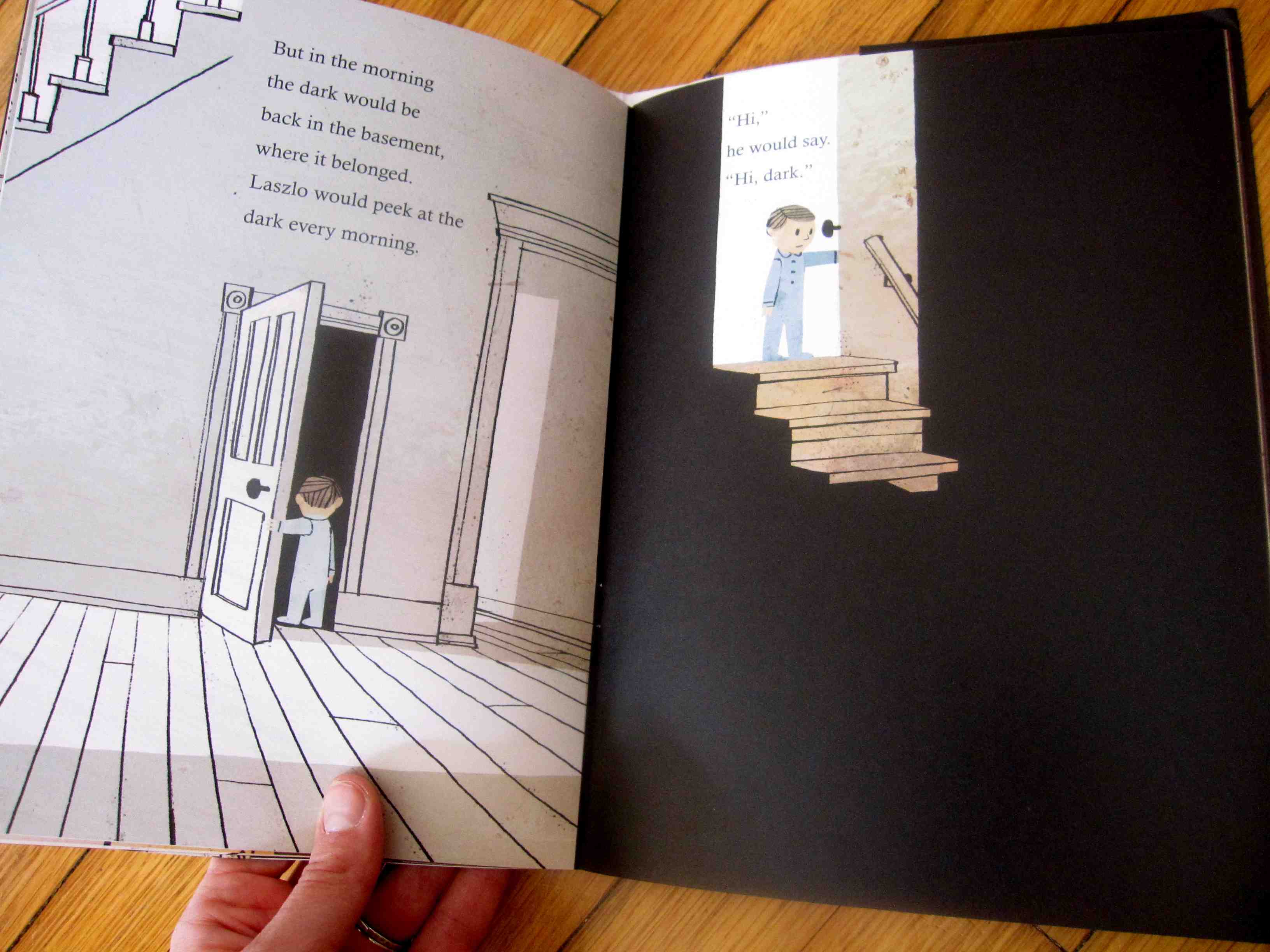
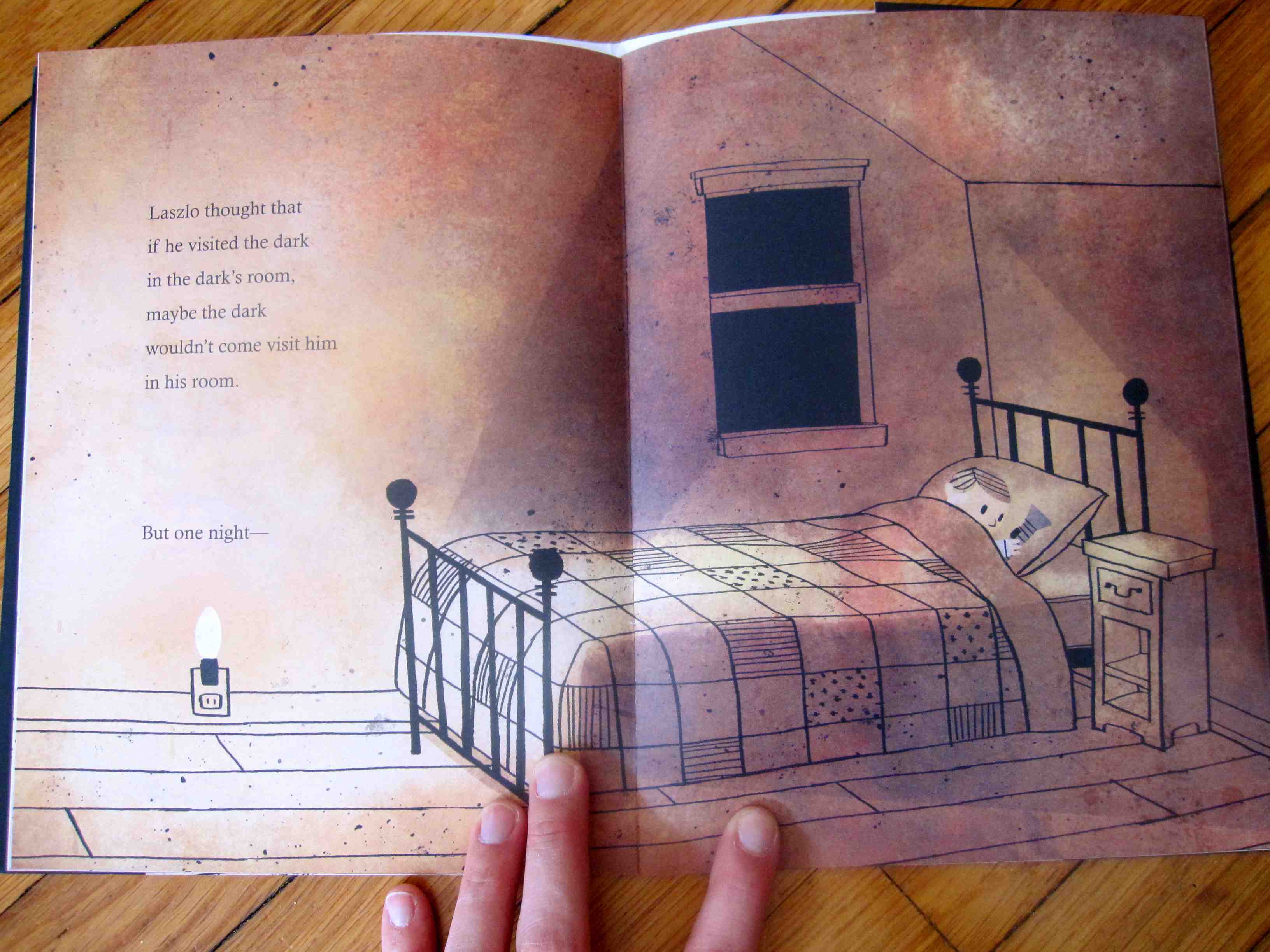
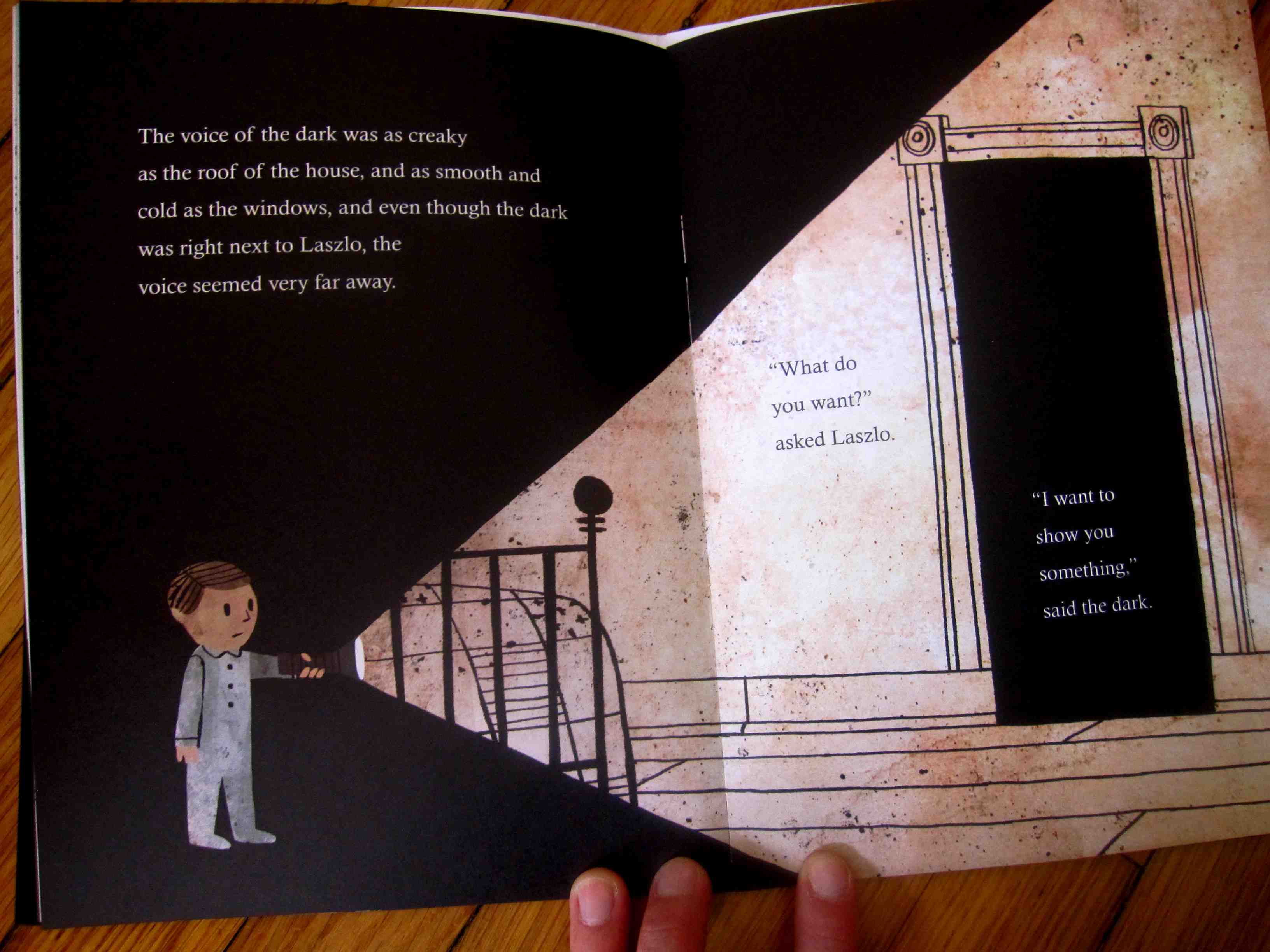
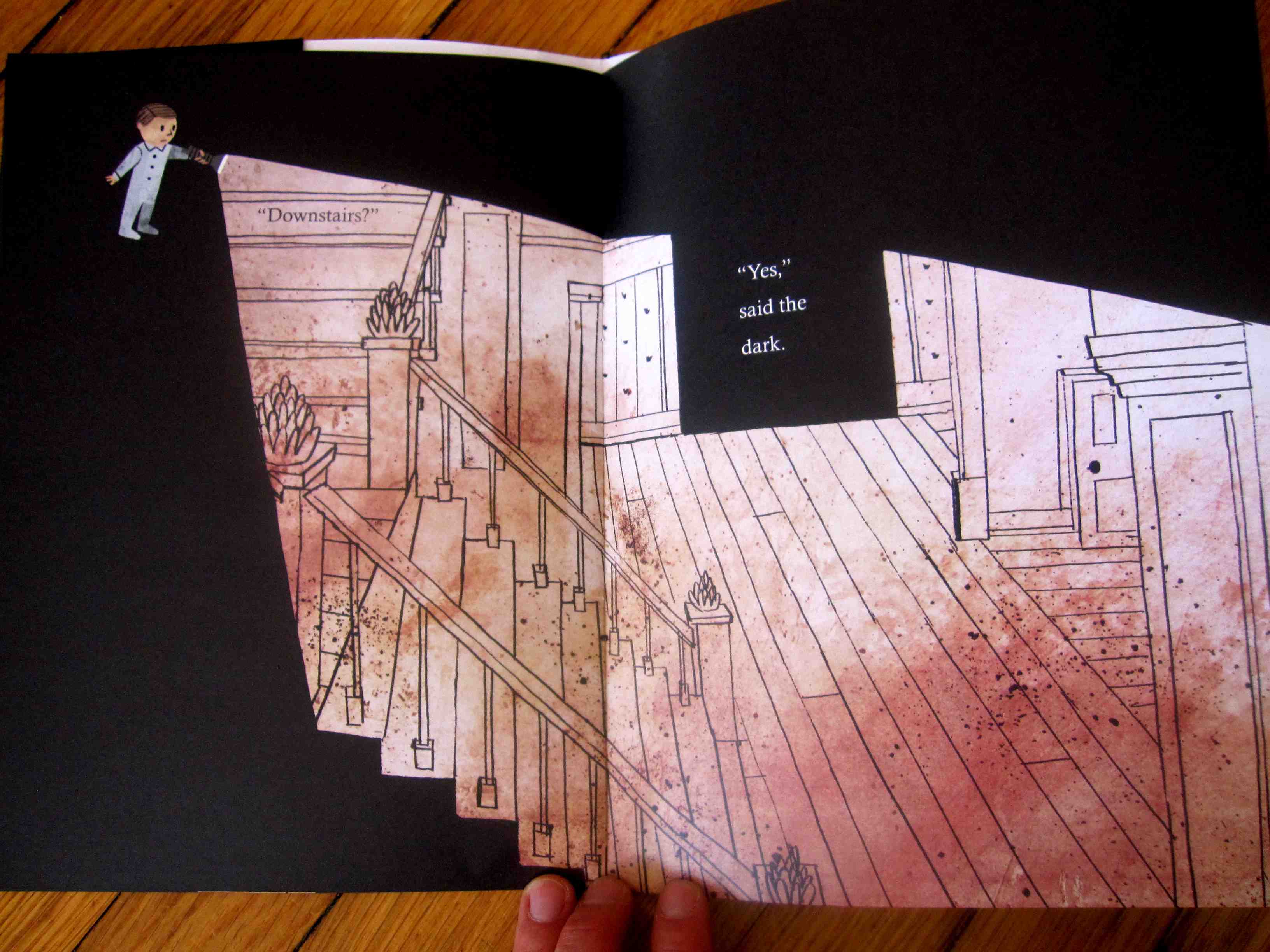
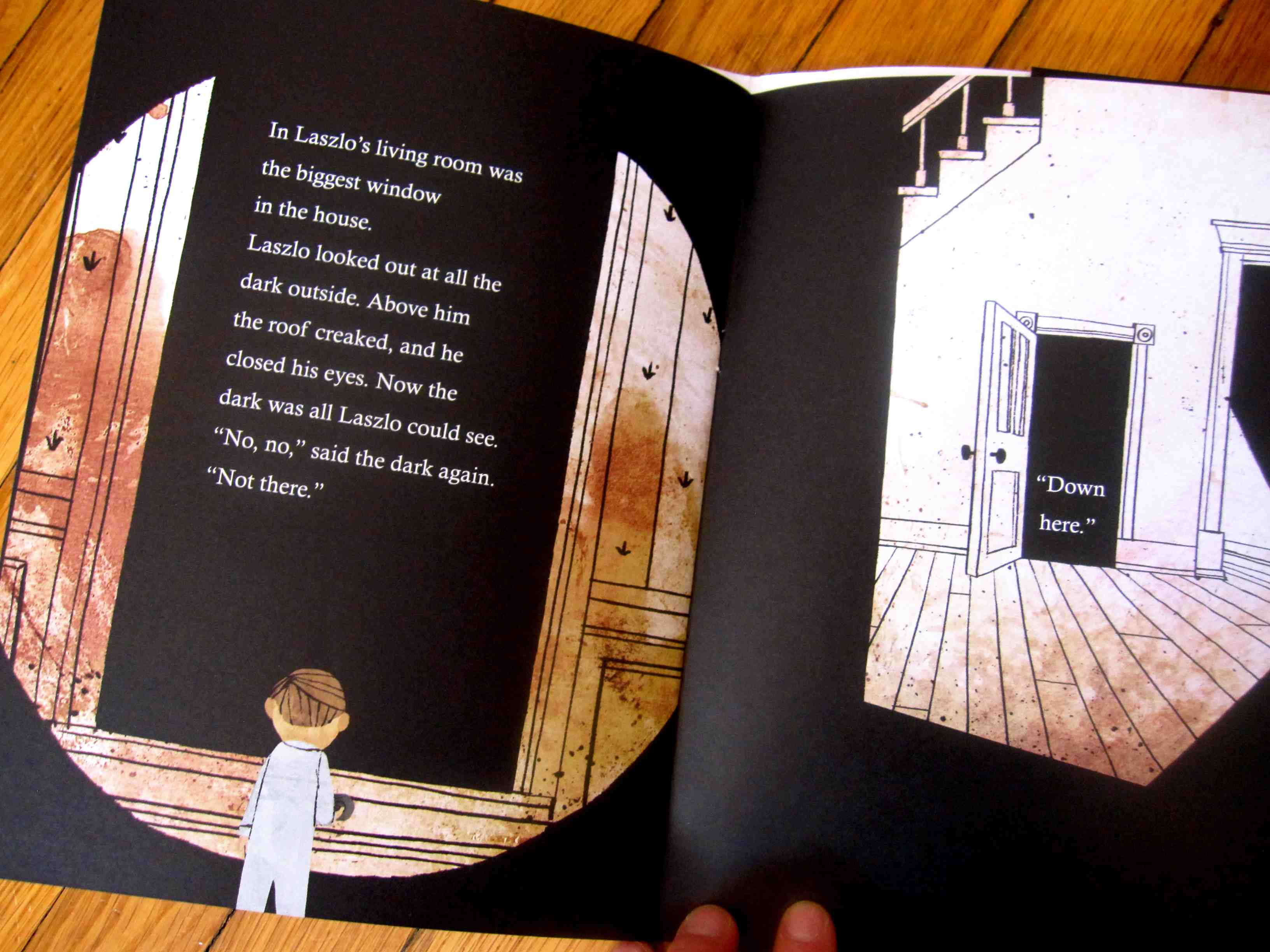
Children and adults will be won over by this eerie, spectacular book. For those who cringe at the thought of basements and dark places, they may learn that there really isn’t anything to be afraid of and might even take comfort in The Dark.
Don’t take my word for it: Review from Fuse 8 Production.
Trailer:
Extras: The official website of Lemony Snicket and the site for his new middle grade fiction book All the Wrong Questions.
Website and blog home for Jon Klassen
Helpful tips on how kids can overcome their fears of the dark.
Source of book reviewed: Galley provided by Little, Brown Books for Young Readers.

17
Mar
Review: Hoop Genius
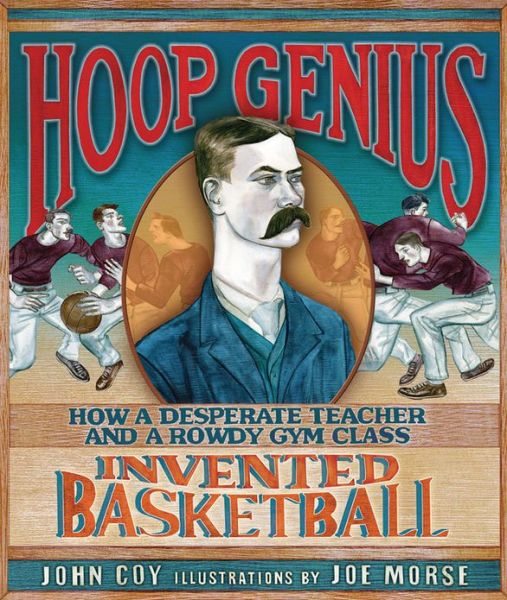
Hoop Genius: how a Desperate Teacher and a Rowdy Gym Class Invented Basketball
by John Coy, illustrated by Joe Morse
Find it at: Your library | Amazon | Indiebound
Published: Carolrhoda Books (January 1, 2013)
Recommended reading age: 5 & up
In a nutshell: Today is Selection Sunday, the official kick-off of the March Madness basketball craze. It’s an exciting time of the year for all ages and also an excellent opportunity to think back on when it all began. Hoop Genius: How a Desperate Teacher and a Rowdy Gym Class Invented Basketball is a look inside the very early beginnings of basketball, featuring it’s inventor, James Naismith.
In 1891, James Naismith took over teaching a very rowdy gym glass that had forced previous instructors to quit. To engage the class who was bored by calisthenic activities, he tried his hand at getting them to play indoor football, soccer, and lacrosse with no success. Naismith almost gave up, but he then imagined a game he used to play when he was a boy and how it could be modified so that it was an active game off the ground with two goals. Using two peach baskets and a soccer ball, the classes’ attention was demanded. They couldn’t get enough of Naismith’s new game, and so the evolution of basketball was set into motion.
Around Lawrence, Kansas, most kids grow up learning who James Naismith was not because he is the inventor of basketball, but because he was the founder of University of Kansas basketball. So, I’m fairly confident that this book will be hit around town, but I also see it’s appeal extending beyond basketball and sports fans. James Naismith’s story is about innovation. Taking a problem that no one else wants to deal with, being determined, and brainstorming a solution – a solution that ends up fostering enthusiasm within his gym class, and today has turned into one of the most celebrated athletic games of all time. The story is fairly short with a message all young readers will enjoy, and illustrations that are sure to capture attention.
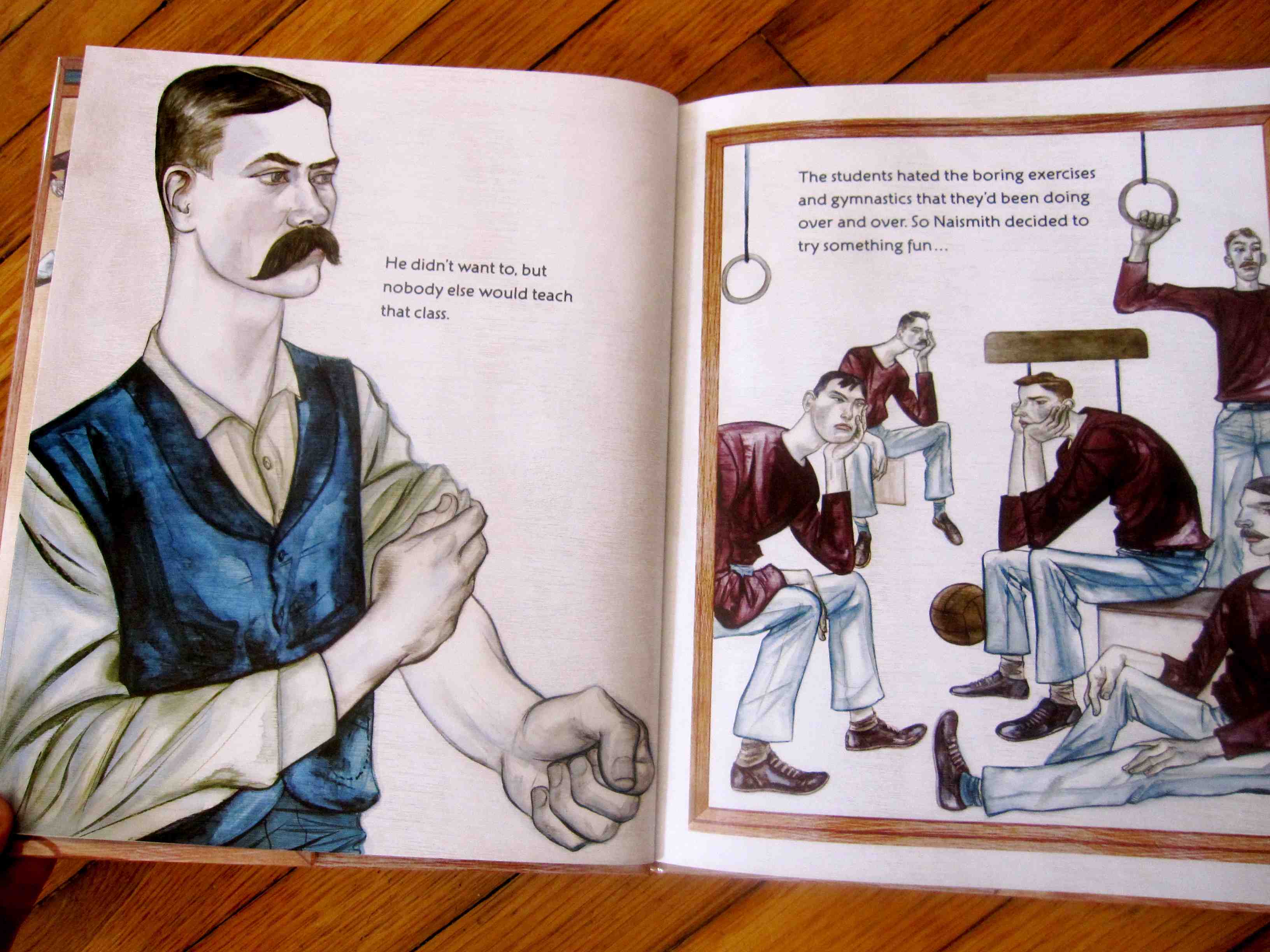
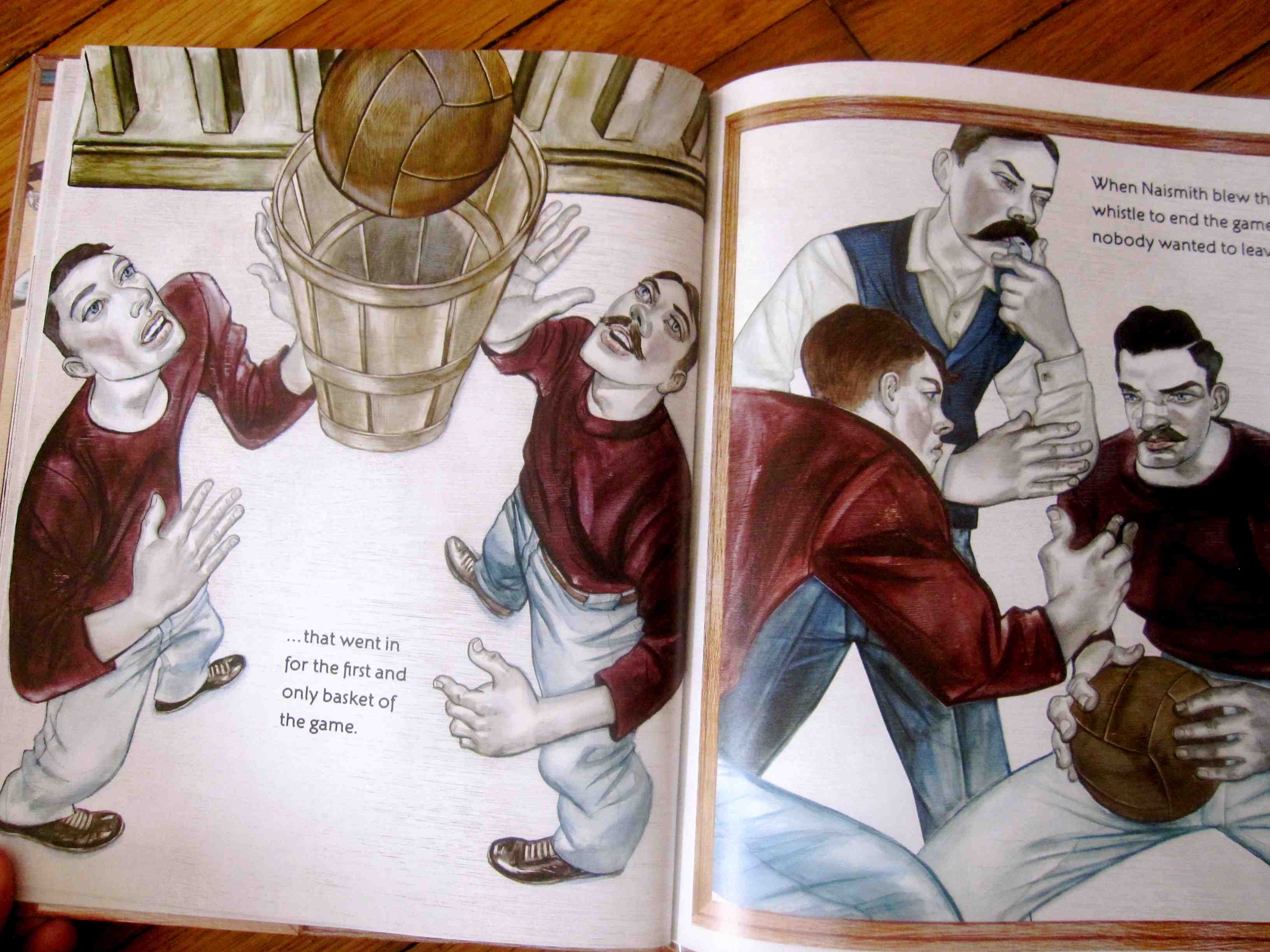
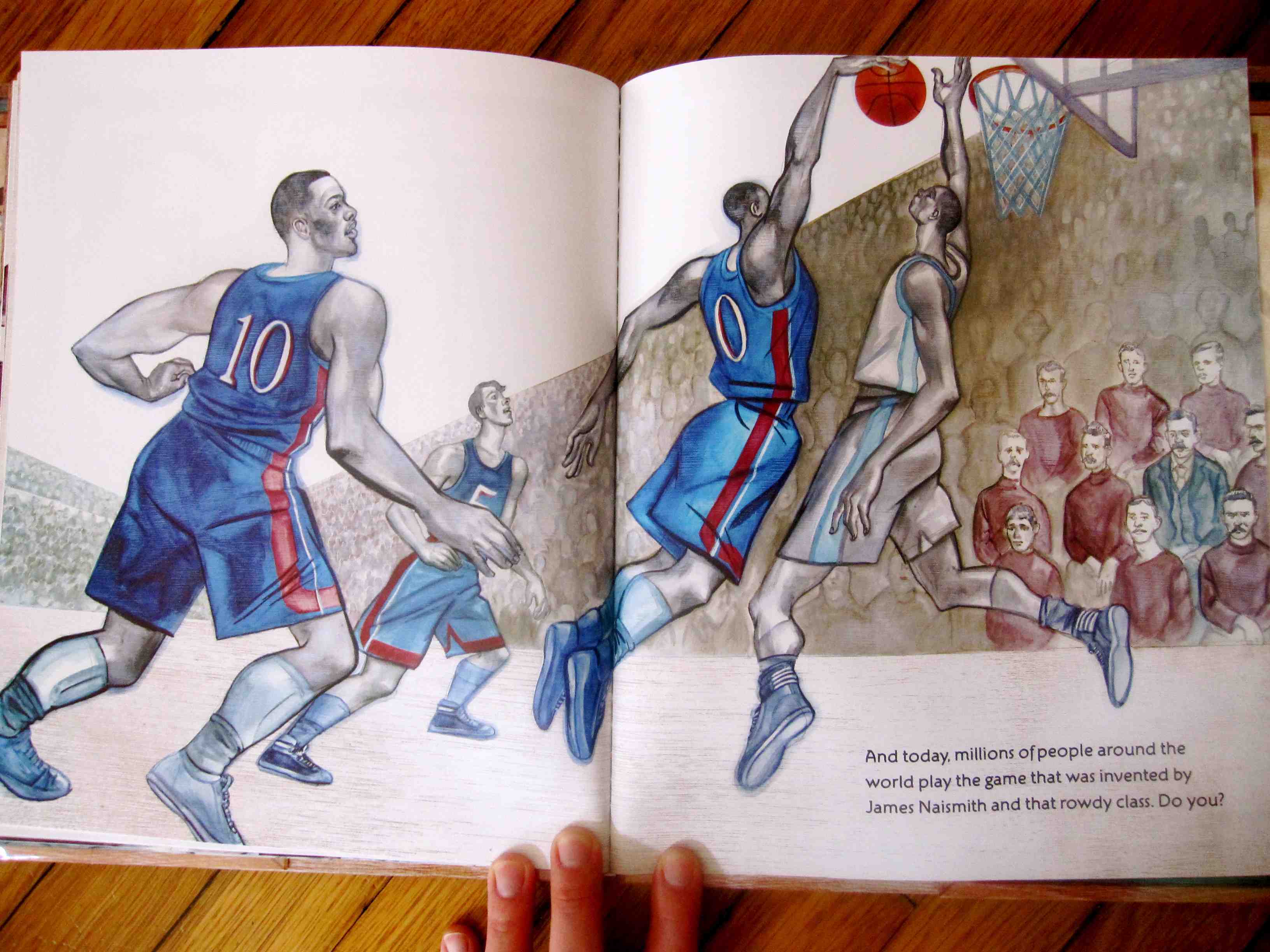
My favorite pagespread is the last… Obviously because it is a nod to James Naismith’s heritage at KU with the basketball players in their Jayhawk crimson and blue. Nicely done, Joe Morse. Very nicely done.
Don’t take my word for it: review from 100 Scope Notes
Extras: More info about author John Coy as well as artwork by illustrator Joe Morse.
If you’re in the Lawrence area, Watkins Museum Community Museum of History has an excellent exhibit More Than A Game: Basketball and Community
You can also learn more about James Naismith from the Kansas Historical Foundation.
Interesting tidbit: To this day, James Naismith was the only KU basketball coach ever to have a losing record. (via Visit Lawrence).
Source of book reviewed: My local library!
14
Mar
Review: Edgar Allan Poe’s Pie
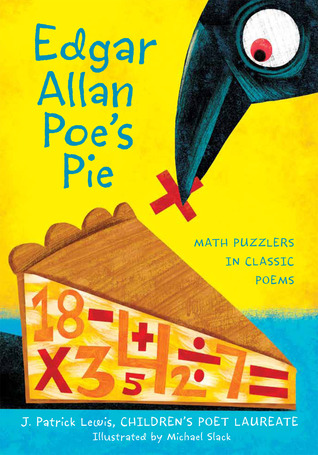
Edgar Allan Poe’s Pie: Math Puzzlers in Classic Poems
by J. Patrick Lewis, illustrated by Michael Slack
Find it at: Your library | Amazon | Indiebound
Published: Harcourt Children’s Books (April 3, 2012)
Recommended reading age: 7 & up
In a nutshell: Today is Pi Day, which means it’s Pie Day in our neck of the woods! It’s also the perfect excuse to review Edgar Allan Poe’s Pie: Math Puzzlers in Classic Poems by Children’s Poet Laureate J. Patrick Lewis. Edgar Allan Poe’s Pie is a clever collection of fifteen poems inspired by classic poems, but with a twist of math added to the mix. Combining both verse and mathematics, together the poems are word puzzles asking for answers (provided in small print upside-down on the bottom of the page). What fun!
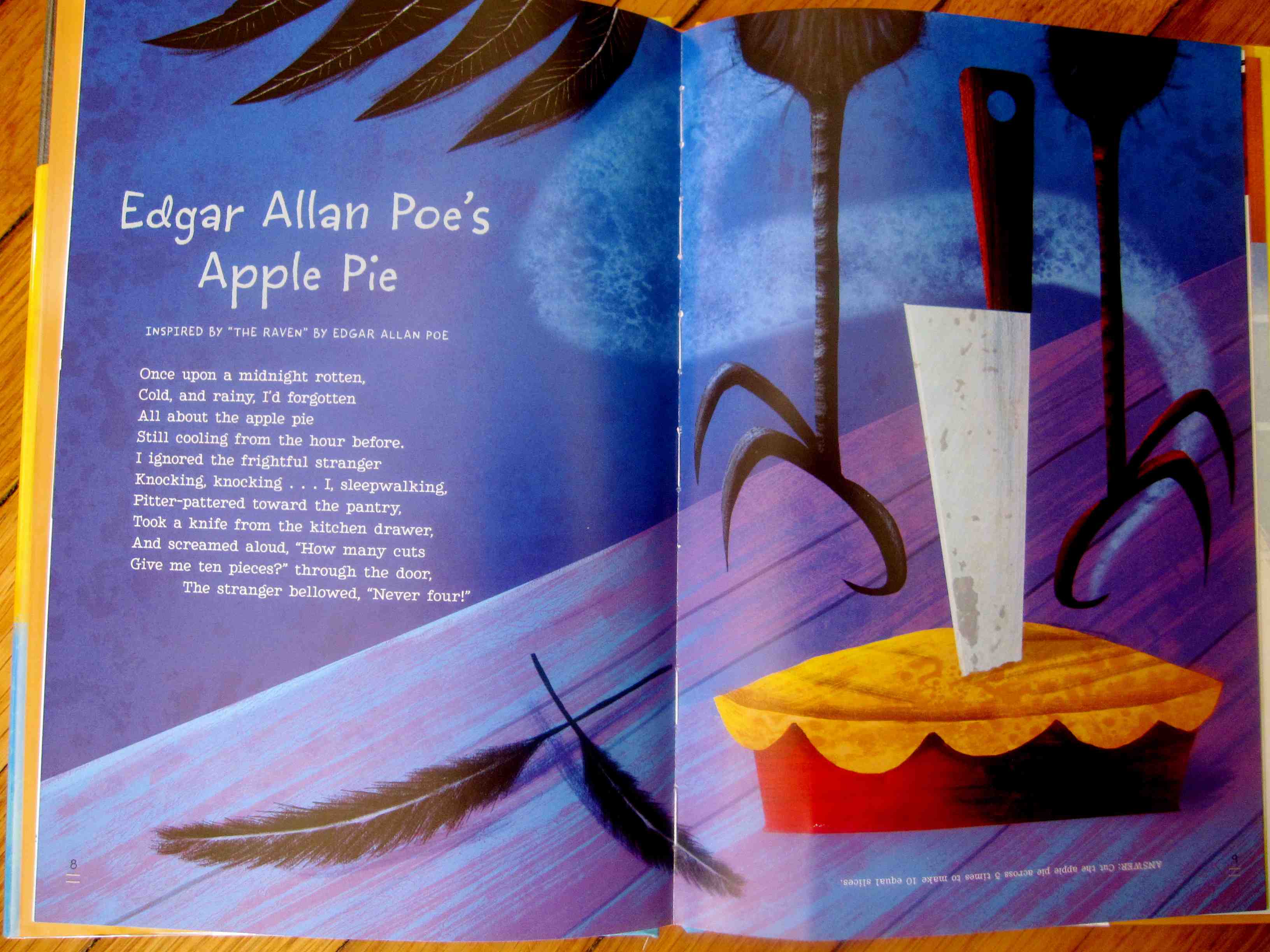
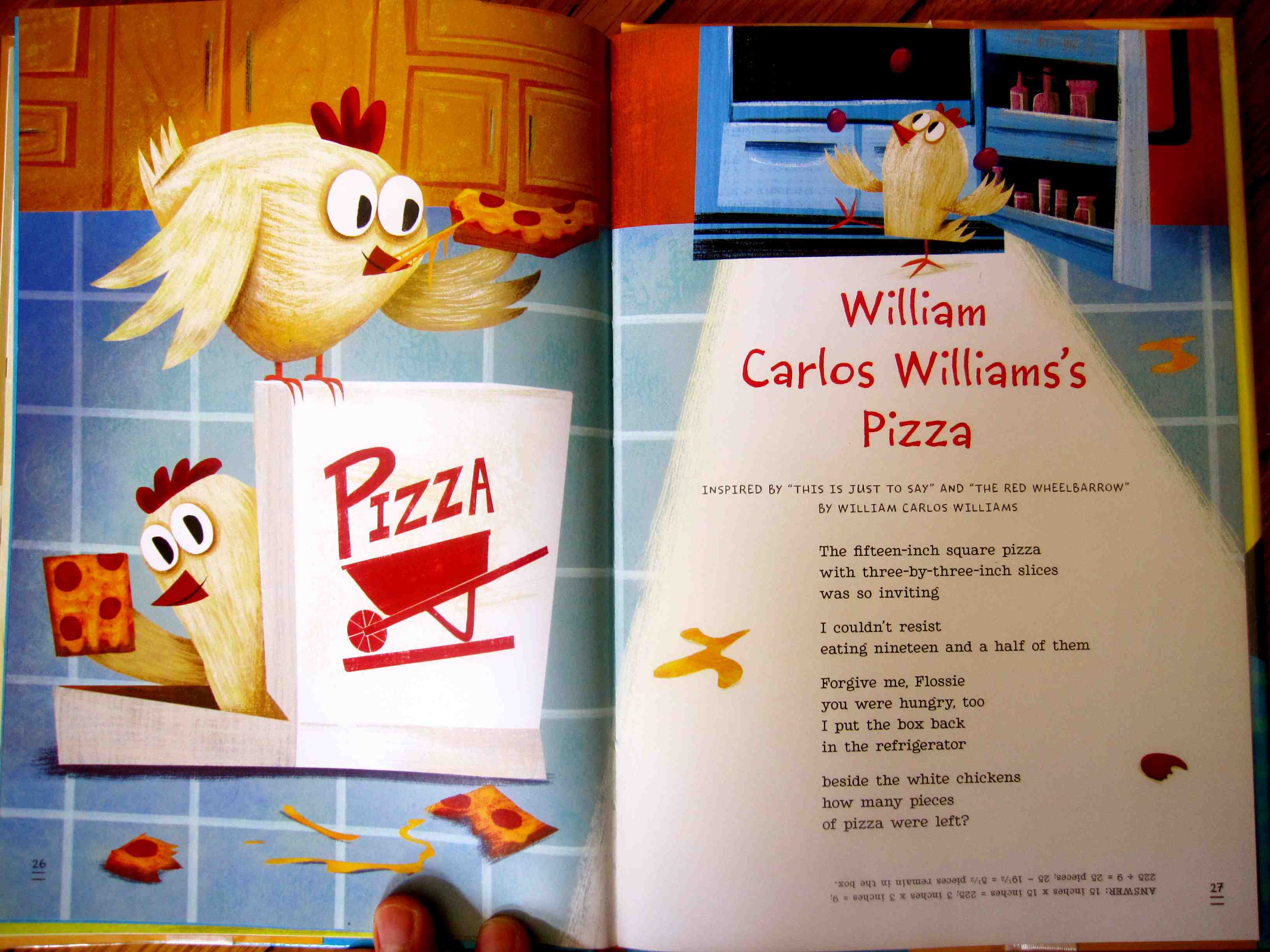
“Edgar Allan Poe’s Apple Pie” (Inspired by “The Raven” by Edgar Allan Poe) Once upon a midnight rotten, Cold and rainy, I’d forgotten All about the apple pie Still Cooling from the hour before. I ignored the frightful stranger Knocking, knocking . . . I, sleepwalking, Pitter-pattered toward the pantry, Took a knife from the kitchen drawer, And screamed aloud, “How many cuts Give me ten pieces?” through the door, The stranger bellowed, “Never four!”
The answer to the puzzle is “cut the apple pie across 5 times to make 10 equal slices”. Walt Whitman, Emily Dickinson, Langston Hughes, and other various wordsmiths are represented providing the reader the opportunity to tap into poetry by the masters and tests their math skills to boot.
And check out these colorful and entertaining illustrations by Michael Slack…
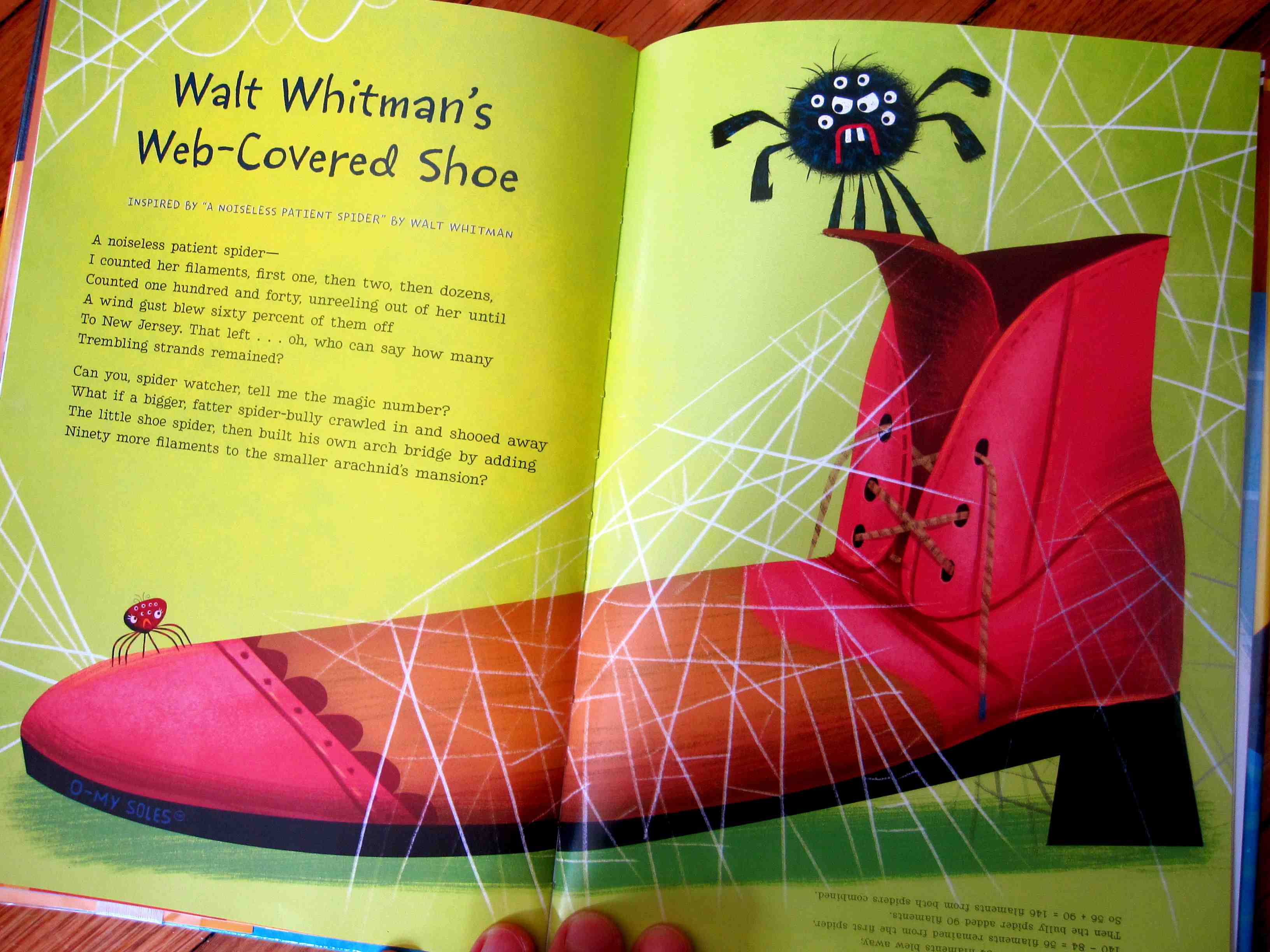
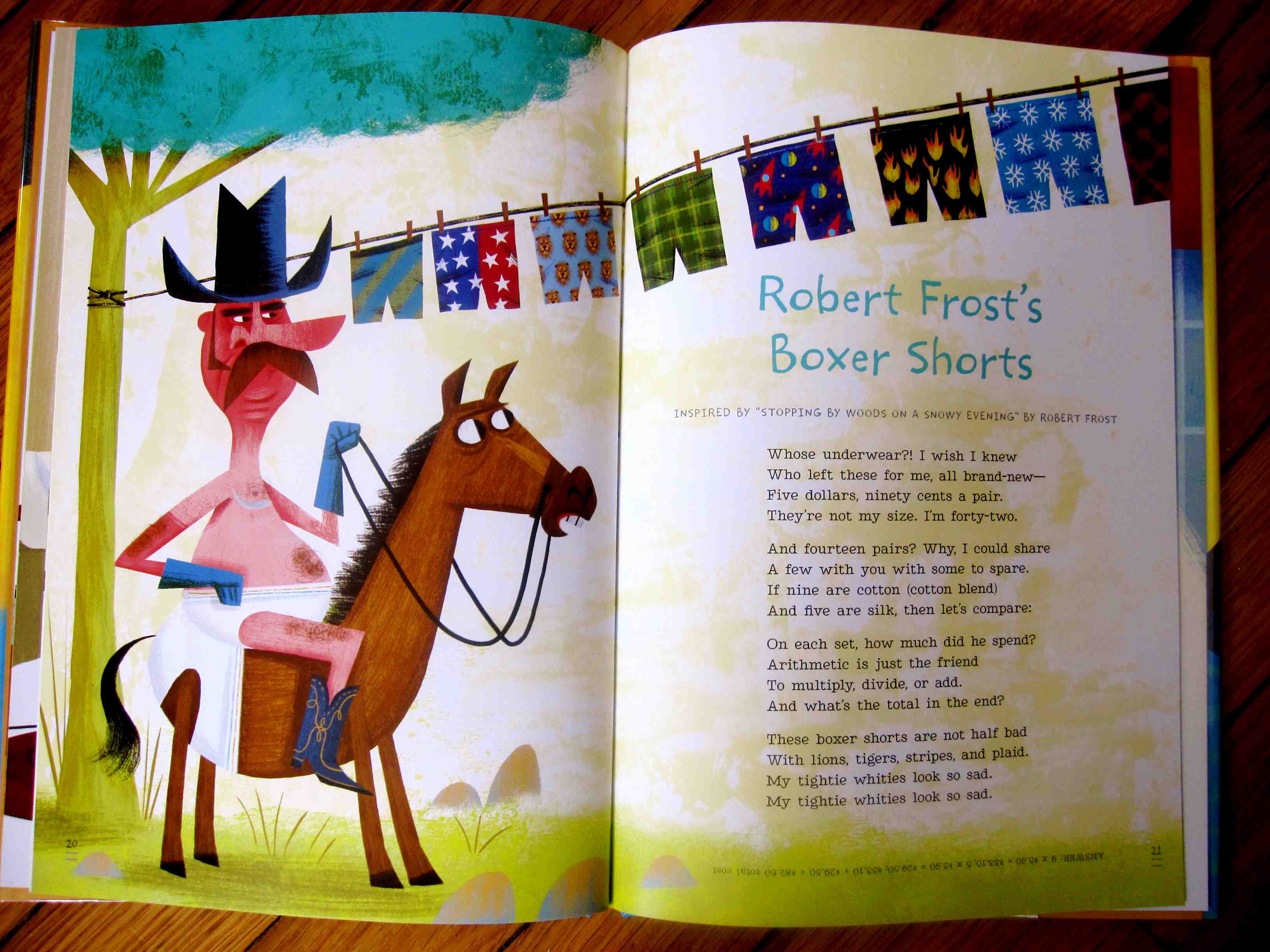
When I was a kid I hated math. Let’s be real… I still don’t enjoy math. But I’ve always taken to poetry and a good brainteaser. Edgar Allan Poe’s Pie would have been the excellent remedy for my lack of interest in math as a child. It’s for math lovers, poetry lovers, and those hesitant in either category.
Don’t take my word for it: “…it’s sacrilege of the best kind. Kids will have fun reading and solving these. Hopefully some smart teachers will share the originals with kids and maybe even have them try some mathematical parodies of their own.” – review from The Miss Rumphius Effect
Extras: Visit these websites for more information on author J. Patrick Lewis and illustrator Michael Slack.
Source of book reviewed: My local library!
12
Mar
Review: How to Be a Cat
How to Be a Cat
by Nikki McClure
Find it at: Your library | Amazon | Indiebound
Published: Abrams Appleseed (March 12, 2013)
Recommended reading age: 0-5
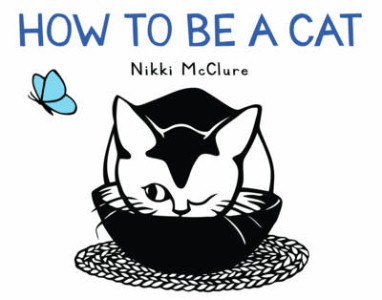
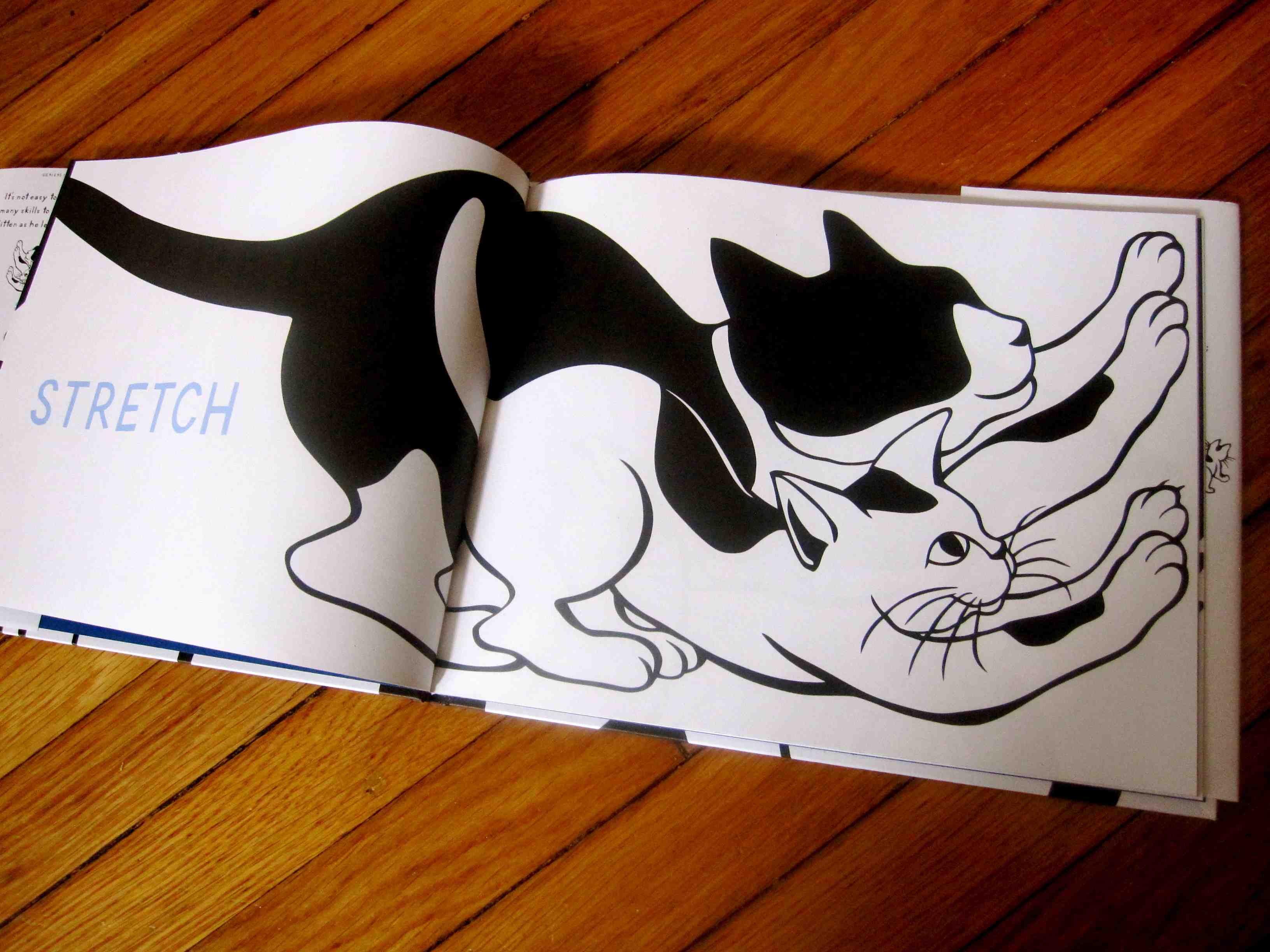
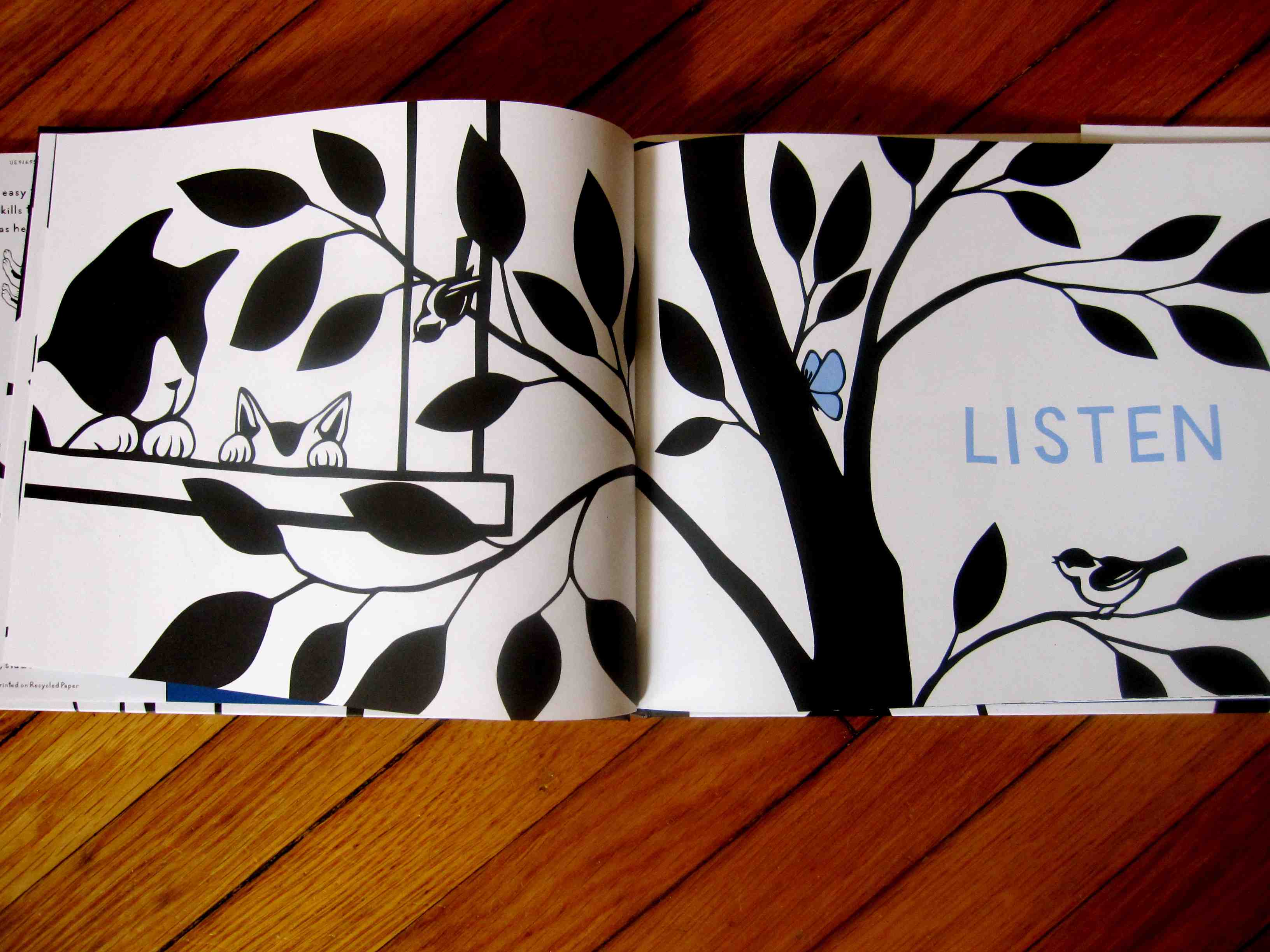
In a nutshell: As a long time fan of cut-paper artist Nikki McClure, and as lifetime cat-lover, I’m extremely excited about the release of her latest book, How to Be a Cat. Black and white images with a subtle appearance of a sky blue butterfly, How to Be a Cat follows one kitten’s exploration in cat behavior guided by an adult cat. With large print words describing each action such as “Stretch”, “Listen”, “Explore”, the reader might feel so inclined to try their hand at being a cat.
There’s something very pure and gentle about Nikki McClure’s cut-paper illustrations that I’ve always been drawn to, but even more so since I’ve become a mother. Themes of parenthood, growth, and nature ring true in all her children’s books, Mama, Is it Summer Yet?, Apple, All in a Day, To Market, To Market; all beautiful stories my daughter L and I enjoy to sharing together over and over again.
With the black and white contrast favorable for stimulating a baby’s vision, and short, one-word-to-one-page pacing, How to Be a Cat is ideal for babies and toddlers both. I’m hoping in the not too distant future the publisher decides to make this book available in a board book format as it would be a fitting read for even the smallest of readers.
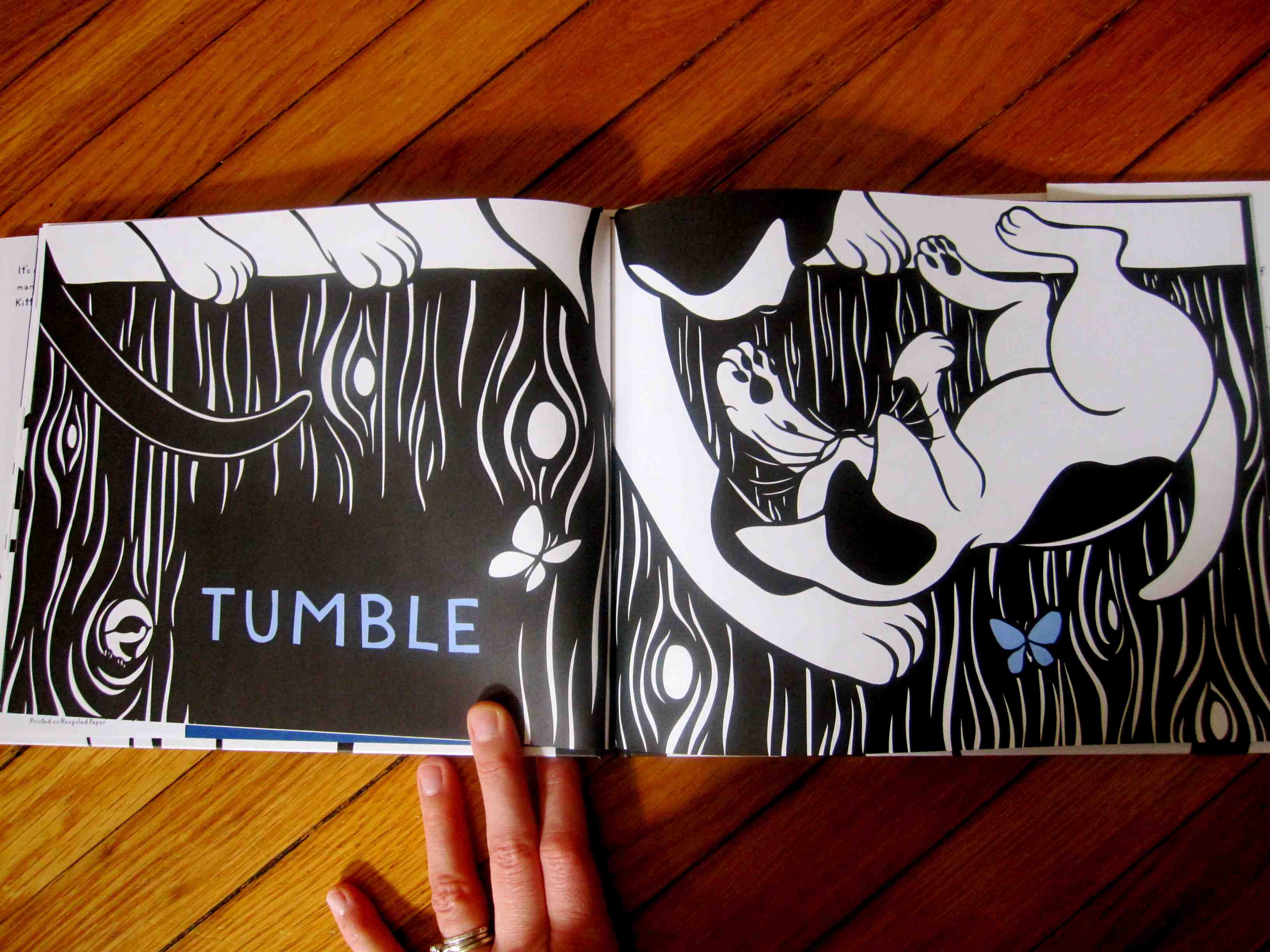
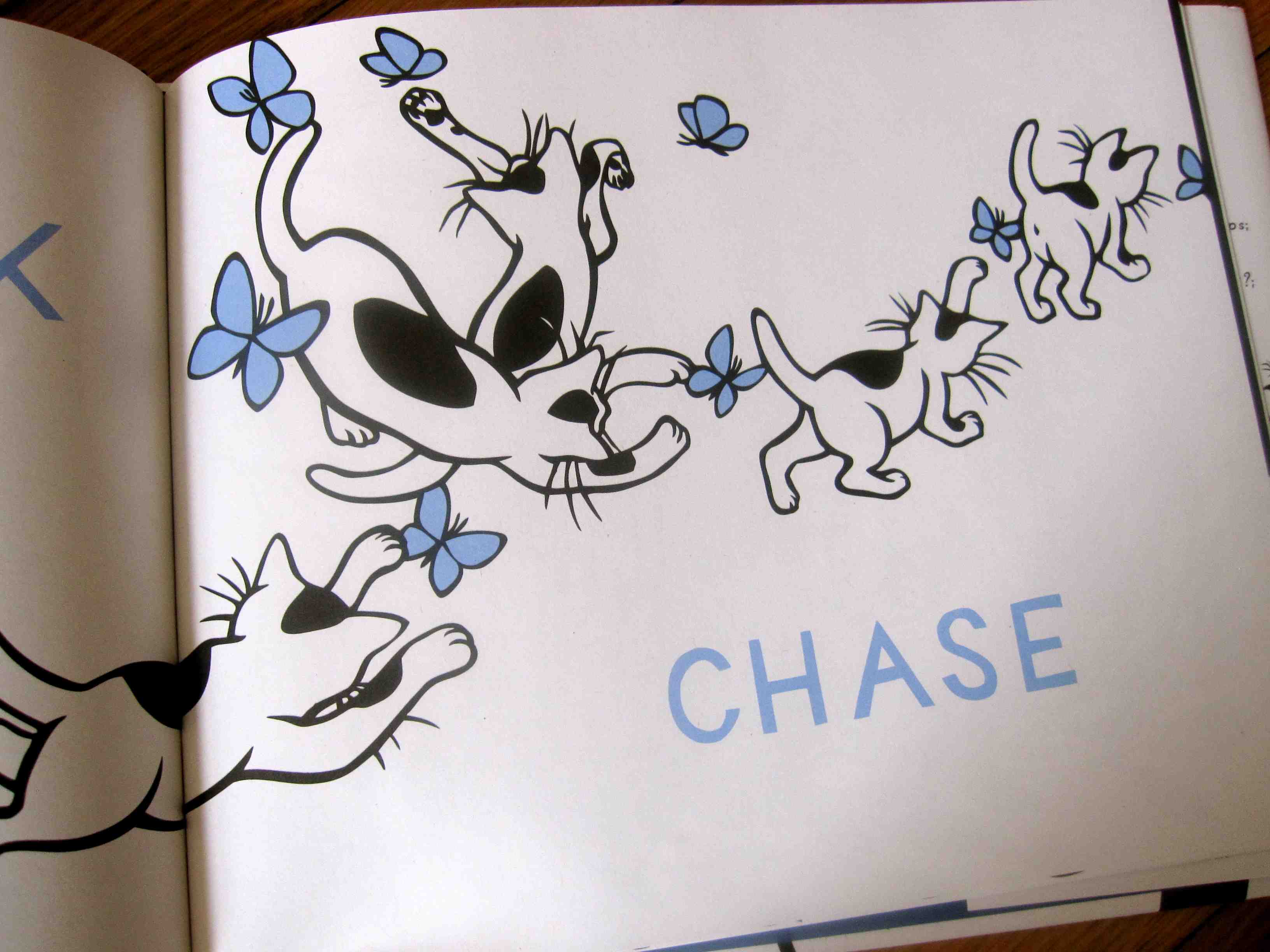
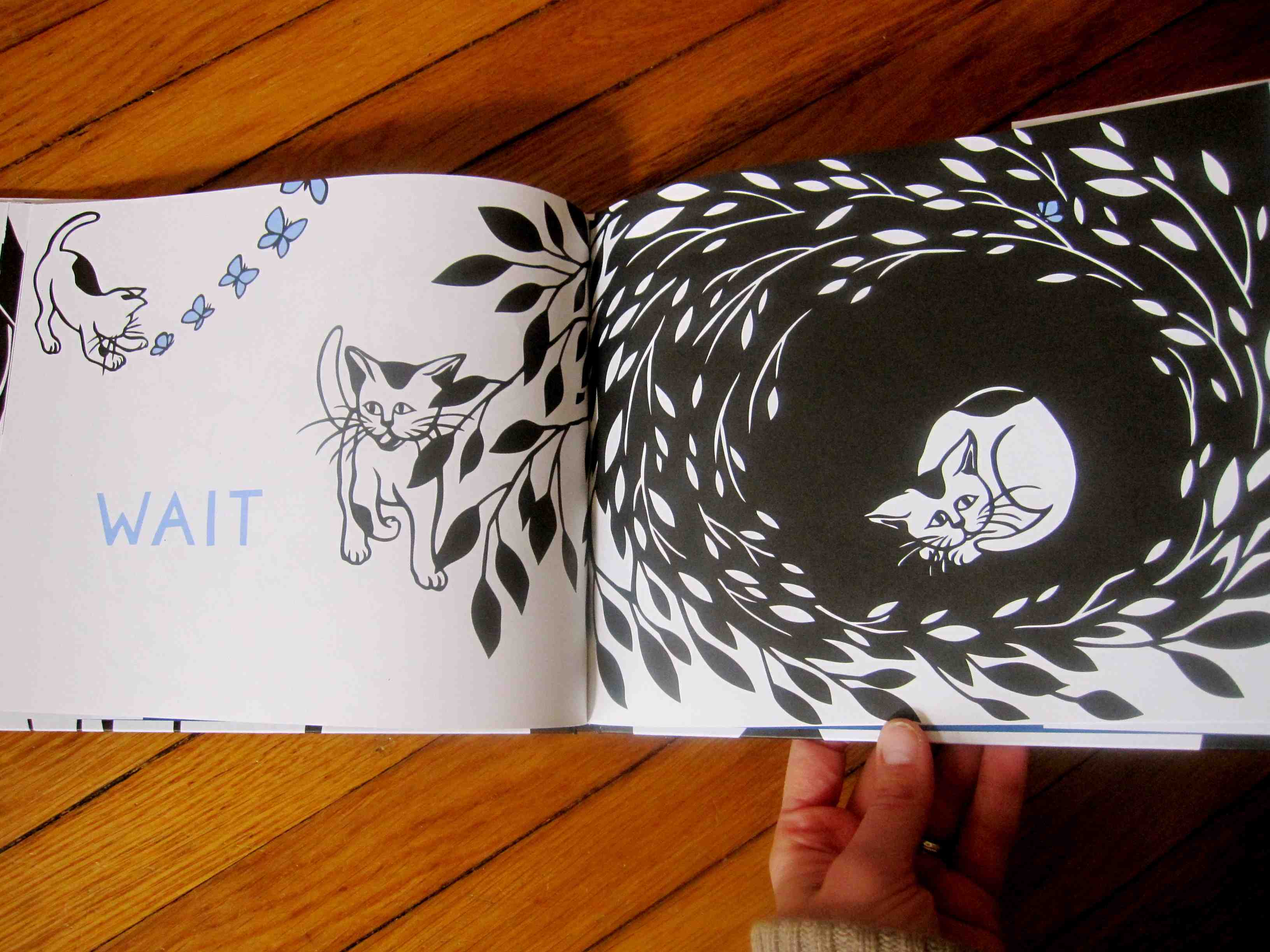
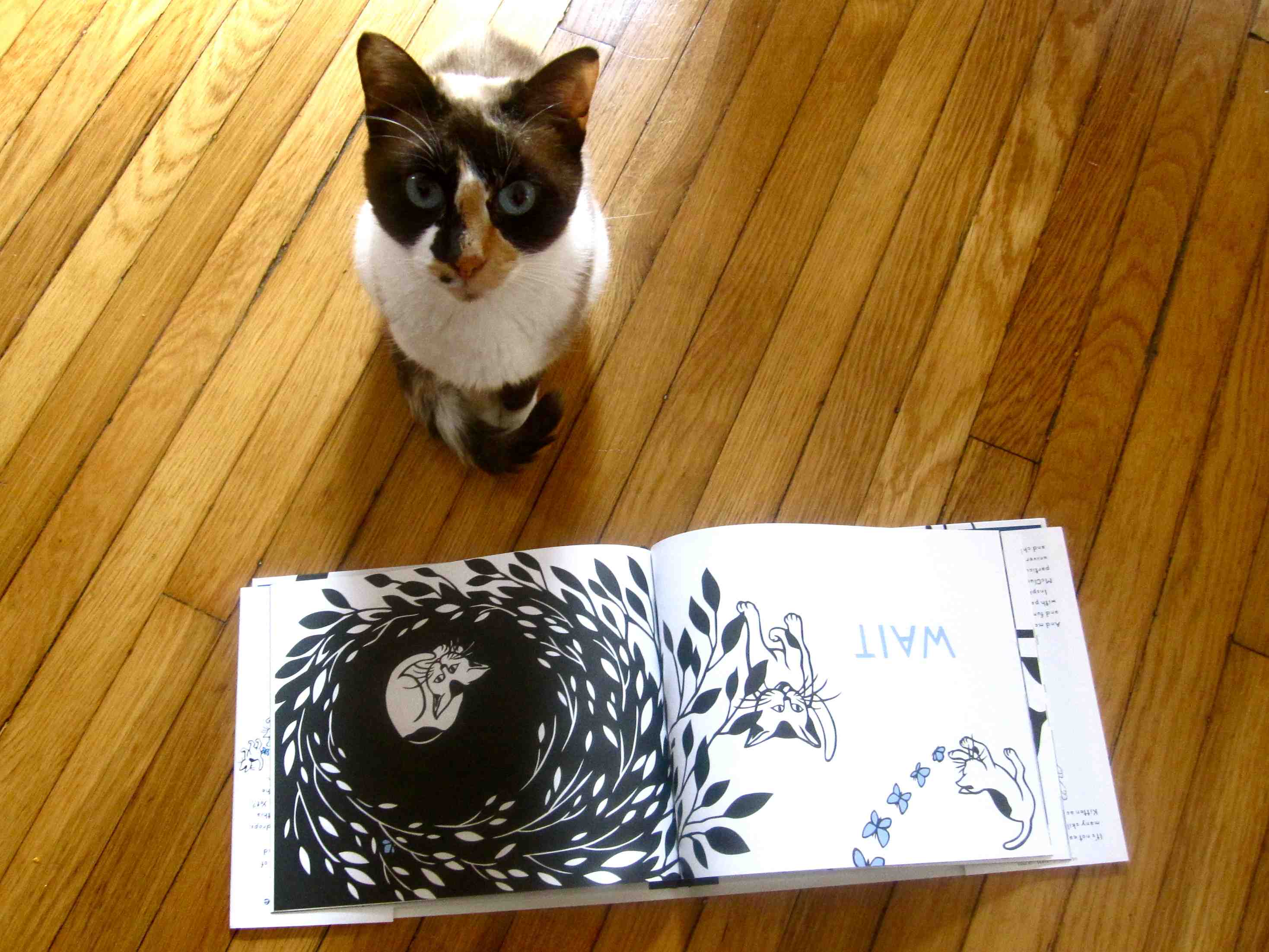
All readers in our house, even the one’s with four legs, adore this sweet and loving story about How to Be a Cat.
Don’t take my word for it: Starred review from Kirkus Reviews.
Extras: Take a peak inside the home of Nikki McClure in “A Visit with Nikki McClure” on the Abrams Blog. The post has a few sneak peak pictures of sketches for her next book!
Enjoy Nikki McClure’s artwork? You can purchase prints and notecards of her work from Buy Olympia.
For more on Nikki McClure visit her website.
Source of book reviewed: Purchased at ALA Midwinter.
11
Mar
Review: Lucky Ducklings
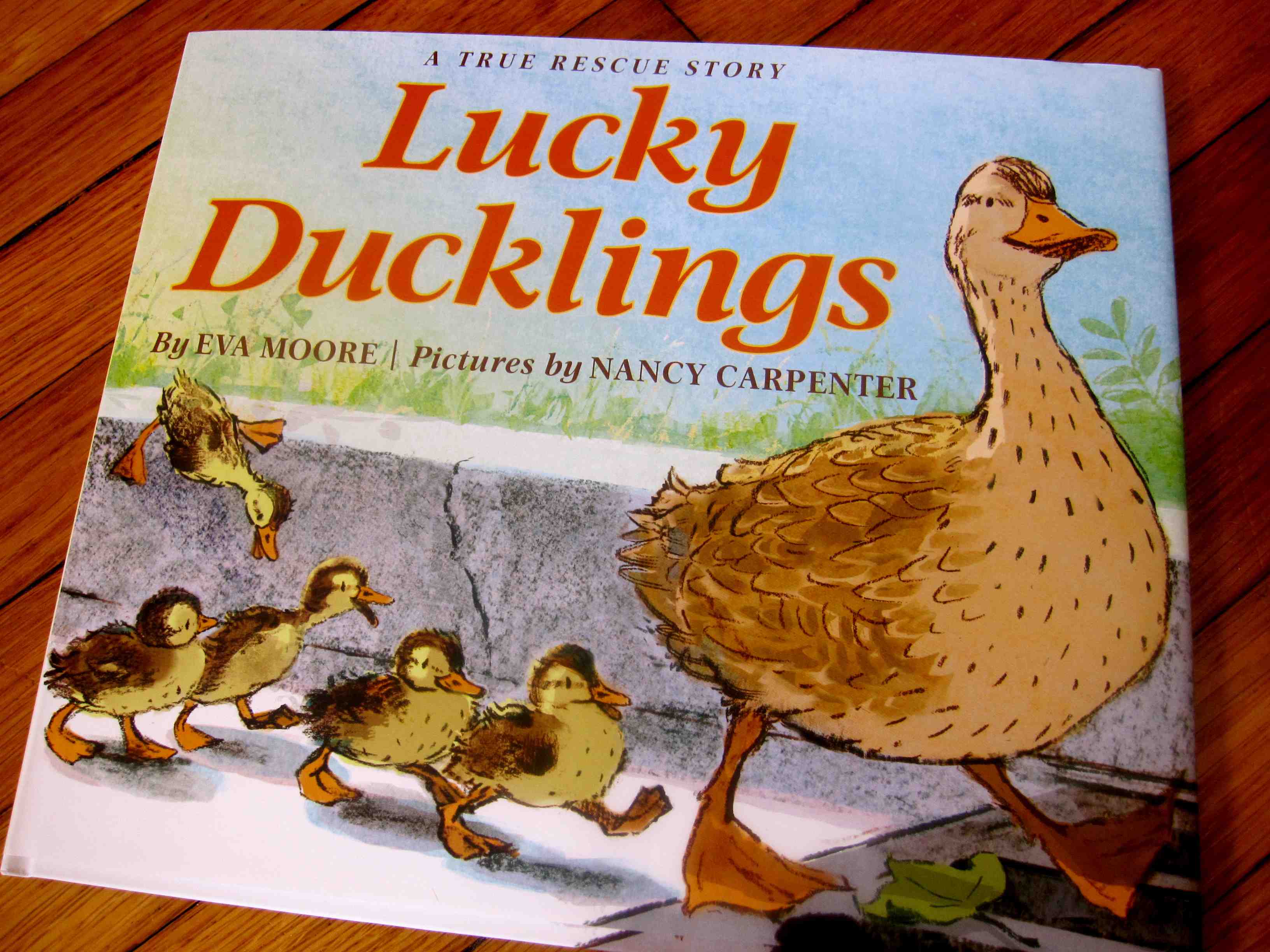
Lucky Ducklings
by Eva Moore, illustrated by Nancy Carpenter
Find it at: Your library | Amazon | Indiebound
Published: Orchard Books, imprint of Scholastic (February 1, 2013)
Recommended reading age: 3 & up
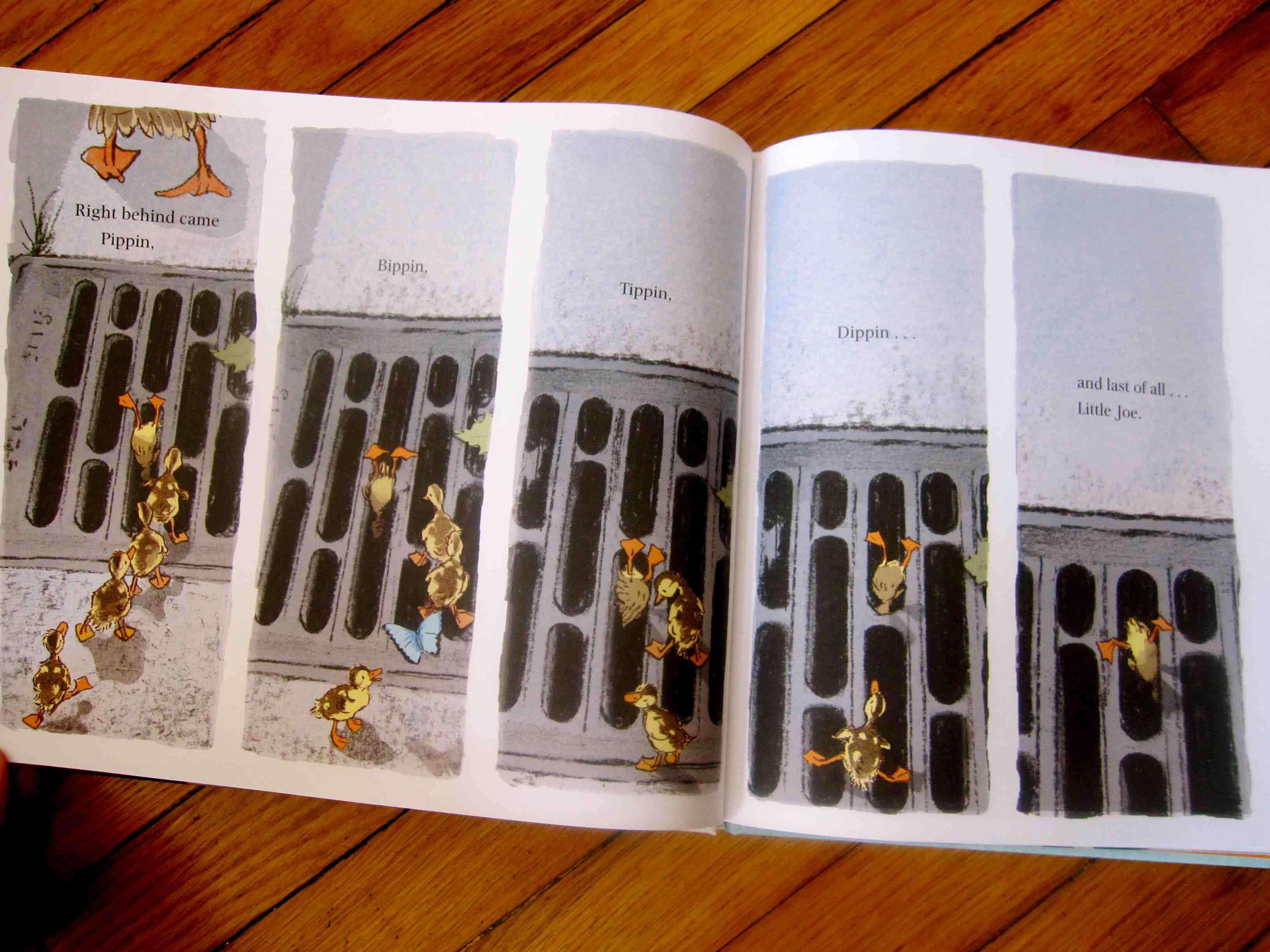
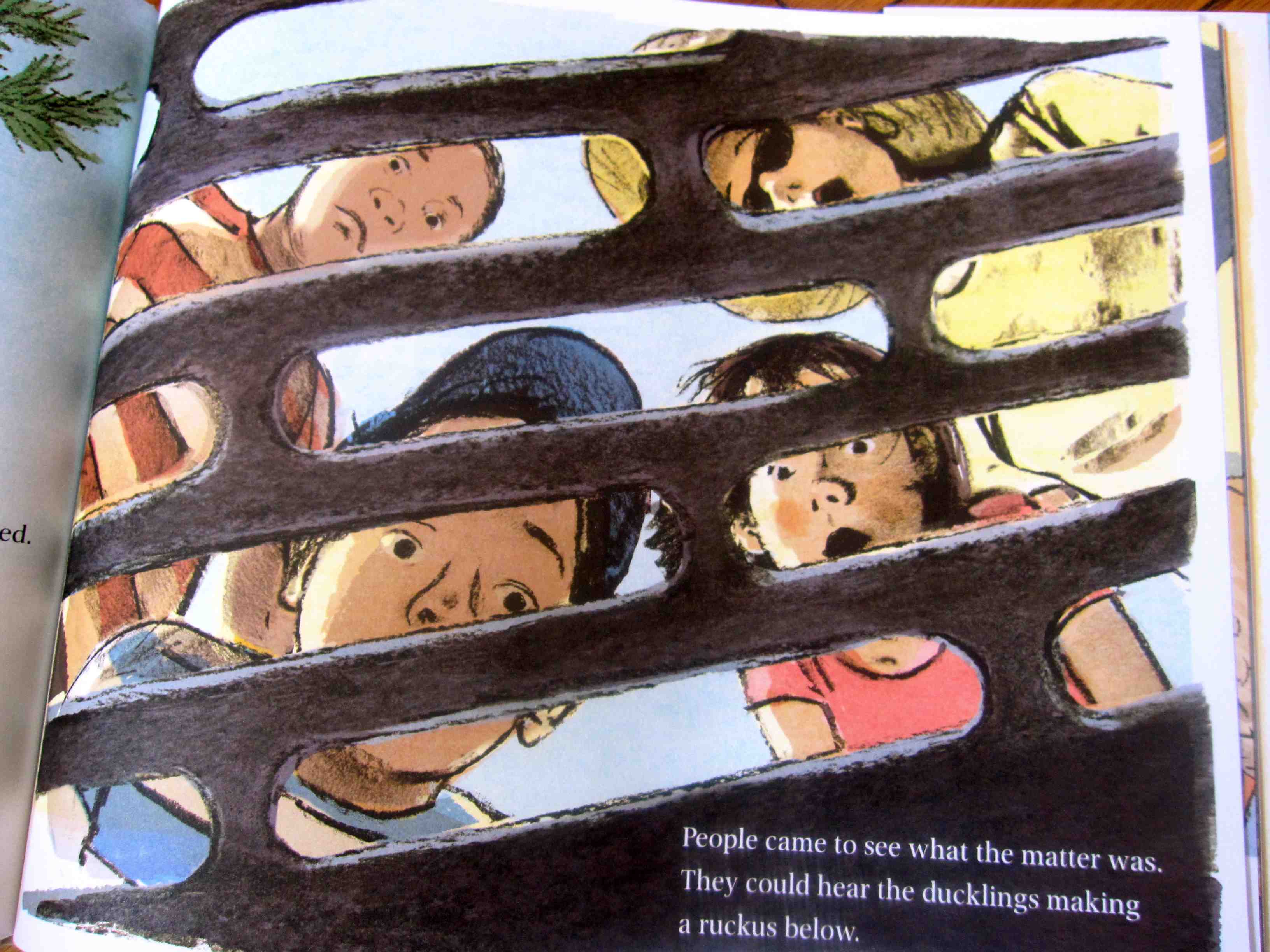
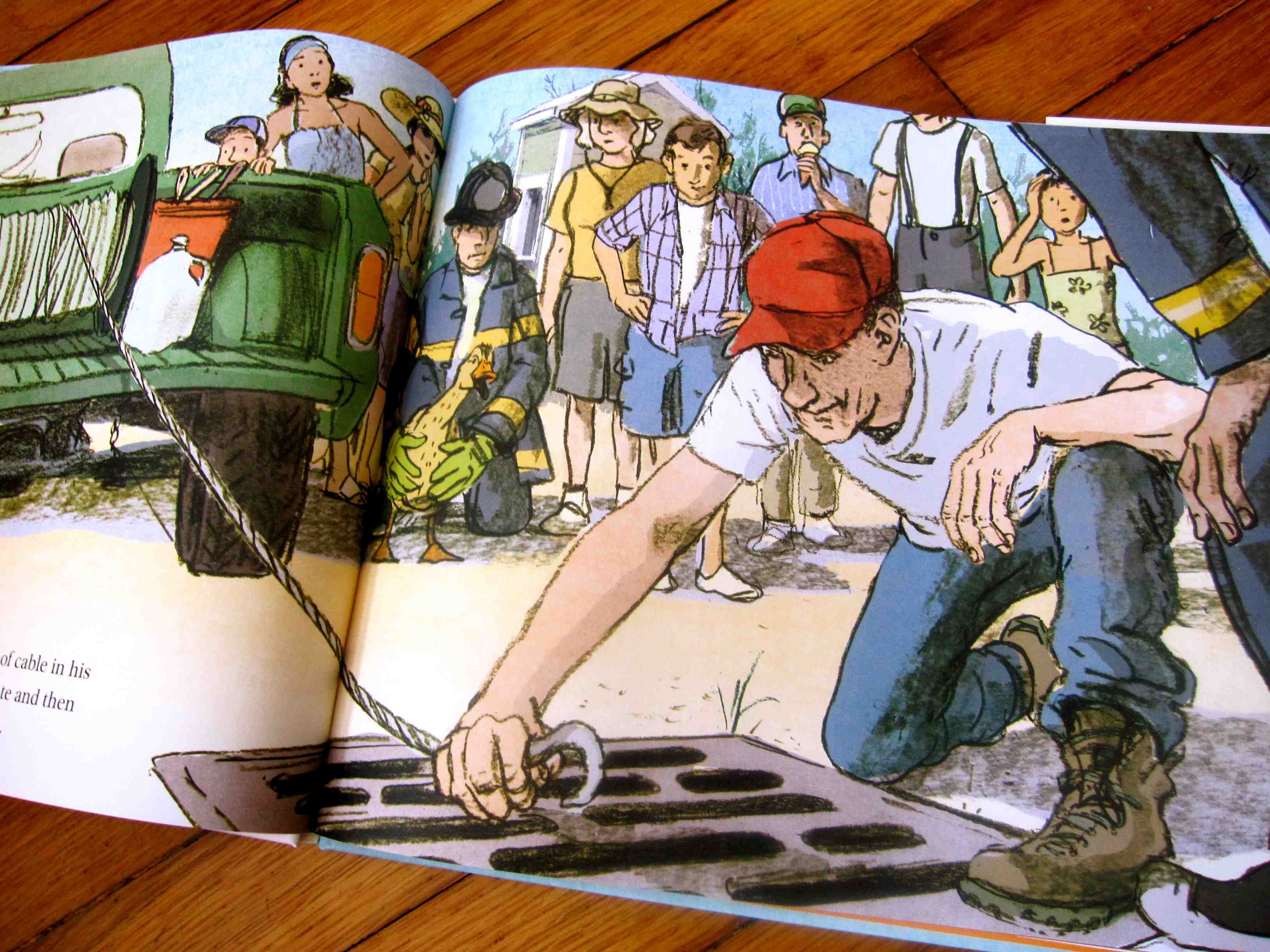
In a nutshell: It’s Make Way for Ducklings for a new generation. Lucky Ducklings is the true story about about five little ducklings who got stuck in a storm drain in Montauk, New York in June of 2000. One morning, Pippin, Bippin, Tippin, Dippin, Little Joe, and Mama Duck decide to go on a walk out of the park and into town. They have a bite to eat and are on their merry way until Mama Duck walks over a storm drain and her little ducklings follow her lead, but the storm drain openings are too large for the five ducklings and they fall in one by one. Someone saw what happened, called the fire department, and a crowd started to draw around the storm drain, but frantic Mama Duck wouldn’t let anyone close to her stranded babies. The Montauk Firemen Department arrived, and the rescue of the little ducklings got underway.
Falling into the storm drain could of been the end of the story for those ducklings, but it wasn’t. Someone was watching and called the fire department, and it was because of that ‘someone’ that those ducklings stood the chance of being saved. The support within the community saved those little waddling balls of fluffy cuteness. I know I’m not the only one in my library that is looking forward to reading this book during storytime, as it will surely be one that kids enjoy and respond to. Plus, it has a few valuable lessons to share. And not to mention, the illustrations by Nancy Carpenter are absolutely stunning.
It is an endearing story about community, a heroic rescue, and a mother’s love. And most importantly, to be aware of the life around you. You never know when you might be needed. A true story with a whole lot of heart, Lucky Ducklings is a whole lot of wonderful.
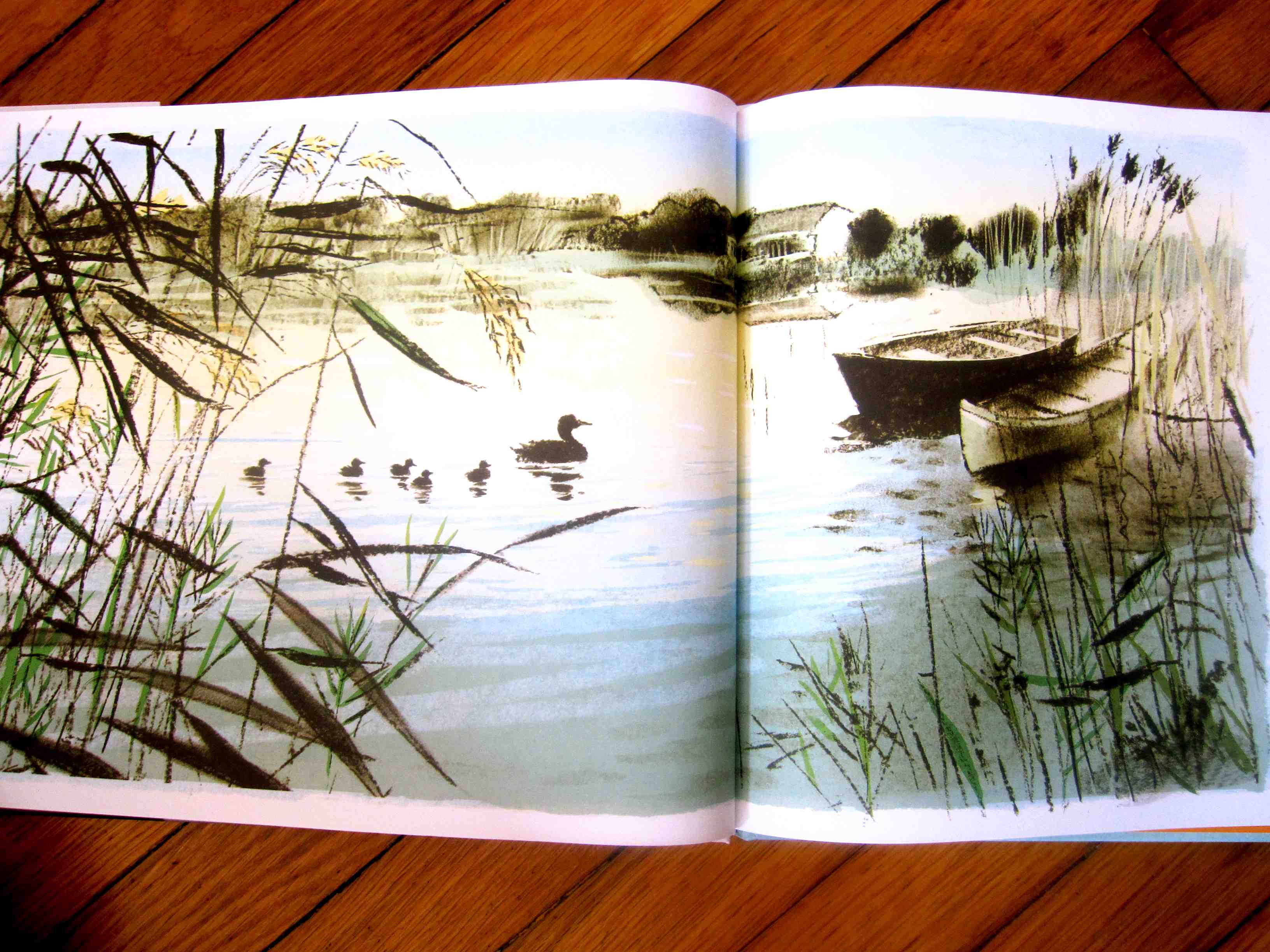
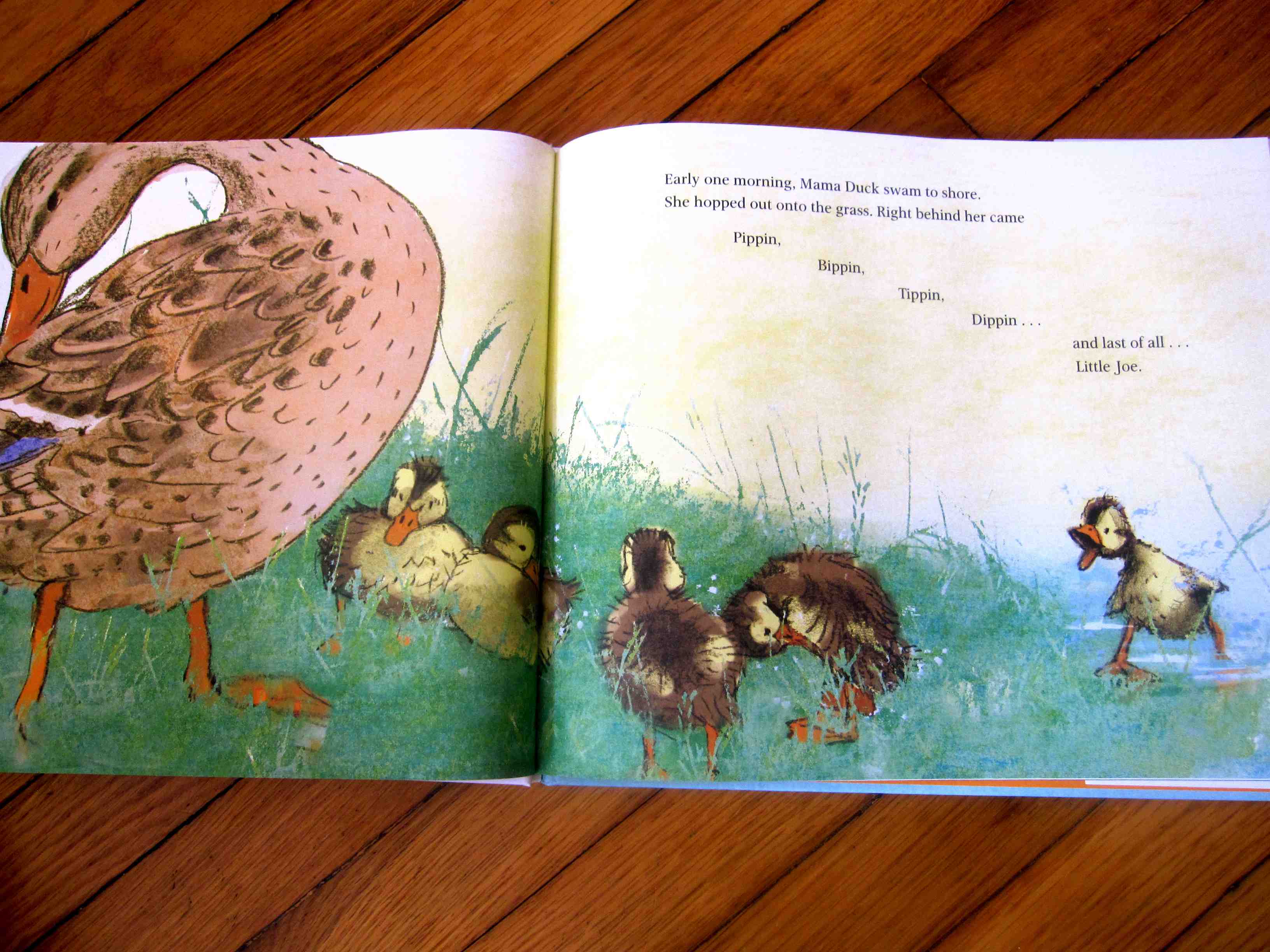
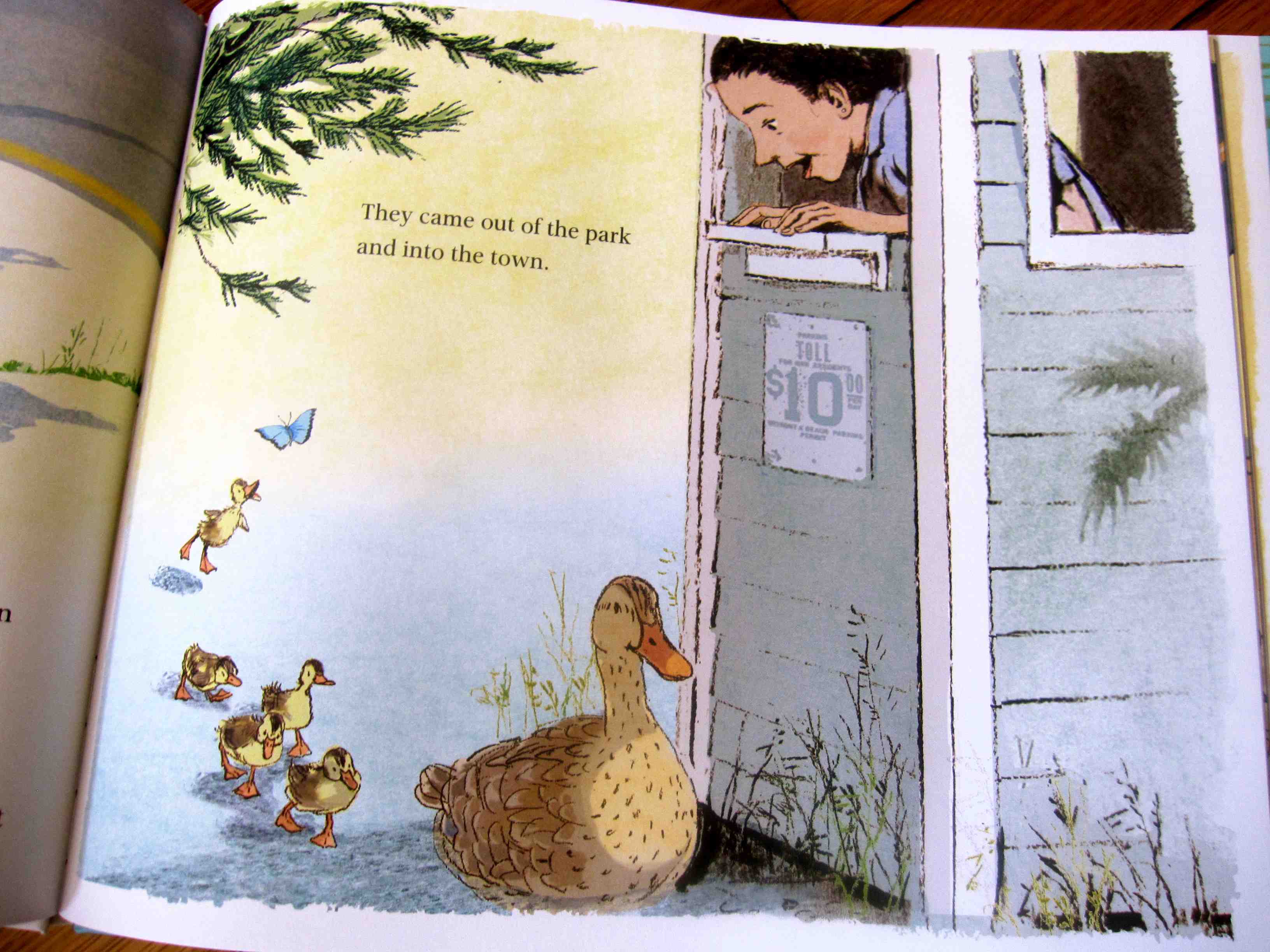
Don’t take my word for it: “Make Way for Ducklings”, a review from Seven Impossible Things Before Breakfast
Extras: Gah! I had to do it…
Source of book reviewed: Review copy provided by the wonderful folks at Scholastic.
10
Mar
Review: Chickenhare
 Chickenhare
by Chris Grine
Find it at: Your library | Amazon | Indiebound
Published: Scholastic GRAPHIX (February 1, 2013)
Recommended Reading Age: 11 & up
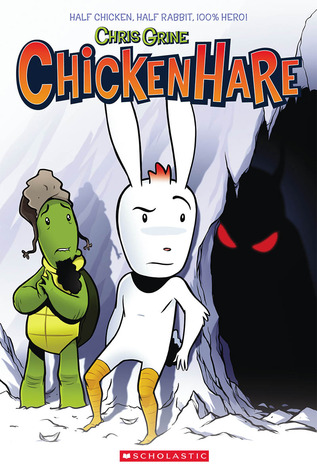
In a nutshell: Chickenhare has the body of a rabbit with the legs and feathers of a chicken. His friend Abe is a bearded turtle. Together, these two friends find themselves caught in quite the predicament. Trekking through a snowy tundra, a foul hunter has captured them and is transporting them to a mad taxidermist who likes to kill, stuff, and dress up exotic animals. Weird right? It gets weirder. Once the hunter hands over Chickenhare and Abe, they are thrown into cages with two other unusual prisoners, a monkey-looking smart aleck named Banjo, and Meg, a small, but intense horned creature with purple hair and a cape. And let’s not forget the ghostly goat wearing a top hat and monocle with unexplained and fleeting appearances throughout. In an effort to escape the insane taxidermist and save their lives, the four team up in a bizarre adventure with humorous exchanges along the way to an ending that is… well… weird.
Suffice it to say, it’s a relatively quick read for the middle school-age kids who welcome a little “dark and strange” in their reading appetites. Originally published as a three part series that was previously released under Dark Horse Comics a few years ago, Chickenhare is now in the limelight of tween readers, re-released under Scholastic’s graphic novel imprint, GRAPHIX. Even though Chickenhare is more accessible to younger readers, it definitely isn’t appropriate for kids younger than 6th grade. Even I was a little creeped out by the lunatic Klaus, the taxidermist, and his sinister gang of thugs. It was a little too bizarre for my taste, but I know there’s an audience of kids who will surely enjoy it.
Don’t take my word for it: See what kids have to say about this title in KIDS SCORE: Chickenhare on the OWL Blog
Trailer:
Chickenhare book trailer from chris grine on Vimeo.
Extras: Chickenhare’s blog home the BEST Chickenhare website… EVER.
Source of book reviewed: Review copy provided by the kind and gracious folks at Scholastic.
7
Mar
Throwback Thursday: The Big Jump and Other Stories
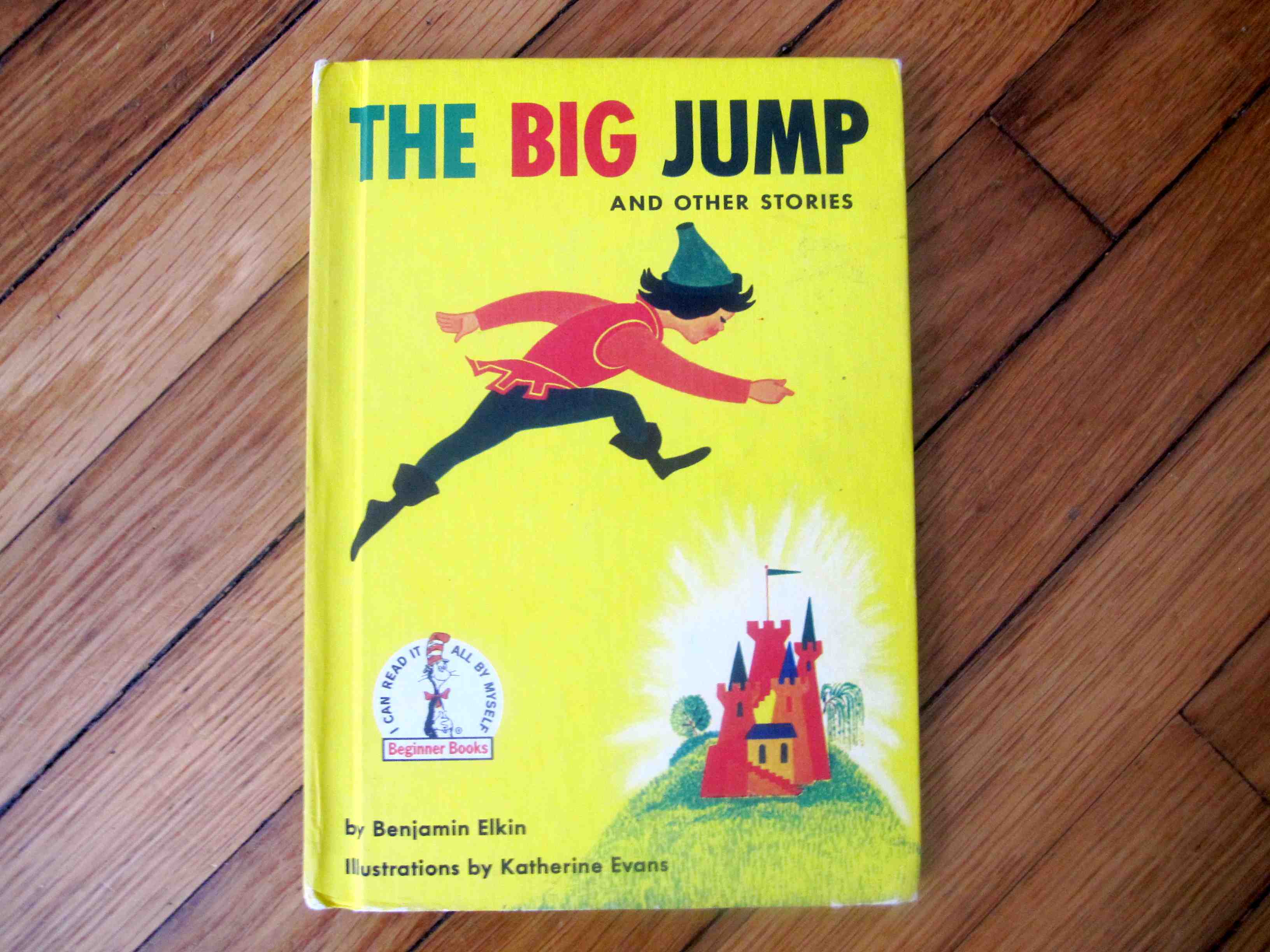
The Big Jump and Other Stories
by Benjamin Elkin, illustrations by Katherine Evans
Find it at: Your library | Amazon
Published: Random House Books for Young Readers (September 12, 1958)
Do you follow NPR’s Backseat Book Club? If not, Backseat Book Club is a series that selects one kid-friendly book per month, and airs a special segment for listeners on the show All Things Considered at month’s end. As it so happens, Gary D. Schmidt, one of my favorite middle grade fiction authors, was featured in February for his novel, Okay for Now. During his interview with Michele Norris, he talked about his favorite book from childhood, The Big Jump and Other Stories.
Growing up Gary Schmidt was considered a lost cause, a “stupid kid”, until a teacher took him by the hand and taught him how to be a reader. The first book he really, really loved was this book. I’m a proud owner of a first edition copy of The Big Jump and Other Stories, so today’s Throwback Thursday is inspired by that interview. As in Gary Schmidt’s personal account, it only takes one teacher, parent, or a person who cares, and one book to make all the difference in a person’s life.
The Big Jump and Other Stories, one of the first titles in the Beginner Books series for beginning readers, is told in three parts: “The Big Jump”, “Something New”, and “The Wish Sack”. The first story, “The Big Jump”, is about a good king who had many dogs, but one day one of his dogs grows fond of a boy, Ben. Since only kings could have dogs, the king makes a declaration that if Ben can jump as he can, to the top of his castle, then he can keep the dog. In the second story, Ben finds the same king from the first story in a predicament. If the king doesn’t find something new, the bad king will take the kingdom’s gold. The third and final story is about a very magical sack given to Ben by a funny old man. The bad king ends up stealing the sack and Ben has to figure out how to reclaim it. Each story is about one boy thinking outside the box and being brave, and in return claiming victory in each scenario. It’s a special little book, with the charming 1950’s style illustrations, and strong story morals. It’s no wonder it stands out to Mr. Gary Schmidt as his number one read.
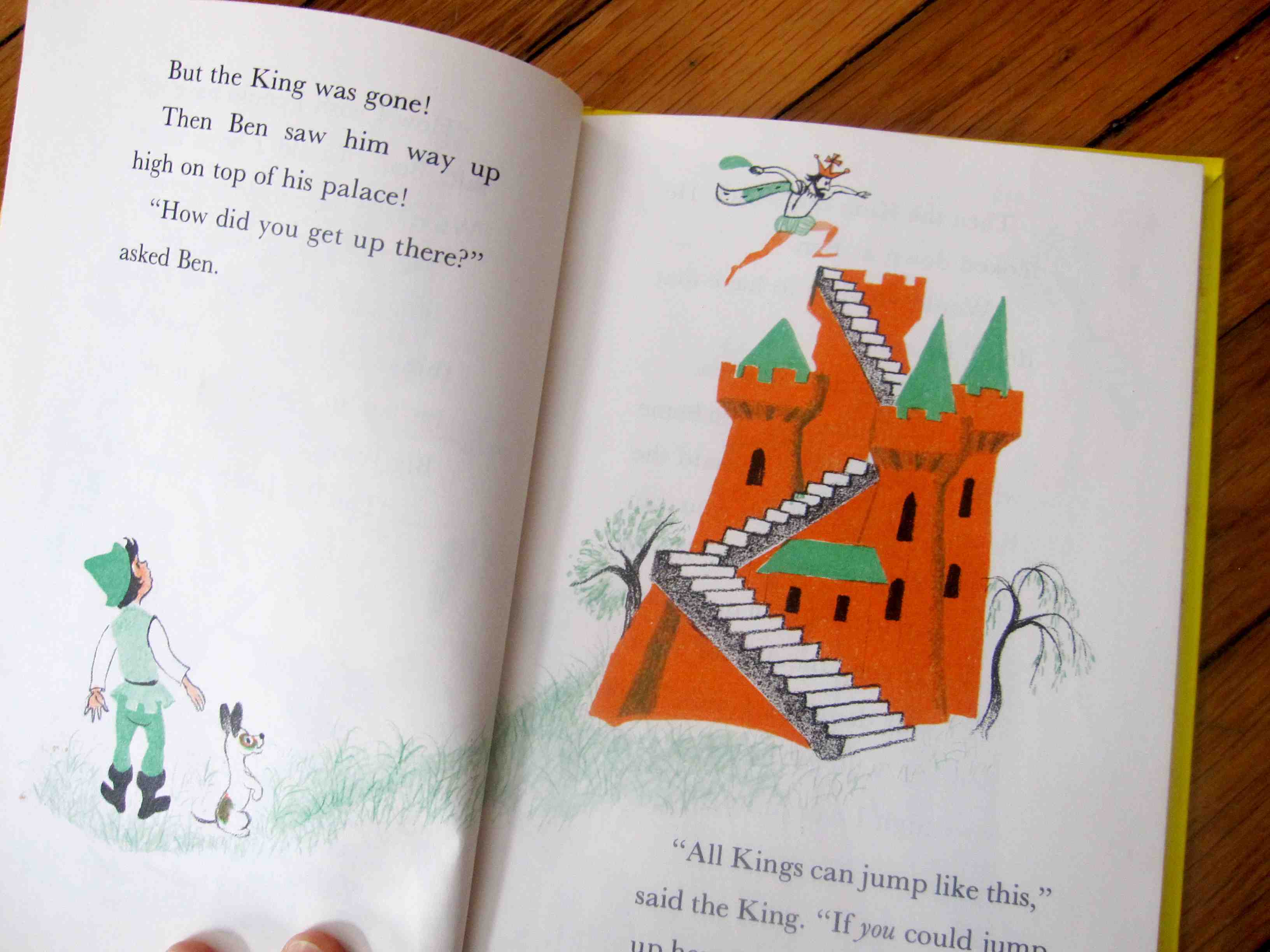
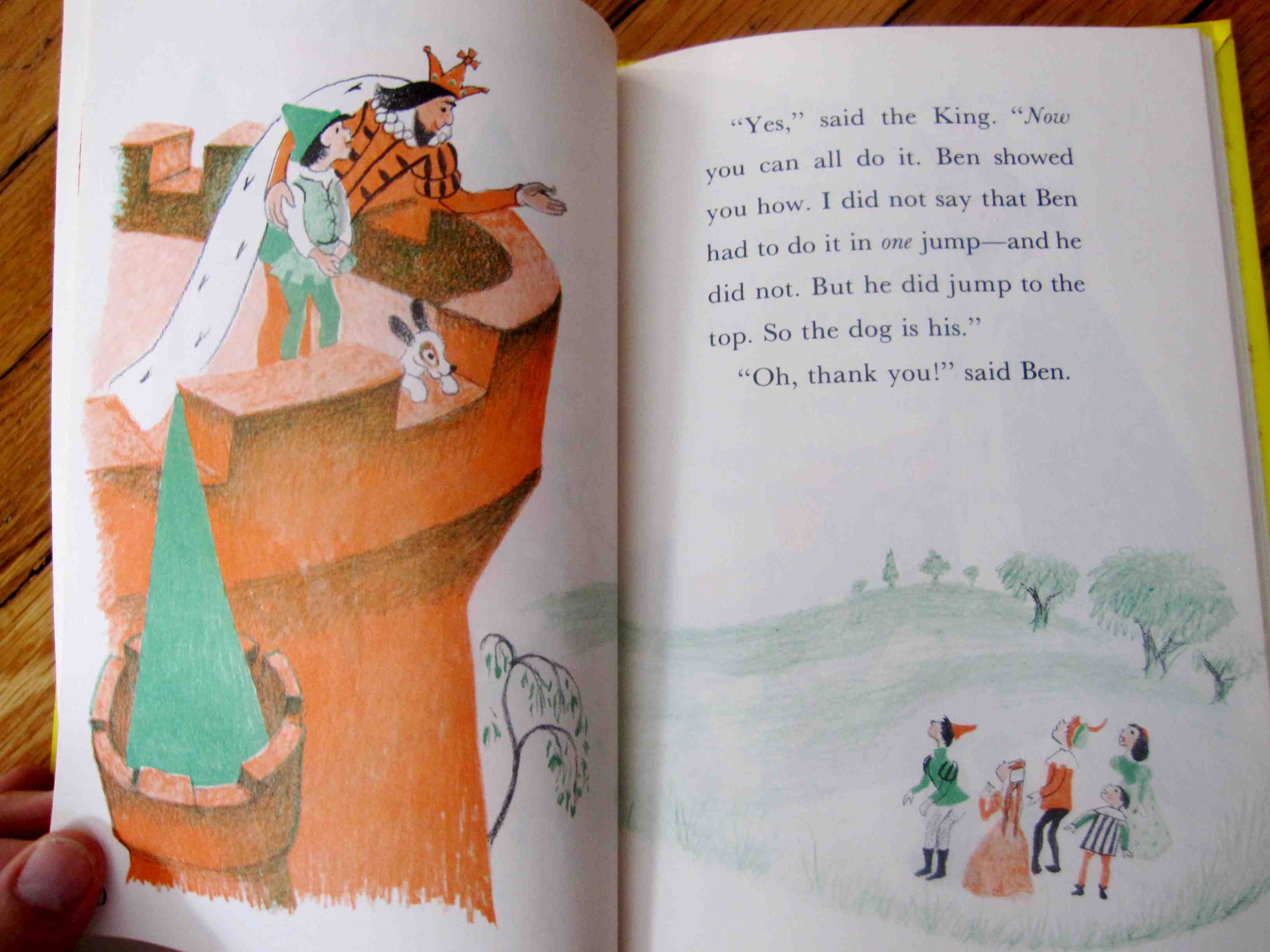
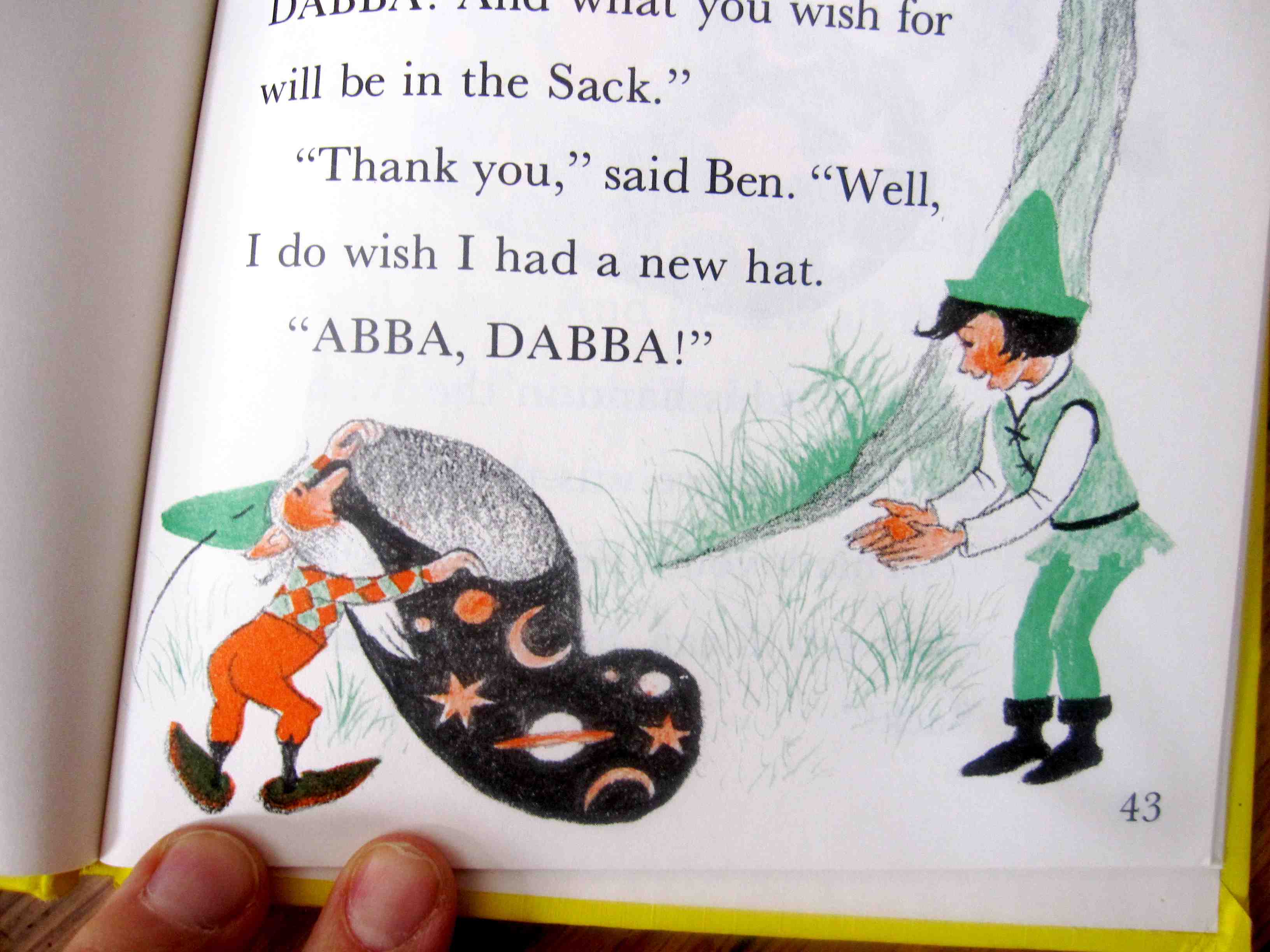
If you’re interested in participating with NPR’s Backseat Book Club, the book selection for March is The Wonderful Wizard of Oz. I have never read it, but very much look forward to doing so. Read with your family, classroom, and spread to the word to your patrons. It’s not just exclusive to children; teens and adults are most certainly welcome to listen in as well!
6
Mar
Reading Together
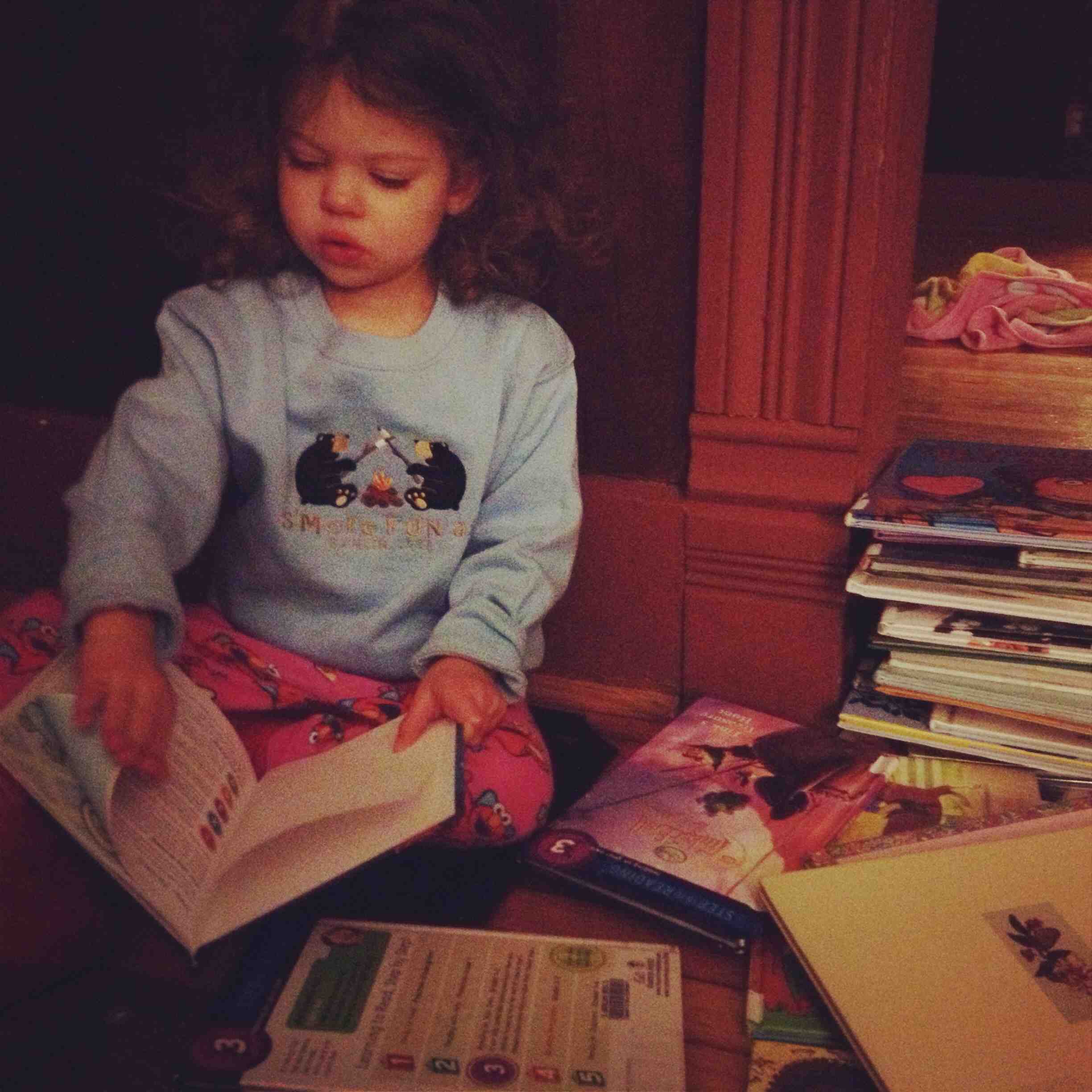
***Reading Together is a sampling of books I’m currently reading aloud to L, my toddler daughter. Since I work in the children’s room of a public library, I’m always bringing home stacks and stacks of books to share together. Old and new. These are our favorites. Some of which have been read over and over and over again…. Times thirty. To the tenth power.***
Kansas has seen lots of snow which had left us stuck inside over the past month, but we were quite content with piles of books decorating the couch and most corners of the house. The largest piles were always found close to hot air vents (L is sitting on one in this picture). L’s latest obsession is ballet (thanks to Flora and the Flamingo), and half of the books were about tutus and prima ballerinas. So, I took them off this list and decided to devote an entirely separate post to it in the near future. Stay tuned.
Here’s what we’ve been reading together.
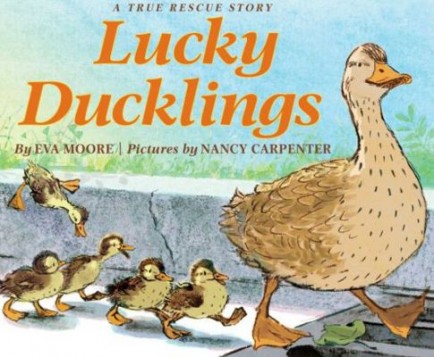
Lucky Ducklings by Eva Moore, illustrations by Nancy Carpenter
A true rescue story about five little ducklings who get stuck in a storm drain, and a town that comes to their rescue. Sweet story with incredible illustrations. Full review later this week!
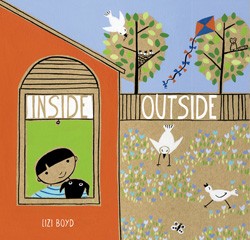
Inside Outside by Lizi Boyd
We’ve been having so much fun going back and forth between inside and outside, season to season in this lovely die-cut picture book. (Full review here)
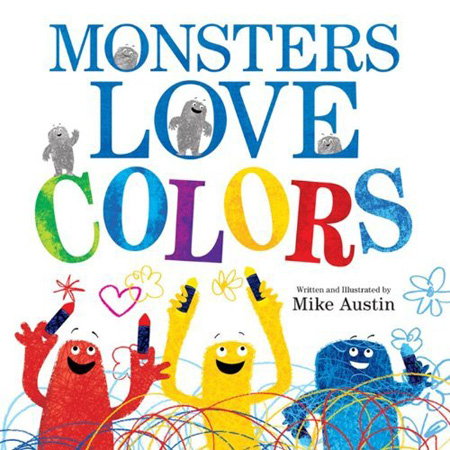
Monsters Love Colors by Mike Austin
L loves books about monsters and this one specifically has caught her fancy. Think Mouse Paint but with monsters, Monsters Love Colors is a wonderful preschool book that teachers color recognition and color mixing.
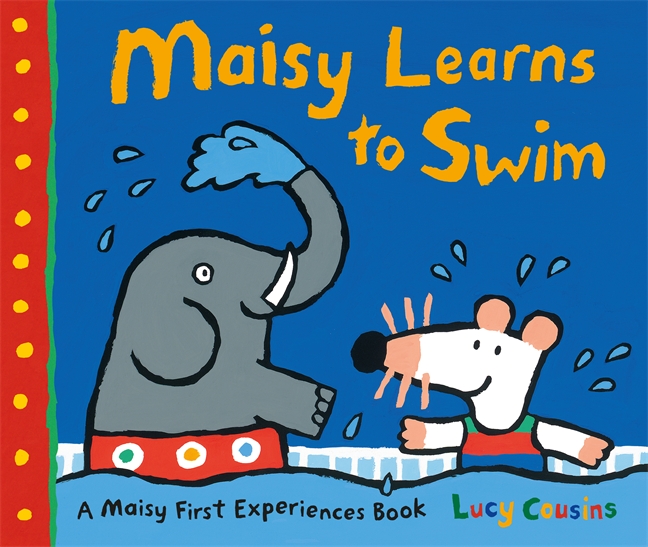
Maisy Learns to Swim by Lucy Cousins
A new Maisy book! We love reading Maisy books, and this latest title about swimming lessons has us wishing for warmer weather when we can hop into the pool again.
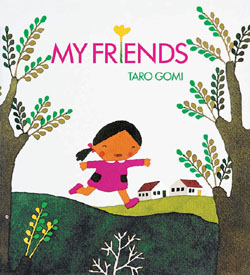
My Friends by Taro Gomi
Taro Gomi kind of reminds me of Leo Lioni. This is such a simple story about the type of friends in a little girl’s life. Bonus: there is a ninja gorilla.
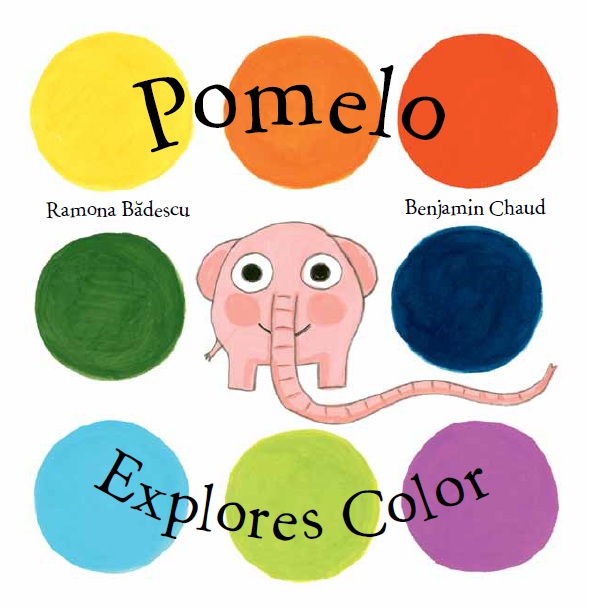
Pomelo Explores Color by Ramona Badescu and Benjamin Chaud
L didn’t show much interest in the first Pomelo the Garden Elephant book, Pomelo Begins to Grow, but she loves flipping through this one about how the curious garden elephant sees all the different colors.
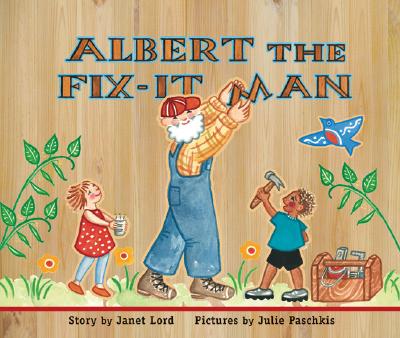
Albert the Fix-it Man by Janet Lord, illustrations by Julie Paschkis
This was a find by one of my co-workers. When anyone has something that needs to be repaired, Albert is there to help fix it. But what happens when the fix-it man falls ill? I thoroughly enjoy the message this book shares with its readers.
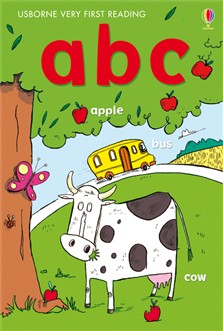
ABC by Sarah Horne
L has been working on learning her letters and this is the first ABC book I’ve brought home that she has shown interest in. Simple illustrations with large, easy to read letters. It’s also a small book, which makes it easy for her to maneuver- One of the reasons I feel she enjoys the beginning reader books so much.
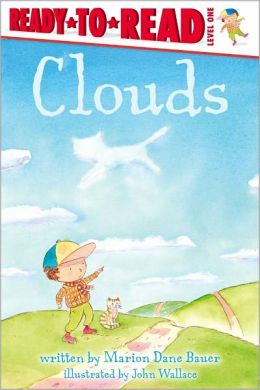
Clouds by Marion Dan Bauer, illustrated by John Wallace
If you’re looking for books that explain the weather to a young audience, these Ready-To-Read books by Marion Dane Bauer are fantastic. We also have been reading her books about rain wind, and snow.
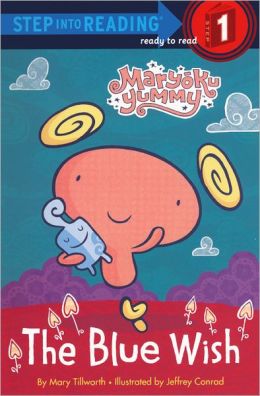
The Blue Wish by Mary Tillworth, illustrated by Jeffery Conrad
I’m not familiar with the Maryoku Yummy show. We don’t have TV, so I’m a little out of the loop that way. But L found this book at the library a month ago and has really enjoyed it. It’s about a pink blob character named Maryoku (seen above) who wants to help a blue wish come true. Kinda psychedelic for my tastes, but L likes it.
Mouse Around by Pat Schories
Sorry abut the image being so small. I couldn’t find a decent sized one. This was another book L was introduced to by one of my all-knowing children’s literature co-workers. A wordless picture book about a mouse who falls from it’s nest and has quite the adventure throughout the course of the day getting back home.
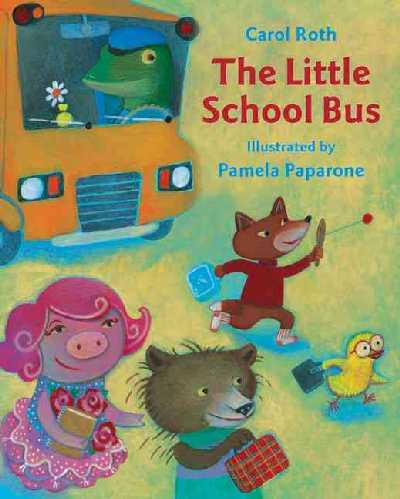
The Little School Bus by Carol Roth, illustrated by Pamela Paparone
This is such a great book about a school bus that is not Wheels on the Bus! With rhythm and rhyme, one school bus picks up it’s animal passengers one by one on the way to school.
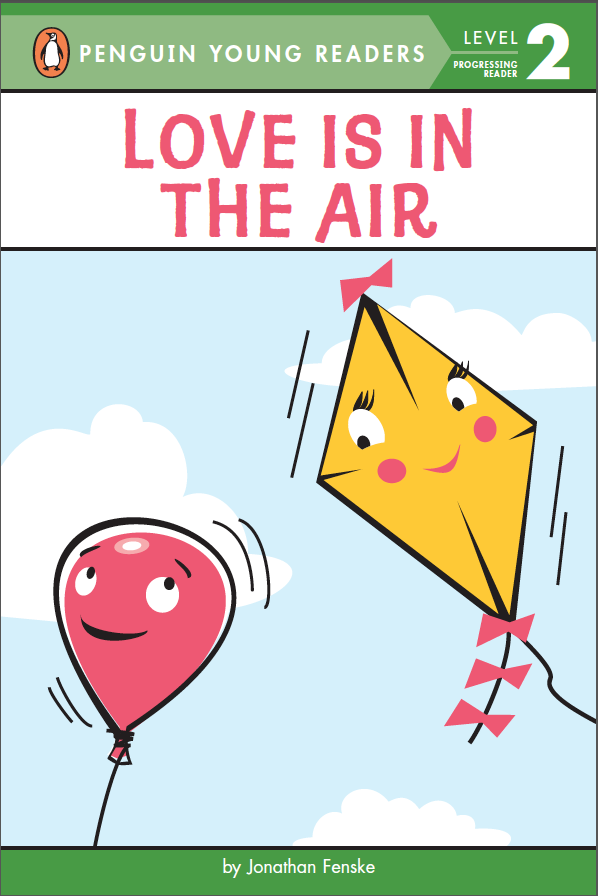
Love is in the Air by Jonathan Fenske
A original story about the lengths, or I should say heights, one will go to for love. A forgotten party balloon meets a kite and together they are the perfect match.
A Rainbow of My Own by Don Freeman
A little boy runs to catch a rainbow, but when he gets there it’s gone away. So, he imagines a play date with a rainbow instead.
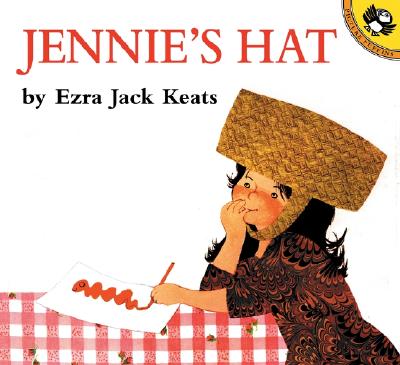
Jennie’s Hat by Ezra Jack Keats
Ezra Jack Keats’ story about Jennie and her disappointing spring hat. After we read it, L and I play a little game where we pretend to put different hat-like objects on our heads.
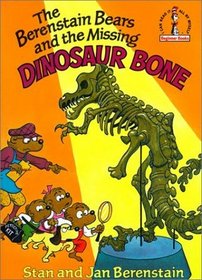
The Berenstien Bears and the Missing Dinosaur Bone by Stan and Jan Berenstain
The Berenstien Bears and the Missing Dinosaur Bone was one of my brother’s and mine favorite childhood books. My mom probably read it a bazillion times to us before bed. Now I’ve been reading it to L who is enjoying it. Today we looked at dinosaur bone pictures after reading.
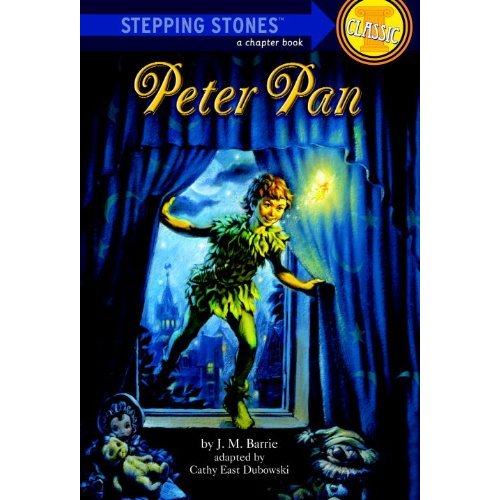
Peter Pan (A Stepping Stone Book) adapted by Cathy East Dubowski from the novel by J.M Barrie
L is still extremely interested in Peter Pan and Tinker Bell, so I decided to check out this abridged version and we’ve been reading a chapter a day ever since. If you know a child interested in a classic work of children’s literature, but might not be ready to take it on yet, these Stepping Stones Book Classics are a great substitute read until they are ready. This edition of Peter Pan has worked like a charm for us.
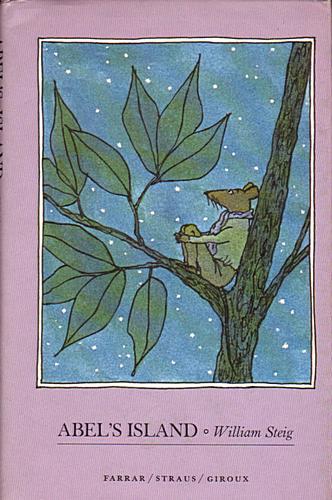
Abel’s Island by William Steig
Abel’s Island is up there on the list of beloved books I read in elementary school. I brought it home the other day to re-read, but L found it first and pleaded that I read it to her. “Are you sure?” I asked, and her little two-year-old self gave me an adamant, “Yes!”. So, both Will and I have been reading it to her. She does get distracted if there is a page with no pictures, as it’s a lengthy book for a toddler. Not sure if we will ever finish it, but she does frequently ask for us to read it to her and seems to take pleasure in listening when we do.
So, that’s what we’ve got going on. What books are you reading?
5
Mar
Review: The Center of Everything
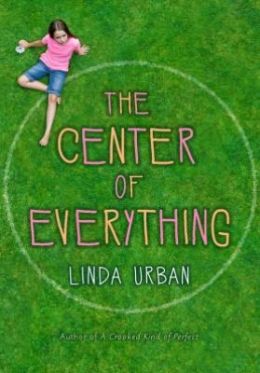
The Center of Everything
by Linda Urban
Find it at: Your library | Amazon | Indiebound
Published: Harcourt Children’s Books (March 5, 2013)
Recommended reading age: 9 & up
In a nutshell: Ruby Pepperdine misses her grandmother. It seems as though since Gigi passed away that everyone is acting like nothing has happened. To Ruby, her death has left a huge hole. No more beloved trips to the roof of her parent’s automotive dealership to decipher constellations. No more Gigi. Worst of all, Ruby feels guilty about something her grandmother told her to do the day she died, and Ruby feels she failed to do it. Listen.
Which is why on Bunning Day, Ruby has a plan to rectify the past with one wish.
In Ruby’s town of Bunning, New Hampshire, a place named after a sailor and the inventor of the hole-less doughnut, Captain Bunning, the biggest day of the year is Bunning Day. It was also the day her Gigi loved more than any other. The biggest part of the celebration is the Bunning Day Parade, featuring floats from the town’s various organizations. It’s also when the winner of the Bunning Day day essay, the Essay Girl or Boy, reads their prize winning, one-minute essay to the crowd. This year, Ruby’s essay was selected and she is the Essay Girl. On Ruby’s twelfth birthday, she made a wish ninety times, on a quarter she pitched through the hole in Captain Bunning’s doughnut, the bronzed statue in the center of Bunning. If you’re able to accomplish this feat, Bunning legend has it your wish will come true before the next Bunning Day was over. Her essay, her destiny, the way things are supposed to be… It’s all apart of her wish. A wish she hopes will lend answers about Gigi.
Without revealing the wish she enlists the help of the inquisitive boy, Nero DeNiro, to help her, which in turn upsets her best friend Lucy. Quickly Ruby starts to feel as if she is spiraling out of control, as the story cycles between past and present, and Ruby’s view point and the view points of various other characters from the town of Bunning.
“Some say it was destiny.”
In the first line of Ruby’s essay and in the early chapters, it was apparent that this book was going to be about something far greater than a girl, her grandmother, and a town parade. Abound with metaphors of destiny, the universe, mathematics, time, and the realities of life, The Center of Everything is flush with theories and curiosities. This is fitting, because Ruby is at a time when friendships, turns of event, and life itself become question marks more than anything else. At least, in retrospect, that’s how I felt as a twelve-year old.
The Center of Everything is full of depth and soul. It is a prime example of why I keep coming back around to being an avid fan of Linda Urban, but I do have one qualm; it will probably also leave you with a serious doughnut craving. A problem I find can easily be remedied.
Don’t take my word for it: Review from Secrets & Sharing Soda
Extras: Read Linda Urban’s post about reading to “exercise our empathy muscles” in A New Point of View via the Nerdy Book Club.
Follow Linda Urban on her blog home. She also has some excellent tips on writing (a must read for any budding author).
Source of book read: Advanced Readers Copy I picked up from Harcourt Children’s Books while at ALA Midwinter.
4
Mar
Review: Inside Outside
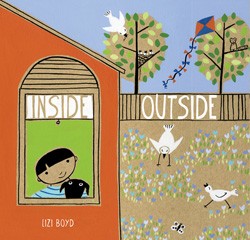
Inside Outside
by Lizi Boyd
Find it at: Your library | Amazon | Indiebound
Published: Chronicle Books (March 19, 2013)
Recommended Reading Age: 2 & up
In a nutshell: Charming is the first word that comes to mind when describing Lizi Boyd’s wordless, die cut picture book, Inside Outside.
The story transitions from the inside to the outside of a little boy’s (or girl’s?) house with each turn of the page. Inside, outside, inside, outside. And as the pages turn so do the change in seasons. Winter to spring to summer to fall to winter. While this sequence is revealed a bit of magic happens; parts of the pages are conveniently cut-out to reveal the next scene. The windows of a room the from inside show glimpses of the weather outside, and when the reader turns the page, going from inside to outside, elements of the outdoors are reflected inside the child’s house.
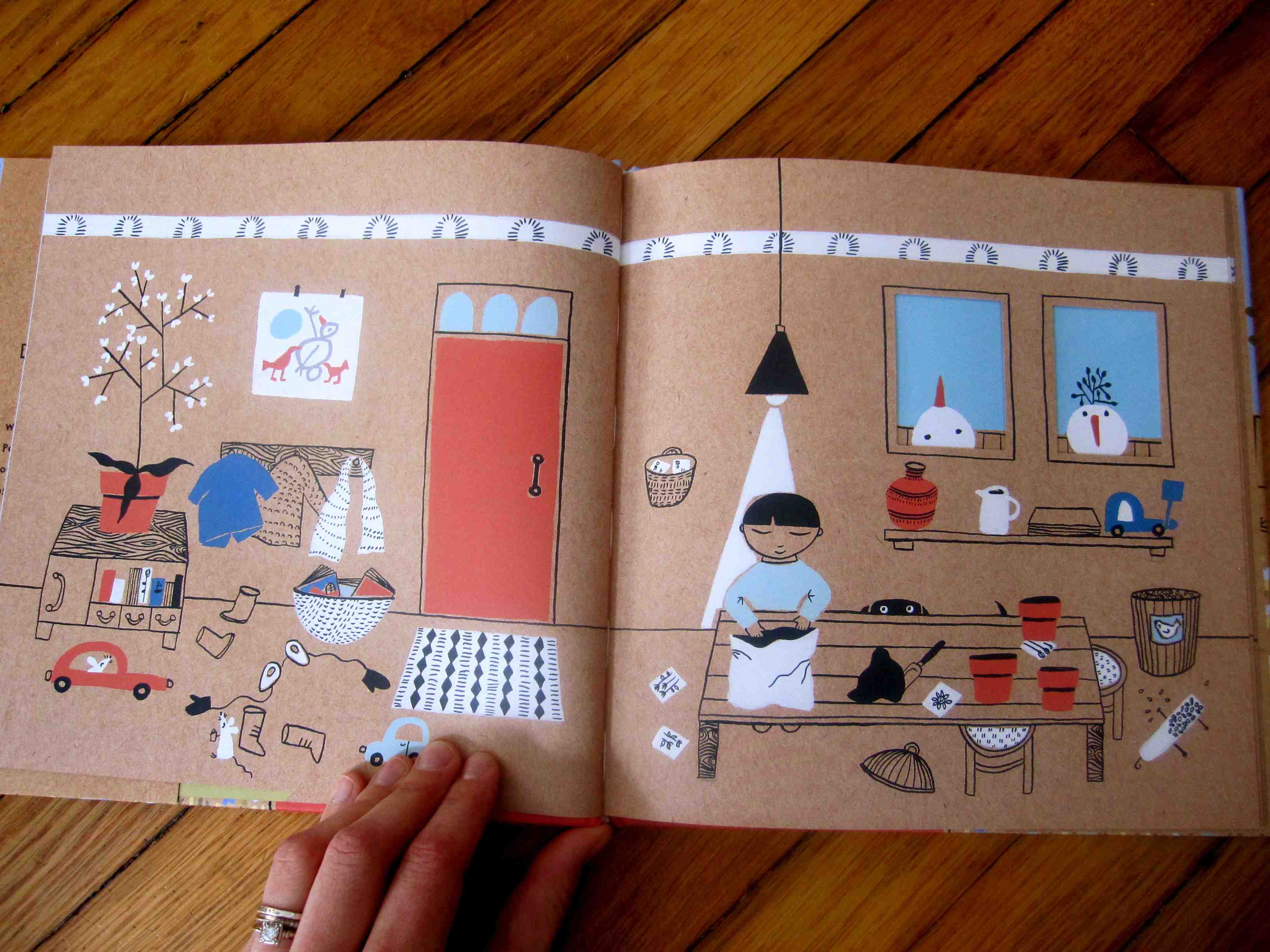
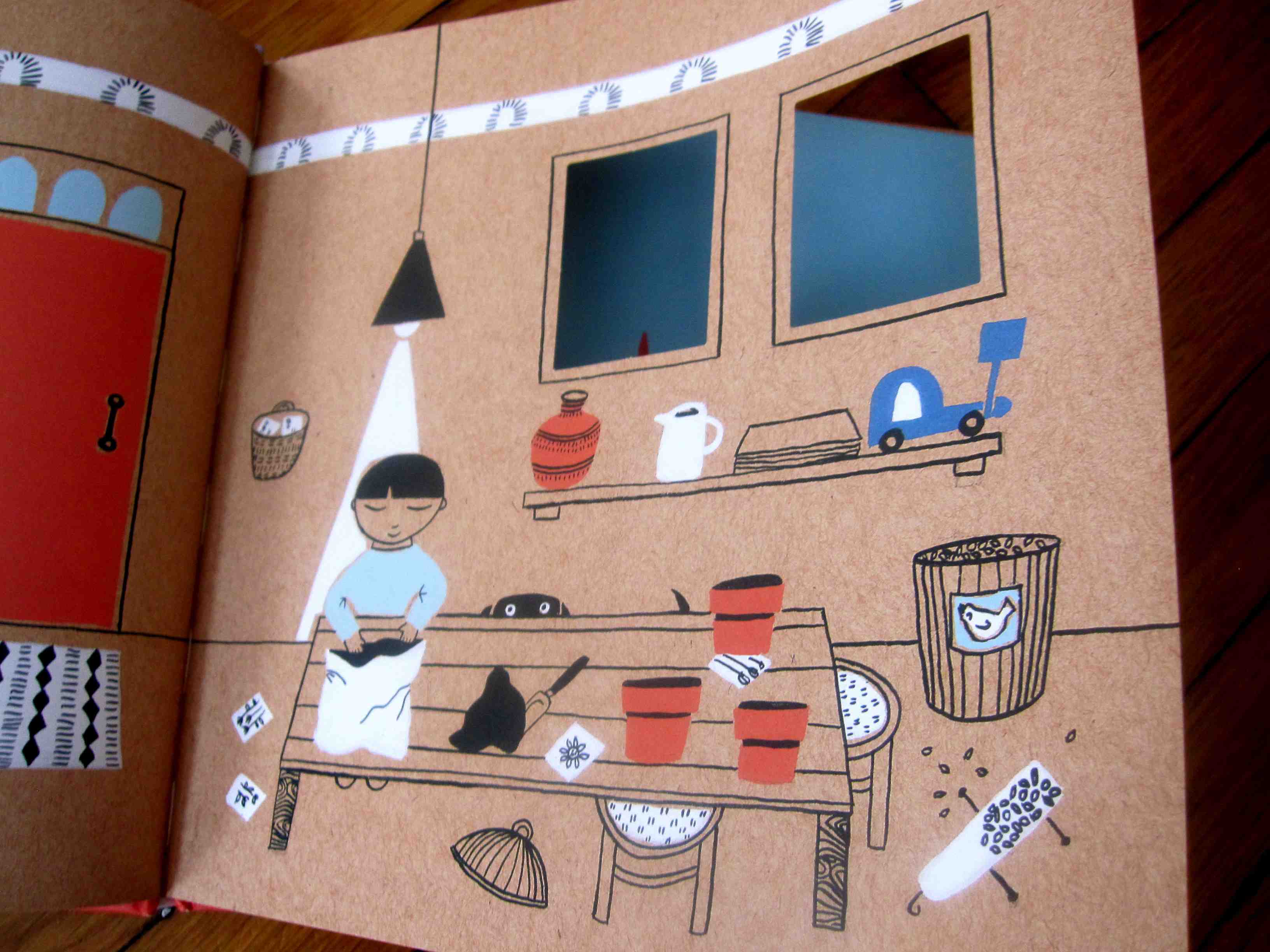
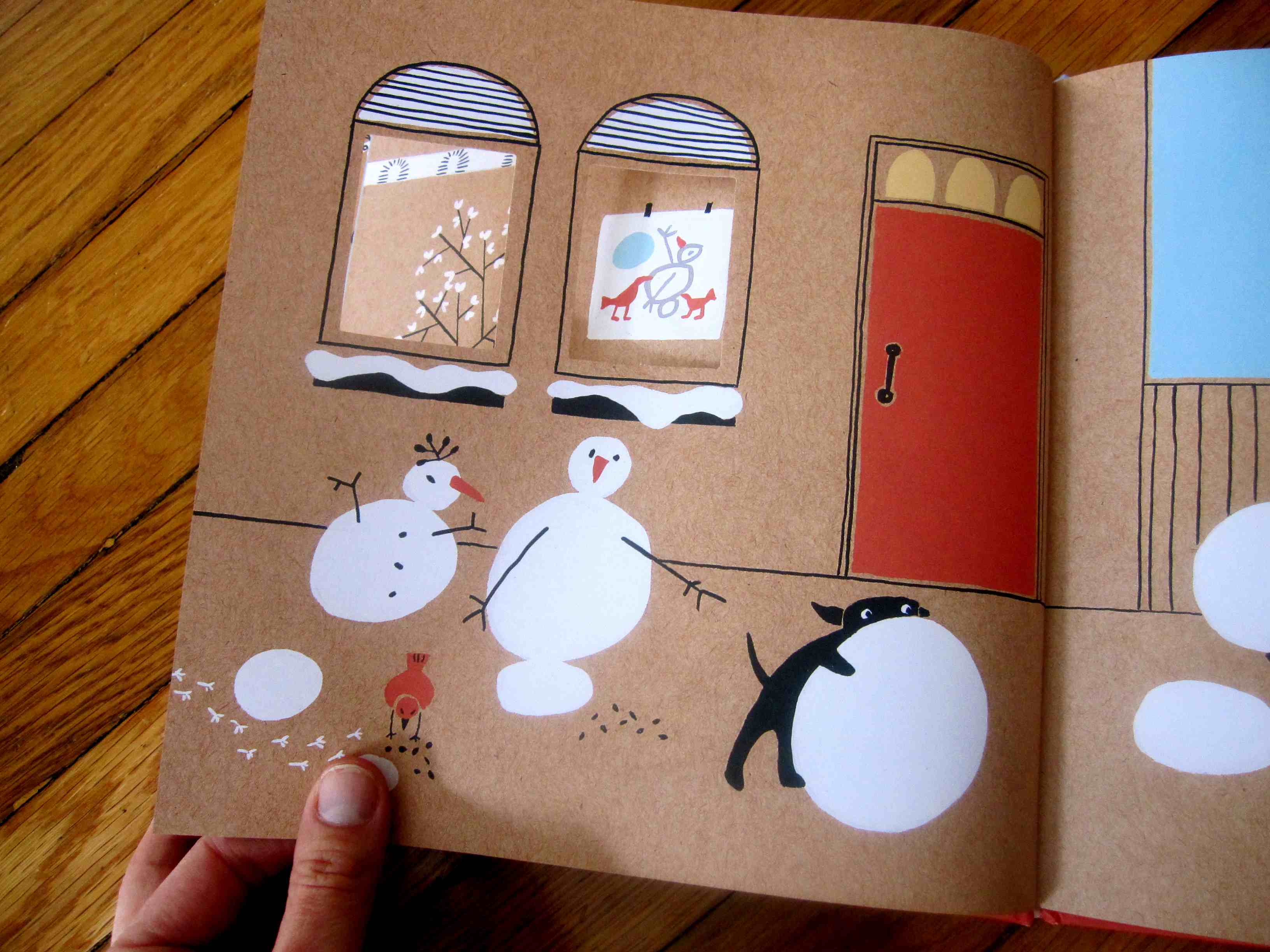
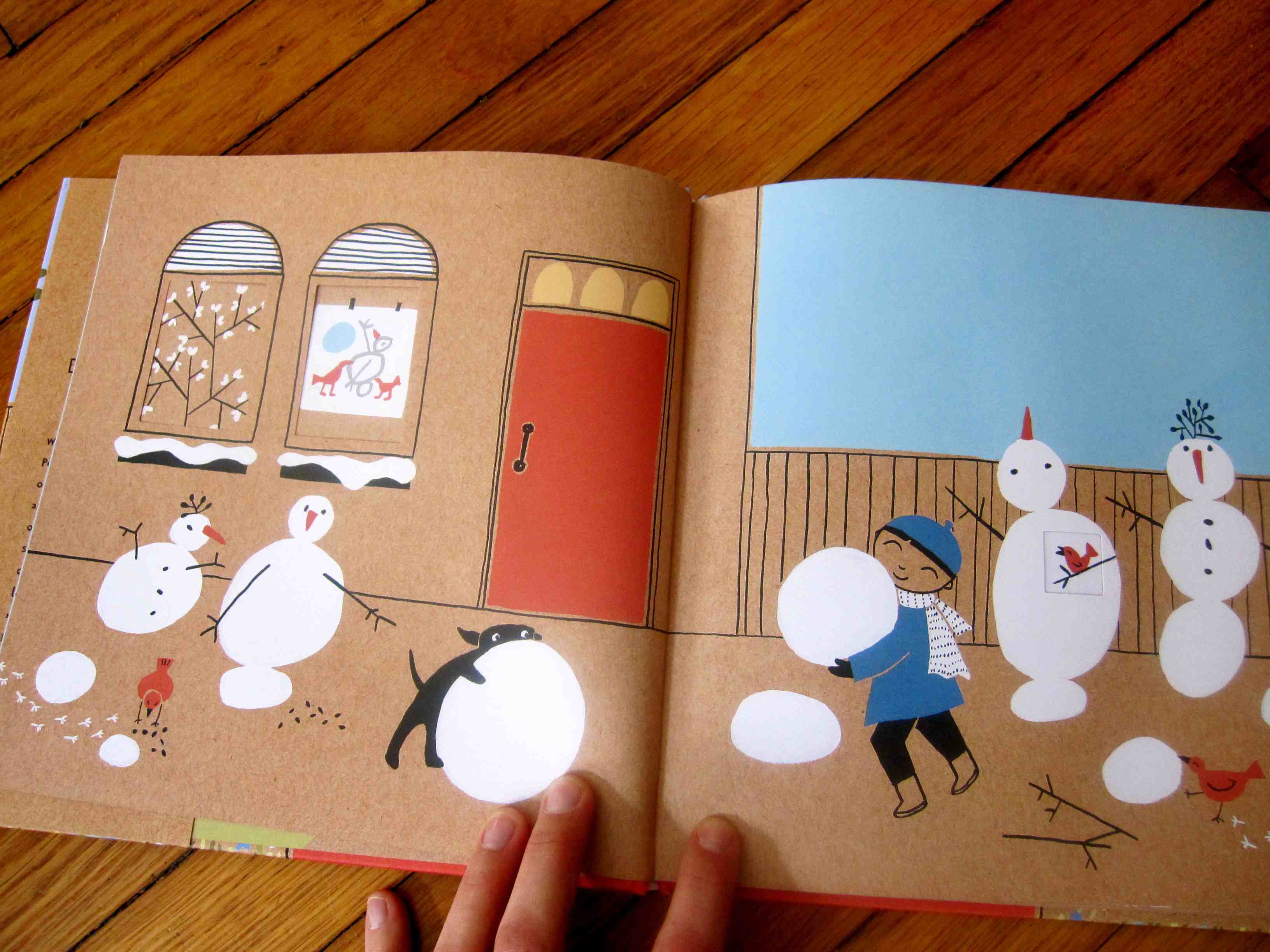
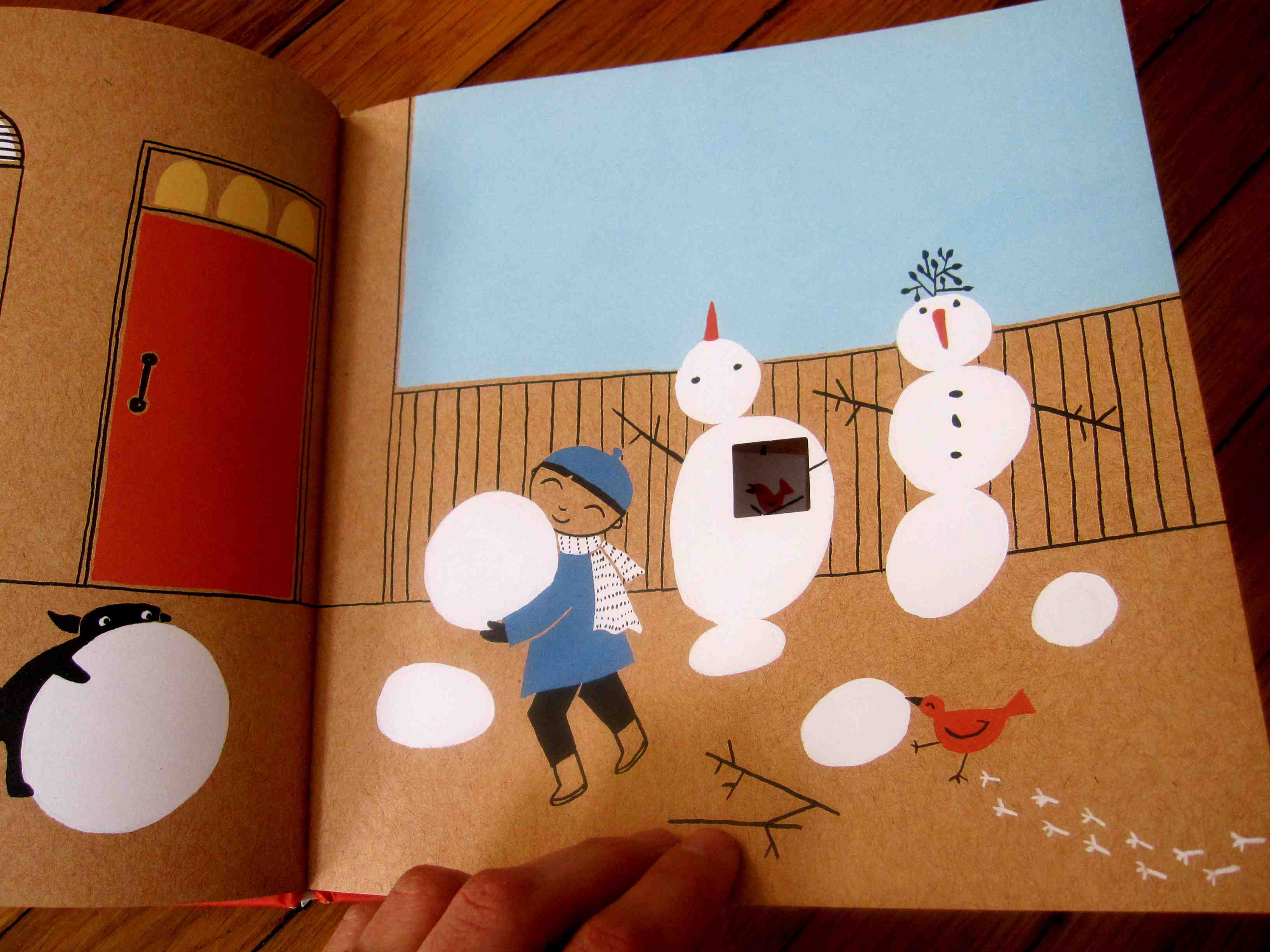
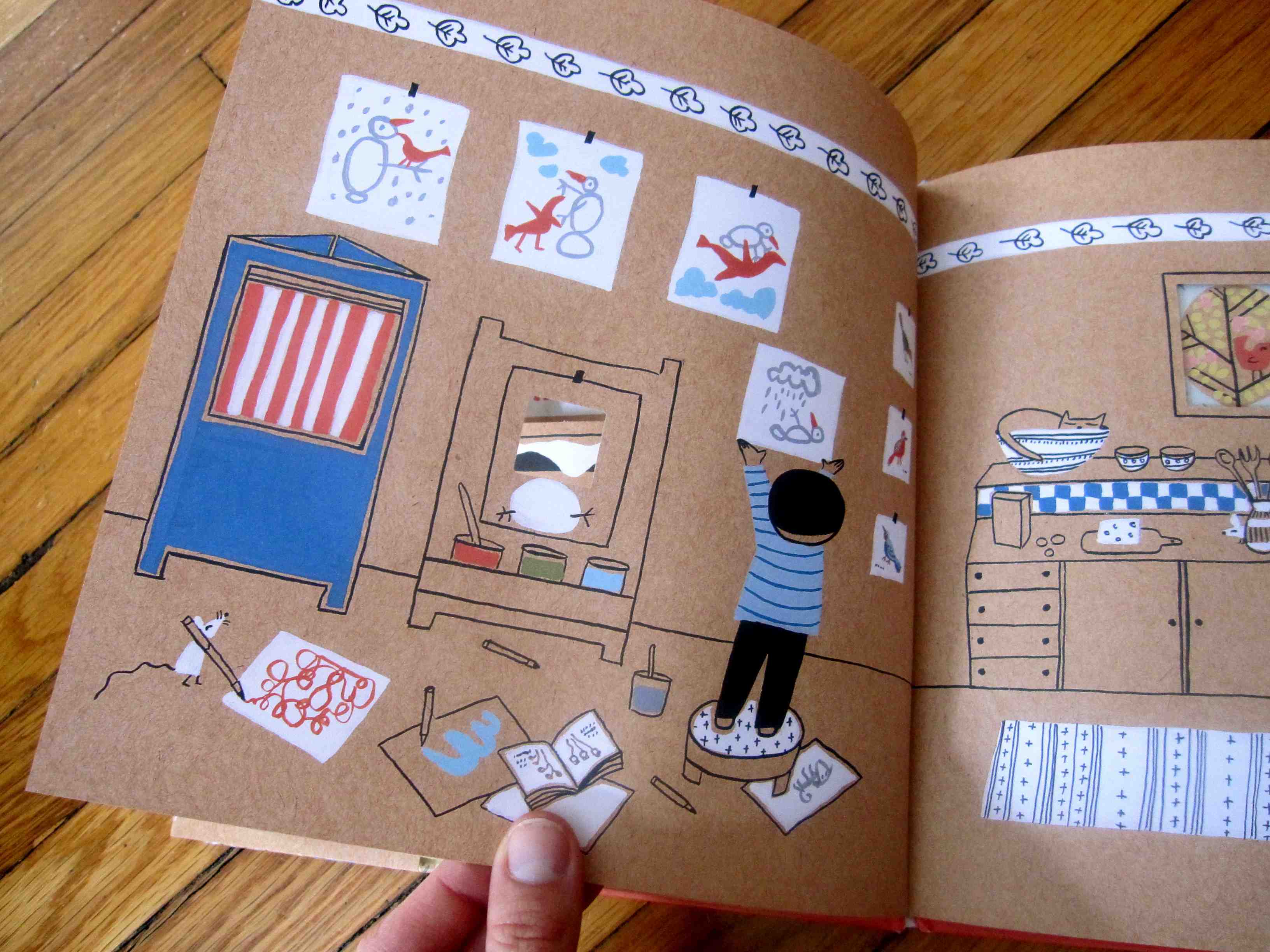
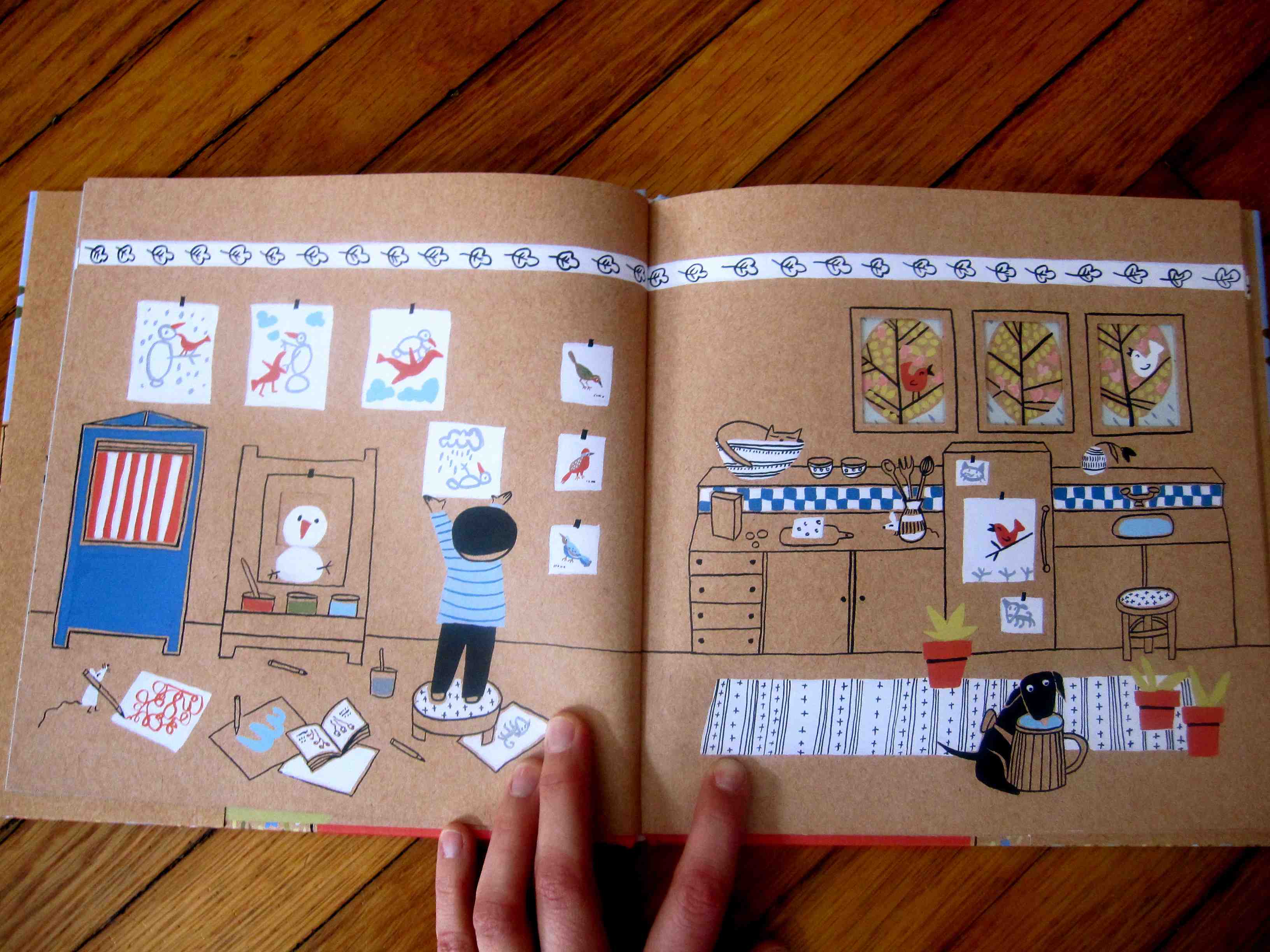
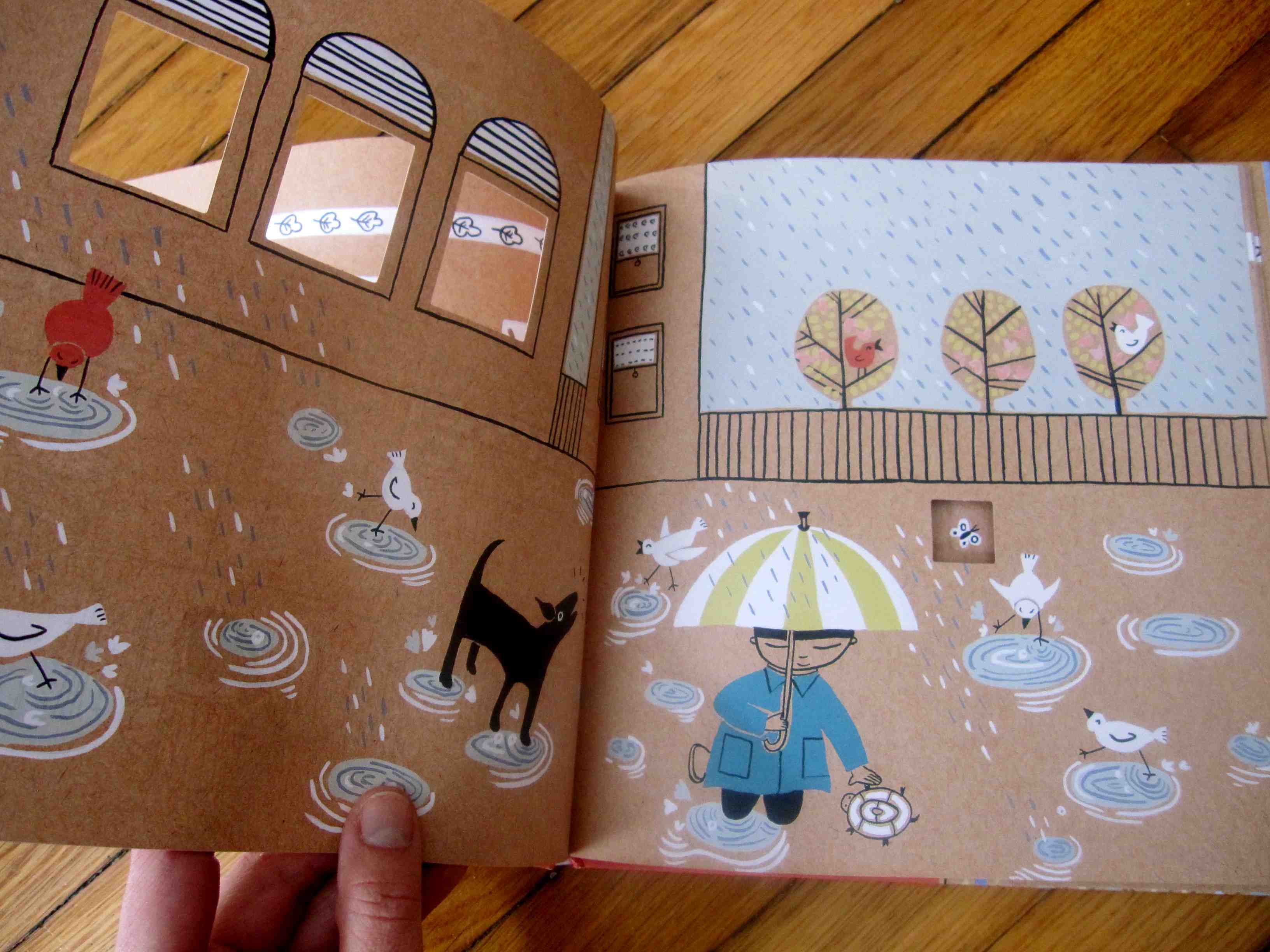
In company with the child character are many animals; the birds outside, mice, a found turtle, a pet cat and dog. Each illustration is detailed with natural cycles, the birds preparing their nest and eventually becoming parents, the child seed starting in the winter, and as the weather warms, moving the garden to outside. Crafting something inside to later use outside. Before and after. Today and tomorrow. Day by day.
Here is a glance at summer:
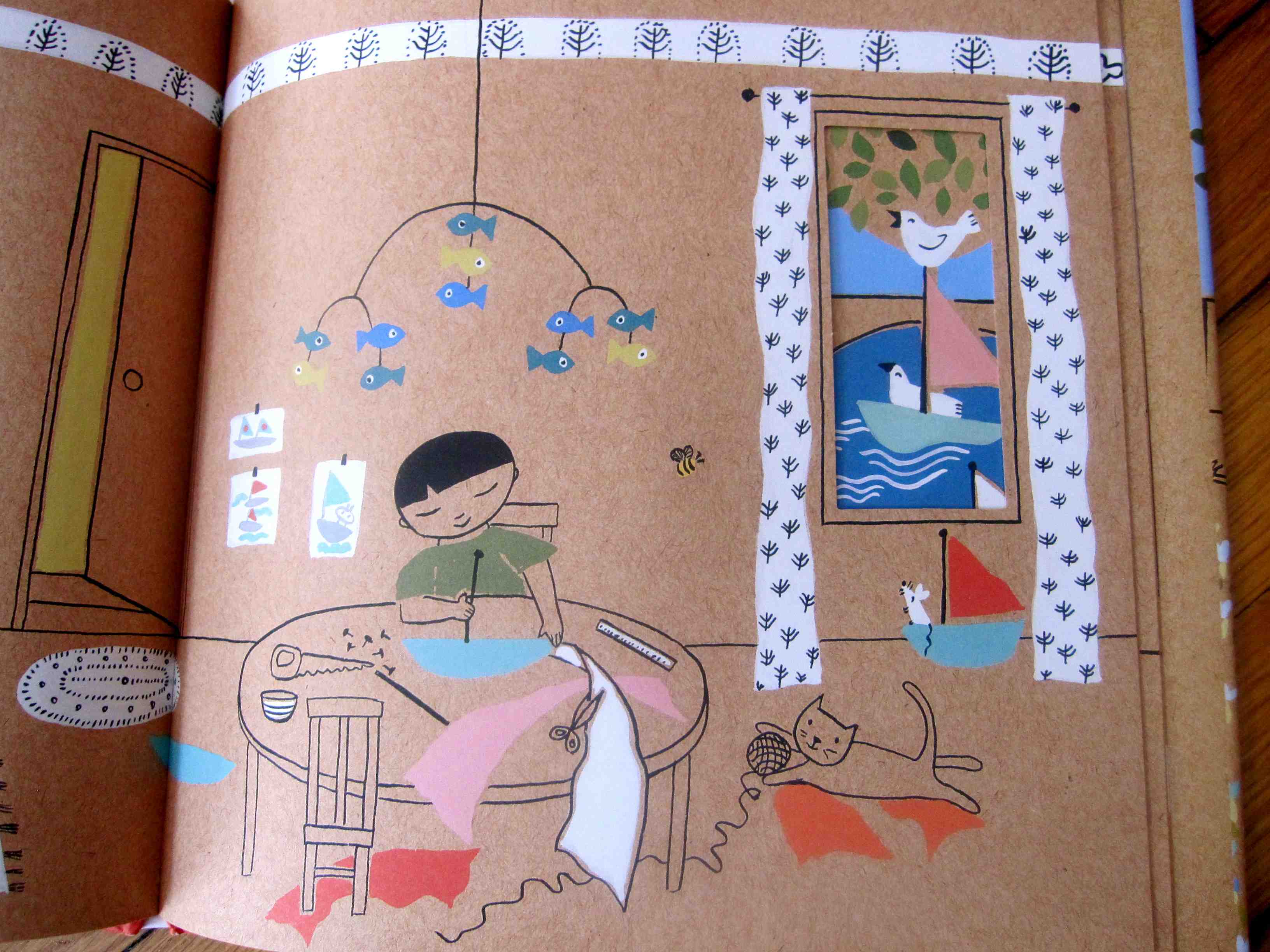
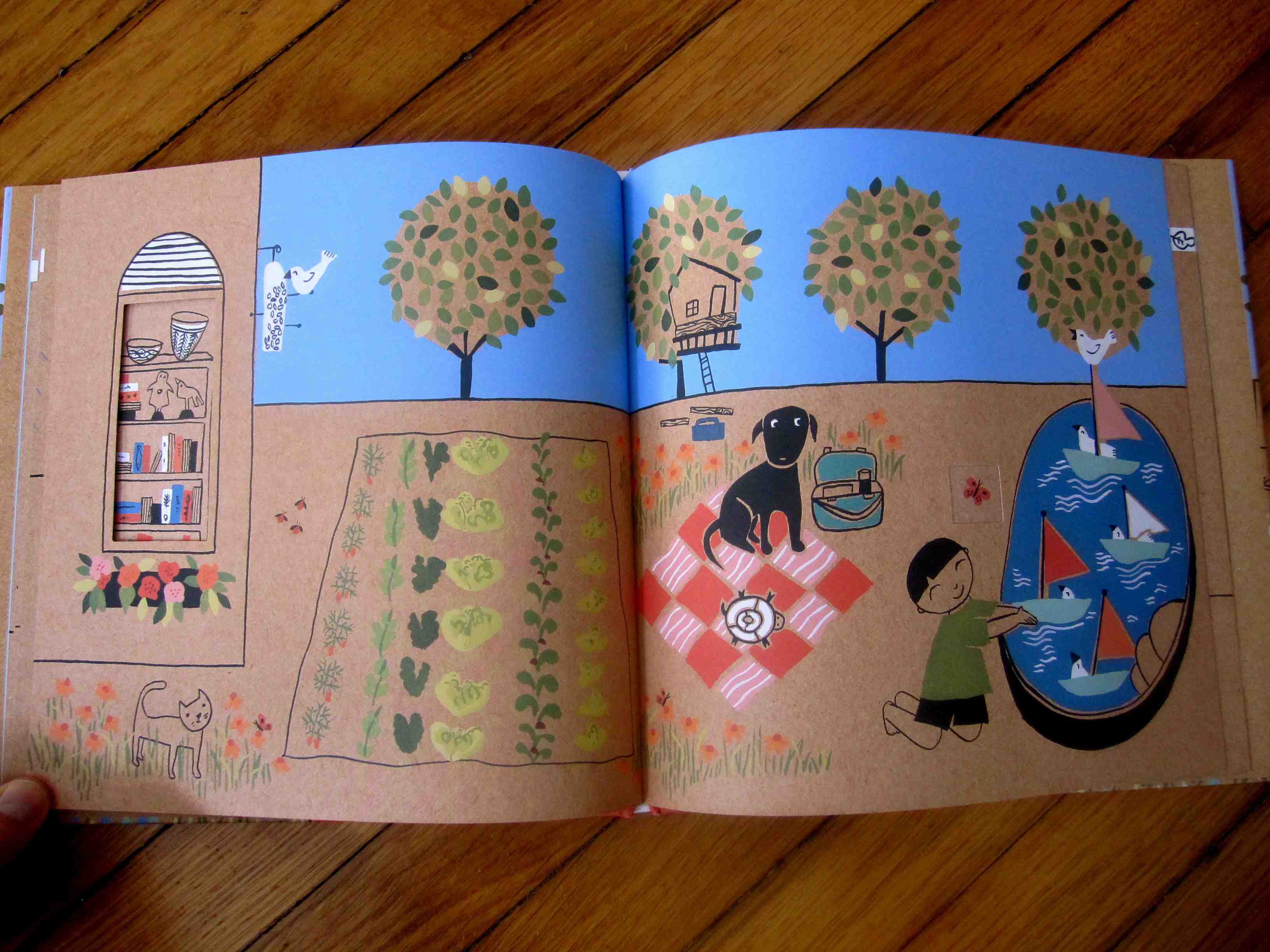
Unknowingly, I ended up photographing each and every page in the book for this post, and didn’t notice until I downloaded the images. Each spread is as attractive as the one before, it’s no wonder I did. But I’ll leave the rest for you to discover on your own.
With peek-a-boo images, sweet illustrations, and noticeable attention to detail, Inside Outside will persuade the reader to open it’s pages season after season.
Don’t take my word for it: I’m not the only one who was smitten. Inside Outside received a starred review from Kirkus Reviews.
Vine:
Extras: Check out Lizi Boyd’s stationary company, Lizi Boyd Papers. I didn’t realize it until I visited the website, but I used to buy these cards of hers at a shop in Brooklyn many years ago.
Source of book reviewed: Review copy provided by the good people over at Chronicle Books.


